Huang Chao, You Di, Guo Wenlai, Qu Wenrui, Hu Yuchen, Li Rui, Zhu Zhe
Hand and Foot Surgery, The Second Hospital of Jilin University.
Department of Anesthesiology, The Sino-Japanese Friendship Hospital of Jilin University, Nanguan District, Changchun City, Jilin, P. R. China.
Medicine (Baltimore). 2019 Jul;98(28):e16453. doi: 10.1097/MD.0000000000016453.
Lunate dislocation is a rare injury to the wrist caused by high-energy trauma, and poor prognosis is often associated with missed initial diagnosis. To date, there is no consensus regarding an effective treatment plan for such cases.
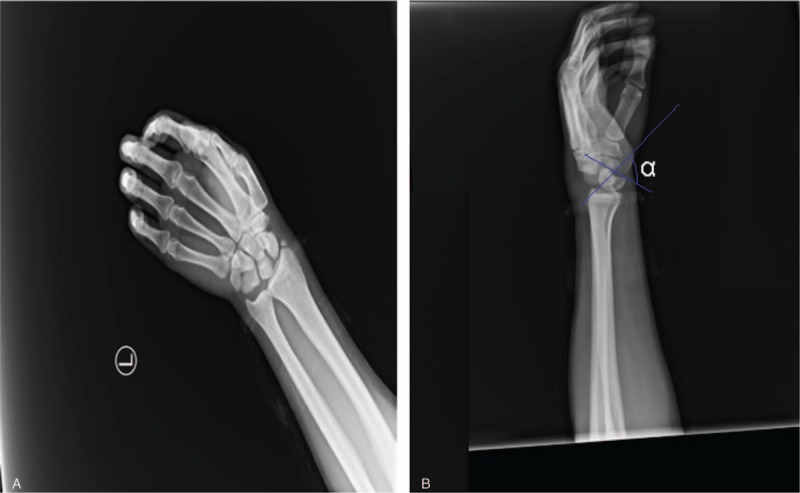
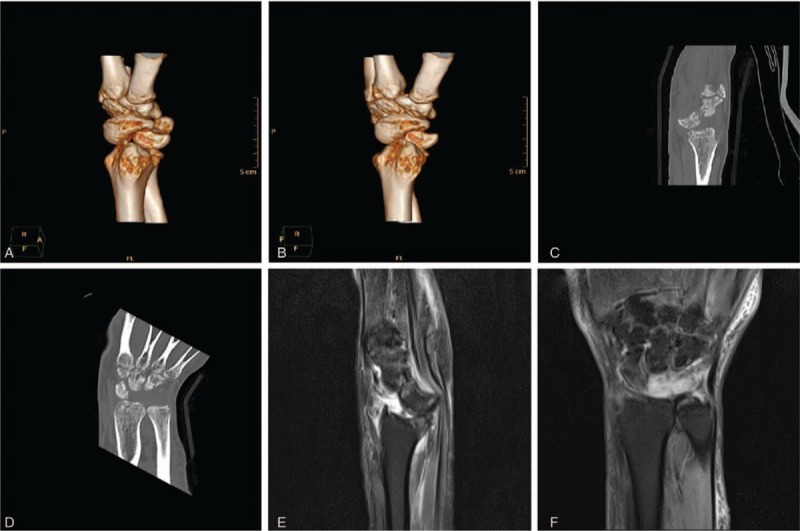
Here, we describe the case of a 36-year-old man who presented with lunate dislocation following a delay in diagnosis of over 7 weeks, and further illuminate its diagnosis and treatment.
The diagnosis of chronic lunate dislocation was rendered.
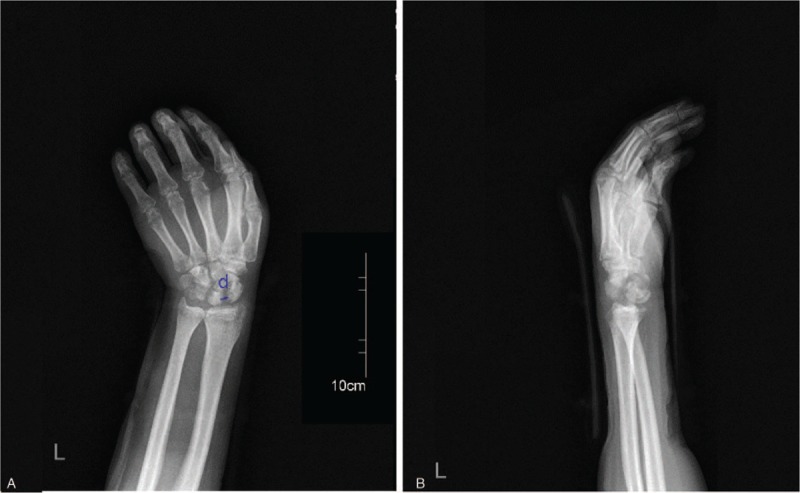
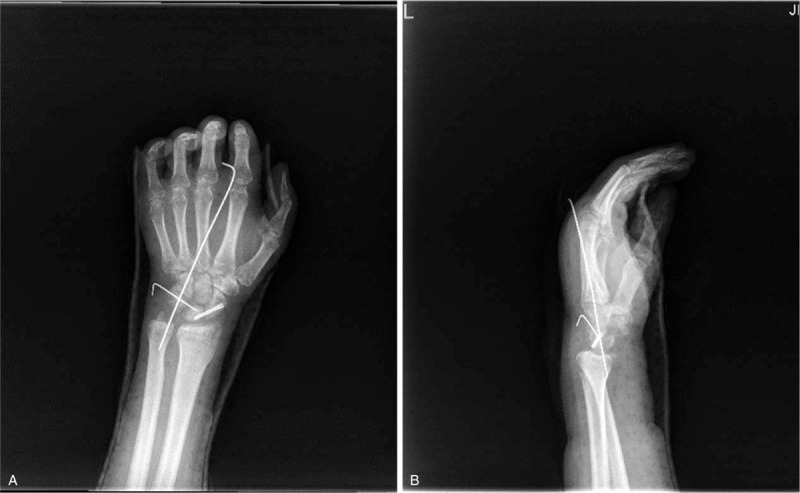
The patient was treated using reduction via the dorsal approach brachial plexus anesthesia. After the reduction, a headless compression screw fixation was performed for first-stage scapholunate fusion, and Kirschner wire fixation of the lunate-triquetrum-hamate was used to stabilize the distal and proximal carpal rows.
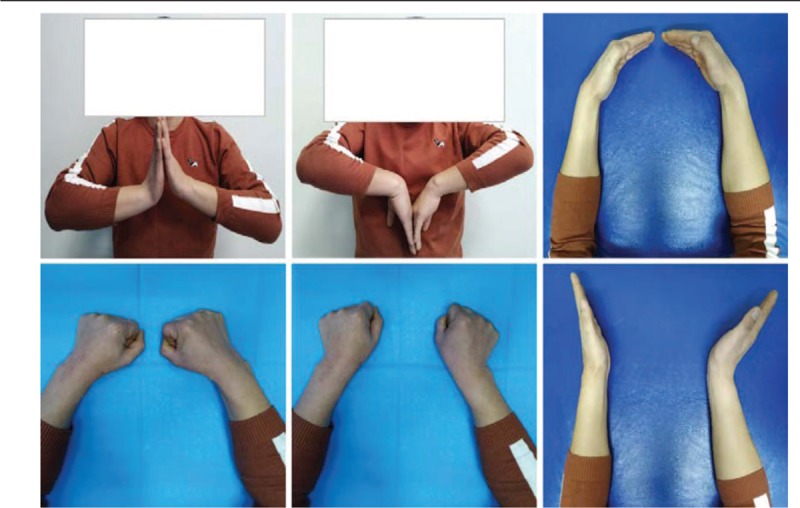
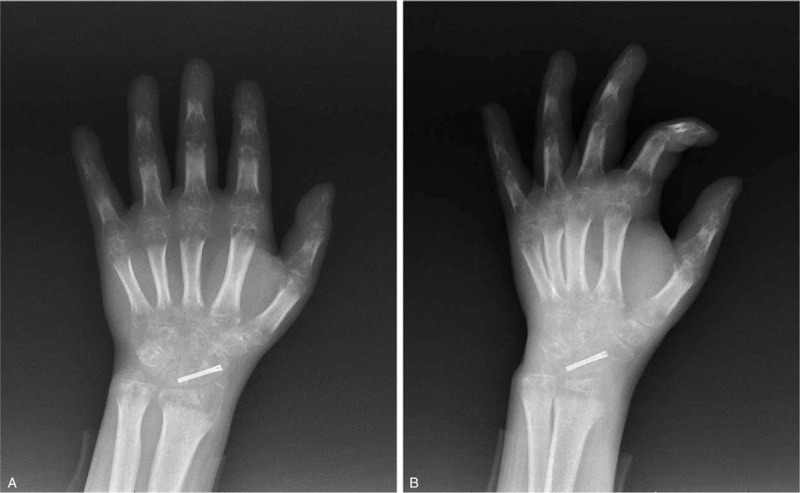
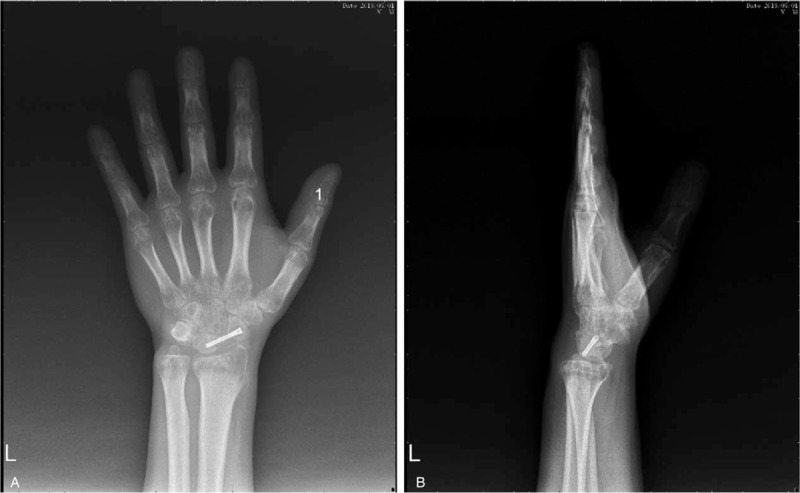
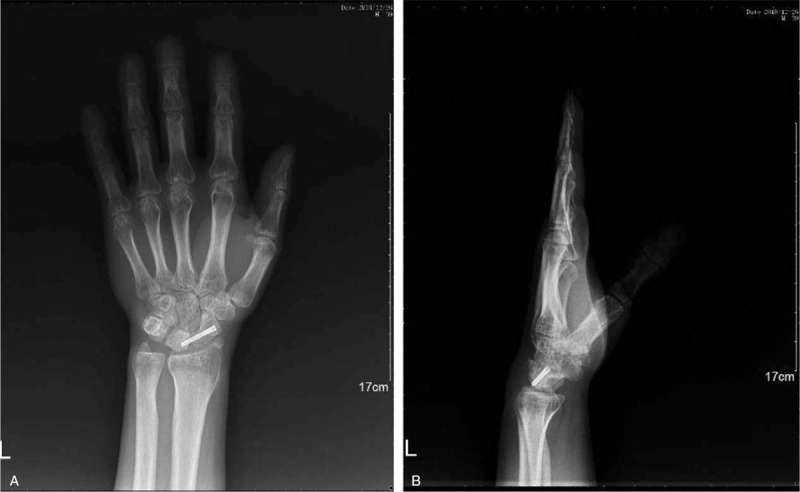
The patient was followed up for 1 year and showed wrist function recovered well; radiographic examination showed no lunate dislocation and successful scapholunate bony fusion. A satisfactory outcome was achieved.
The case study presented here provide evidence that performing an effective first-stage scapholunate fusion is recommended to achieve better therapeutic outcomes for a chronic lunate dislocation. Furthermore, this approach led to a good long-term clinical outcome in our case.
月骨脱位是一种由高能创伤导致的罕见腕部损伤,预后不佳常与初始诊断延误有关。迄今为止,对于此类病例的有效治疗方案尚无共识。
在此,我们描述一名36岁男性患者的病例,该患者在诊断延误超过7周后出现月骨脱位,并进一步阐明其诊断和治疗方法。
确诊为慢性月骨脱位。
患者在臂丛神经麻醉下采用背侧入路进行复位治疗。复位后,进行无头加压螺钉固定以进行一期舟月融合,并使用克氏针固定月骨-三角骨-钩骨以稳定远近侧腕骨排。
对患者进行了1年的随访,结果显示腕关节功能恢复良好;影像学检查显示无月骨脱位且舟月骨骨性融合成功。取得了满意的结果。
此处呈现的病例研究证明,对于慢性月骨脱位,建议进行有效的一期舟月融合以获得更好的治疗效果。此外,在我们的病例中,这种方法带来了良好的长期临床结果。