Institute of Microbiology, University Hospital Center and University of Lausanne, Lausanne, Switzerland.
Laboratory for Molecular Infection Medicine Sweden (MIMS), Department of Molecular Biology, Umeå University, Umeå, Sweden.
mBio. 2019 Jul 16;10(4):e01128-19. doi: 10.1128/mBio.01128-19.
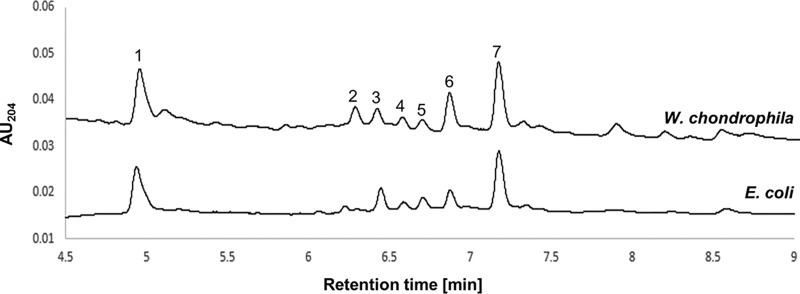
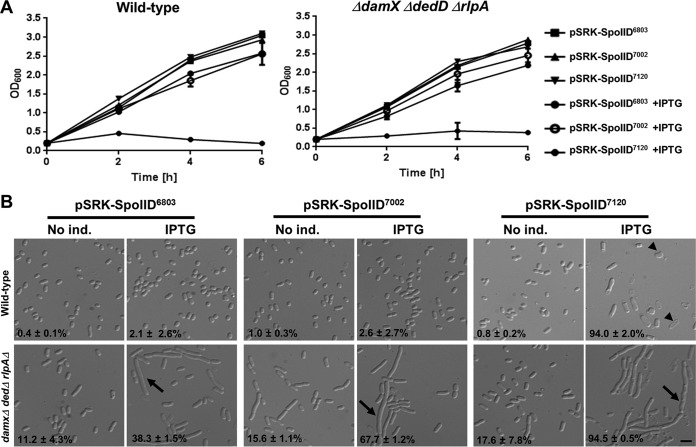
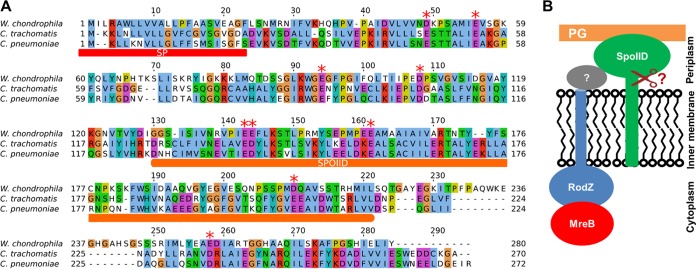
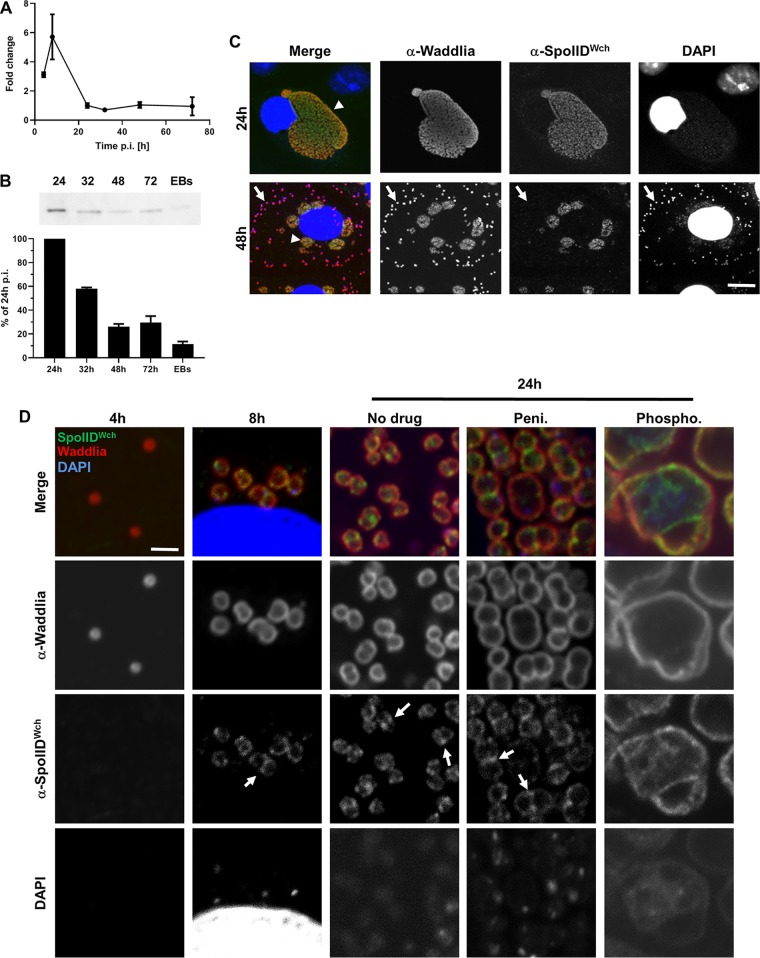
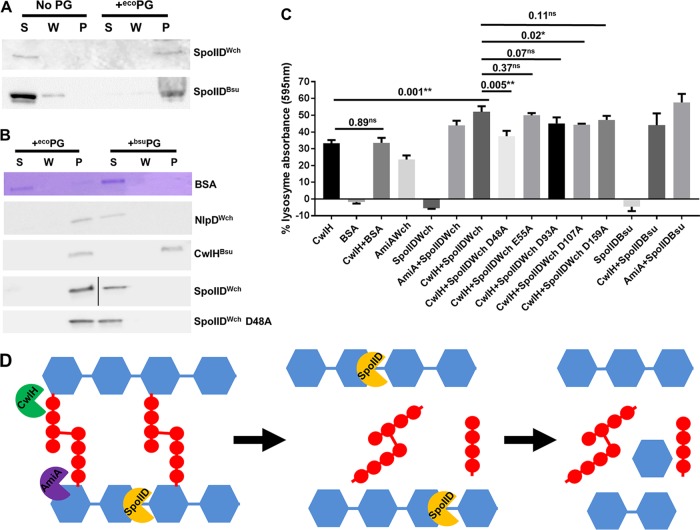
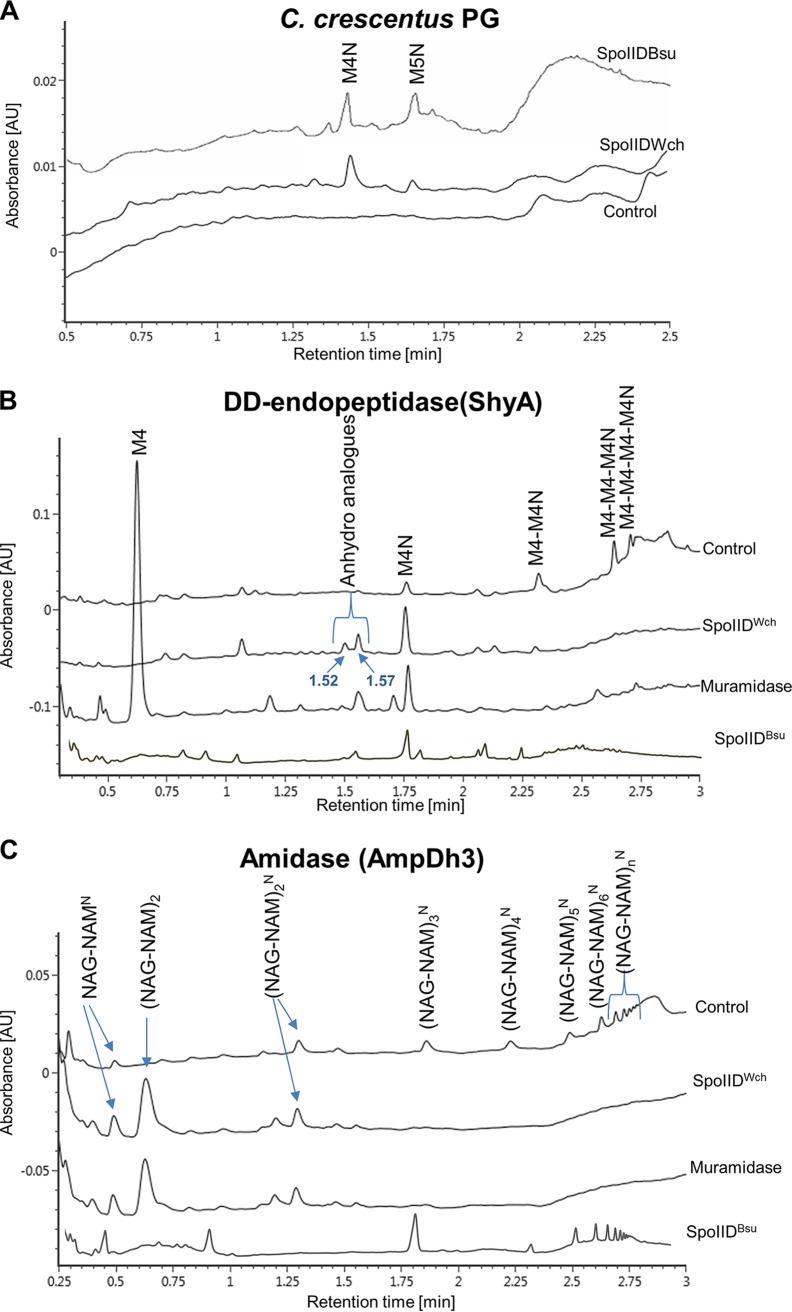
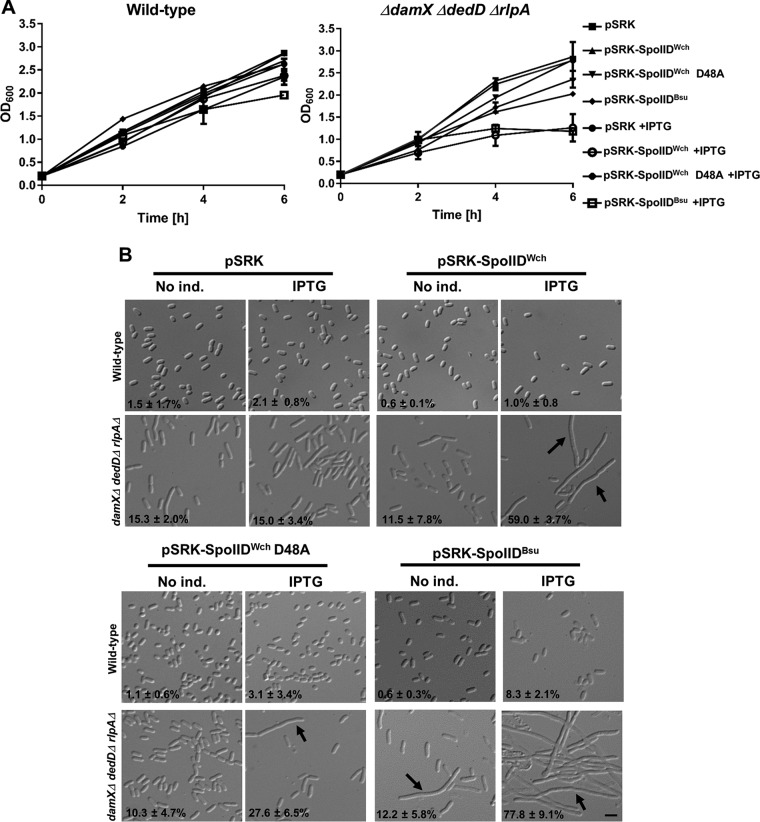
species are obligate intracellular bacteria lacking a classical peptidoglycan sacculus but relying on peptidoglycan synthesis for cytokinesis. While septal peptidoglycan biosynthesis seems to be regulated by MreB actin and its membrane anchor RodZ rather than FtsZ tubulin in , the mechanism of peptidoglycan remodeling is poorly understood. An amidase conserved in is able to cleave peptide stems in peptidoglycan, but it is not clear how peptidoglycan glycan strands are cleaved since no classical lytic transglycosylase is encoded in chlamydial genomes. However, a protein containing a SpoIID domain, known to possess transglycosylase activity in , is conserved in We show here that the SpoIID homologue of the -related pathogen is a septal peptidoglycan-binding protein. Moreover, we demonstrate that SpoIID acts as a lytic transglycosylase on peptidoglycan and as a muramidase on denuded glycan strands As SpoIID-like proteins are widespread in nonsporulating bacteria, SpoIID might commonly be a septal peptidoglycan remodeling protein in bacteria, including obligate intracellular pathogens, and thus might represent a promising drug target. species are obligate intracellular bacteria and important human pathogens that have a minimal division machinery lacking the proteins that are essential for bacterial division in other species, such as FtsZ. Chlamydial division requires synthesis of peptidoglycan, which forms a ring at the division septum and is rapidly turned over. However, little is known of peptidoglycan degradation, because many peptidoglycan-degrading enzymes are not encoded by chlamydial genomes. Here we show that an homologue of SpoIID, a peptidoglycan-degrading enzyme involved in sporulation of bacteria such as , is expressed in , localizes at the division septum, and degrades peptidoglycan , indicating that SpoIID is not only involved in sporulation but also likely implicated in division of some bacteria.
种是专性细胞内细菌,缺乏经典的肽聚糖囊,但依赖肽聚糖合成进行细胞分裂。虽然在 中,隔膜肽聚糖生物合成似乎受到 MreB 肌动蛋白及其膜锚 RodZ 的调节,而不是 FtsZ 微管蛋白,但肽聚糖重塑的机制知之甚少。在 中保守的酰胺酶能够切割肽聚糖中的肽主干,但由于在衣原体基因组中没有编码经典的裂解转糖基酶,因此不清楚如何切割肽聚糖聚糖链。然而,在 中含有 SpoIID 结构域的蛋白被保守,已知在 中具有转糖基酶活性,在 中也被保守。我们在这里表明,与 相关病原体 的 SpoIID 同源物是一种隔膜肽聚糖结合蛋白。此外,我们证明 SpoIID 在肽聚糖上作为裂解转糖基酶,在裸露的聚糖链上作为胞壁质酶发挥作用。由于 SpoIID 样蛋白在非孢子形成细菌中广泛存在,因此 SpoIID 可能通常是细菌中隔膜肽聚糖重塑蛋白,包括专性细胞内病原体,因此可能是一个有前途的药物靶点。种是专性细胞内细菌和重要的人类病原体,它们的分裂机制很简单,缺乏其他物种中细菌分裂所必需的蛋白质,如 FtsZ。衣原体的分裂需要肽聚糖的合成,肽聚糖在分裂隔膜处形成一个环,并迅速被替换。然而,由于许多肽聚糖降解酶不是衣原体基因组编码的,因此对肽聚糖的降解知之甚少。在这里,我们表明,一种参与细菌如 孢子形成的 SpoIID 同源物,在 中表达,定位于分裂隔膜,并降解肽聚糖,表明 SpoIID 不仅参与孢子形成,而且可能参与某些细菌的分裂。