Theoretical Biology, Department of Physics, Chemistry and Biology, Linköping University, 581 83, Linköping, Sweden.
Department of Mathematics (MAI)/Optimization (OPT), Linköping University, 581 83, Linköping, Sweden.
Sci Rep. 2019 Jul 16;9(1):10264. doi: 10.1038/s41598-019-46706-7.
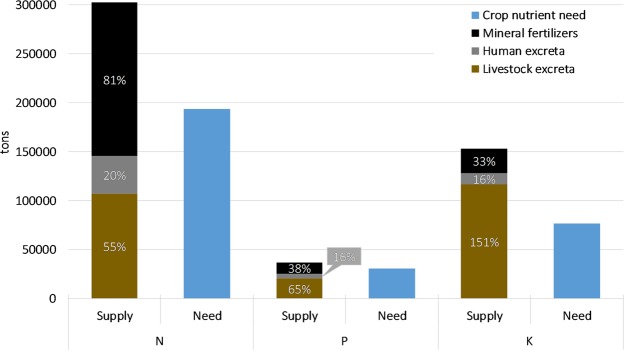
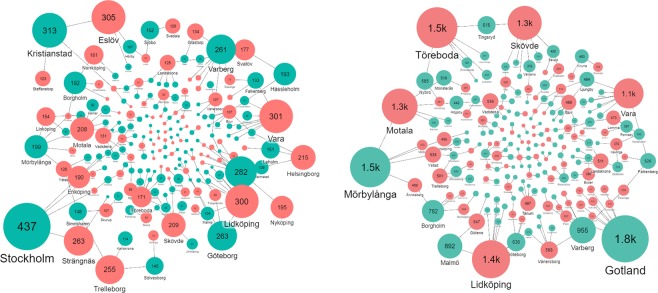
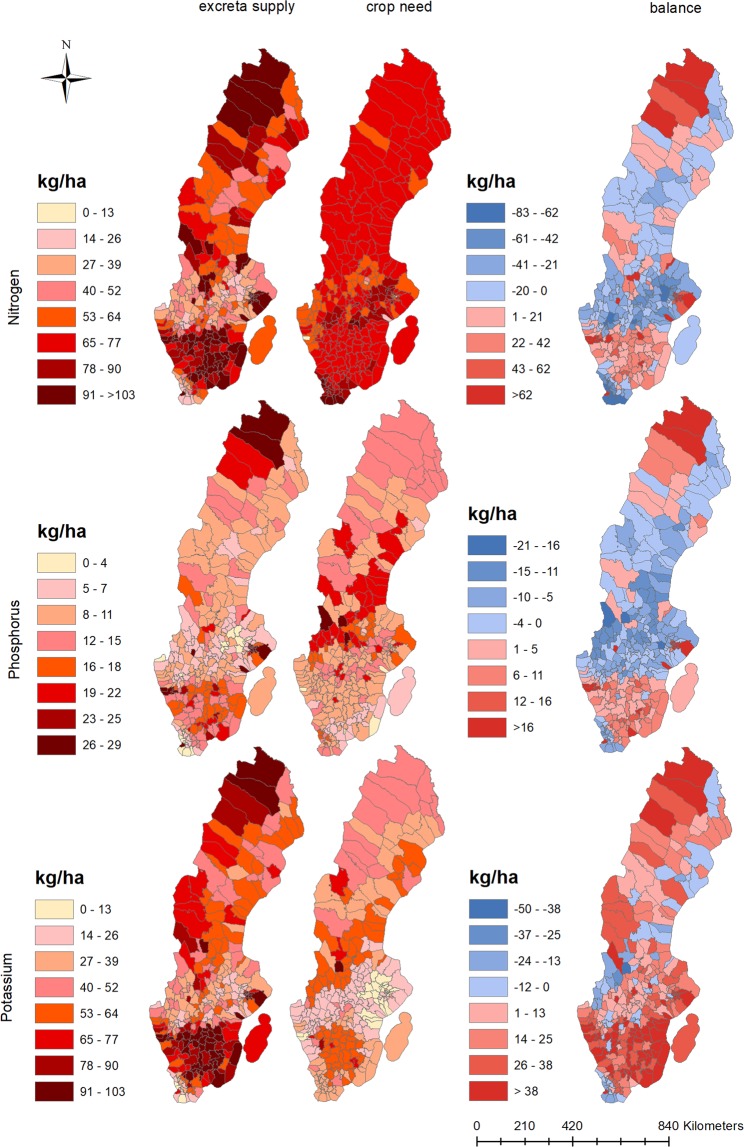
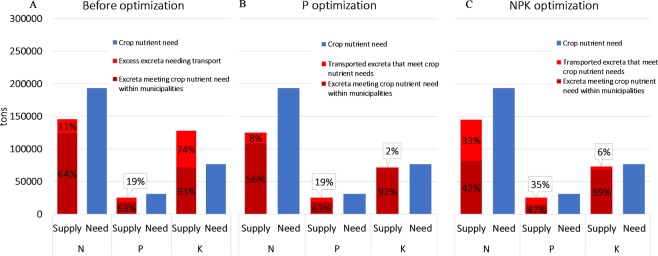
Increased recycling of nutrient-rich organic waste to meet crop nutrient needs is an essential component of a more sustainable food system. However, agricultural specialization continues to pose a significant challenge to balancing crop nutrient needs and the nutrient supply from animal manure and human excreta locally. For Sweden, this study found that recycling all excreta (in 2007) could meet up to 75% of crop nitrogen and 81% of phosphorus needs, but that this would exceed crop potassium needs by 51%. Recycling excreta within municipalities could meet 63% of crop P nutrient needs, but large regional differences and imbalances need to be corrected to avoid over or under fertilizing. Over 50% of the total nitrogen and phosphorus in excreta is contained in just 40% of municipalities, and those have a surplus of excreta nutrients compared to crop needs. Reallocation of surpluses (nationally optimized for phosphorus) towards deficit municipalities, would cost 192 million USD (for 24 079 km of truck travel). This is 3.7 times more than the total NPK fertilizer value being transported. These results indicate that Sweden could reduce its dependence on synthetic fertilizers through investments in excreta recycling, but this would likely require valuing also other recycling benefits.
增加对富营养有机废物的再循环,以满足作物养分需求,是更可持续粮食系统的重要组成部分。然而,农业专业化仍然对平衡作物养分需求与动物粪便和人类排泄物的养分供应带来重大挑战。本研究发现,在瑞典,回收所有排泄物(在 2007 年)可满足高达 75%的作物氮需求和 81%的磷需求,但这将使作物钾需求增加 51%。在市一级内对排泄物进行再循环,可满足 63%的作物磷养分需求,但需要纠正较大的区域差异和不平衡,以避免施肥过多或过少。排泄物中超过 50%的氮和磷仅包含在 40%的市中,这些市的排泄物养分有盈余,与作物需求相比。将盈余(根据磷进行全国优化分配)再分配到有赤字的市,将花费 1.92 亿美元(24079 公里的卡车运输)。这是运输的总氮磷钾肥料价值的 3.7 倍。这些结果表明,瑞典可以通过投资排泄物再循环来减少对合成肥料的依赖,但这可能需要重视其他回收效益。