Cahill Christina R, Leach Justin M, McClure Leslie A, Irvin Marguerite Ryan, Zakai Neil A, Naik Rakhi, Unverzagt Frederick, Wadley Virginia G, Hyacinth Hyacinth I, Manly Jennifer, Judd Suzanne E, Winkler Cheryl, Cushman Mary
Larner College of Medicine at the University of Vermont, Burlington, VT, United States of America.
Department of Biostatistics, University of Alabama at Birmingham, Birmingham, AL, United States of America.
EClinicalMedicine. 2019 May 24;11:27-33. doi: 10.1016/j.eclinm.2019.05.003. eCollection 2019 May-Jun.
Sickle cell anemia may be associated with cognitive dysfunction, and some complications of sickle cell anemia might affect those with sickle cell trait (SCT), so we hypothesized that SCT is a risk factor for cognitive impairment.
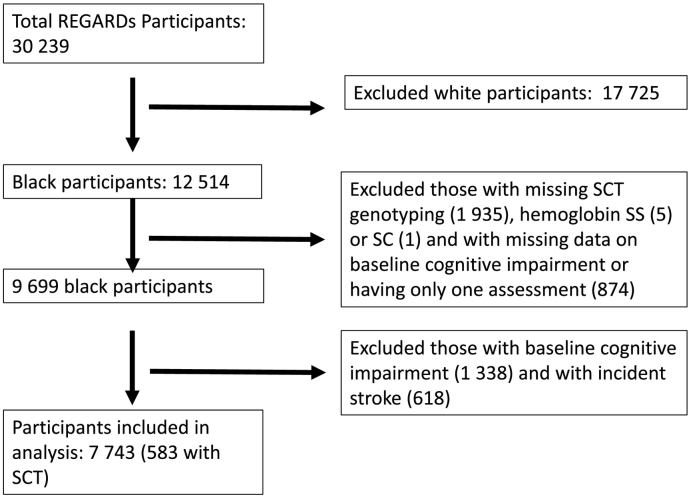
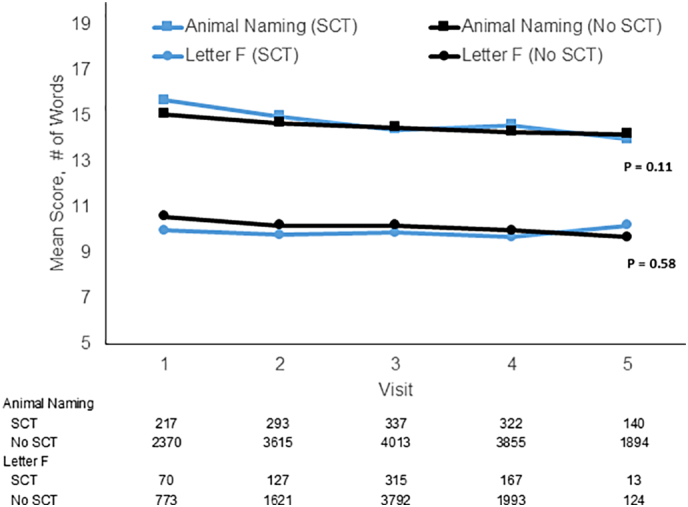
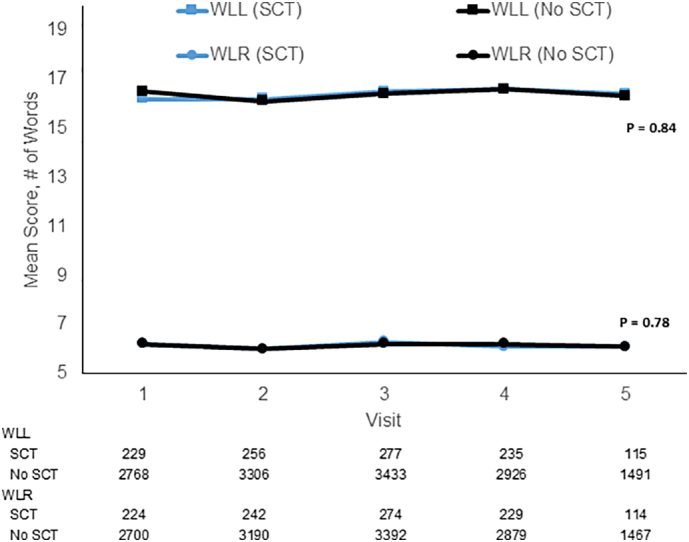
The Reasons for Geographic and Racial Differences in Stroke (REGARDS) study enrolled a national cohort of 30,239 white and black Americans from 2003 to 7, who are followed every 6 months. Baseline and annual global cognitive function testing used the Six-Item Screener (SIS), a validated instrument (scores range 0-6; ≤ 4 indicates cognitive impairment). Participants with baseline cognitive impairment and whites were excluded. Logistic regression was used to calculate the association of SCT with incident cognitive impairment, adjusted for risk factors. Linear mixed models assessed multivariable-adjusted change in test scores on a biennially administered 3-test battery measuring learning, memory, and semantic and phonemic fluency.
Among 7743 participants followed for a median of 7·1 years, 85 of 583 participants with SCT (14·6%) developed incident cognitive impairment compared to 902 of 7160 (12·6%) without SCT. In univariate analysis, the odds ratio (OR) of incident cognitive impairment was 1·18 (95% CI: 0·93, 1·51) for those with SCT vs. those without. Adjustment did not impact the OR. There was no difference in change on 3-test battery scores by SCT status (all > 0·11).
In this prospective cohort study of black Americans, SCT was not associated with incident cognitive impairment or decline in test scores of learning, memory and executive function.
National Institutes of Health, American Society of Hematology.
镰状细胞贫血可能与认知功能障碍有关,镰状细胞贫血的一些并发症可能会影响镰状细胞性状(SCT)携带者,因此我们推测SCT是认知障碍的一个危险因素。
中风地理和种族差异原因(REGARDS)研究纳入了2003年至2007年的30239名美国白人和黑人组成的全国队列,每6个月进行一次随访。基线和年度全球认知功能测试使用六项筛查器(SIS),这是一种经过验证的工具(分数范围为0 - 6;≤4表示认知障碍)。排除基线认知障碍参与者和白人。使用逻辑回归计算SCT与新发认知障碍的关联,并对危险因素进行校正。线性混合模型评估了在每两年进行一次的测量学习、记忆以及语义和音素流畅性的三项测试组合中,多变量校正后的测试分数变化。
在中位随访7.1年的7743名参与者中,583名SCT参与者中有85名(14.6%)出现新发认知障碍,而7160名非SCT参与者中有902名(12.6%)出现新发认知障碍。在单变量分析中,SCT参与者发生新发认知障碍的比值比(OR)为1.18(95%置信区间:0.93,1.51),与非SCT参与者相比。校正后并未影响OR。SCT状态对三项测试组合分数的变化没有差异(所有P>0.11)。
在这项针对美国黑人的前瞻性队列研究中,SCT与新发认知障碍或学习、记忆及执行功能测试分数下降无关。
美国国立卫生研究院、美国血液学会。