Molecular Neurobiology Laboratory, The Salk Institute for Biological Studies, 10010 North Torrey Pines Road, La Jolla, CA 92037, USA.
Molecular Neurobiology Laboratory, The Salk Institute for Biological Studies, 10010 North Torrey Pines Road, La Jolla, CA 92037, USA; Biology Graduate Program, Division of Biological Sciences, University of California, San Diego, 9500 Gilman Drive, La Jolla, CA 92093, USA.
Cell Rep. 2019 Jul 16;28(3):625-639.e6. doi: 10.1016/j.celrep.2019.06.033.
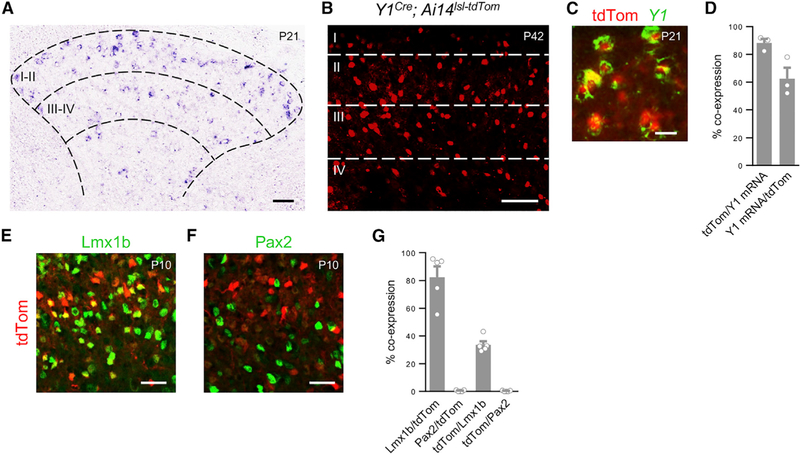
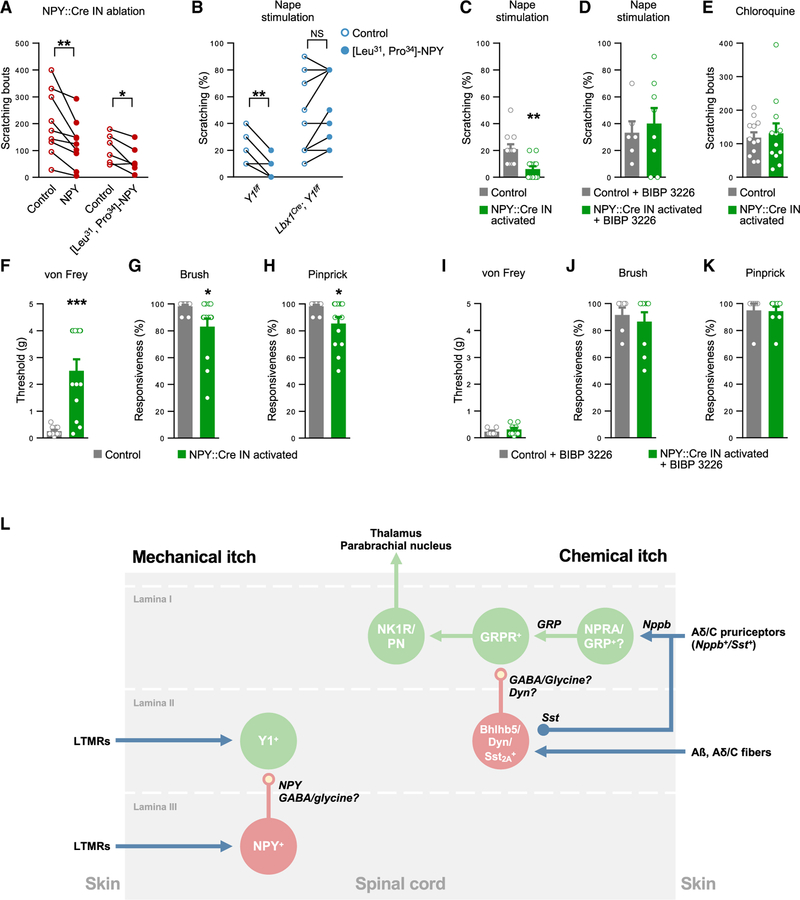
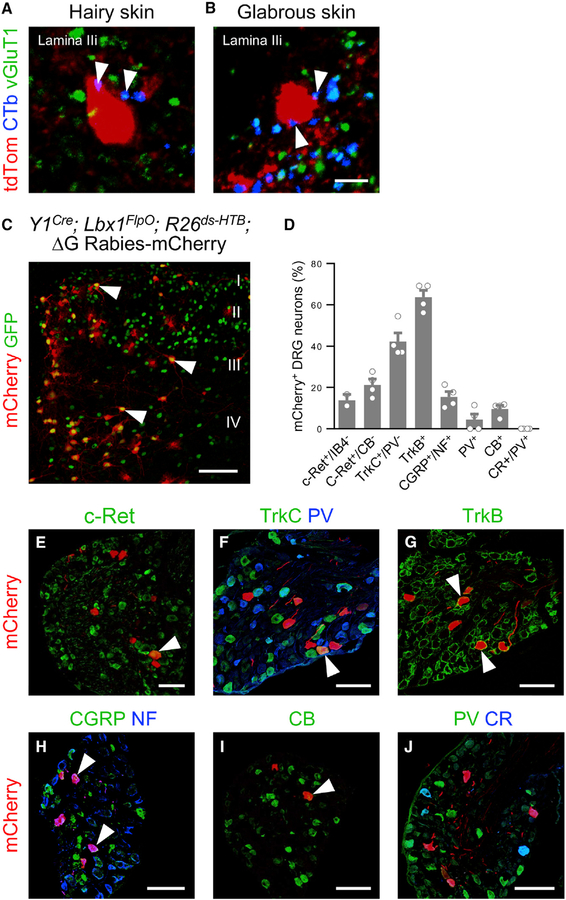
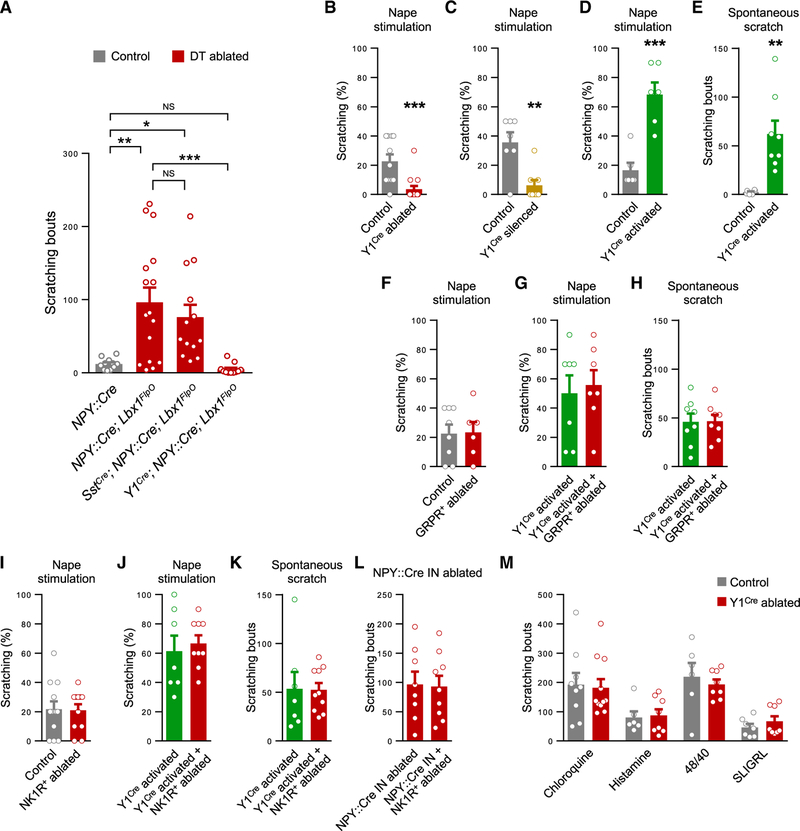
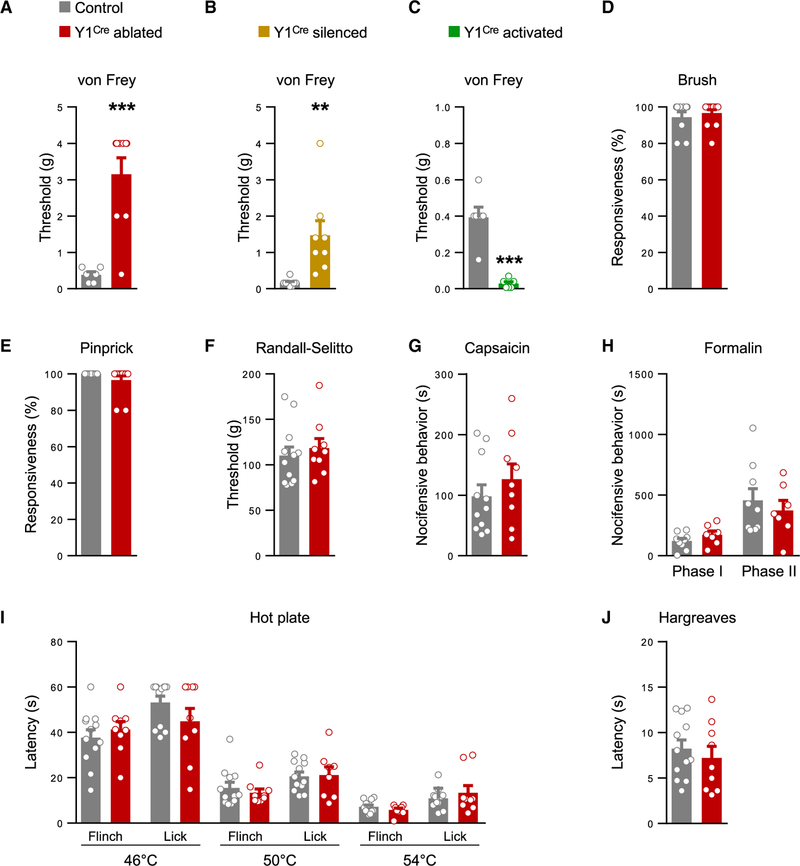
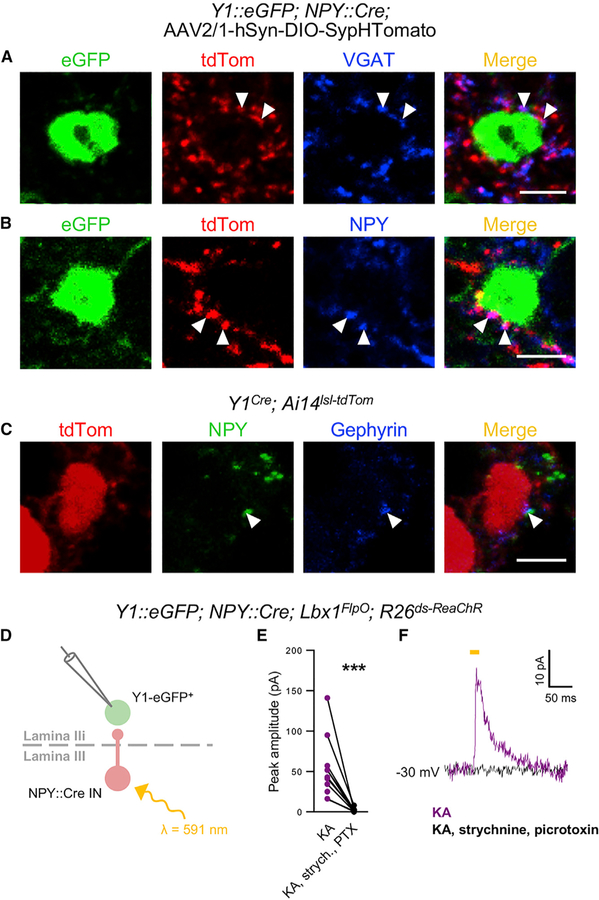
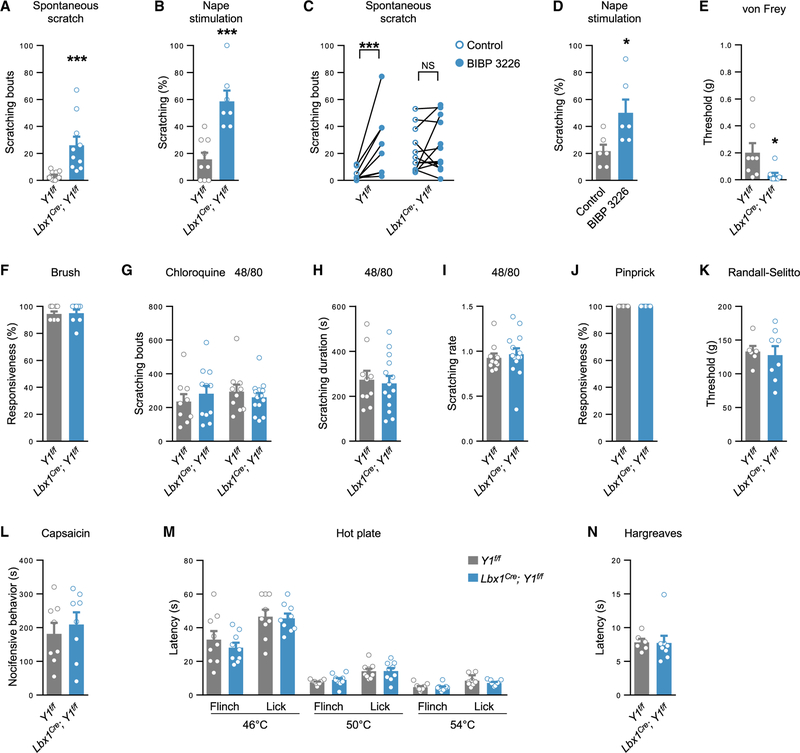
Acute itch can be generated by either chemical or mechanical stimuli, which activate separate pathways in the periphery and spinal cord. While substantial progress has been made in mapping the transmission pathway for chemical itch, the central pathway for mechanical itch remains obscure. Using complementary genetic and pharmacological manipulations, we show that excitatory neurons marked by the expression of the neuropeptide Y1 receptor (Y1 neurons) form an essential pathway in the dorsal spinal cord for the transmission of mechanical but not chemical itch. Ablating or silencing the Y1 neurons abrogates mechanical itch, while chemogenetic activation induces scratching. Moreover, using Y1 conditional knockout mice, we demonstrate that endogenous neuropeptide Y (NPY) acts via dorsal-horn Y1-expressing neurons to suppress light punctate touch and mechanical itch stimuli. NPY-Y1 signaling thus regulates the transmission of innocuous tactile information by establishing biologically relevant thresholds for touch discrimination and mechanical itch reflexes.
急性瘙痒可由化学或机械刺激引起,这些刺激会激活外周和脊髓中的不同途径。虽然在绘制化学瘙痒的传递途径方面已经取得了相当大的进展,但机械瘙痒的中枢途径仍然不清楚。使用互补的遗传和药理学操作,我们表明,由神经肽 Y1 受体(Y1 神经元)表达标记的兴奋性神经元在背侧脊髓中形成了机械瘙痒但不是化学瘙痒传递的必需途径。消融或沉默 Y1 神经元会消除机械瘙痒,而化学遗传激活会引起搔抓。此外,使用 Y1 条件性敲除小鼠,我们证明内源性神经肽 Y(NPY)通过背角表达 Y1 的神经元起作用,以抑制轻点状触摸和机械瘙痒刺激。因此,NPY-Y1 信号通过为触摸辨别和机械瘙痒反射建立生物学相关的阈值来调节无害触觉信息的传递。