Laboratory of Viral Hepatitis, Oswaldo Cruz Institute, FIOCRUZ, Rio de Janeiro, Brazil.
Molecular Virology Laboratory, Oswaldo Cruz Institute, FIOCRUZ, Rio de Janeiro, Brazil.
BMC Infect Dis. 2019 Jul 17;19(1):632. doi: 10.1186/s12879-019-4183-0.
Hepatitis B virus (HBV) testing in oral fluid samples may provide advantages in diagnosis, screening or prevalence studies, especially among individuals with venous access difficulties. This study aims to optimize one commercially available assay for detecting total anti-HBc marker in oral fluid samples and to evaluate its utility under real life conditions in different settings for the purposes of prevalence and diagnostic studies.
Oral fluid was collected using a Salivette device and some parameters were initially evaluated: type of elution buffer and sample volume. Thereafter, the utility of oral fluid samples for detection of anti-HBc was evaluated in real life conditions in which, 1296 individuals gave serum and oral fluid samples. All serum samples were submitted to commercial EIAs to detect total anti-HBc, according to the manufacturer's instructions and oral fluid samples according to previous optimization.
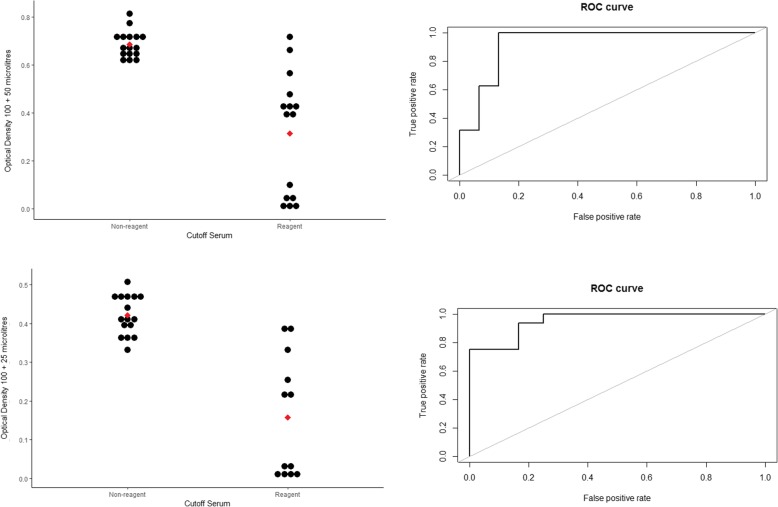
In optimization evaluation, PBS/BSA 0.5% and 100 μL of oral fluid (volume was two-fold increased compared to serum in EIA) were chosen as transport buffer and sample volume. In the field study, anti-HBc was detected in 211 out of 1296 serum samples giving overall oral fluid sensitivity of 52.6% and specificity of 96%. Concordance was higher in ambulatory setting (67.7) compared to general population (31.8). Mean ± standard deviation values of optical density/cutoff (OD/CO) in serum samples were higher in false-negative oral fluid samples than those seen in true positive samples. Sensitivity was higher in those presenting active infection compared to anti-HBc isolate and past infection. Sensitivity also increased in the ambulatory group when HCV individuals were excluded.
It was possible to optimize a commercial EIA for detecting anti-HBc in oral fluid samples and where the highest concordance was found in ambulatory settings and among individuals with active infection.
在口腔液样本中检测乙型肝炎病毒(HBV)可能在诊断、筛查或流行率研究中具有优势,特别是在静脉通路困难的个体中。本研究旨在优化一种商业上可用于检测口腔液样本中总抗-HBc 标志物的检测方法,并评估其在不同环境下实际应用的实用性,以进行流行率和诊断研究。
使用 Salivette 装置采集口腔液,并对初始评估的一些参数进行评估:洗脱缓冲液的类型和样本量。此后,在实际条件下评估口腔液样本用于检测抗-HBc 的实用性,其中 1296 名个体提供了血清和口腔液样本。所有血清样本均根据制造商的说明,采用商业 ELISA 检测总抗-HBc,而口腔液样本则根据先前的优化进行检测。
在优化评估中,选择 PBS/BSA 0.5%和 100μL 口腔液(与 ELISA 中的血清相比,样本量增加了一倍)作为运输缓冲液和样本量。在现场研究中,在 1296 份血清样本中检测到 211 份抗-HBc,总口腔液敏感性为 52.6%,特异性为 96%。在门诊环境中的一致性(67.7%)高于一般人群(31.8%)。血清样本的光密度/临界值(OD/CO)的平均值±标准差在假阴性口腔液样本中高于真阳性样本。与抗-HBc 分离株和既往感染相比,在活动性感染患者中敏感性更高。当排除 HCV 个体时,门诊组的敏感性也增加。
可以优化一种商业 ELISA 用于检测口腔液样本中的抗-HBc,在门诊环境中和活动性感染个体中一致性最高。