Department of Physiology, Amsterdam UMC, Vrije Universiteit Amsterdam, Amsterdam Cardiovascular Sciences, 1081 HV Amsterdam, The Netherlands.
Sydney Heart Bank, Discipline of Anatomy, Bosch Institute, University of Sydney, Sydney 2006, Australia.
Cells. 2019 Jul 18;8(7):741. doi: 10.3390/cells8070741.
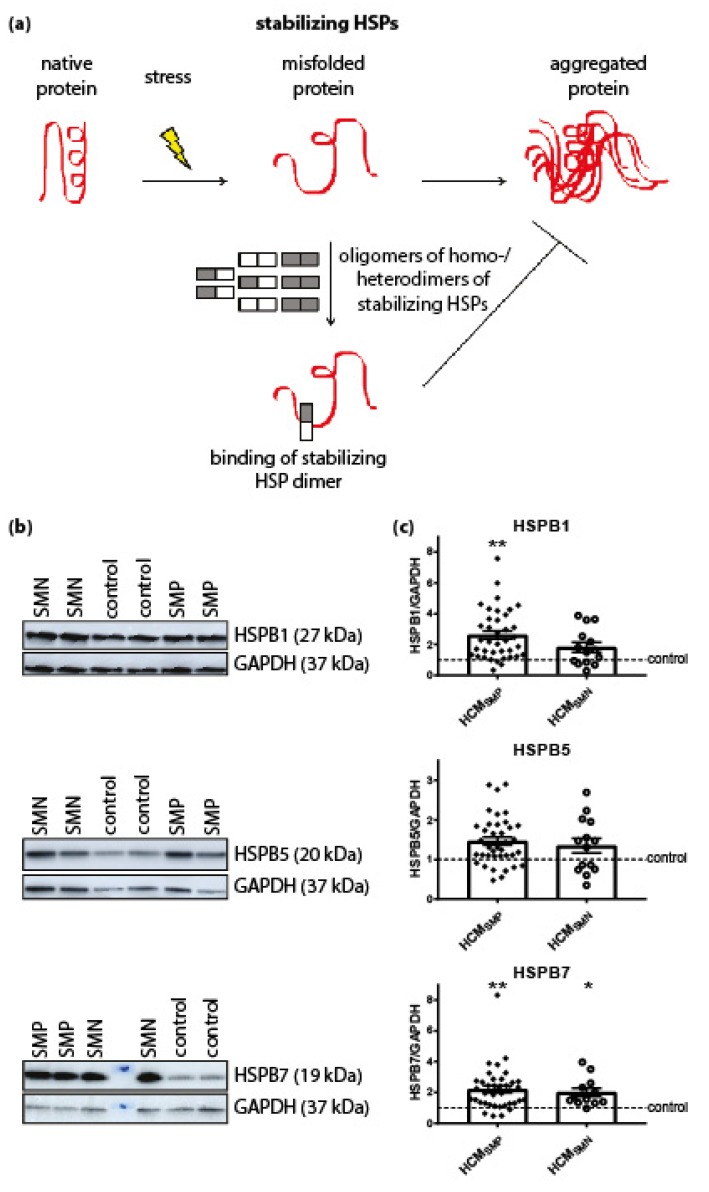
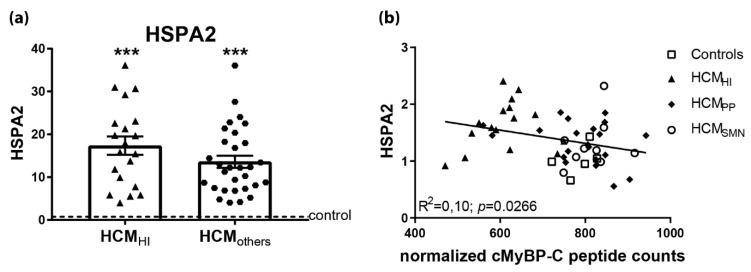
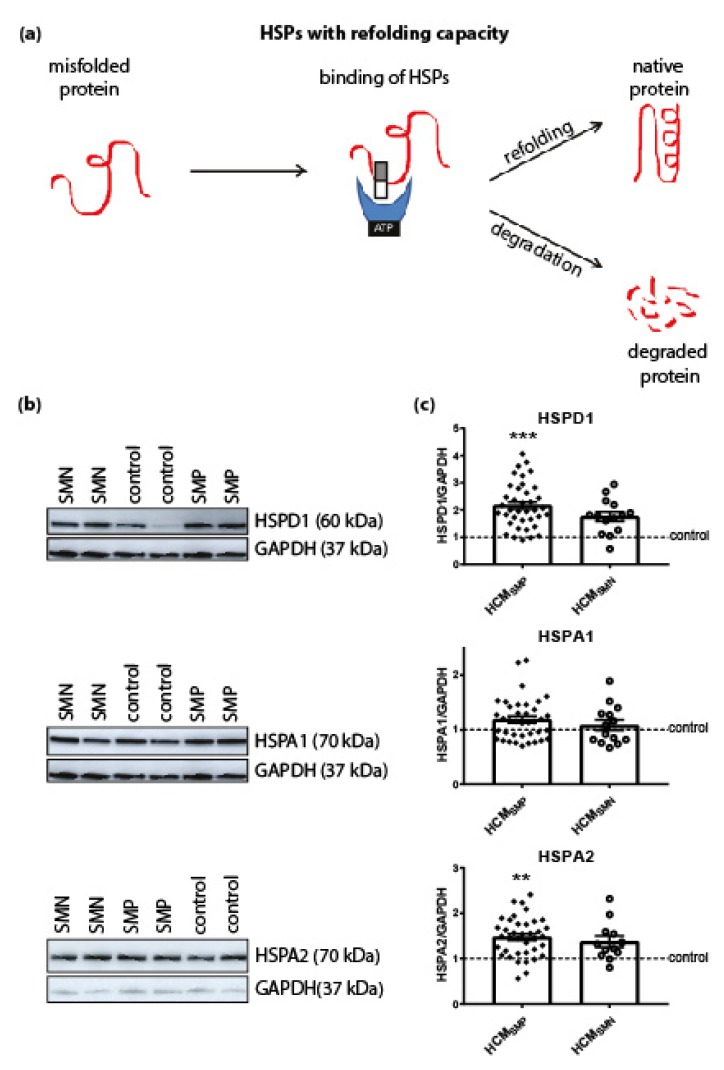
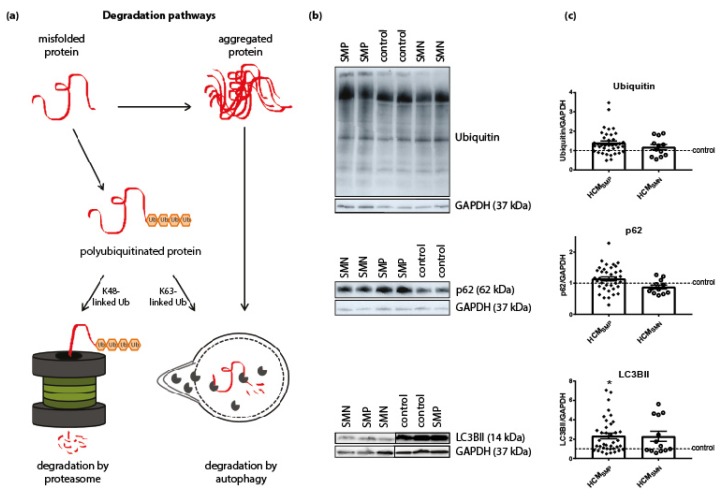
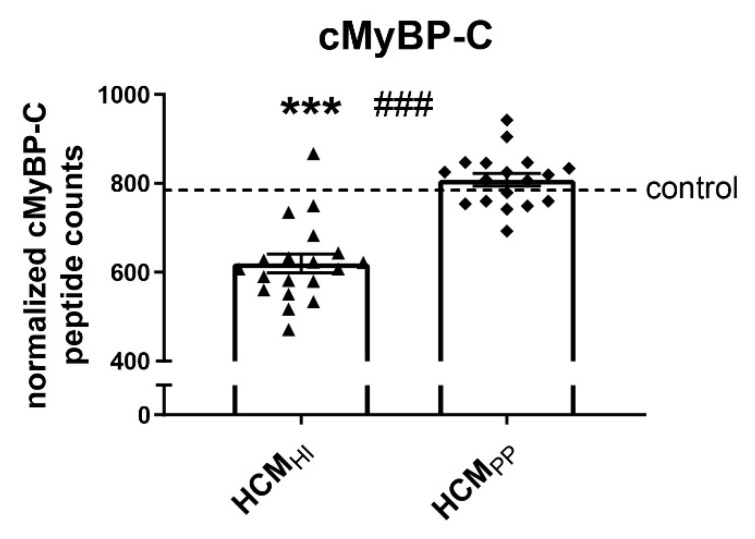
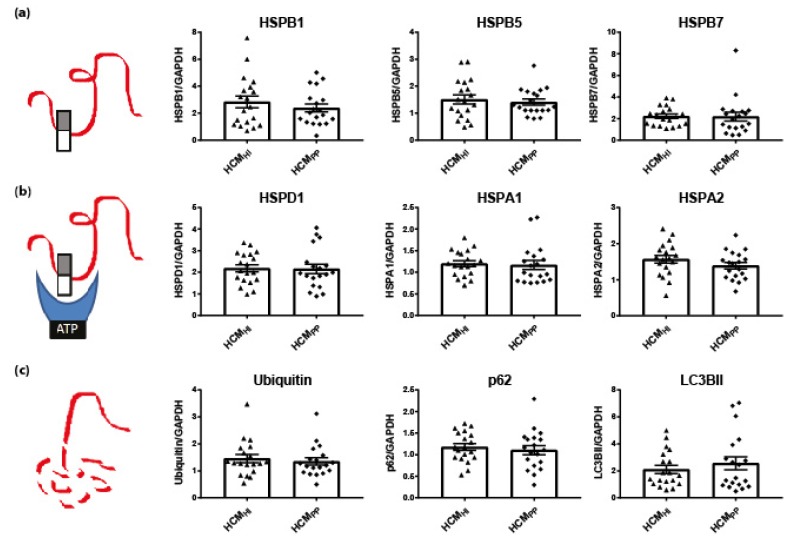
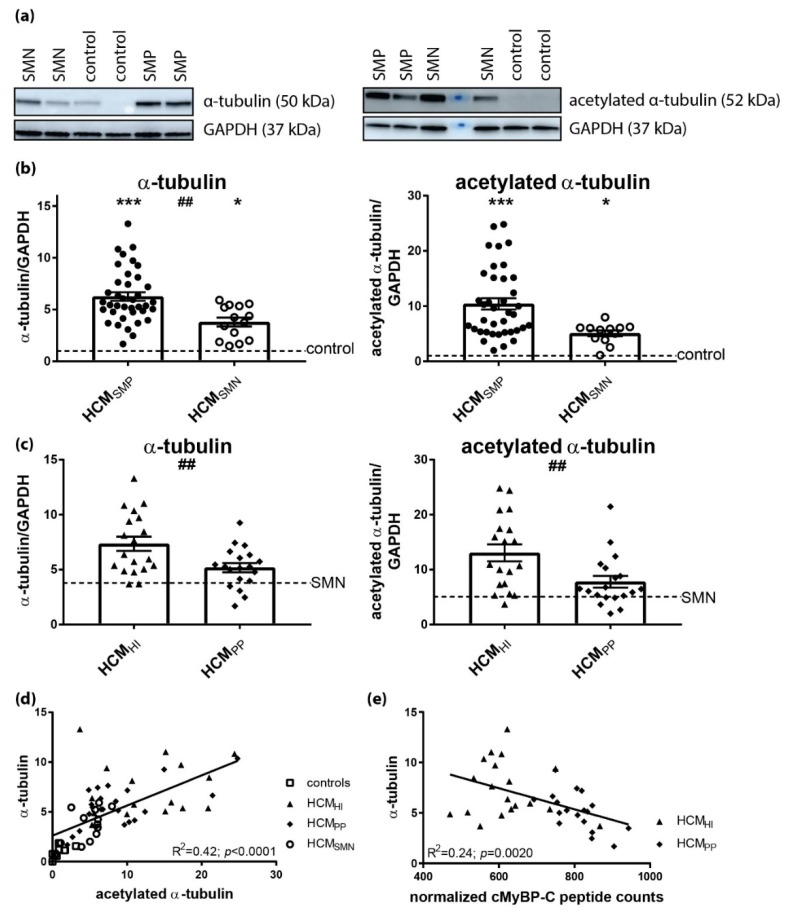
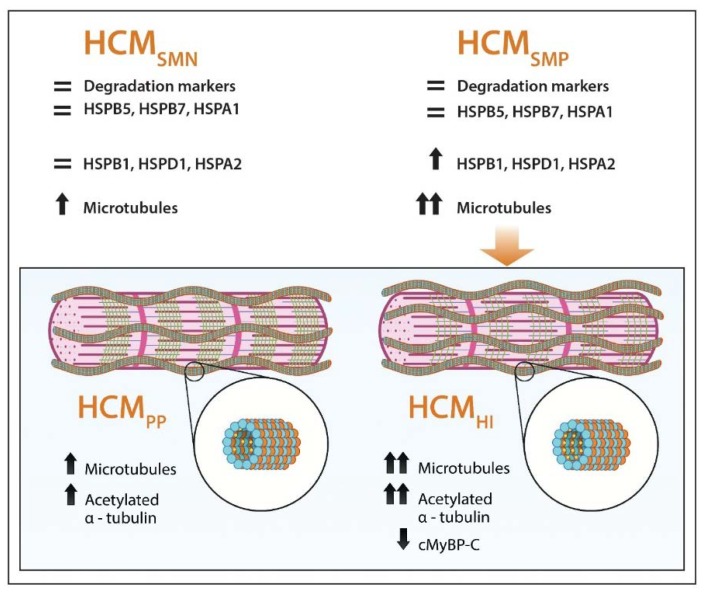
Hypertrophic cardiomyopathy (HCM) is the most common inherited cardiac disorder. It is mainly caused by mutations in genes encoding sarcomere proteins. Mutant forms of these highly abundant proteins likely stress the protein quality control (PQC) system of cardiomyocytes. The PQC system, together with a functional microtubule network, maintains proteostasis. We compared left ventricular (LV) tissue of nine donors (controls) with 38 sarcomere mutation-positive (HCM) and 14 sarcomere mutation-negative (HCM) patients to define HCM and mutation-specific changes in PQC. Mutations in HCM result in poison polypeptides or reduced protein levels (haploinsufficiency, HI). The main findings were 1) several key PQC players were more abundant in HCM compared to controls, 2) after correction for sex and age, stabilizing heat shock protein (HSP)B1, and refolding, HSPD1 and HSPA2 were increased in HCM compared to controls, 3) α-tubulin and acetylated α-tubulin levels were higher in HCM compared to controls, especially in HCM, 4) myosin-binding protein-C (cMyBP-C) levels were inversely correlated with α-tubulin, and 5) α-tubulin levels correlated with acetylated α-tubulin and HSPs. Overall, carrying a mutation affects PQC and α-tubulin acetylation. The haploinsufficiency of cMyBP-C may trigger HSPs and α-tubulin acetylation. Our study indicates that proliferation of the microtubular network may represent a novel pathomechanism in cMyBP-C haploinsufficiency-mediated HCM.
肥厚型心肌病(HCM)是最常见的遗传性心脏病。它主要由编码肌节蛋白的基因突变引起。这些高度丰富的蛋白质的突变形式可能会给心肌细胞的蛋白质质量控制(PQC)系统带来压力。PQC 系统与功能微管网络一起维持蛋白质平衡。我们比较了 9 名供体(对照组)的左心室(LV)组织与 38 名肌节突变阳性(HCM)和 14 名肌节突变阴性(HCM)患者的 LV 组织,以定义 HCM 和突变特异性的 PQC 变化。HCM 中的突变导致毒多肽或蛋白质水平降低(杂合不足,HI)。主要发现包括:1)与对照组相比,几种关键的 PQC 参与者在 HCM 中更为丰富;2)校正性别和年龄后,与对照组相比,稳定热休克蛋白(HSP)B1 和重折叠的 HSPD1 和 HSPA2 在 HCM 中增加;3)与对照组相比,α-微管蛋白和乙酰化α-微管蛋白水平在 HCM 中更高,尤其是在 HCM 中;4)肌球蛋白结合蛋白-C(cMyBP-C)水平与α-微管蛋白呈负相关;5)α-微管蛋白水平与乙酰化α-微管蛋白和 HSPs 相关。总之,携带突变会影响 PQC 和α-微管蛋白乙酰化。cMyBP-C 的杂合不足可能会触发 HSP 和α-微管蛋白乙酰化。我们的研究表明,微管网络的增殖可能代表了 cMyBP-C 杂合不足介导的 HCM 中的一种新的病理机制。