Department of Neurology, University Hospital, Krakow, Poland.
Department of Neurology, School of Medicine, Jagiellonian University, Botaniczna 3, 31-503, Kraków, Poland.
J Neurol. 2019 Nov;266(11):2710-2717. doi: 10.1007/s00415-019-09471-1. Epub 2019 Jul 19.
Delirium is a very common neurobehavioral complication after stroke, but its influence on long-term outcome is not well characterized. The objective of the study was to determine the prognostic significance of delirium for functional status, nursing home admission, and mortality in a large cohort of patients with delirium in the acute phase of stroke assessed 3 and 12 months after stroke.
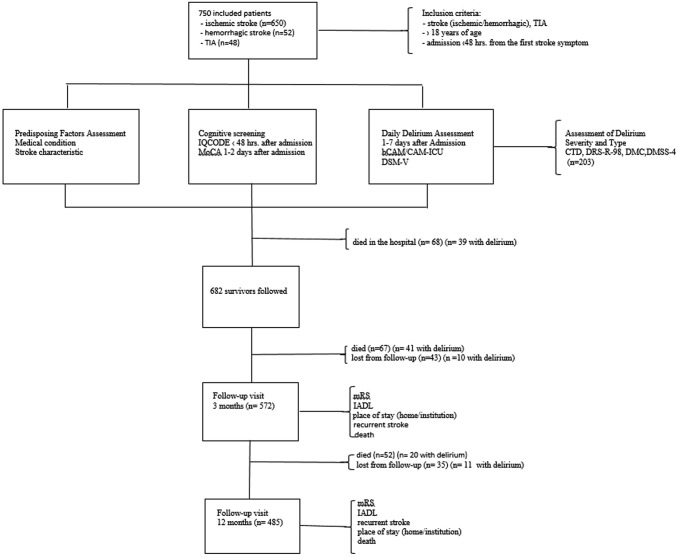
All stroke survivors included in PROPOLIS were followed up (n = 682). Outcome data included: discharge destination, recurrence of stroke, cardiovascular complications, functional activity and mobility, nursing home admission, and mortality.
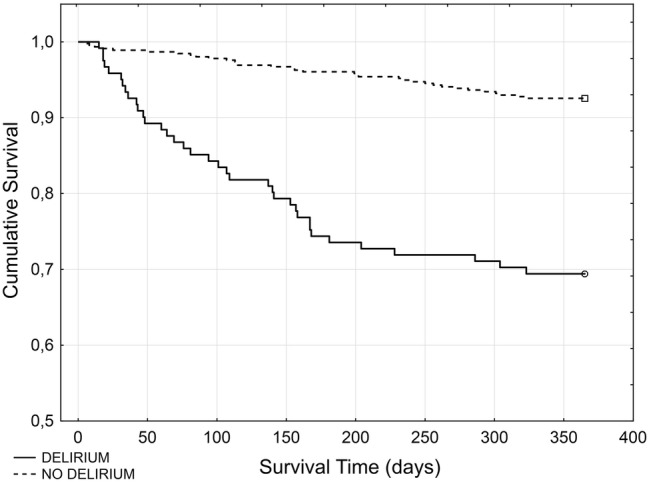
Patients with delirium were discharged to another hospital or nursing home significantly more often than those presenting without delirium. The 3- and 12-month post-stroke mortality rates were higher in delirious patients (OR 6.41 CI 3.76-10.92; p < 0.001 and OR 5.17 CI 3.36-7.96; p < 0.001). When considering 3-month mortality, higher age, modified Rankin Scale prior to admission and temperature between 1 and 3 days after admission, as well delirium, pneumonia and more severe neurological deficits on admission were independent risk factors. For 12-month mortality, the independent risk factors were higher age and modified Rankin Scale post-stroke, delirium, and history of respiratory diseases prior to stroke. Patients with delirium were more likely to live in nursing homes 3 and 12 months after stroke and were more disabled than patients without delirium.
Delirium in acute phase of stroke negatively influences the long-term prognosis. A study addressing the effect of early recognition and treatment of identified modifiable risk factors for adverse long-term outcomes is urgently needed to decrease bad prognosis within this population.
谵妄是中风后非常常见的神经行为并发症,但它对长期预后的影响尚不清楚。本研究的目的是确定谵妄对急性期后 3 个月和 12 个月的大量中风谵妄患者的功能状态、入住疗养院和死亡率的预后意义。
对 PROPOLIS 中纳入的所有中风幸存者进行随访(n=682)。结局数据包括:出院去向、中风复发、心血管并发症、功能活动和移动能力、入住疗养院和死亡率。
有谵妄的患者出院到其他医院或疗养院的比例明显高于没有谵妄的患者。谵妄患者的 3 个月和 12 个月的卒中后死亡率更高(OR 6.41,95%CI 3.76-10.92;p<0.001 和 OR 5.17,95%CI 3.36-7.96;p<0.001)。考虑 3 个月死亡率时,年龄较高、入院前改良 Rankin 量表评分较高、入院后 1-3 天体温较高,以及谵妄、肺炎和入院时更严重的神经功能缺损,是独立的危险因素。对于 12 个月死亡率,独立的危险因素是年龄较高和卒中后改良 Rankin 量表评分、谵妄以及卒中前的呼吸系统疾病史。有谵妄的患者在中风后 3 个月和 12 个月更有可能入住疗养院,而且比没有谵妄的患者残疾程度更高。
中风急性期的谵妄会对长期预后产生负面影响。迫切需要开展研究,以确定早期识别和治疗可改变的不良预后的风险因素,从而降低该人群的不良预后。