Wang Tao, Nimkingratana Puwapong, Smith Christopher A, Cheng Aixin, Hardingham Timothy E, Kimber Susan J
Faculty of Biology, Medicine and Health, University of Manchester, UK.
Wellcome Centre for Cell-Matrix Research, Faculty of Biology, Medicine and Health, University of Manchester, Oxford Road, Manchester M13 9PL, UK.
Stem Cell Res. 2019 Aug;39:101497. doi: 10.1016/j.scr.2019.101497. Epub 2019 Jul 9.
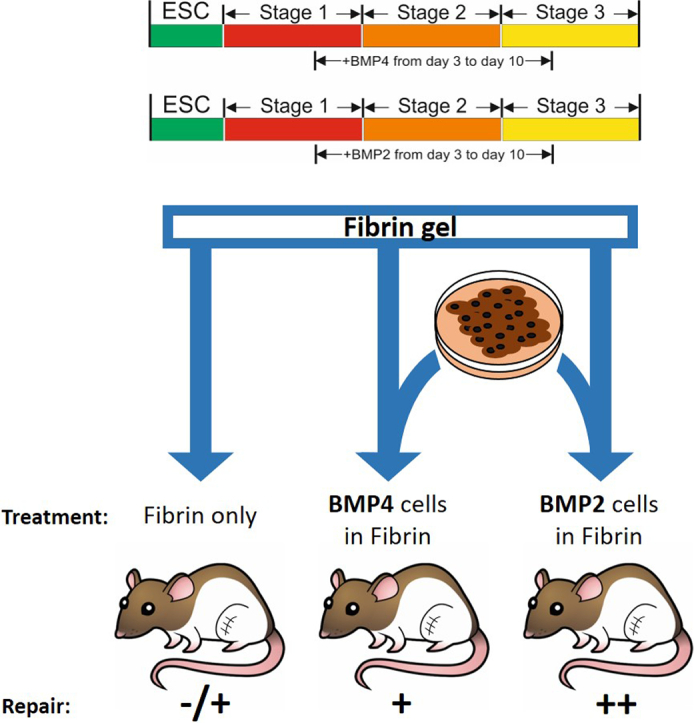
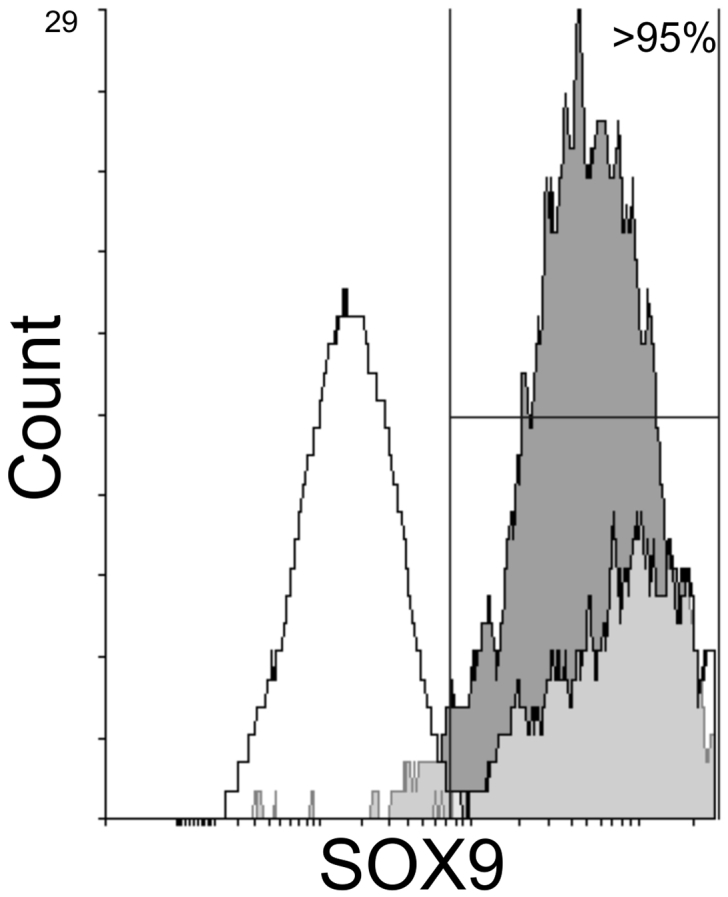
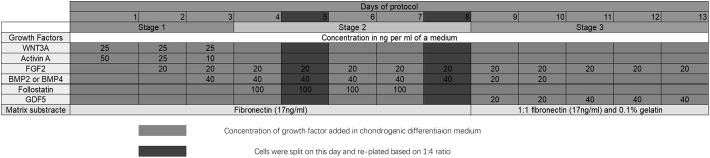
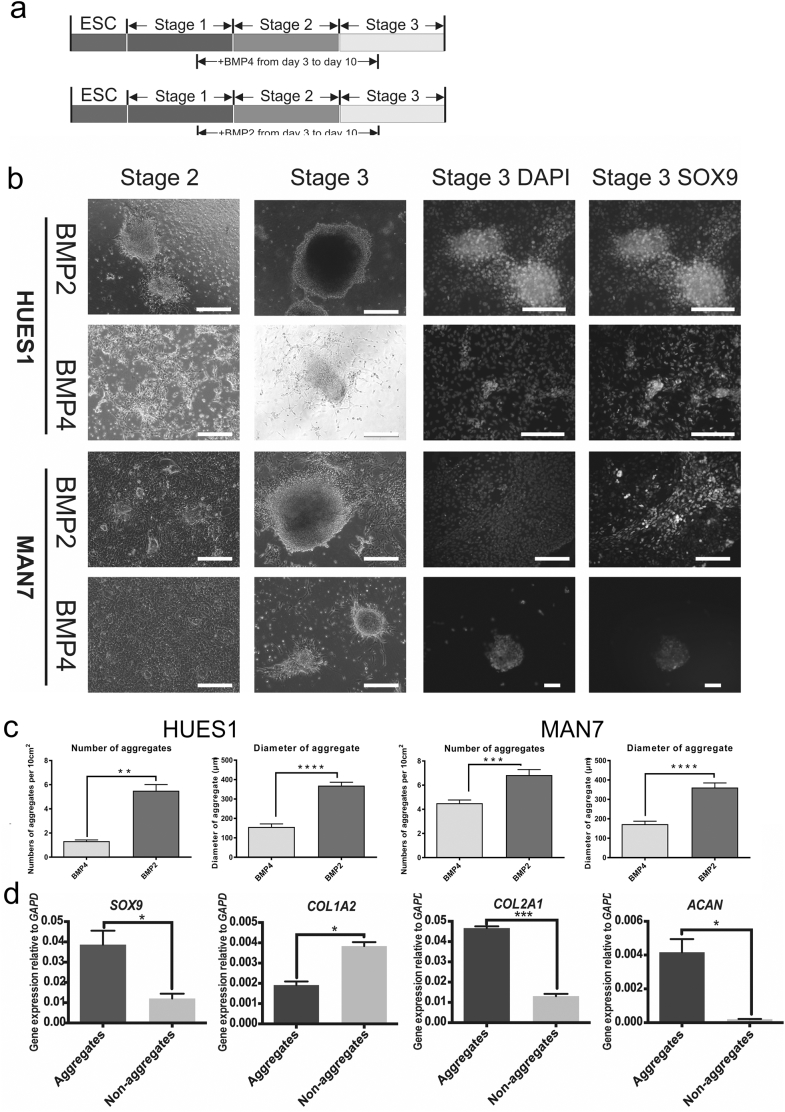
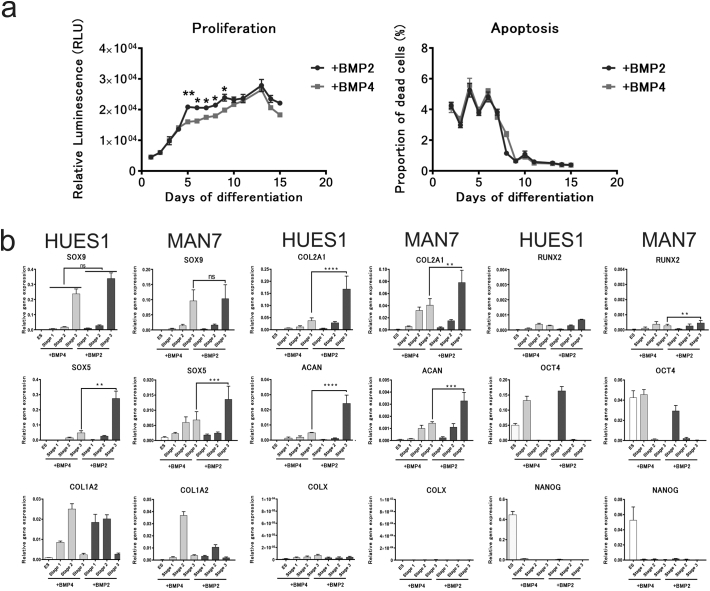
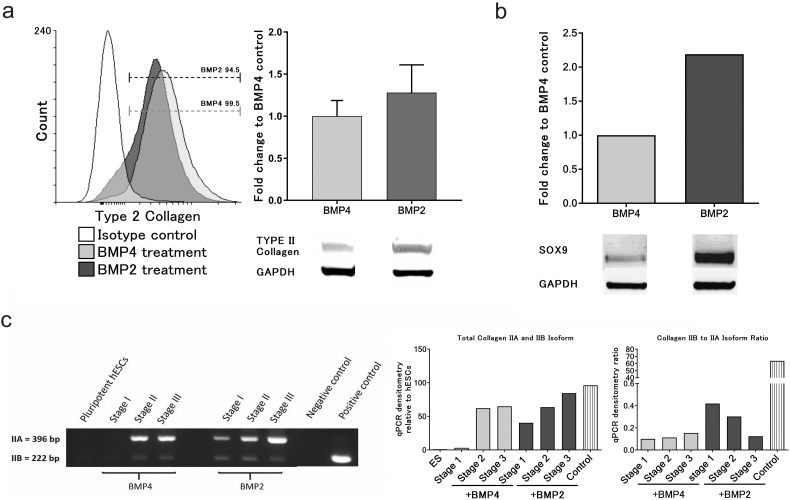
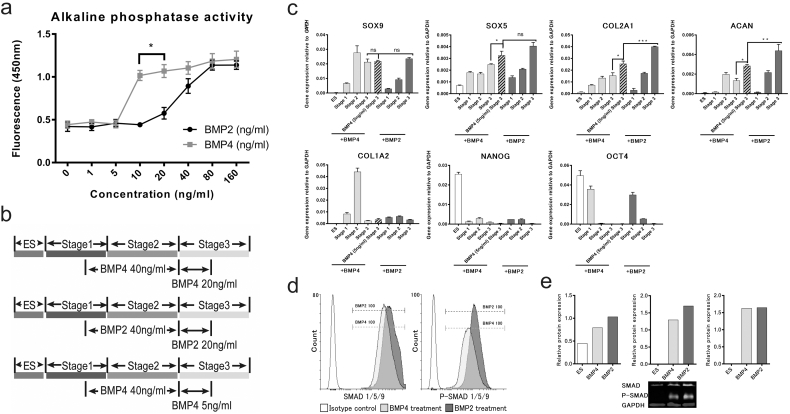
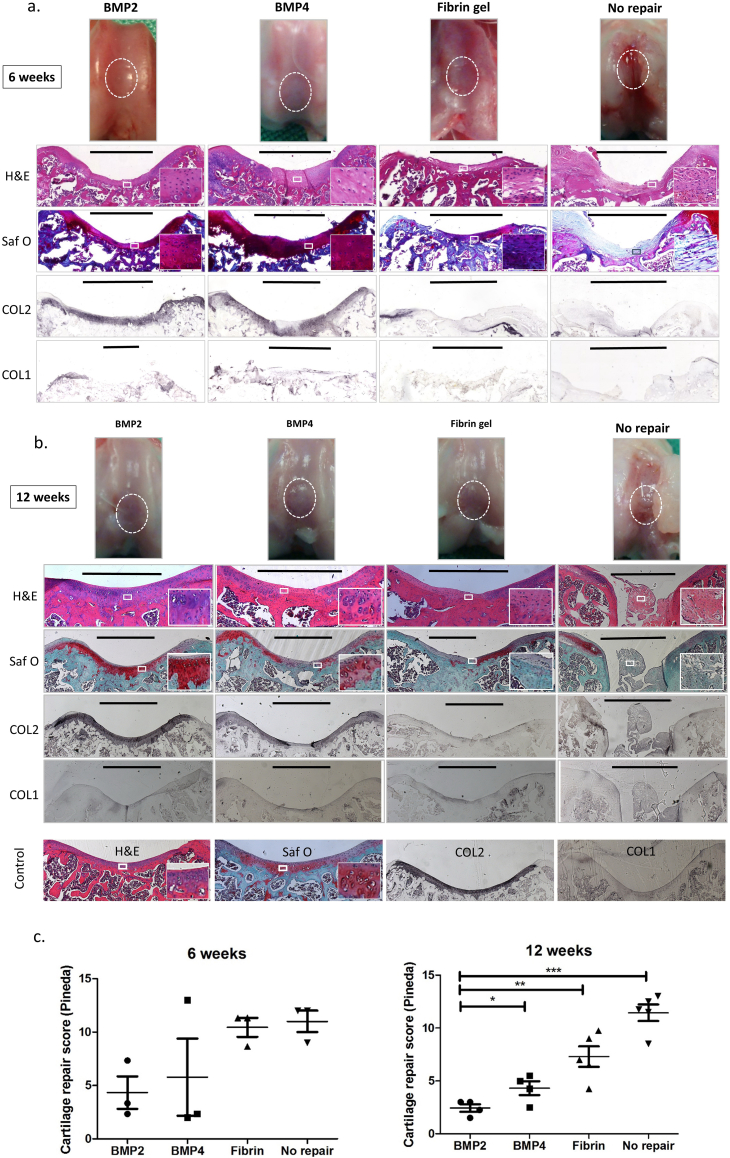
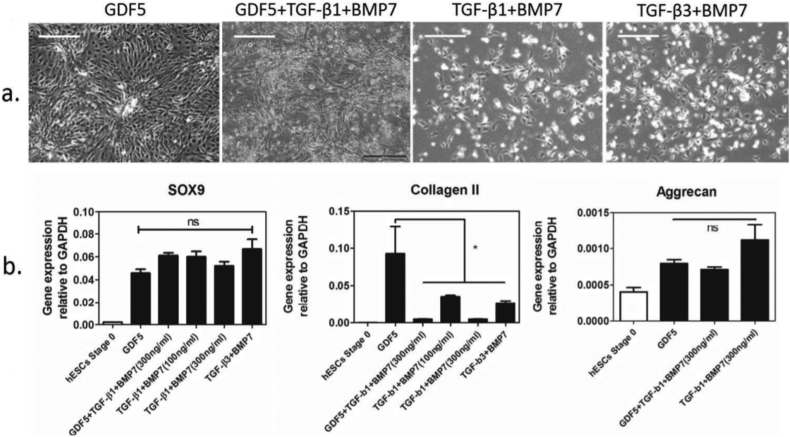
Human embryonic stem cells (hESCs) have great potential for the repair of damaged articular cartilage. We developed a serum-free 14-day protocol for hESC differentiation into chondrocyte progenitors, which surprisingly lacked strong cartilage matrix production in in vitro tests. In order to direct these progenitors to a more mature phenotype, we investigated substituting different members of the TGFβ family in the protocol. Initially, we supplemented, or substituted GDF5 (day 11-14), with combinations of BMP7 and TGFβ-1, or -3, but these modifications yielded no improvement in matrix gene expression. However, replacing BMP4 with BMP2 (days 3-10 of the protocol) resulted in a more rapid increase in SOX9 gene expression and increased expression of chondrogenic genes SOX5, ACAN and COL2A1. The replacement of BMP4 with BMP2 also enhanced the formation of chondrogenic cell aggregates, with greater deposition of type II collagen. This change was not accompanied by hypertrophic chondrocyte marker COL10A1 expression. The results demonstrate that BMP2 has greater specificity for the generation of chondrogenic cells from hESCs than BMP4 and this was consistent in two hESC lines (HUES1 and MAN7). hESC-chondrogenic cells derived with either BMP2 or BMP4 were tested in vivo by implanting them in fibrin into osteochondral defects in the femur of RNU rats. Repaired cartilage tissue, positive for Safranin O and type II collagen was detected at 6 and 12 weeks with both cell sources, but the BMP2 cells scored higher for tissue quality (Pineda score). Therefore, BMP2 is more effective at driving chondrogenic differentiation from human pluripotent stem cells than BMP4 and the effect on the resulting chondroprogenitors is sustained in an in vivo setting.
人胚胎干细胞(hESCs)在修复受损关节软骨方面具有巨大潜力。我们开发了一种无血清的14天方案,用于将hESCs分化为软骨细胞祖细胞,但令人惊讶的是,在体外试验中,这些祖细胞缺乏强大的软骨基质生成能力。为了将这些祖细胞引导至更成熟的表型,我们研究了在该方案中替换TGFβ家族的不同成员。最初,我们用BMP7和TGFβ-1或-3的组合补充或替代GDF5(第11 - 14天),但这些修改并未改善基质基因表达。然而,用BMP2替代BMP4(方案的第3 - 10天)导致SOX9基因表达更快增加,并增加了软骨生成基因SOX5、ACAN和COL2A1的表达。用BMP2替代BMP4还增强了软骨生成细胞聚集体的形成,伴有更多II型胶原沉积。这种变化并未伴随肥大软骨细胞标志物COL10A1的表达。结果表明,与BMP4相比,BMP2在从hESCs生成软骨细胞方面具有更高的特异性,并且在两个hESC系(HUES1和MAN7)中都是如此。用BMP2或BMP4衍生的hESC - 软骨细胞通过将它们植入纤维蛋白中,植入RNU大鼠股骨的骨软骨缺损中进行体内测试。在6周和12周时,两种细胞来源均检测到对番红O和II型胶原呈阳性的修复软骨组织,但BMP2细胞的组织质量评分更高(皮内达评分)。因此,与BMP4相比,BMP2在驱动人多能干细胞向软骨生成分化方面更有效,并且对所得软骨祖细胞的影响在体内环境中得以持续。