Chen Xin, Luo Qingqing, Yan Xiujuan, Li Wenting, Chen Shengliang
Division of Gastroenterology and Hepatology, Key Laboratory of Gastroenterology and Hepatology, Ministry of Health, Renji Hospital, School of Medicine, Shanghai Jiao Tong University, Shanghai Institu.
J Neurogastroenterol Motil. 2019 Jul 1;25(3):442-460. doi: 10.5056/jnm19014.
BACKGROUND/AIMS: Abdominal pain can be evoked or exacerbated after gastrointestinal cold stimulation in some patients with diarrhea-predominant irritable bowel syndrome (IBS-D), indicating a low temperature-induced sensitization of visceral perception. We investigated the role of vagal transient receptor potential ankyrin 1 (TRPA1, a cold-sensing ion channel) in cold-aggravated visceral mechanonociception in a stress-induced IBS animal model.
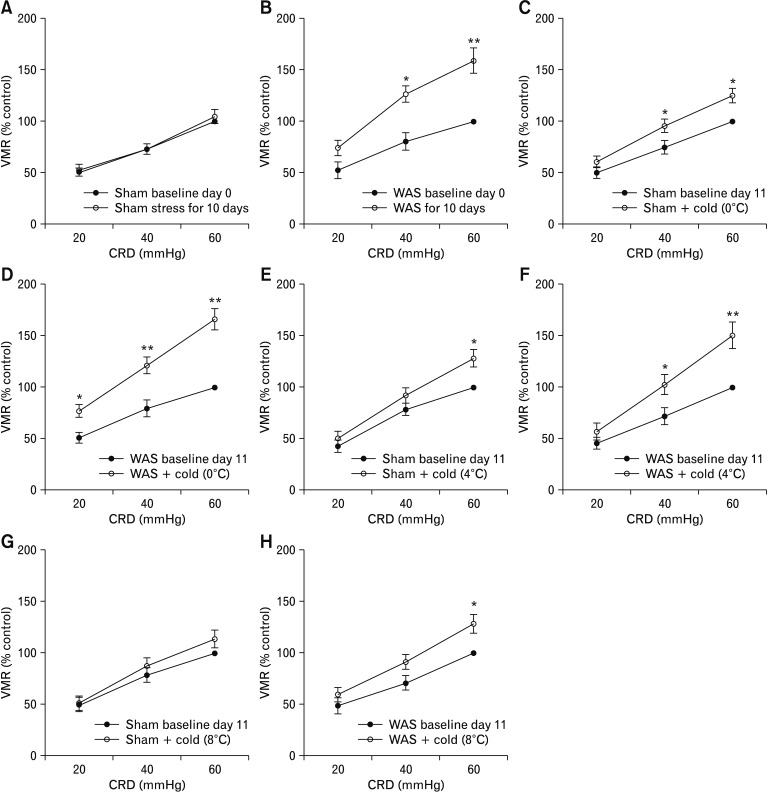
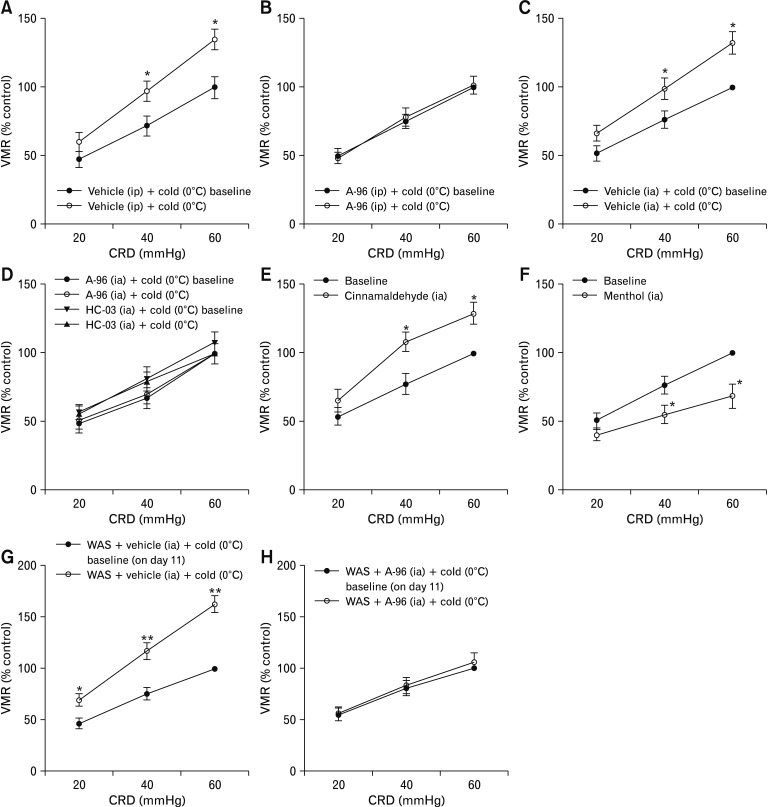
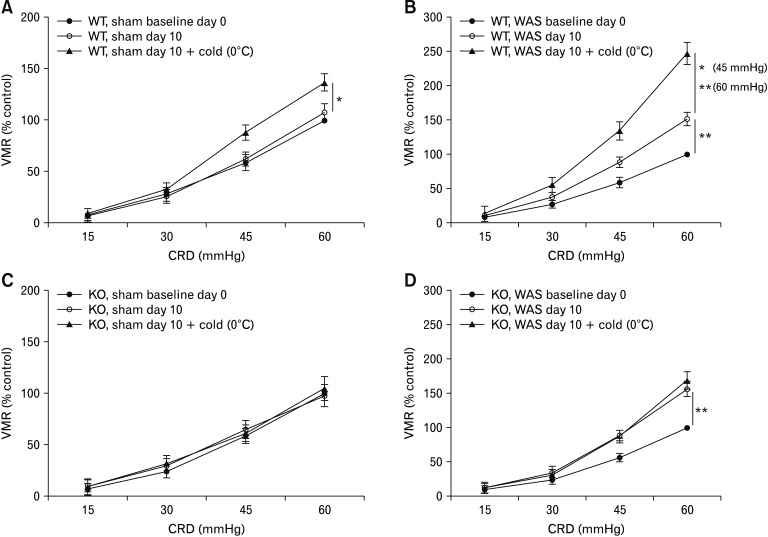
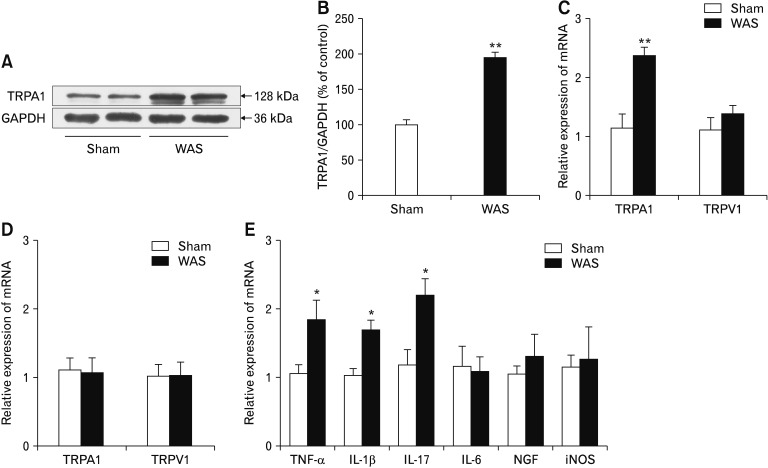
TTRPA1 expression was examined in antral biopsies of healthy controls and IBS-D patients. Abdominal symptoms were assessed before and after warm or cold water intake. The visceromotor response (VMR) to colorectal distention (CRD) following intra-antral infusion of cold saline was measured in animals undergoing sham or chronic water avoidance stress. TRPA1 expression, extracellular signalregulated protein kinase 1/2 (ERK1/2) phosphorylation, and neuronal calcium influx in vagal afferents were assessed.
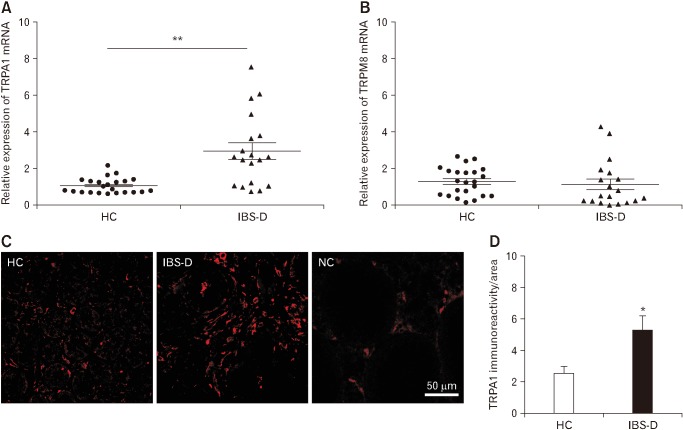
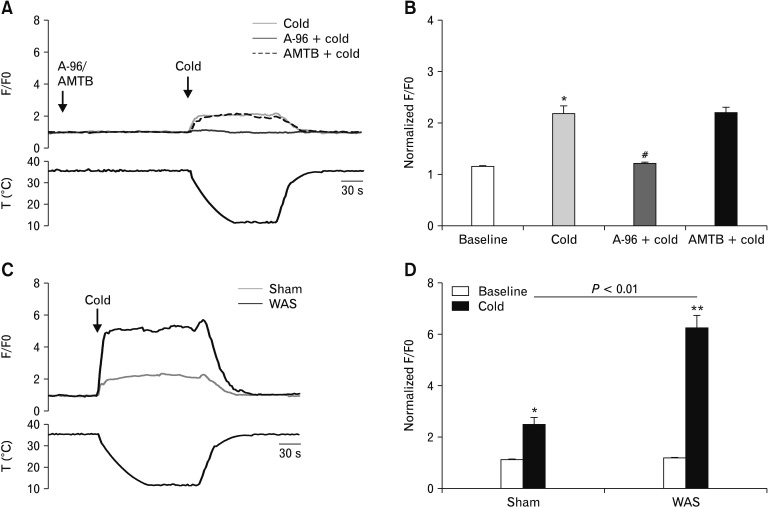
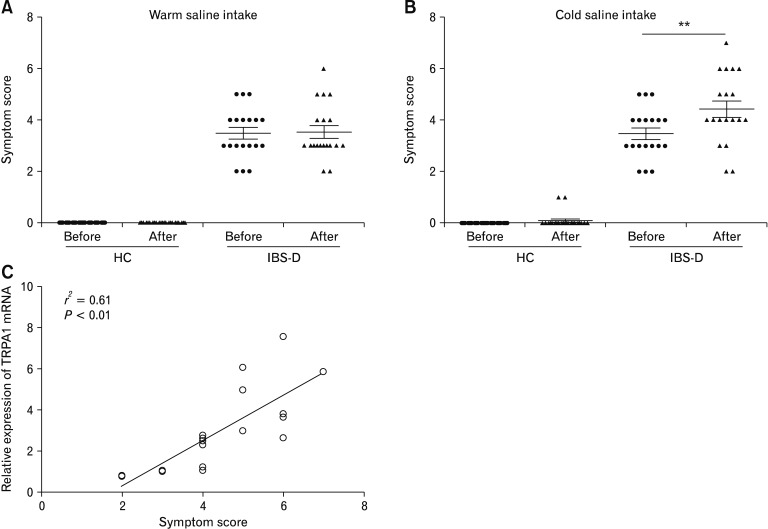
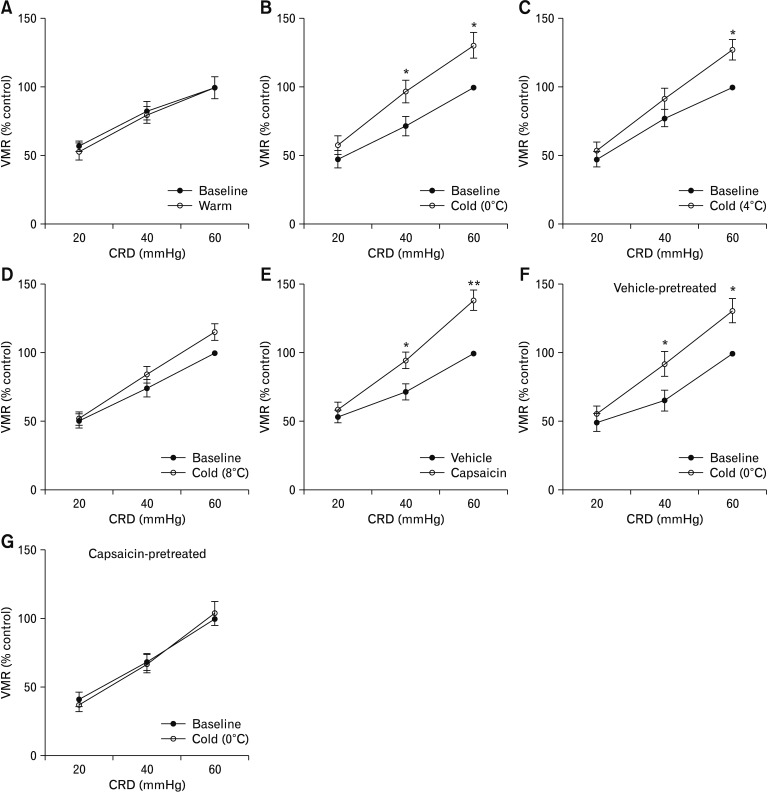
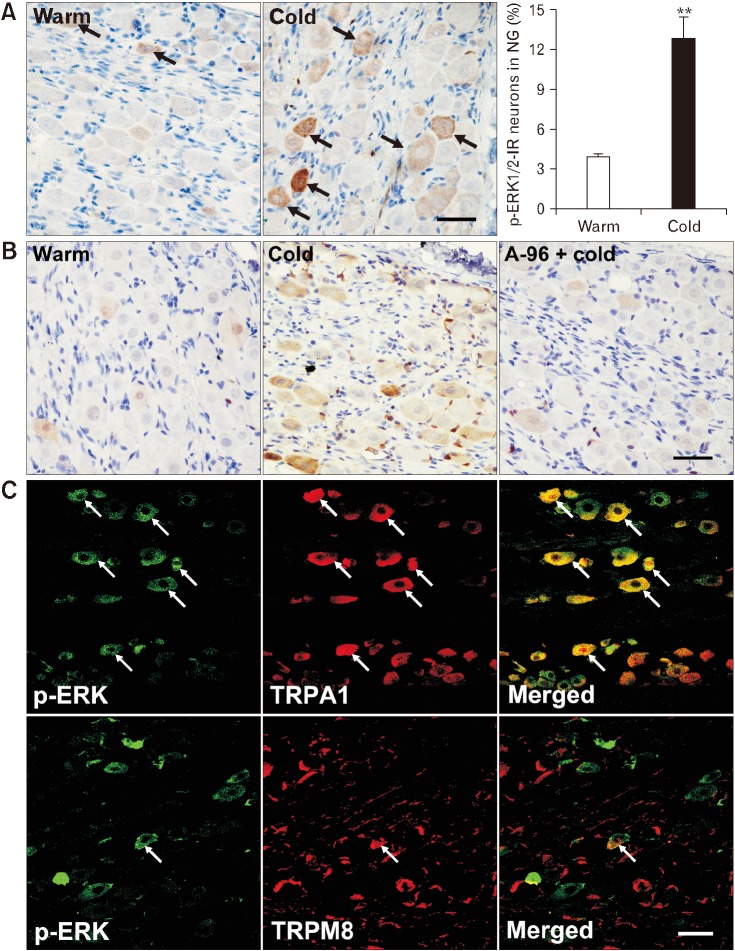
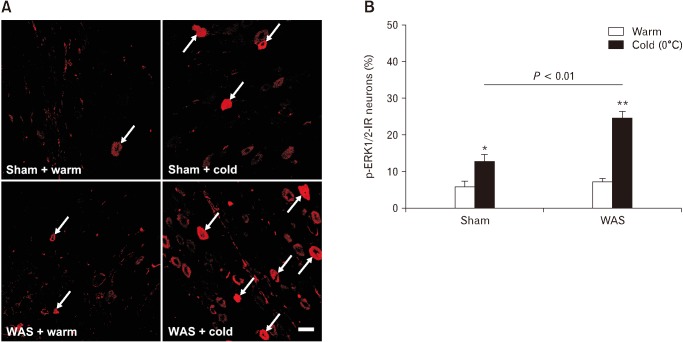
Compared to healthy controls, IBS-D patients displayed elevated antral TRPA1 expression, which was associated with symptom scores after cold (4°C) water intake. Intra-antral infusion of cold saline increased VMR to CRD in naive rats, an effect dependent on vagal afferents. In stressed rats, this effect was greatly enhanced. Functional blockade and gene deletion of TRPA1 abolished the cold effect on visceral nociception. TRPA1 expression in vagal (but not spinal) afferents increased after stress. Moreover, the cold-induced, TRPA1dependent ERK1/2 activation and calcium influx in nodose neurons were more robust in stressed rats.
Stress-exaggerated visceral mechanonociception after antral cold exposure may involve up-regulation of TRPA1 expression and function on vagal afferents. Our findings reveal a novel mechanism for abnormal gastrointestinal cold sensing in IBS.
背景/目的:在一些腹泻型肠易激综合征(IBS-D)患者中,胃肠道冷刺激后可诱发或加重腹痛,这表明低温可导致内脏感觉过敏。我们在应激诱导的IBS动物模型中研究了迷走神经瞬时受体电位锚蛋白1(TRPA1,一种冷敏离子通道)在冷加重的内脏机械性伤害感受中的作用。
检测健康对照者和IBS-D患者胃窦活检组织中TRPA1的表达。在摄入温水或冷水前后评估腹部症状。在接受假手术或慢性禁水应激的动物中,测量胃窦内注入冷盐水后对结肠扩张(CRD)的内脏运动反应(VMR)。评估迷走神经传入纤维中TRPA1的表达、细胞外信号调节蛋白激酶1/磷酸化(ERK1/2)以及神经元钙内流情况。
与健康对照者相比,IBS-D患者胃窦TRPA1表达升高,这与摄入冷水(4°C)后的症状评分相关。胃窦内注入冷盐水可增加未处理大鼠对CRD的VMR,该效应依赖于迷走神经传入纤维。在应激大鼠中,这种效应大大增强。TRPA1的功能阻断和基因缺失消除了寒冷对内脏痛觉的影响。应激后迷走神经(而非脊髓)传入纤维中TRPA1的表达增加。此外,在应激大鼠中,寒冷诱导的、TRPA1依赖的ERK1/2激活和结状神经元中的钙内流更为强烈。
胃窦冷暴露后应激加剧的内脏机械性伤害感受可能涉及迷走神经传入纤维上TRPA1表达和功能的上调。我们的研究结果揭示了IBS中胃肠道冷感觉异常的一种新机制。