Jimenez Camilo, Erwin William, Chasen Beth
Department of Endocrine Neoplasia and Hormonal Disorders, The University of Texas MD Anderson Cancer Center, 1400 Pressler Street, Unit 1461, Houston, TX 77030, USA.
Department of Imaging Physics, The University of Texas MD Anderson Cancer Center, 1400 Pressler Street, Unit 1461, Houston, TX 77030, USA.
Cancers (Basel). 2019 Jul 20;11(7):1018. doi: 10.3390/cancers11071018.
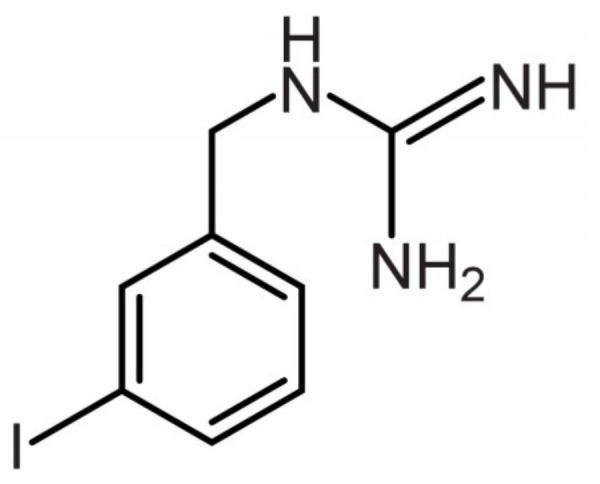
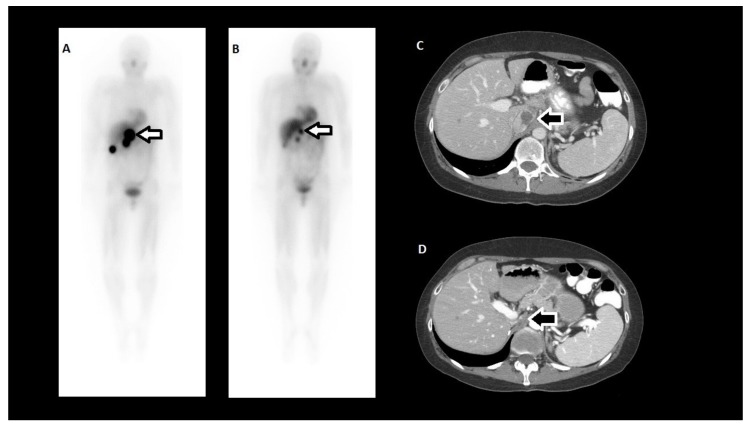
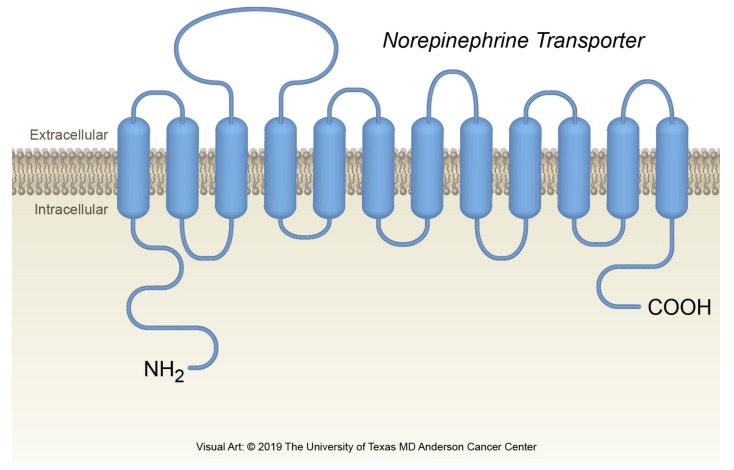
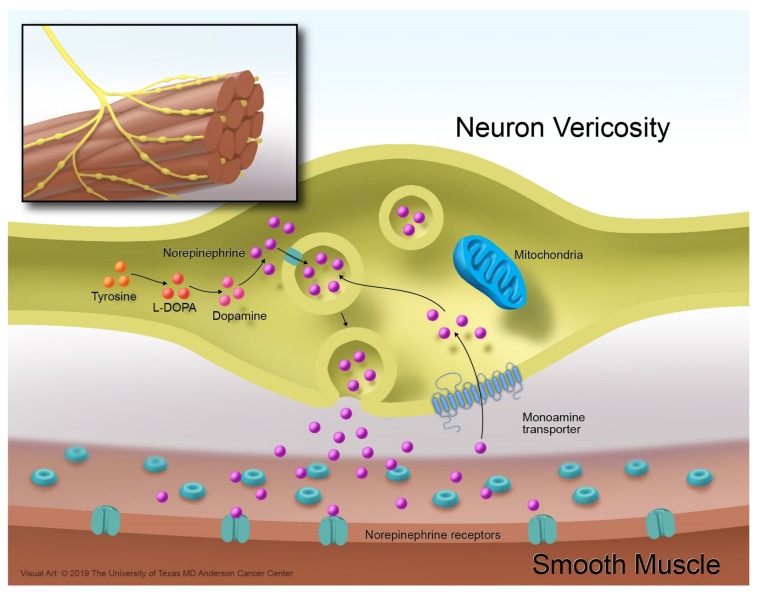
Low-specific-activity iodine-131-radiolabeled metaiodobenzylguanidine (I-131-MIBG) was introduced last century as a potential systemic therapy for patients with malignant pheochromocytomas and paragangliomas. Collective information derived from mainly retrospective studies has suggested that 30-40% of patients with these tumors benefit from this treatment. A low index of radioactivity, lack of therapeutic standardization, and toxicity associated with intermediate to high activities (absorbed radiation doses) has prevented the implementation of I-131-MIBG's in clinical practice. High-specific-activity, carrier-free I-131-MIBG has been developed over the past two decades as a novel therapy for patients with metastatic pheochromocytomas and paragangliomas that express the norepinephrine transporter. This drug allows for a high level of radioactivity, and as yet is not associated with cardiovascular toxicity. In a pivotal phase two clinical trial, more than 90% of patients achieved partial responses and disease stabilization with the improvement of hypertension. Furthermore, many patients exhibited long-term persistent antineoplastic effects. Currently, the high-specific-activity I-131-MIBG is the only approved therapy in the US for patients with metastatic pheochromocytomas and paragangliomas. This review will discuss the historical development of high-specific-activity I-131-MIBG, its benefits and adverse events, and future directions for clinical practice applicability and trial development.
低比活度碘-131标记的间碘苄胍(I-131-MIBG)于上世纪被引入,作为恶性嗜铬细胞瘤和副神经节瘤患者的一种潜在全身治疗方法。主要来自回顾性研究的综合信息表明,30%-40%的这些肿瘤患者可从该治疗中获益。放射性指数低、缺乏治疗标准化以及与中高活度(吸收辐射剂量)相关的毒性阻碍了I-131-MIBG在临床实践中的应用。在过去二十年中,已开发出高比活度、无载体的I-131-MIBG,作为一种针对表达去甲肾上腺素转运体的转移性嗜铬细胞瘤和副神经节瘤患者的新型治疗方法。这种药物具有高放射性水平,且目前尚未发现与心血管毒性相关。在一项关键的二期临床试验中,超过90%的患者实现了部分缓解和疾病稳定,同时高血压症状得到改善。此外,许多患者表现出长期持续的抗肿瘤作用。目前,高比活度I-131-MIBG是美国唯一获批用于转移性嗜铬细胞瘤和副神经节瘤患者的治疗方法。本综述将讨论高比活度I-131-MIBG的历史发展、其益处和不良事件,以及临床实践适用性和试验开发的未来方向。