Faculty of Medicine, University of Latvia; 3 Jelgavas St, LV-1004 Riga, Latvia.
Faculty of Chemistry, University of Latvia; 1 Jelgavas St, LV-1004 Riga, Latvia.
Medicina (Kaunas). 2019 Jul 21;55(7):393. doi: 10.3390/medicina55070393.
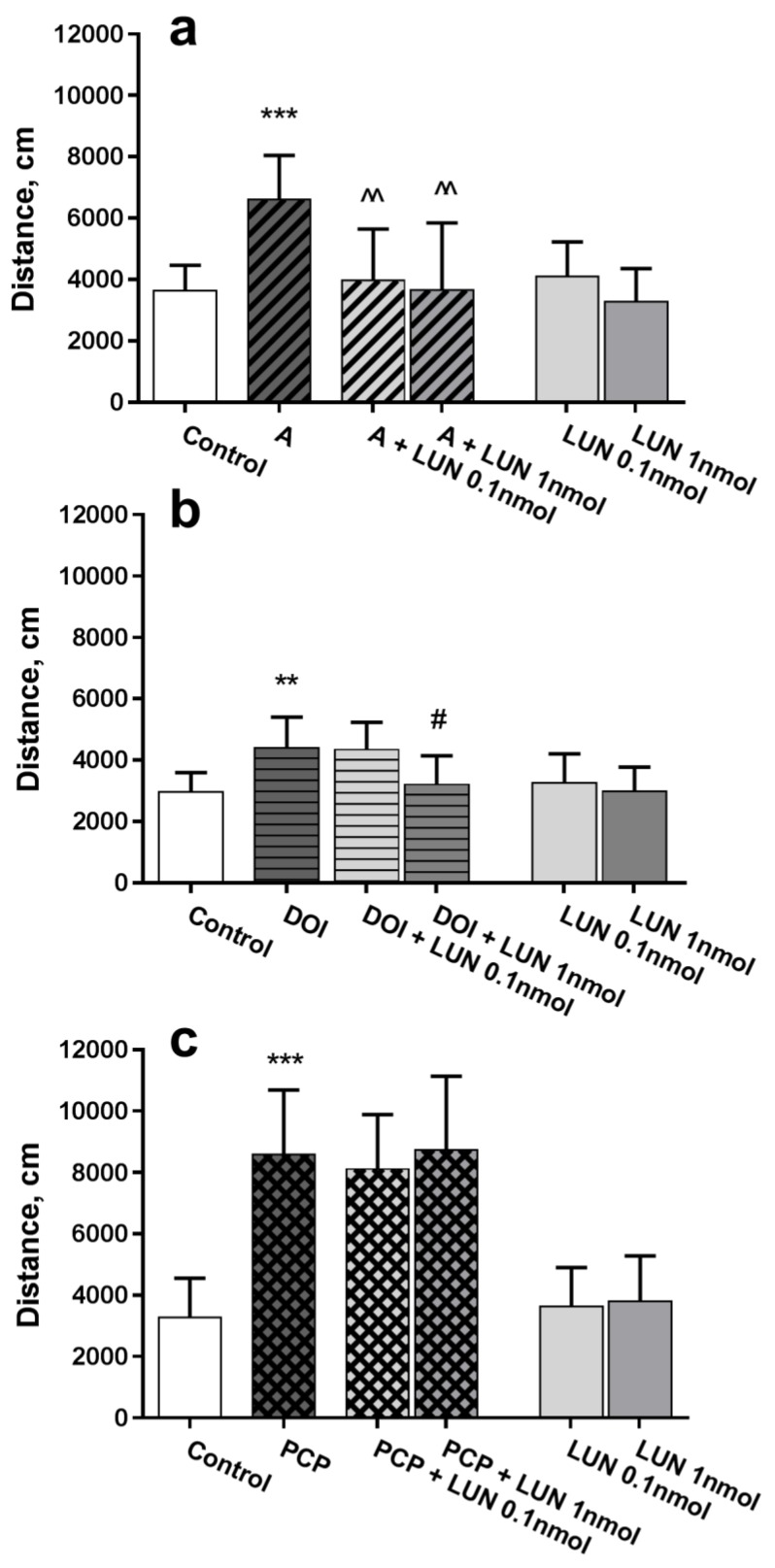
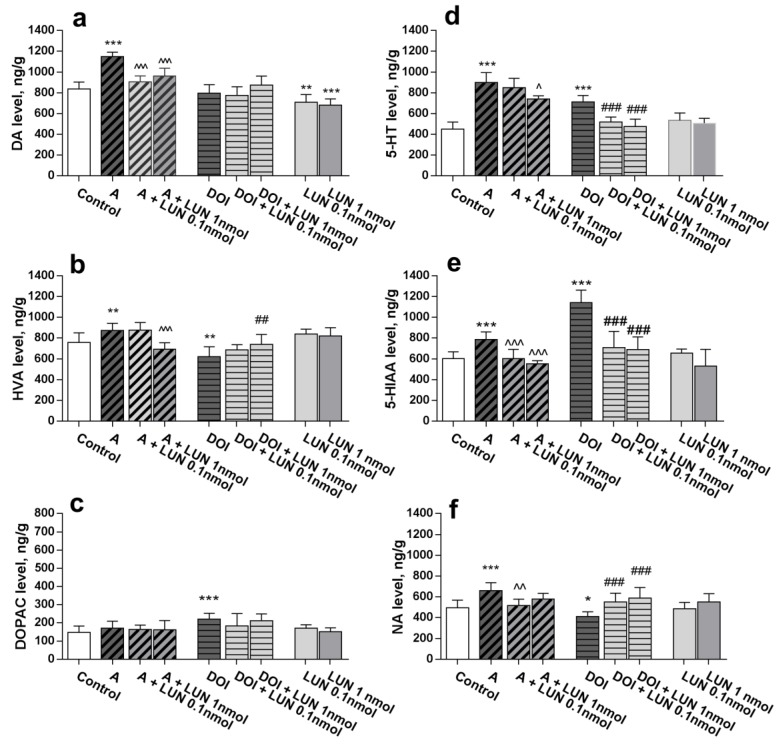
Previously we have shown that synthetic lunasin, a 43 amino acid residue-containing peptide, after its central (intracisternal) administration in mice demonstrated antagonism against dopaminergic drug behavioural effects, indicating a putative antipsychotic/anti-schizophrenic profile of lunasin. The aims of the present studies were: to test whether lunasin would show an influence on the dopaminergic system after intranasal administration, and to examine the effect(s) of lunasin on serotonin and glutamatergic systems, which could play an essential role in antipsychotic action. Lunasin was administered intra-nasally at doses 0.1 and 1 nmol/mouse in ICR mice ( = 7-8) and tested in an open field on hyperlocomotion caused by amphetamine; serotonin 5-HT 2A/2C receptor agonist 1-(2,5-dimethoxy-4-iodophenyl)- 2-aminopropane (DOI); and glutamate NMDA receptor antagonist phencyclidine. Following behavioural testing, the contents of neurotransmitters and their metabolites in brain hemispheres ( = 6-8) were assessed by ultra-high-performance liquid chromatography-time of flight mas-spectrometry (UHPLC-TOF-MS) method. Also, lunasin binding to serotonin receptors was assessed. Lunasin intra-nasally fully normalized hyper-locomotion and brain monoamine levels in amphetamine- and DOI-treated mice brains. Phencyclidine behavioural effects were not influenced. In vitro receptor binding data demonstrated a low affinity of lunasin (at µM concentrations) compared with DOI (nM concentrations) for the 5-HT and 5-HT receptors. These results demonstrated, for the first time, that the intranasal administration of oligopeptide lunasin normalized mice behaviour and brain monoamine levels in experimental psychosis mice models. Its neuro-regulatory effects indicated a usefulness of this peptide molecule for the design of novel psychotropic agents.
先前,我们已经证实,经过中央(核内)给药后,含有 43 个氨基酸残基的合成 lunasin 肽对多巴胺能药物的行为效应表现出拮抗作用,表明 lunasin 具有潜在的抗精神病/抗精神分裂症特性。本研究的目的是:测试 lunasin 经鼻内给药后是否会对多巴胺能系统产生影响,并研究 lunasin 对 5-羟色胺和谷氨酸能系统的影响,这些系统可能在抗精神病作用中发挥重要作用。我们以 ICR 小鼠(n = 7-8)为实验对象,以 0.1 和 1 nmol/只的剂量经鼻内给予 lunasin,并在行为学测试中检测其对安非他命引起的过度活动、5-羟色胺 5-HT2A/2C 受体激动剂 1-(2,5-二甲氧基-4-碘苯基)-2-氨基丙烷(DOI)以及谷氨酸 NMDA 受体拮抗剂苯环利定的影响。行为学测试后,采用超高效液相色谱-飞行时间质谱(UHPLC-TOF-MS)法检测脑半球神经递质及其代谢物的含量(n = 6-8)。同时,我们评估了 lunasin 与 5-羟色胺受体的结合情况。结果表明,lunasin 经鼻内给药可完全纠正安非他命和 DOI 处理的小鼠大脑中的过度活动和单胺水平。苯环利定的行为学效应不受影响。体外受体结合数据表明,与 DOI(nM 浓度)相比,lunasin(µM 浓度)对 5-HT 和 5-HT 受体的亲和力较低。这些结果首次表明,经鼻内给予寡肽 lunasin 可使实验性精神病小鼠模型的行为和大脑单胺水平正常化。其神经调节作用表明该肽分子可用于设计新型精神药物。