Pérez Francisco J, Iturra Pablo A, Ponce Carolina A, Magne Fabien, Garcia-Angulo Víctor, Vargas Sergio L
Programa de Microbiología y Micología, Instituto de Ciencias Biomédicas (ICBM), Facultad de Medicina, Universidad de Chile, Santiago, Chile.
Front Microbiol. 2019 Jul 5;10:1522. doi: 10.3389/fmicb.2019.01522. eCollection 2019.
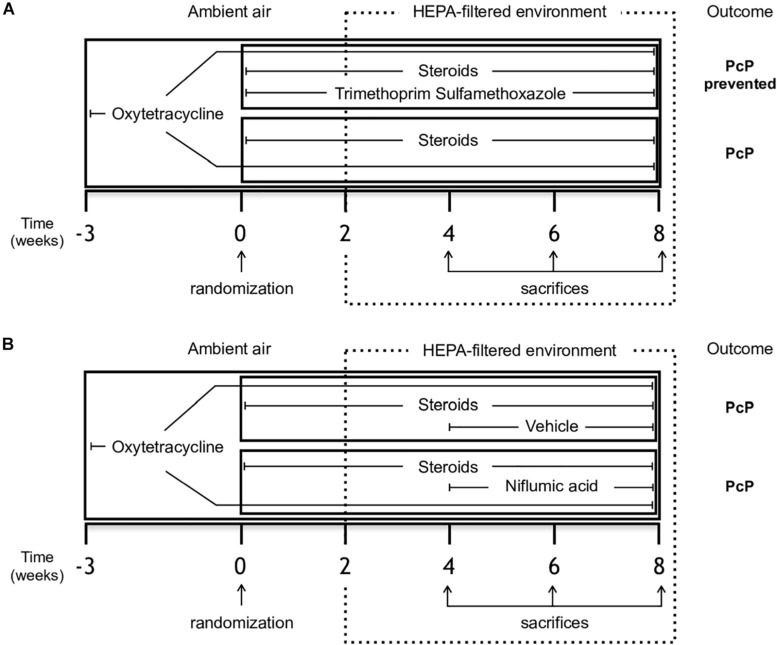
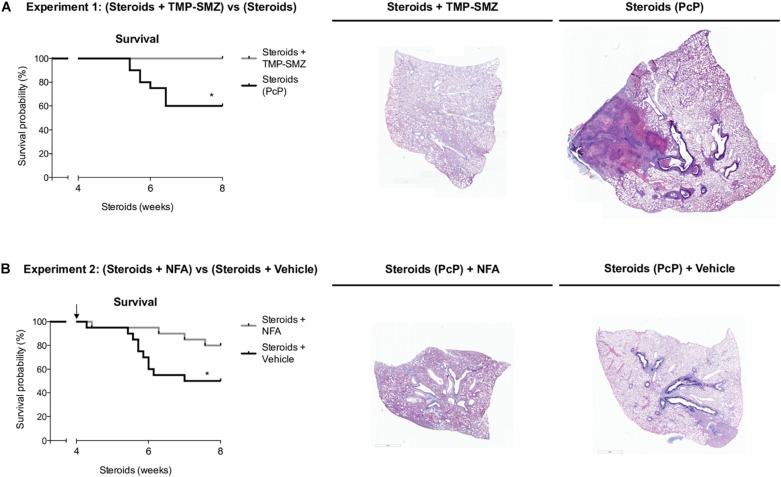
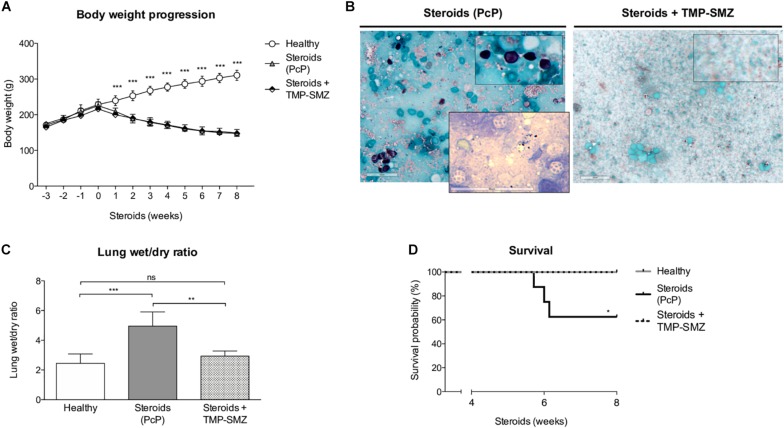
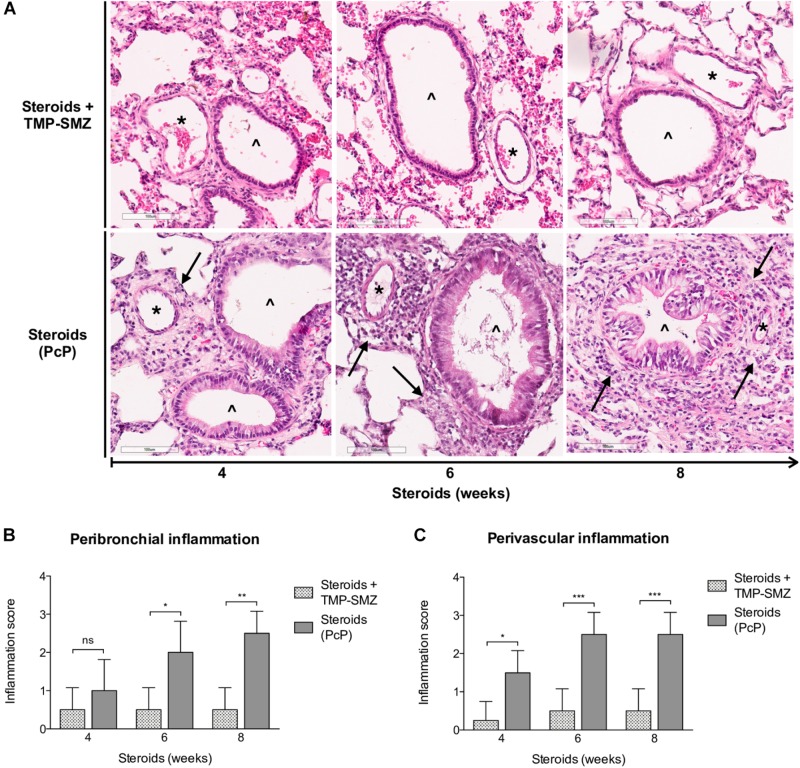
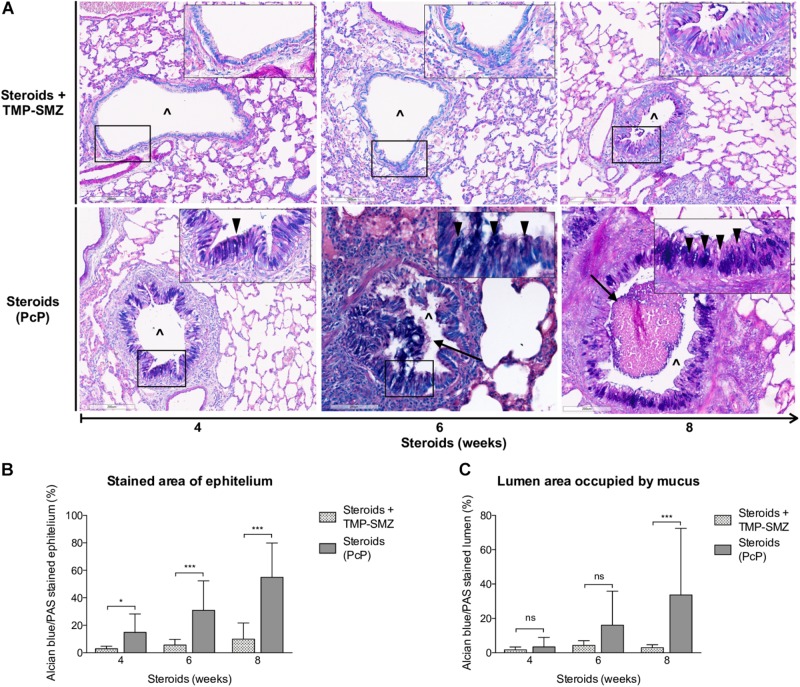
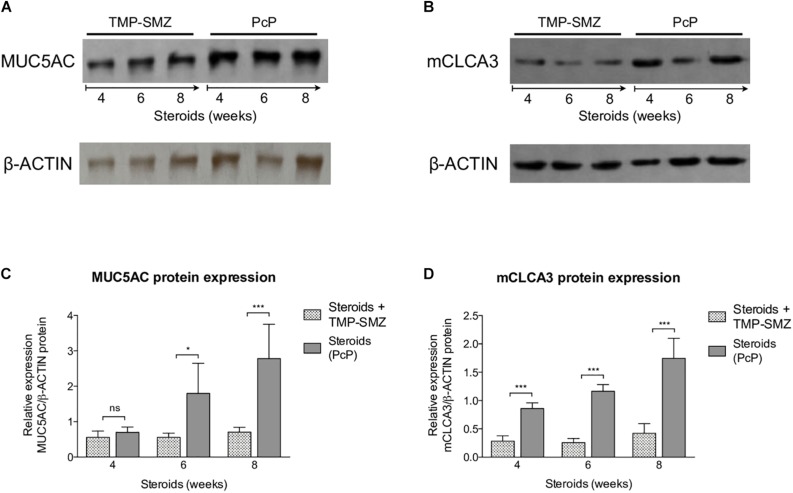
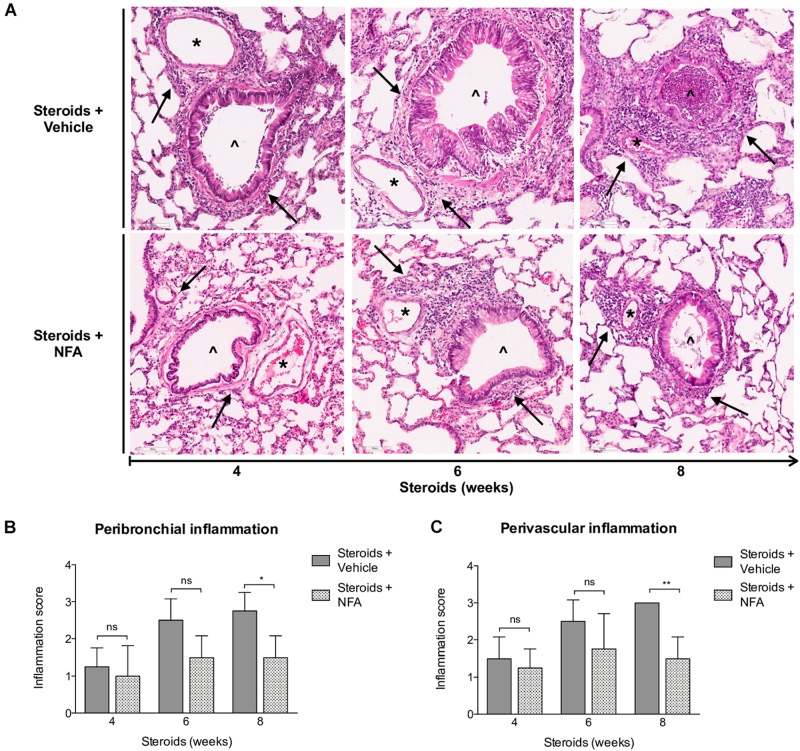
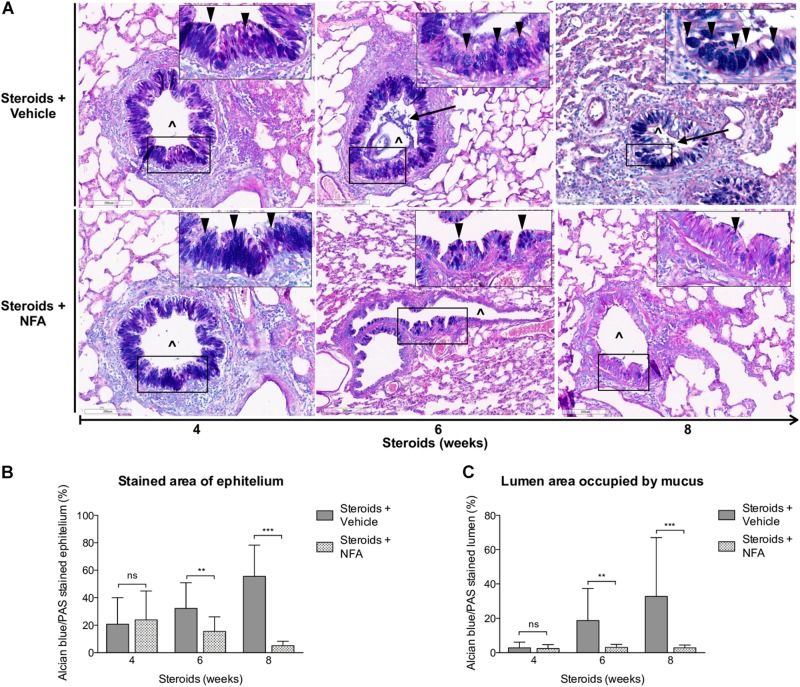
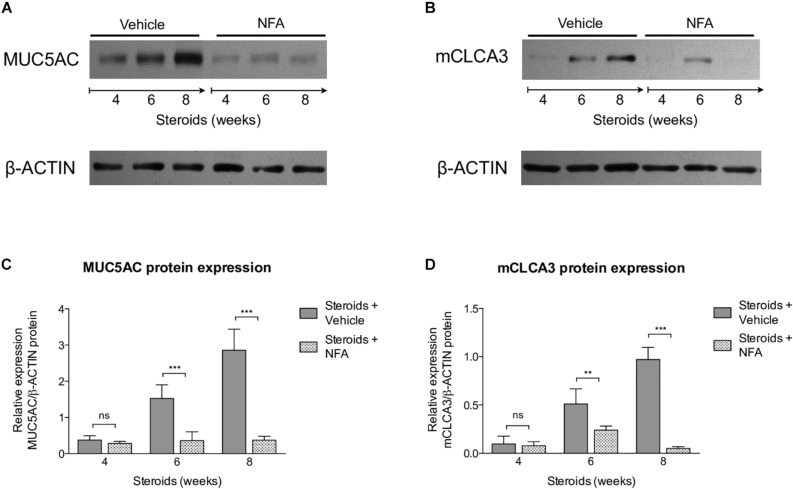
Although the role of adaptive immunity in fighting infection is well known, the role of the innate, airway epithelium, responses remains largely unexplored. The concerted interaction of innate and adaptive responses is essential to successfully eradicate infection. Increased expression of goblet-cell-derived CLCA1 protein plus excess mucus in infant autopsy lungs and in murine models of primary infection alert of innate immune system immunopathology associated to infection. Nonetheless, whether blocking mucus-associated innate immune pathways decreases -related immunopathology is unknown. Furthermore, current treatment of pneumonia (PcP) relying on anti- drugs plus steroids is not ideal because removes cellular immune responses against the fungal pathogen. In this study, we used the steroid-induced rat model of PcP to evaluate inflammation and mucus progression, and tested the effect of niflumic acid (NFA), a fenamate-type drug with potent CLCA1 blocker activity, in decreasing -associated immunopathology. In this model, animals acquire spontaneously and pneumonia develops owing to the steroids-induced immunodeficiency. Steroids led to decreased animal weight evidencing severe immunosuppression and to significant -associated pulmonary edema as evidenced by wet-to-dry lung ratios that doubled those of uninfected animals. Inflammatory cuffing infiltrates were noticed first around lung blood vessels followed by bronchi, and both increased progressively. Similarly, airway epithelial and lumen mucus progressively increased. This occurred in parallel to increasing levels of MUC5AC and mCLCA3, the murine homolog of hCLCA1. Administration of NFA caused a significant decrease in total mucus, MUC5AC and mCLCA3 and also, in -associated inflammation. Most relevant, NFA treatment improved survival at 8 weeks of steroids. Results suggest an important role of innate immune responses in immunopathology of steroid-induced PcP. They warrant evaluation of CLCA1 blockers as adjunctive therapy in this condition and describe a simple model to evaluate therapeutic interventions for steroid resistant mucus, a common condition in patients with chronic lung disease like asthma, chronic obstructive pulmonary disease (COPD) and cystic fibrosis.
虽然适应性免疫在对抗感染中的作用已广为人知,但固有免疫、气道上皮的反应作用在很大程度上仍未得到探索。固有免疫和适应性免疫反应的协同相互作用对于成功根除感染至关重要。在婴儿尸检肺以及原发性感染的小鼠模型中,杯状细胞衍生的CLCA1蛋白表达增加以及黏液过多,提示与感染相关的固有免疫系统免疫病理学。然而,阻断与黏液相关的固有免疫途径是否会降低相关免疫病理学尚不清楚。此外,目前依赖抗真菌药物加类固醇治疗肺孢子菌肺炎(PcP)并不理想,因为它消除了针对真菌病原体的细胞免疫反应。在本研究中,我们使用类固醇诱导的大鼠PcP模型来评估炎症和黏液进展,并测试了具有强大CLCA1阻断活性的芬那酸盐类药物尼氟灭酸(NFA)在降低相关免疫病理学方面的作用。在这个模型中,动物自发感染肺孢子菌,由于类固醇诱导的免疫缺陷而发展为肺炎。类固醇导致动物体重下降,证明存在严重免疫抑制,并导致与肺孢子菌相关的显著肺水肿,肺干湿比是未感染动物的两倍就证明了这一点。首先在肺血管周围发现炎症套袖状浸润,随后在支气管周围出现,且两者都逐渐增加。同样,气道上皮和管腔内黏液也逐渐增加。这与MUC5AC和mCLCA3(hCLCA1的小鼠同源物)水平的升高同时发生。给予NFA导致总黏液、MUC5AC和mCLCA3显著减少,并且与肺孢子菌相关的炎症也减少。最相关的是,NFA治疗提高了类固醇治疗8周时的生存率。结果表明固有免疫反应在类固醇诱导的PcP免疫病理学中起重要作用。它们值得评估CLCA1阻断剂作为这种情况下的辅助治疗,并描述了一个简单的模型来评估针对类固醇抵抗性黏液的治疗干预措施,这在哮喘、慢性阻塞性肺疾病(COPD)和囊性纤维化等慢性肺病患者中是一种常见情况。