Scheuermann Uwe, Ibrahim Mohamed M, Yerxa John, Parker William, Hartwig Matthew G, Klitzman Bruce, Barbas Andrew S
Department of Surgery, Duke University Medical Center, Durham, NC.
Transplant Direct. 2019 Jun 21;5(7):e463. doi: 10.1097/TXD.0000000000000905. eCollection 2019 Jul.
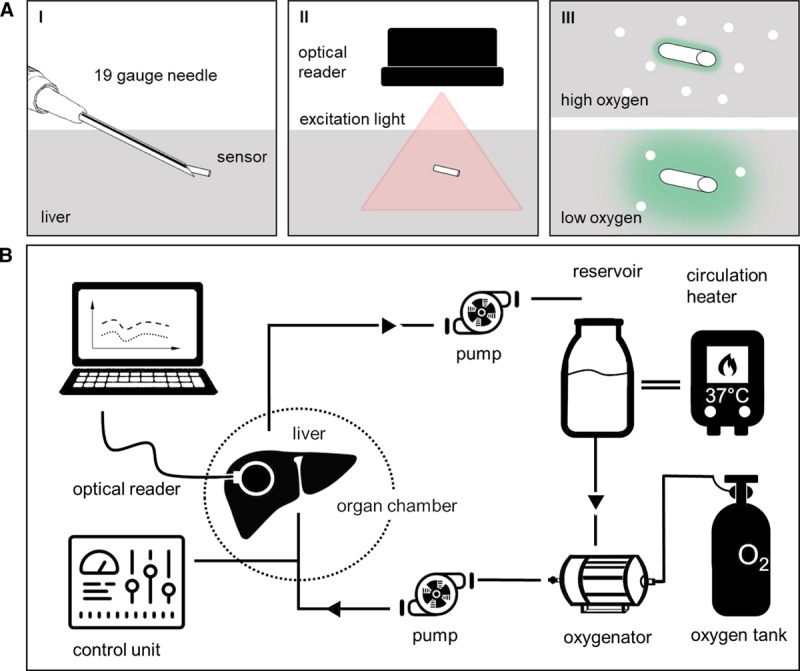
Normothermic machine perfusion (NMP) is emerging as a novel preservation strategy in liver transplantation, but the optimal methods for assessing liver grafts during this period have not been determined. The aim of this study was to investigate whether implantable oxygen biosensors can be used to monitor tissue oxygen tension in liver grafts undergoing NMP.
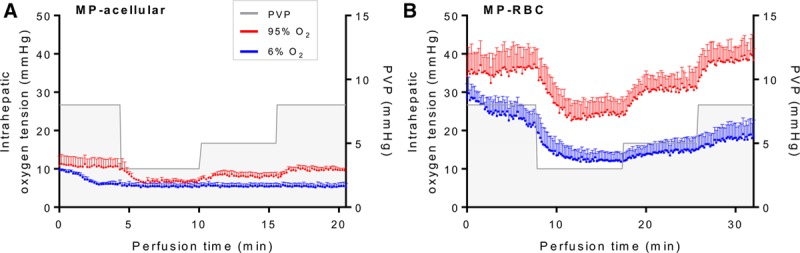
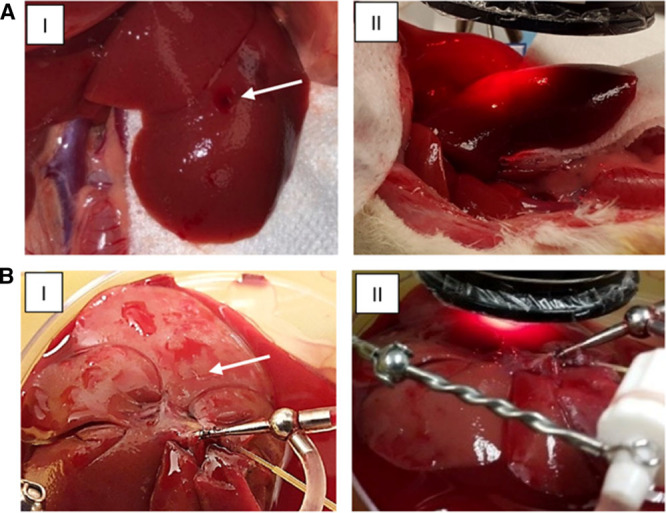
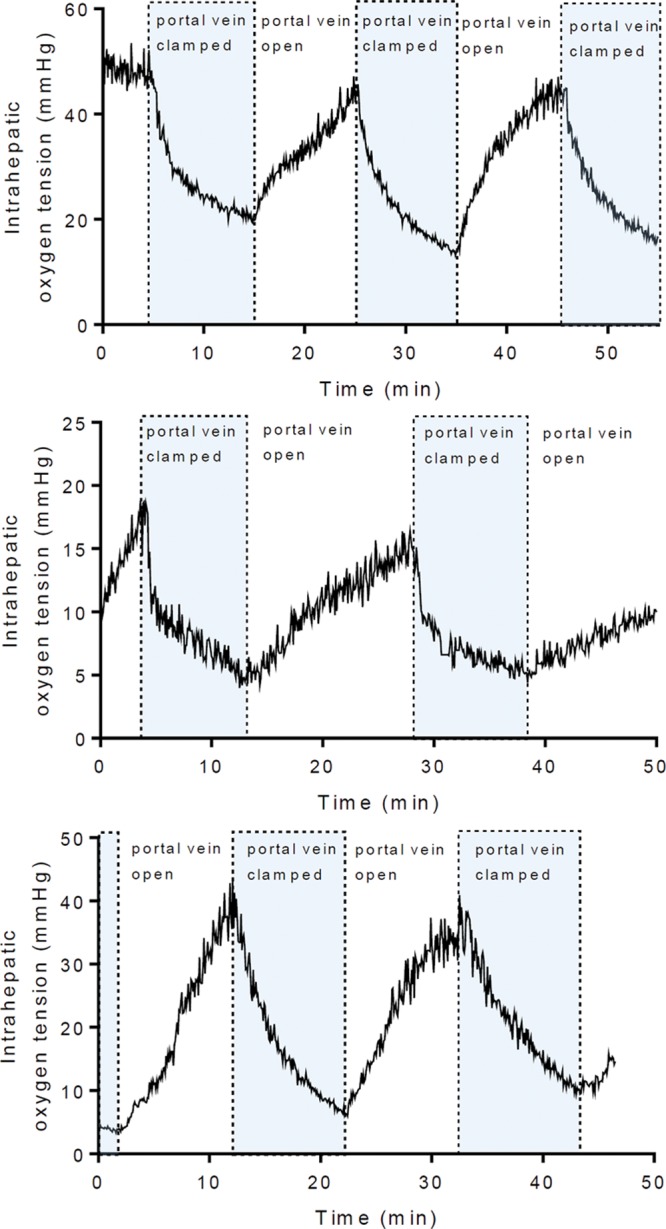
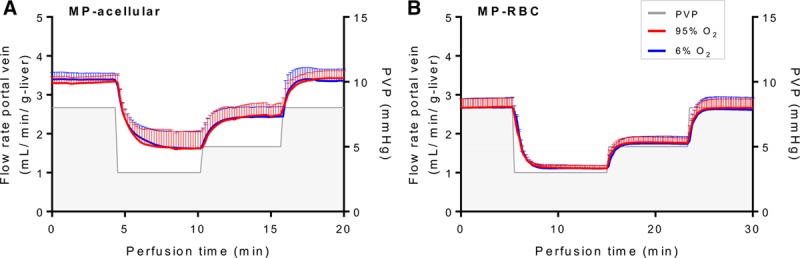
Implantable phosphorescence-based oxygen sensors were tested in 3 different experimental groups: (1) in vivo during laparotomy, (2) during NMP of liver grafts with an acellular perfusate (NMP-acellular), and (3) during NMP with perfusate containing red blood cells (NMP-RBC). During in vivo experiments, intrahepatic oxygen tension was measured before and after occlusion of the portal vein (PV). In NMP experiments, intrahepatic oxygen tension was measured as a function of different PV pressure settings (3 vs 5 vs 8 mm Hg) and inflow oxygen concentration (95% O vs 6% O).
In vivo, intrahepatic oxygen tension decreased significantly within 2 minutes of clamping the PV ( < 0.05). In NMP experiments, intrahepatic oxygen tension correlated directly with PV pressure when high inflow oxygen concentration (95%) was used. Intrahepatic oxygen tension was significantly higher in the NMP-RBC group compared with the NMP-acellular group for all conditions tested ( < 0.05).
Implantable oxygen biosensors have potential utility as a tool for real-time monitoring of intrahepatic oxygen tension during NMP of liver grafts. Further investigation is required to determine how intrahepatic oxygen tension during NMP correlates with posttransplant graft function.
常温机器灌注(NMP)正在成为肝移植中一种新型的保存策略,但在此期间评估肝移植的最佳方法尚未确定。本研究的目的是调查植入式氧生物传感器是否可用于监测接受NMP的肝移植组织中的氧张力。
在3个不同的实验组中测试了基于磷光的植入式氧传感器:(1)剖腹手术期间的体内实验,(2)使用无细胞灌注液进行肝移植的NMP期间(NMP-无细胞组),以及(3)使用含红细胞灌注液的NMP期间(NMP-RBC组)。在体内实验中,测量门静脉(PV)阻断前后的肝内氧张力。在NMP实验中,测量肝内氧张力作为不同PV压力设置(3 vs 5 vs 8 mmHg)和流入氧浓度(95% O₂ vs 6% O₂)的函数。
在体内,夹闭PV后2分钟内肝内氧张力显著降低(P<0.05)。在NMP实验中,当使用高流入氧浓度(95%)时,肝内氧张力与PV压力直接相关。在所有测试条件下,NMP-RBC组的肝内氧张力均显著高于NMP-无细胞组(P<0.05)。
植入式氧生物传感器有潜力作为实时监测肝移植NMP期间肝内氧张力的工具。需要进一步研究以确定NMP期间的肝内氧张力与移植后移植物功能之间的关系。