Faculty of Biology, Philipps University, Karl-von-Frisch-Straße 8, 35043, Marburg, Germany.
Max Planck Institute for Terrestrial Microbiology, Karl-von-Frisch-Straße 10, 35043, Marburg, Germany.
Nat Commun. 2019 Jul 23;10(1):3290. doi: 10.1038/s41467-019-11242-5.
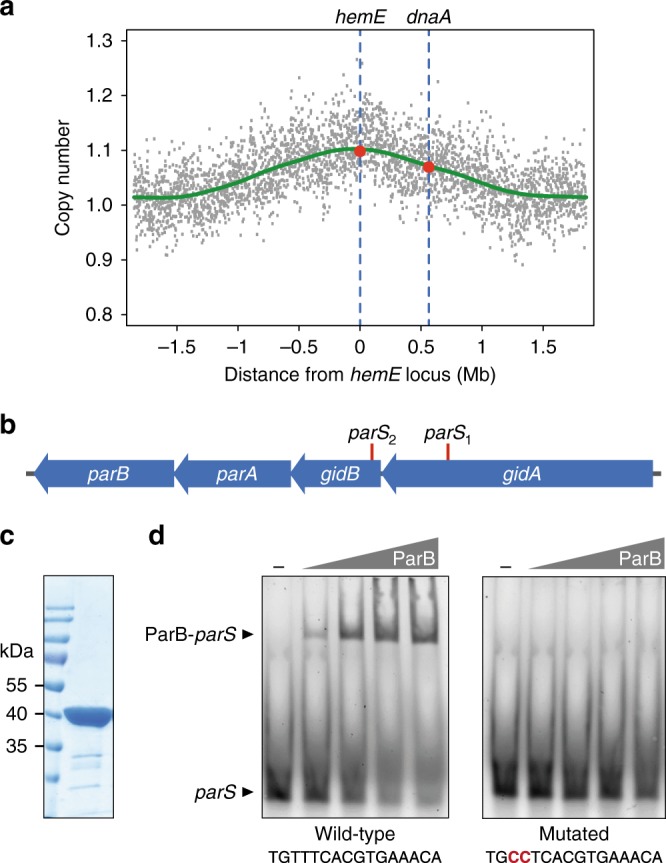
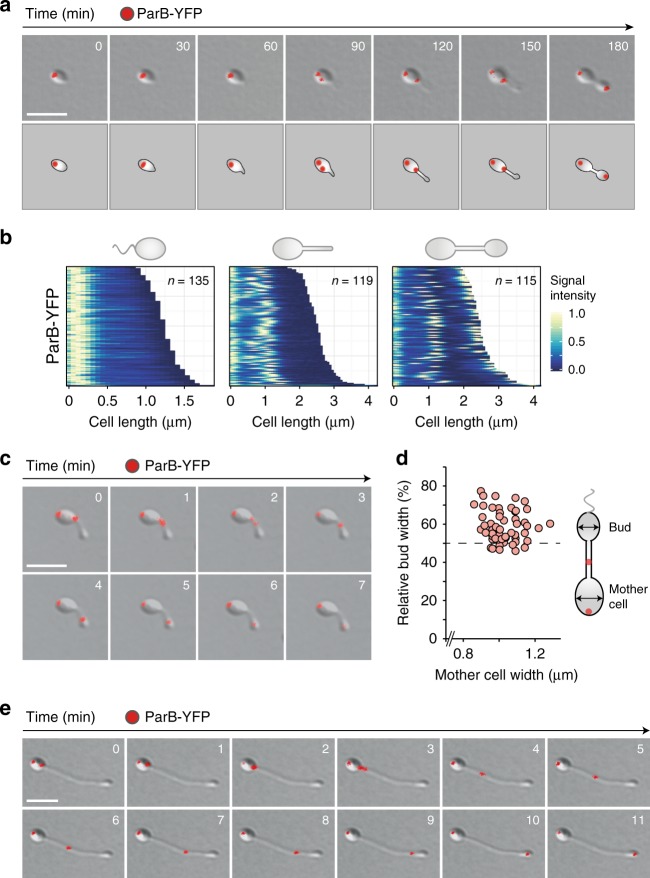
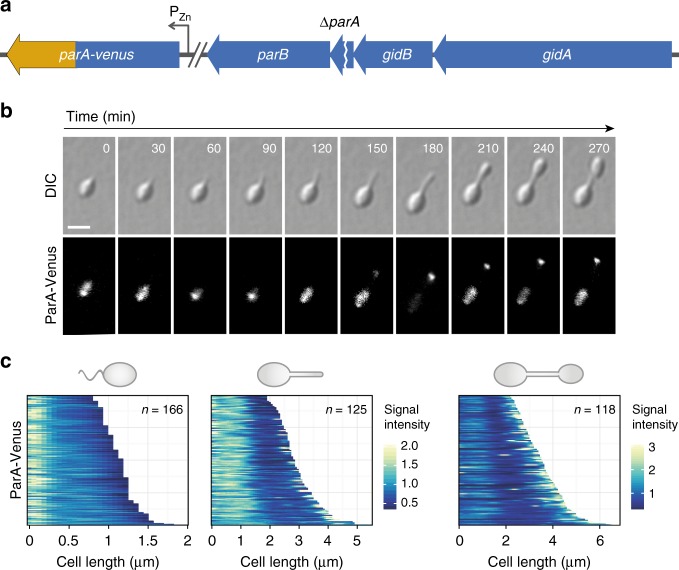
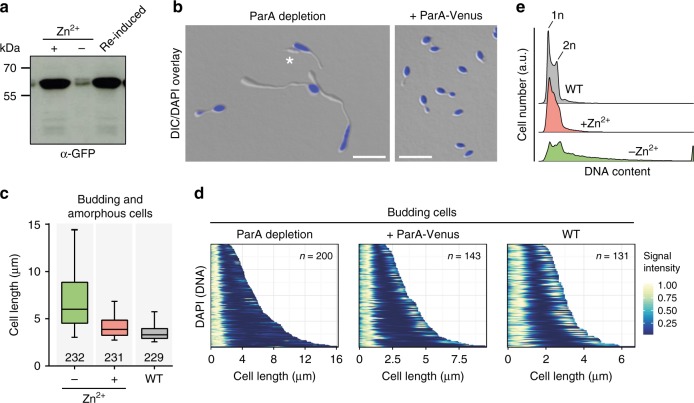
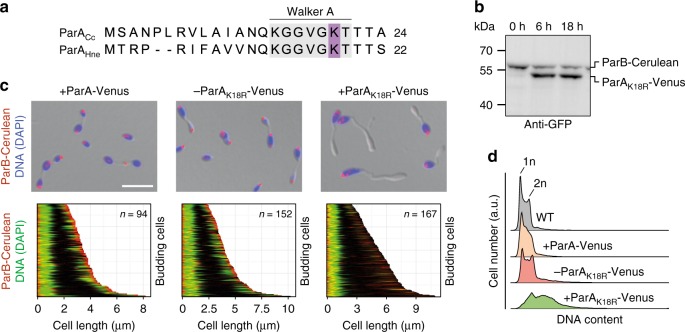
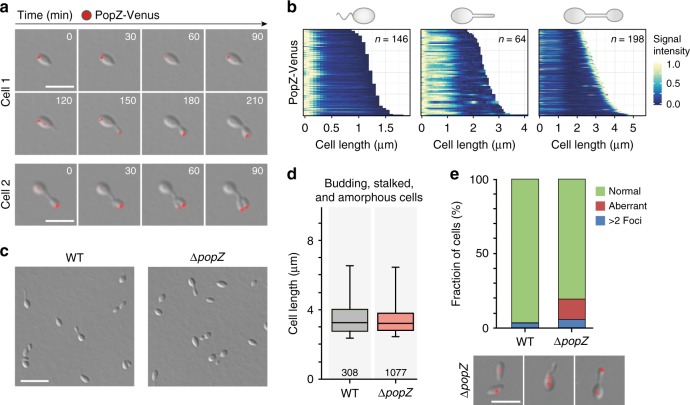
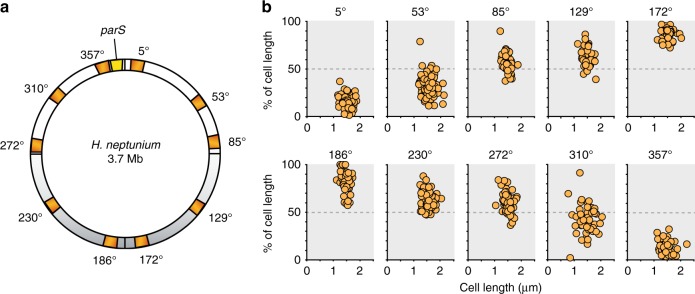
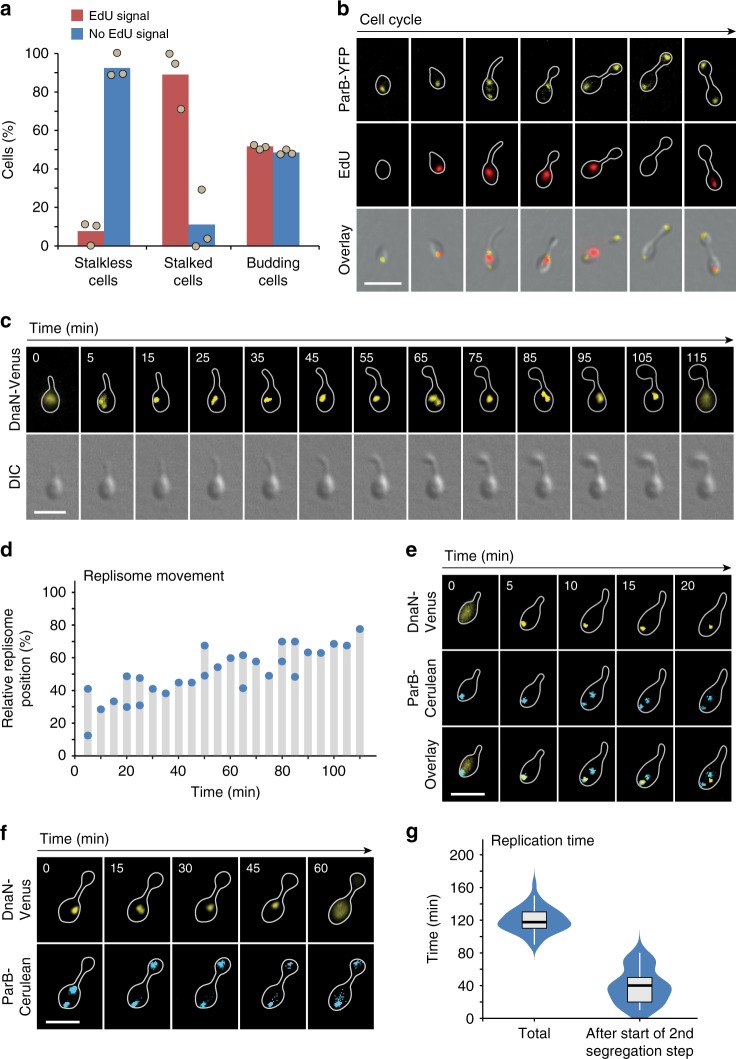
Chromosome segregation typically occurs after replication has finished in eukaryotes but during replication in bacteria. Here, we show that the alphaproteobacterium Hyphomonas neptunium, which proliferates by bud formation at the tip of a stalk-like cellular extension, segregates its chromosomes in a unique two-step process. First, the two sister origin regions are targeted to opposite poles of the mother cell, driven by the ParABS partitioning system. Subsequently, once the bulk of chromosomal DNA has been replicated and the bud exceeds a certain threshold size, the cell initiates a second segregation step during which it transfers the stalk-proximal origin region through the stalk into the nascent bud compartment. Thus, while chromosome replication and segregation usually proceed concurrently in bacteria, the two processes are largely uncoupled in H. neptunium, reminiscent of eukaryotic mitosis. These results indicate that stalked budding bacteria have evolved specific mechanisms to adjust chromosome segregation to their unusual life cycle.
染色体分离通常发生在真核生物复制完成后,但在细菌复制过程中进行。在这里,我们表明,通过在类似茎状细胞延伸物的尖端形成芽来增殖的α变形菌噬纤维菌,以独特的两步过程分离其染色体。首先,通过 ParABS 分区系统将两个姐妹起始区域靶向母细胞的相反极。随后,一旦大部分染色体 DNA 被复制,并且芽超过一定的阈值大小,细胞就会在第二个分离步骤中启动,在此过程中,它将靠近茎部的起始区域通过茎部转移到新生芽室中。因此,虽然染色体复制和分离通常在细菌中同时进行,但在噬纤维菌中,这两个过程在很大程度上是解耦的,这让人联想到真核有丝分裂。这些结果表明,有柄出芽细菌已经进化出特定的机制来调整染色体分离以适应其不寻常的生命周期。