Wang Guowen, Li Yongchang, Yang Qilin, Xu Shangrong, Ma Shike, Yan Rongge, Zhang Ruina, Jia Gongxue, Ai Deqiang, Yang Qi'en
1Key Laboratory of Adaptation and Evolution of Plateau Biota, Northwest Institute of Plateau Biology, Chinese Academy of Sciences, Xining, 810000 Qinghai China.
2University of Chinese Academy of Sciences, Beijing, 100049 China.
J Anim Sci Biotechnol. 2019 Jul 12;10:64. doi: 10.1186/s40104-019-0360-7. eCollection 2019.
Spermatogenesis is a cellular differentiation process that includes three major events: mitosis of spermatogonia, meiosis of spermatocytes and spermiogenesis. Steady-state spermatogenesis relies on functions of spermatogonial stem cells (SSCs). Establishing and maintaining a foundational SSC pool is essential for continued spermatogenesis in mammals. Currently, our knowledge about SSC and spermatogenesis is severely limited in domestic animals.
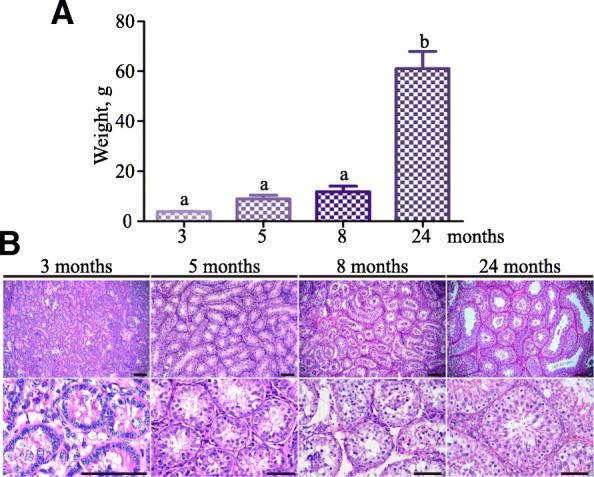
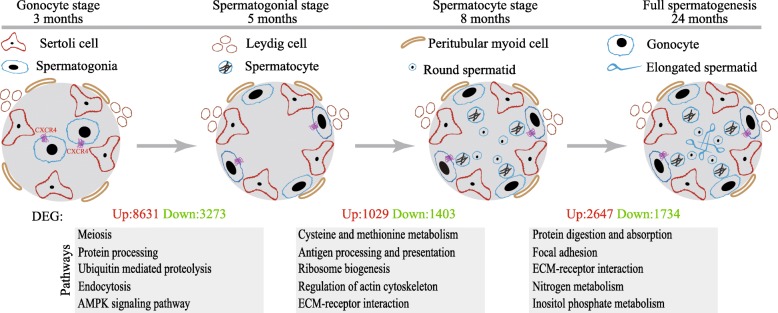
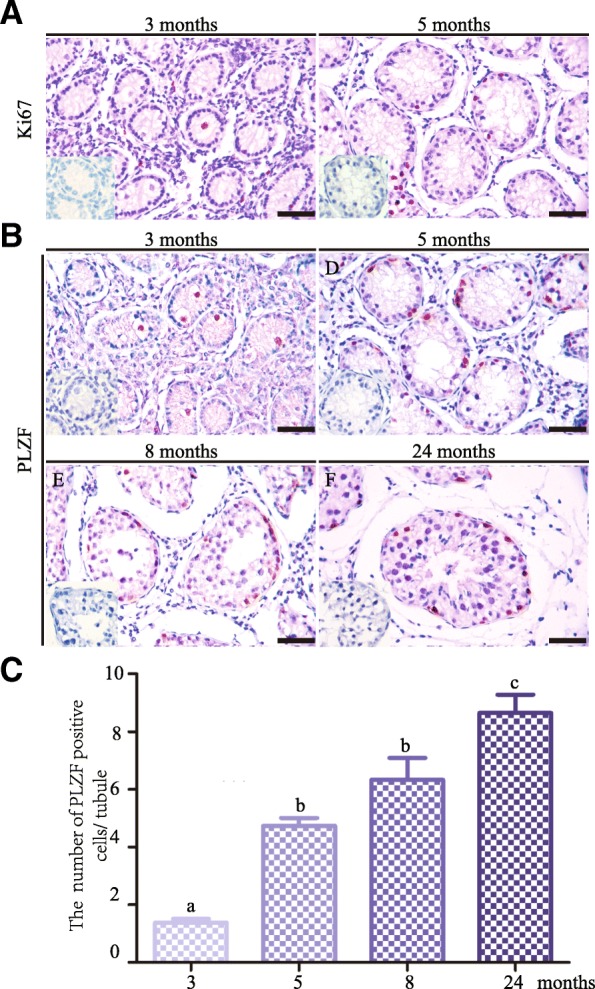
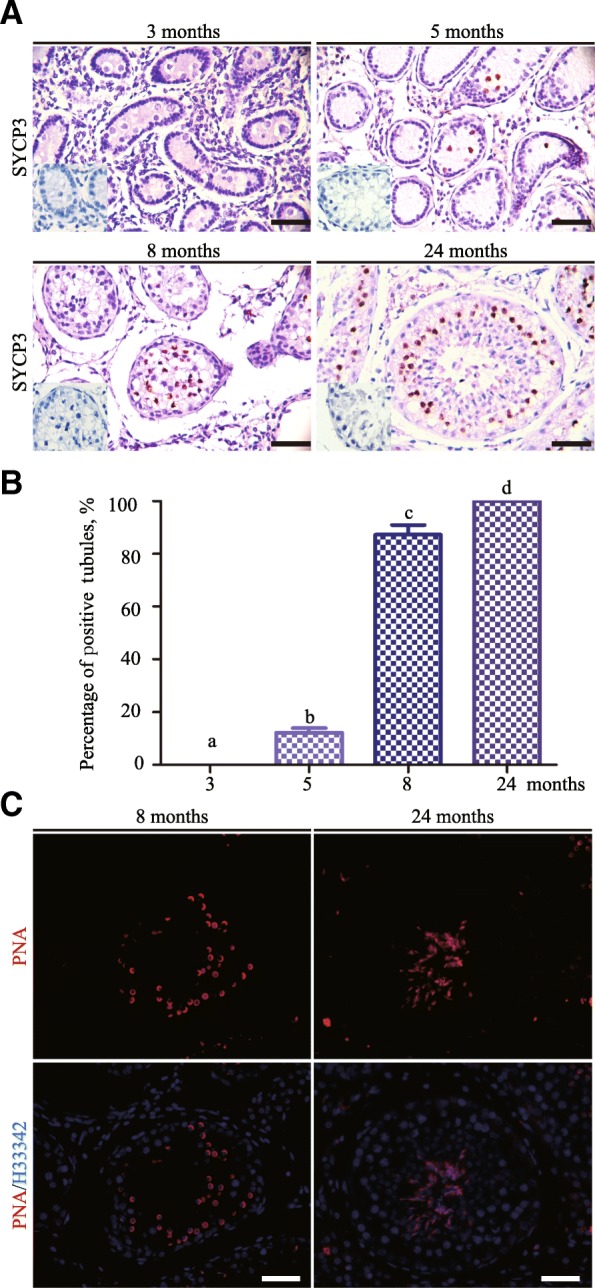
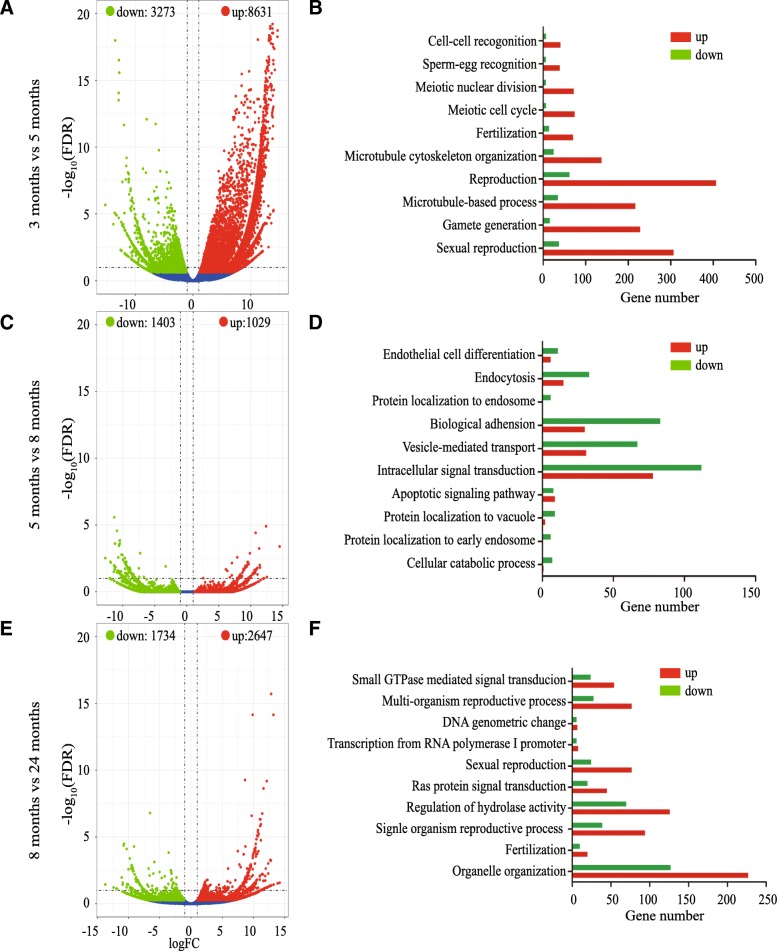
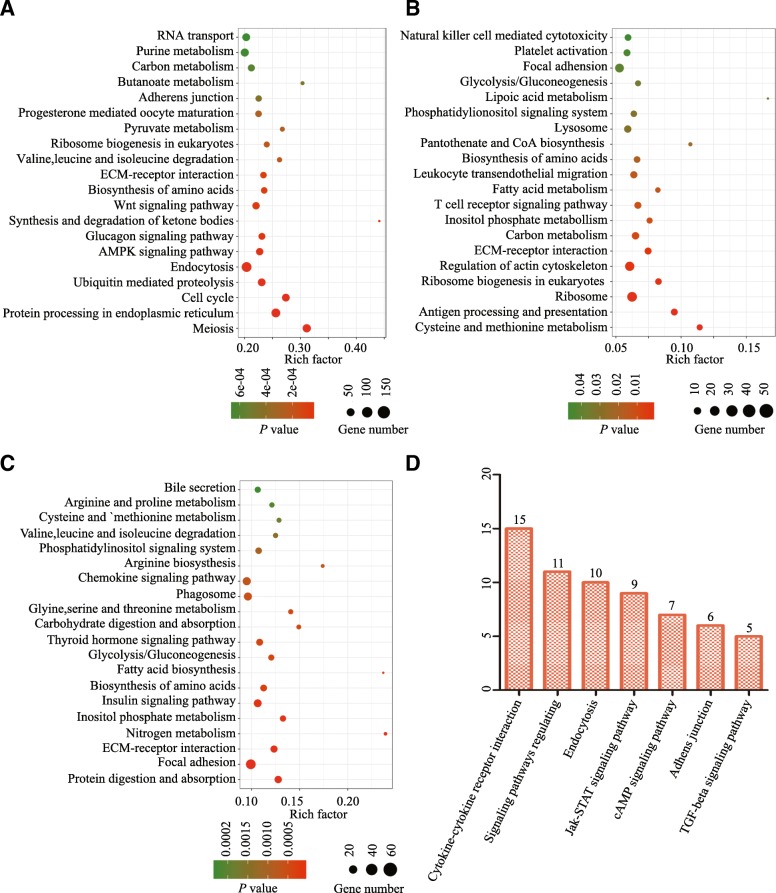
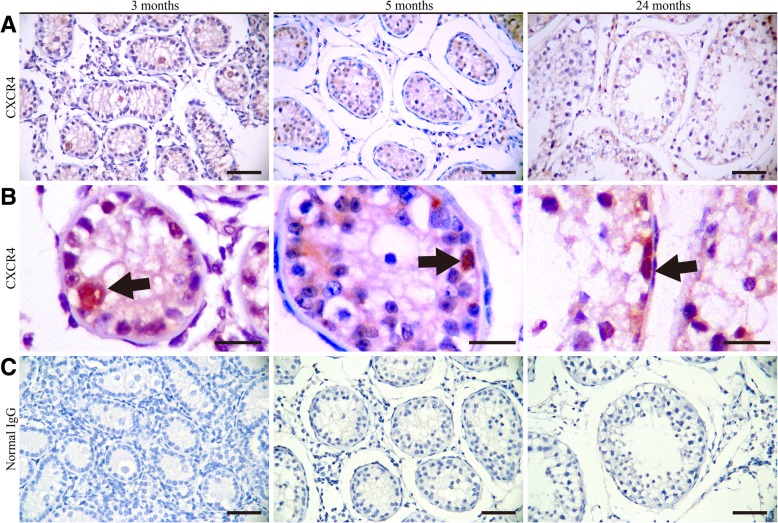
In the present study, we examined transcriptomes of testes from domestic yaks at four different stages (3, 5, 8 and 24 months of age) and attempted to identify genes that are associated with key developmental events of spermatogenesis. Histological analyses showed that the most advanced germ cells within seminiferous tubules of testes from 3, 5, 8 and 24 months old yaks were gonocytes, spermatogonia, spermatocytes and elongated spermatids, respectively. RNA-sequencing (RNA-seq) analyses revealed that 11904, 4381 and 2459 genes were differentially expressed during the gonocyte to spermatogonia transition, the mitosis to meiosis transition and the meiosis to post-meiosis transition. Further analyses identified a list of candidate genes than may regulate these important cellular processes. , a previously identified SSC niche factor in mouse, was one of the up-regulated genes in the 5 months old yak testis. Results of immunohistochemical staining confirmed that CXCR4 was exclusively expressed in gonocytes and a subpopulation of spermatogonia in the yak testis.
Together, these findings demonstrated histological changes of postnatal testis development in the domestic yak. During development of spermatogonial lineage, meiotic and haploid germ cells are supported by dynamic transcriptional regulation of gene expression. Our transcriptomic analyses provided a list of candidate genes that potentially play crucial roles in directing the establishment of SSC and spermatogenesis in yak.
精子发生是一个细胞分化过程,包括三个主要事件:精原细胞的有丝分裂、精母细胞的减数分裂和精子形成。稳态精子发生依赖于精原干细胞(SSCs)的功能。建立和维持一个基础的SSC库对于哺乳动物持续的精子发生至关重要。目前,我们对家畜中SSC和精子发生的了解非常有限。
在本研究中,我们检测了家养牦牛在四个不同阶段(3、5、8和24月龄)睾丸的转录组,并试图鉴定与精子发生关键发育事件相关的基因。组织学分析表明,3、5、8和24月龄牦牛睾丸生精小管内最先进的生殖细胞分别是生殖母细胞、精原细胞、精母细胞和伸长的精子细胞。RNA测序(RNA-seq)分析显示,在生殖母细胞向精原细胞转变、有丝分裂向减数分裂转变以及减数分裂向减数分裂后转变过程中,分别有11904、4381和2459个基因差异表达。进一步分析确定了一系列可能调控这些重要细胞过程的候选基因。CXCR4是小鼠中先前鉴定的一种SSC微环境因子,是5月龄牦牛睾丸中上调的基因之一。免疫组织化学染色结果证实,CXCR4仅在家养牦牛睾丸的生殖母细胞和精原细胞亚群中表达。
总之,这些发现证明了家养牦牛出生后睾丸发育的组织学变化。在精原细胞谱系发育过程中,减数分裂和单倍体生殖细胞受到基因表达动态转录调控的支持。我们的转录组分析提供了一系列候选基因,这些基因可能在指导牦牛SSC的建立和精子发生中发挥关键作用。