Liu Xiaobei, Mo Fei, Zeng Hao, Zhu Sha, Ma Xuelei
Cancer Center, State Key Laboratory of Biotherapy, West China Hospital, Sichuan University, Chengdu, Sichuan 610041, P.R. China.
West China School of Medicine, West China Hospital, Sichuan University, Chengdu, Sichuan 610041, P.R. China.
Biomed Rep. 2019 Aug;11(2):70-78. doi: 10.3892/br.2019.1222. Epub 2019 Jun 13.
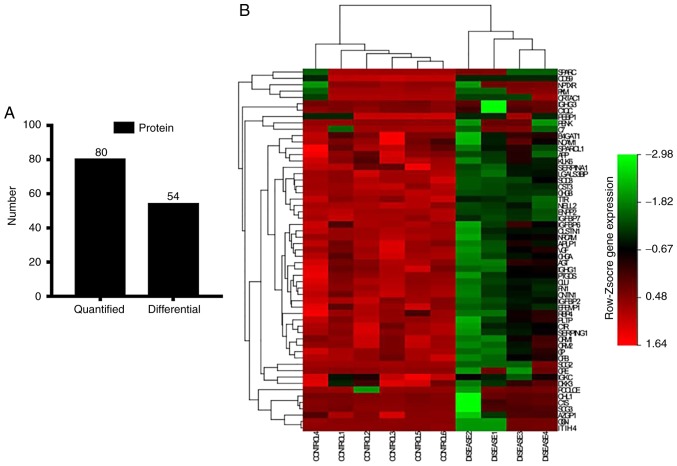
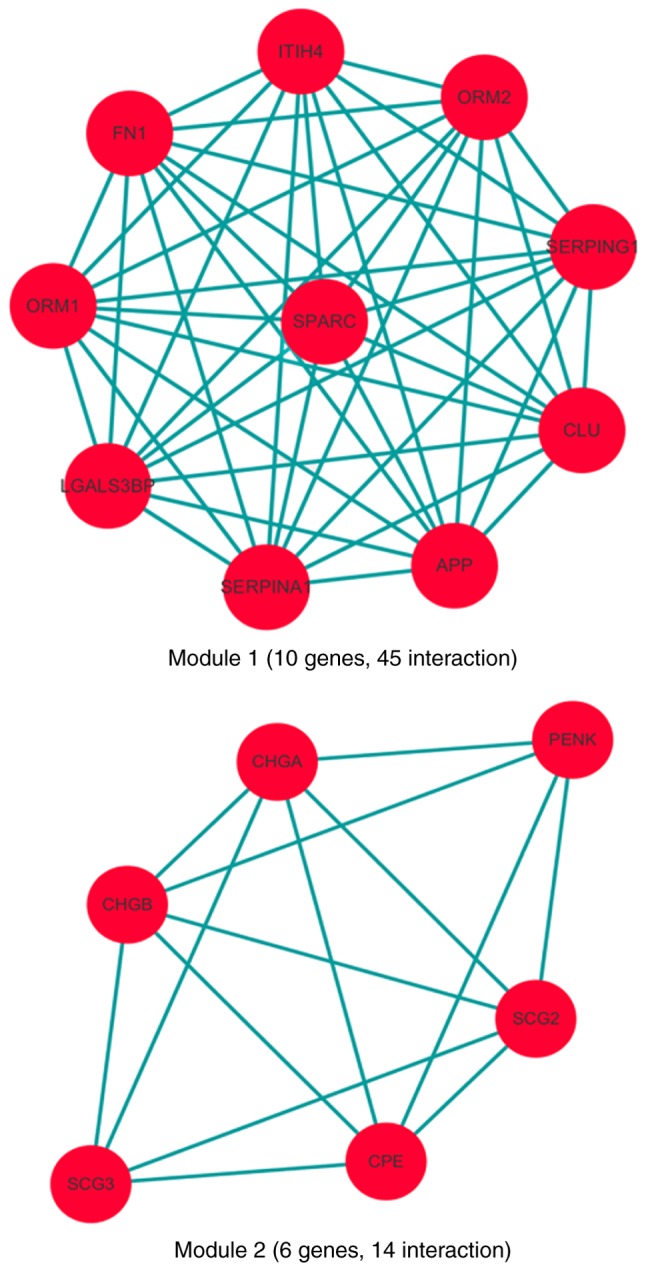
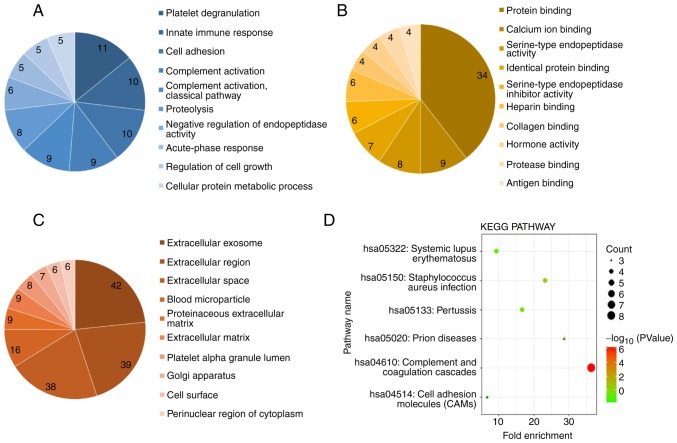
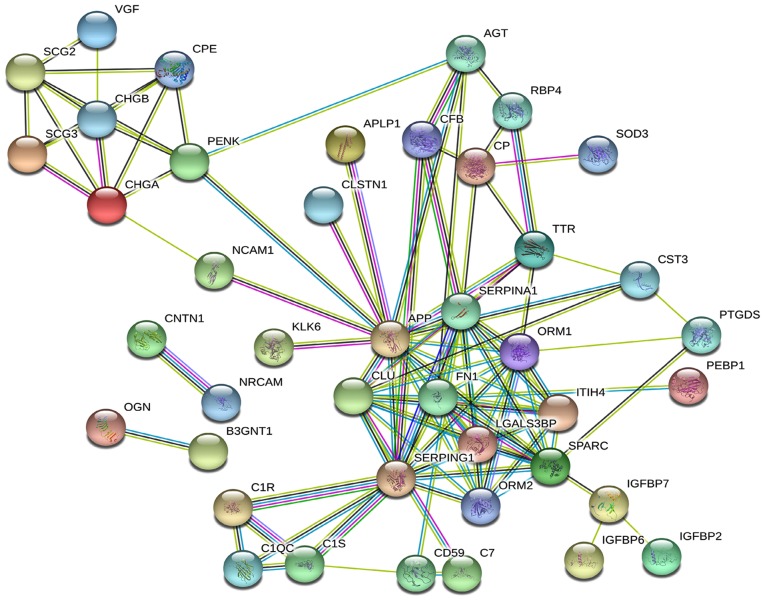
The outcome of patients with diffuse large B-cell lymphoma (DLBCL) with central nervous system (CNS) recurrence is poor. However, there is currently no consensus regarding diagnostic techniques. The aim of the present study was to investigate the cerebrospinal fluid (CSF) protein profile of DLBCL and identify a potential novel method for the early diagnosis of patients with DLBCL at high risk for subsequent CNS involvement. The CSF proteomic profiling of patients with DLBCL and a control group were compared using label-free liquid chromatography-tandem mass spectrometry. Gene Ontology and pathway analyses were conducted using the Database for Annotation, Visualization and Integrated Discovery. The protein interactions were analyzed using the Search Tool for the Retrieval of Interacting Genes/Proteins database. In the present study, a total of 53 differentially expressed proteins with >1 log fold change (false discovery rate <0.01, P<0.05) were identified and quantified. These proteins appeared to be involved in platelet degranulation, innate immune response and cell adhesion. Two hub gene network modules were obtained by protein-protein interaction network analysis. Of these proteins, secreted protein acidic and rich in cysteine (SPARC) and proenkephalin (PENK) were significantly decreased in the CSF of patients with DLBCL, which appeared to be correlated with CNS involvement. The findings of the present study indicate that decreased expression levels of SPARC and PENK in the CSF may serve as early-phase biomarkers to evaluate the risk of CNS involvement in patients with DLBCL, enabling clinicians to offer prophylactic therapy at the time of diagnosis.
弥漫性大B细胞淋巴瘤(DLBCL)患者发生中枢神经系统(CNS)复发的预后较差。然而,目前关于诊断技术尚无共识。本研究的目的是研究DLBCL患者的脑脊液(CSF)蛋白质谱,并确定一种潜在的新方法,用于早期诊断有后续CNS受累高风险的DLBCL患者。使用无标记液相色谱-串联质谱法比较DLBCL患者和对照组的CSF蛋白质组学图谱。使用注释、可视化和综合发现数据库进行基因本体论和通路分析。使用检索相互作用基因/蛋白质数据库的搜索工具分析蛋白质相互作用。在本研究中,共鉴定和定量了53种差异表达蛋白,其变化倍数>1 log(错误发现率<0.01,P<0.05)。这些蛋白质似乎参与血小板脱颗粒、先天免疫反应和细胞粘附。通过蛋白质-蛋白质相互作用网络分析获得了两个枢纽基因网络模块。在这些蛋白质中,富含半胱氨酸的酸性分泌蛋白(SPARC)和脑啡肽原(PENK)在DLBCL患者的CSF中显著降低,这似乎与CNS受累相关。本研究结果表明,CSF中SPARC和PENK表达水平降低可能作为评估DLBCL患者CNS受累风险的早期生物标志物,使临床医生能够在诊断时提供预防性治疗。