School of Psychological Sciences, Monash University, Melbourne, Australia.
College of Education, Psychology and Social Work, Flinders University, Adelaide, Australia.
PLoS One. 2019 Jul 24;14(7):e0218988. doi: 10.1371/journal.pone.0218988. eCollection 2019.
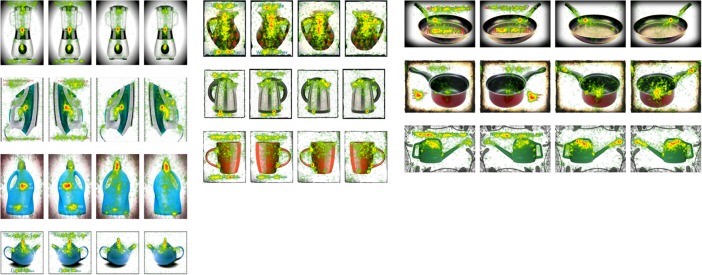
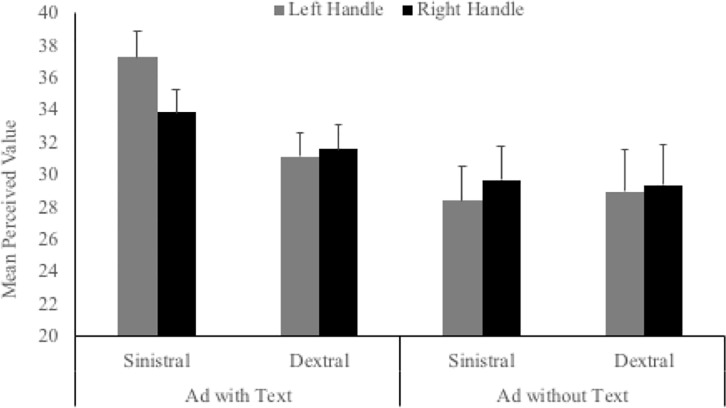
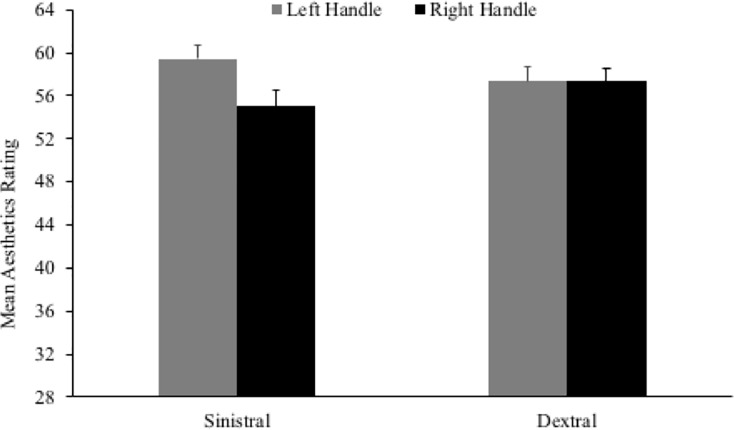
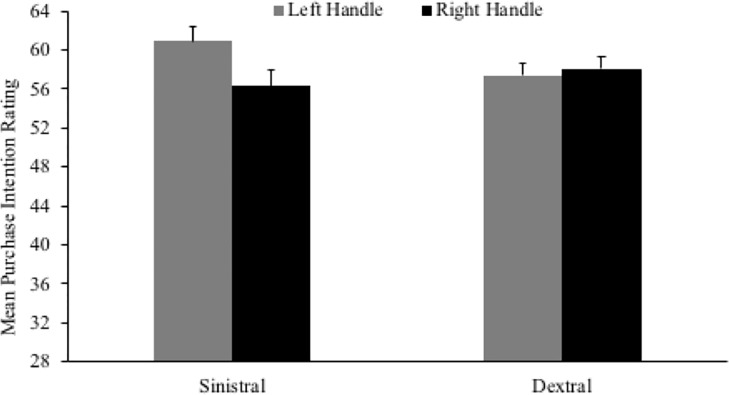
We live in a right-hander's world. Although left-handers become accustomed to using right-handed devices, an underlying preference for objects that afford the dominant hand could remain. We employed eye tracking while left- and right-handed participants viewed advertisements for everyday products. Participants then rated aesthetic appeal, purchase intention, and perceived value. Left-handed participants found advertisements for products that more easily afforded them action to be more aesthetically appealing. They also indicated greater future purchase intention for products that were oriented towards the left hand, and gave these products a higher perceived value. Eye tracking data showed that object handles attracted attention, and were also able to retain participants' attention. Further, across multiple eye movement measures, our data show that participant eye movements were altered by the orientation of the handle, such that this side of the image was examined earlier and for longer, regardless of handedness. Left-handers' preferences might be stronger because they are more aware of object orientation, whereas right-handers do not experience the same difficulties. These findings highlight intrinsic differences in the way in which we perceive objects and our underlying judgments about those products, based on handedness.
我们生活在一个右撇子的世界里。尽管左撇子已经习惯了使用右手工具,但他们可能仍然更喜欢为惯用手提供便利的物品。我们让左撇子和右撇子参与者在观看日常用品广告时使用眼动追踪技术。然后,参与者对美学吸引力、购买意愿和感知价值进行了评价。左撇子参与者发现,那些更容易让他们用惯用手操作的产品的广告更具吸引力。他们也表示,对于那些面向左手的产品,他们将来更有可能购买,并且这些产品的感知价值更高。眼动追踪数据显示,物体把手吸引了人们的注意力,并且能够保持参与者的注意力。此外,通过多项眼动测量,我们的数据表明,参与者的眼动会因把手的方向而发生变化,无论他们是惯用左手还是右手,图像的这一侧都会更早被看到,并且停留的时间更长。左撇子的偏好可能更强,因为他们更关注物体的方向,而右撇子则不会遇到同样的困难。这些发现突出了基于手性的我们感知物体和对这些产品的潜在判断方式的内在差异。