School of Occupational Therapy, Social Work and Speech Pathology, Curtin University, Perth, Western Australia, Australia.
Cooperative Research Centre for Living with autism (Autism CRC), Long Pocket Brisbane, Queensland, Australia.
PLoS One. 2019 Jul 25;14(7):e0220197. doi: 10.1371/journal.pone.0220197. eCollection 2019.
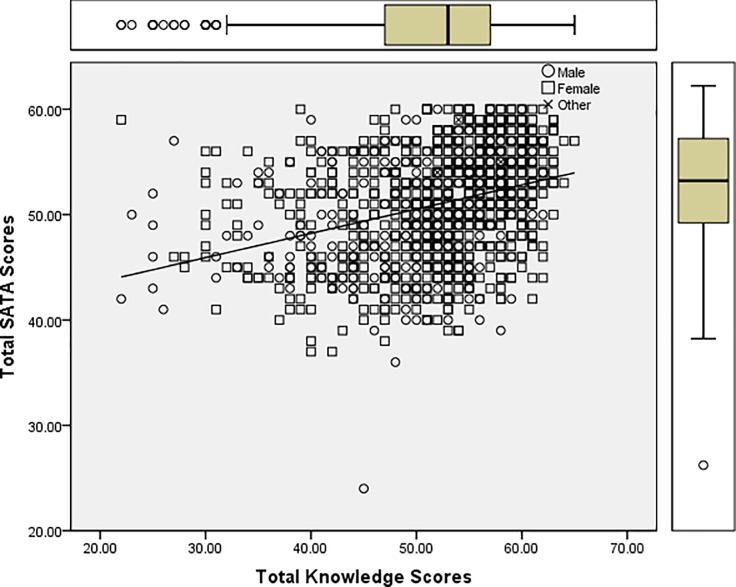
"Why are neurotypicals so pig-ignorant about autism?" an autistic person wrote on the Curtin Autism Research Group's on-line portal as a response to a call for research questions. Co-produced with an autistic researcher, knowledge about and attitudes towards autism were analysed from 1,054 completed surveys, representing the Australian neurotypical adult population. The majority, 81.5% of participants had a high level of knowledge and 81.3% of participants had a strong positive attitude towards autism. Neither age, nor education level had an impact on attitudes. However, attitudes were influenced by knowledge about 'Societal Views and Ideas'; 'What it Could be Like to Have Autism'; and the demographic variables 'Knowing and having spent time around someone with autism'; and gender (women having more positive attitudes than men). Thus, targeted interventions, geared more towards men than women, to increase knowledge about autism could further improve attitudes and increase acceptance of the autistic community.
“为什么神经典型人对自闭症如此无知?”一位自闭症患者在科廷自闭症研究小组的在线门户上回应了一项研究问题的呼吁。这项研究由一位自闭症研究员共同完成,从代表澳大利亚神经典型成年人群体的 1054 份完成的调查中分析了对自闭症的了解和态度。大多数(81.5%)参与者具有较高的知识水平,81.3%的参与者对自闭症持有强烈的积极态度。年龄和教育水平都没有对态度产生影响。然而,态度受到“社会观点和观念”、“自闭症可能是什么样子”以及人口统计学变量“了解并与自闭症患者相处过”和性别(女性比男性态度更积极)的影响。因此,针对男性而非女性的有针对性的干预措施,以增加对自闭症的了解,可能会进一步改善态度,增加对自闭症群体的接受程度。