Szczerbinski Lukasz, Taylor Mark A, Citko Anna, Gorska Maria, Larsen Steen, Hady Hady Razak, Kretowski Adam
Department of Endocrinology, Diabetology and Internal Medicine; Medical University of Bialystok, Sklodowskiej-Curie 24A, 15-276 Bialystok, Poland.
School of Medicine, University of California at San Francisco, 505 Parnassus Ave., San Francisco, CA 94143, USA.
J Clin Med. 2019 Jul 24;8(8):1091. doi: 10.3390/jcm8081091.
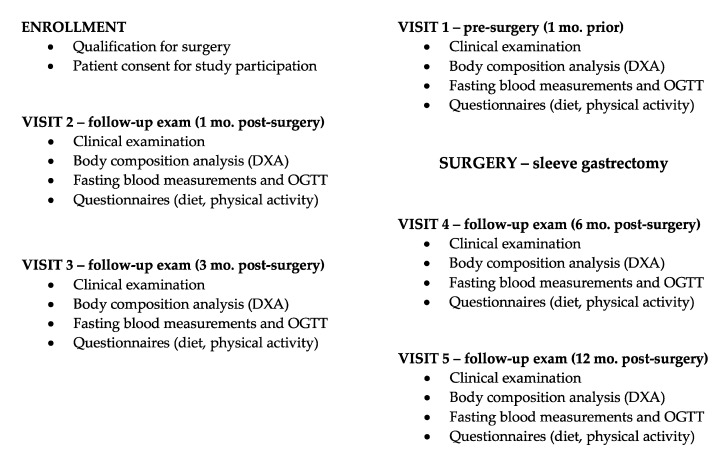
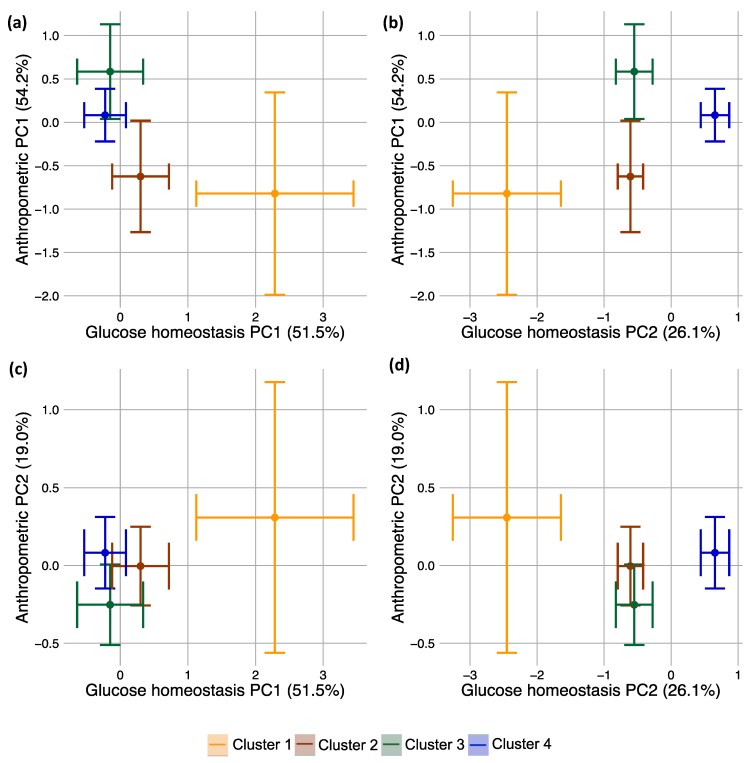
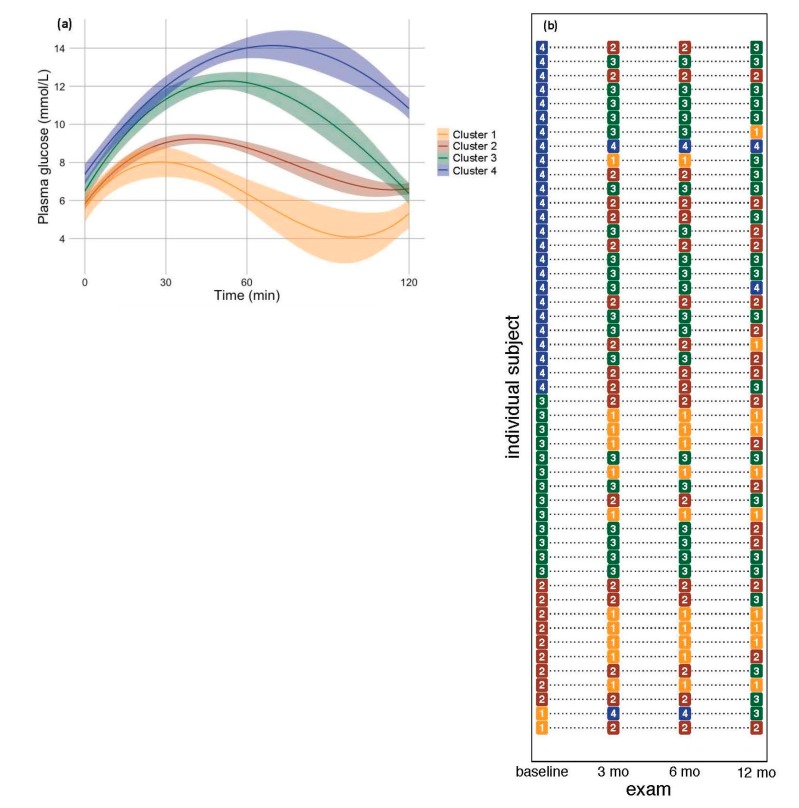
Glycemic responses to bariatric surgery are highly heterogeneous among patients and defining response types remains challenging. Recently developed data-driven clustering methods have uncovered subtle pathophysiologically informative patterns among patients without diabetes. This study aimed to explain responses among patients with and without diabetes to bariatric surgery with clusters of glucose concentration during oral glucose tolerance tests (OGTTs). We assessed 30 parameters at baseline and at four subsequent follow-up visits over one year on 154 participants in the Bialystok Bariatric Surgery Study. We applied latent trajectory classification to OGTTs and multinomial regression and generalized linear mixed models to explain differential responses among clusters. OGTT trajectories created four clusters representing increasing dysglycemias that were discordant from standard diabetes diagnosis criteria. The baseline OGTT cluster increased the predictive power of regression models by over 31% and aided in correctly predicting more than 83% of diabetes remissions. Principal component analysis showed that the glucose homeostasis response primarily occurred as improved insulin sensitivity concomitant with improved the OGTT cluster. In sum, OGTT clustering explained multiple, correlated responses to metabolic surgery. The OGTT is an intuitive and easy-to-implement index of improvement that stratifies patients into response types, a vital first step in personalizing diabetic care in obese subjects.
减肥手术的血糖反应在患者中高度异质性,定义反应类型仍然具有挑战性。最近开发的数据驱动聚类方法揭示了无糖尿病患者中细微的病理生理信息模式。本研究旨在通过口服葡萄糖耐量试验(OGTT)期间的血糖浓度聚类来解释减肥手术对有糖尿病和无糖尿病患者的反应。我们在比亚韦斯托克减肥手术研究中对154名参与者在基线以及随后一年中的四次随访中评估了30项参数。我们将潜在轨迹分类应用于OGTT,并使用多项回归和广义线性混合模型来解释各聚类之间的差异反应。OGTT轨迹产生了四个代表血糖异常增加的聚类,这些聚类与标准糖尿病诊断标准不一致。基线OGTT聚类使回归模型的预测能力提高了31%以上,并有助于正确预测超过83%的糖尿病缓解情况。主成分分析表明,葡萄糖稳态反应主要表现为胰岛素敏感性改善,同时OGTT聚类也得到改善。总之,OGTT聚类解释了对代谢手术的多种相关反应。OGTT是一种直观且易于实施的改善指标,可将患者分层为不同的反应类型,这是肥胖受试者糖尿病个性化护理至关重要的第一步。