Verhaltensökologie & Soziobiologie, Deutsches Primatenzentrum - Leibniz-Institut für Primatenforschung, Göttingen, Germany.
Laboratório de Primatologia, Departamento de Zoologia, Universidade Estadual Paulista - UNESP, Rio Claro, SP, Brazil.
Sci Rep. 2019 Jul 25;9(1):10356. doi: 10.1038/s41598-019-46683-x.
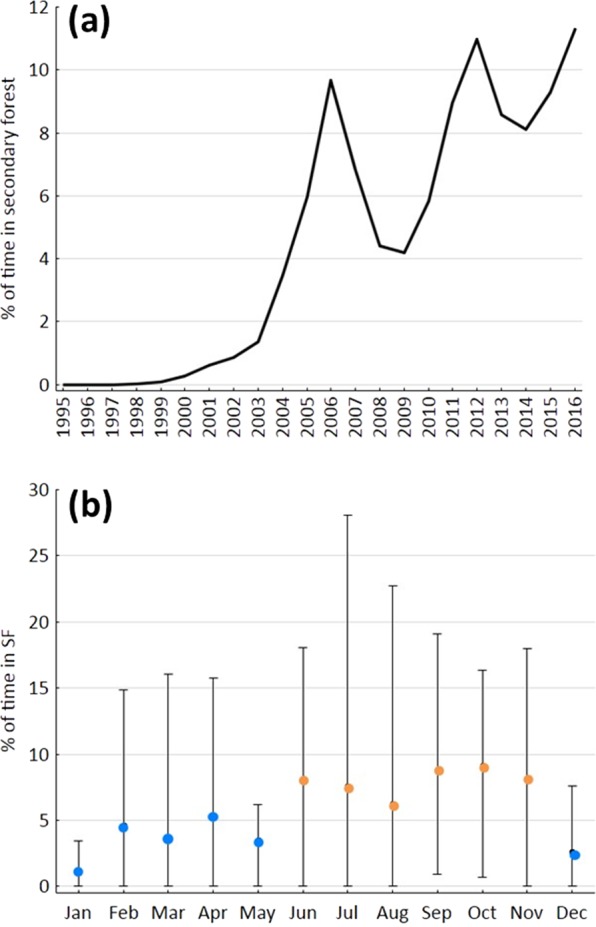
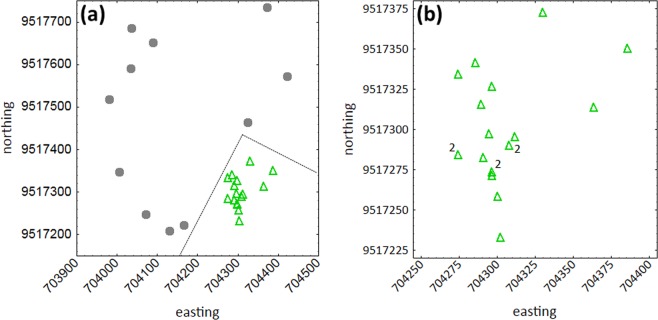
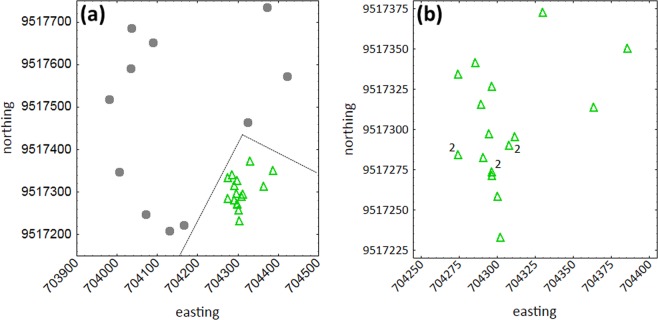
Increasingly large proportions of tropical forests are anthropogenically disturbed. Where natural regeneration is possible at all, it requires the input of plant seeds through seed dispersal from the forest matrix. Zoochorous seed dispersal - the major seed dispersal mode for woody plants in tropical forests - is particularly important for natural regeneration. In this study, covering a period of more than 20 years, we show that small New World primates, the tamarins Saguinus mystax and Leontocebus nigrifrons, increase their use of an anthropogenically disturbed area over time and disperse seeds from primary forest tree species into this area. Through monitoring the fate of seeds and through parentage analyses of seedlings of the legume Parkia panurensis from the disturbed area and candidate parents from the primary forest matrix, we show that tamarin seed dispersal is effective and contributes to the natural regeneration of the disturbed area.
越来越多的热带森林受到人为干扰。在可能进行自然恢复的地方,它需要通过森林基质中的植物种子传播来输入植物种子。动物传播——热带森林中木本植物的主要种子传播方式——对自然恢复特别重要。在这项为期 20 多年的研究中,我们表明,小型新世界灵长类动物,绢毛猴和黑掌绢毛猴,随着时间的推移增加了对人为干扰区域的利用,并将来自原生林树种的种子传播到该区域。通过监测种子的命运以及通过对来自干扰区域的豆科植物 Parkia panurensis 的幼苗和来自原生林基质的候选亲本的亲子关系分析,我们表明绢毛猴的种子传播是有效的,并有助于干扰区域的自然恢复。