Hosokawa Yuichi, Tomita Koji, Takashiri Masayuki
Department of Materials Science, Tokai University, 4-1-1 Kitakaname, Hiratsuka, Kanagawa, 259-1292, Japan.
Department of Chemistry, Tokai University, 4-1-1 Kitakaname, Hiratsuka, Kanagawa, 259-1292, Japan.
Sci Rep. 2019 Jul 25;9(1):10790. doi: 10.1038/s41598-019-47356-5.
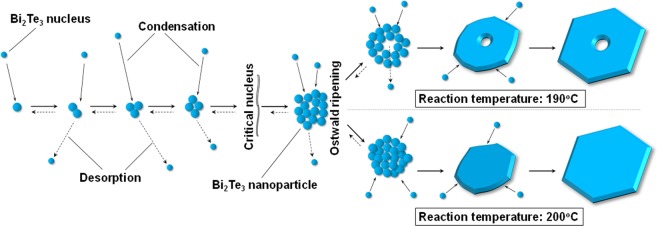
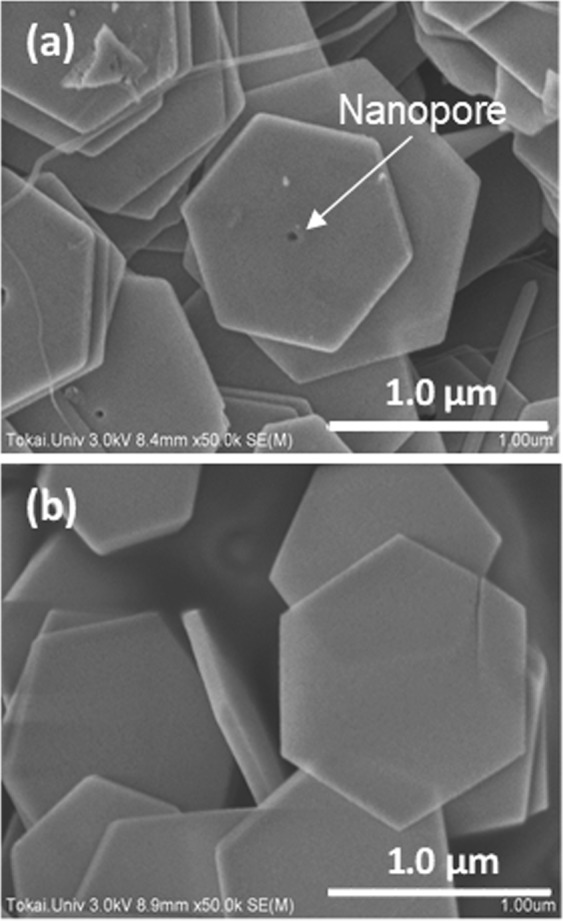
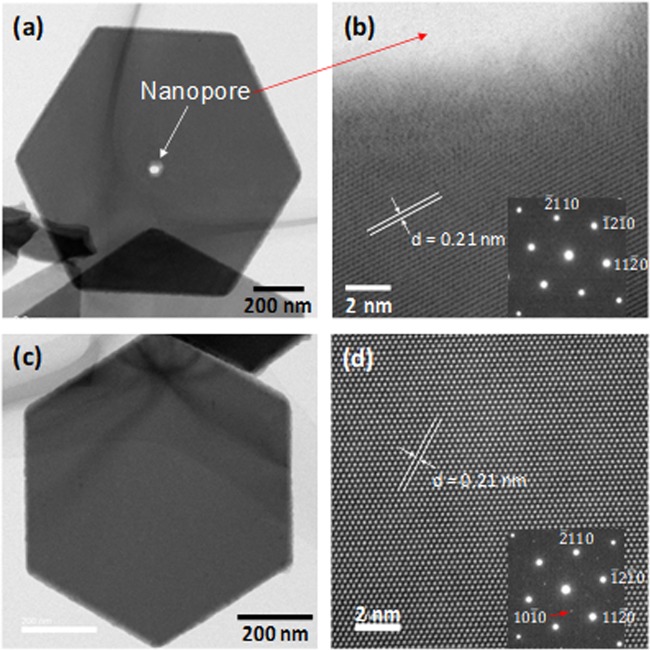
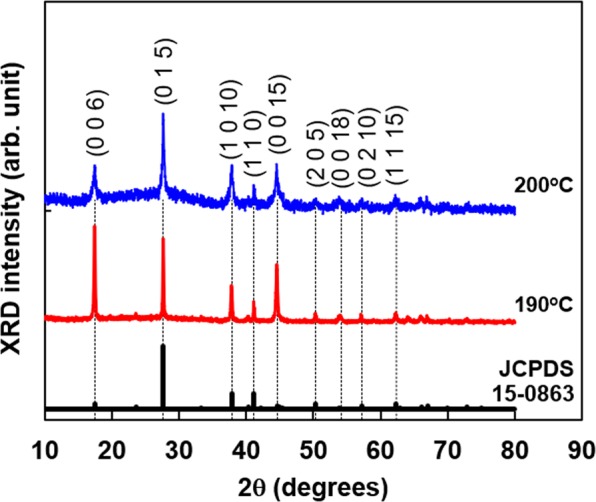
Bismuth telluride (BiTe) is a promising thermoelectric material for applications near room temperature. To increase the thermoelectric performance of this material, its dimensions and thermal transport should be decreased. Two-dimensional nanoplates with nanopores are an ideal structure because thermal transport is disrupted by nanopores. We prepared BiTe nanoplates with single nanopores by a solvothermal synthesis and investigated their structural and crystallographic properties. The nanoplates synthesized at a lower reaction temperature (190 °C) developed single nanopores (approximately 20 nm in diameter), whereas the nanoplates synthesized at a higher reaction temperature (200 °C) did not have nanopores. A crystal growth mechanism is proposed based on the experimental observations.
碲化铋(BiTe)是一种在室温附近应用前景广阔的热电材料。为提高这种材料的热电性能,应减小其尺寸并降低热传输。具有纳米孔的二维纳米片是一种理想结构,因为纳米孔会干扰热传输。我们通过溶剂热合成制备了具有单个纳米孔的BiTe纳米片,并研究了它们的结构和晶体学性质。在较低反应温度(190°C)下合成的纳米片形成了单个纳米孔(直径约20nm),而在较高反应温度(200°C)下合成的纳米片没有纳米孔。基于实验观察结果提出了一种晶体生长机制。