Multimedia and Telecommunications Department, Universitat Oberta de Catalunya, 08018 Barcelona, Spain.
Sensors (Basel). 2019 Jul 25;19(15):3274. doi: 10.3390/s19153274.
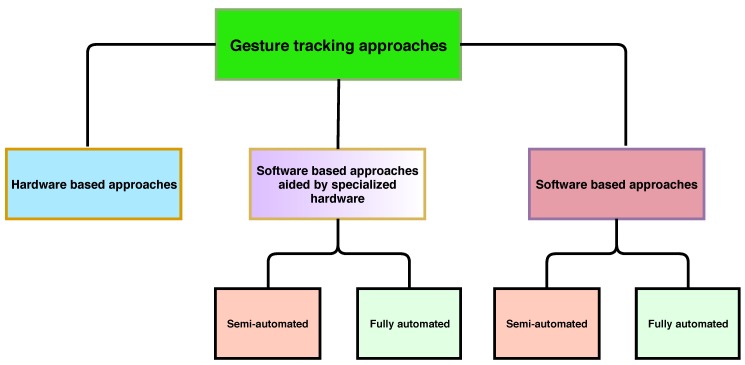
Neuroscience has traditionally relied on manually observing laboratory animals in controlled environments. Researchers usually record animals behaving freely or in a restrained manner and then annotate the data manually. The manual annotation is not desirable for three reasons; (i) it is time-consuming, (ii) it is prone to human errors, and (iii) no two human annotators will 100% agree on annotation, therefore, it is not reproducible. Consequently, automated annotation for such data has gained traction because it is efficient and replicable. Usually, the automatic annotation of neuroscience data relies on computer vision and machine learning techniques. In this article, we have covered most of the approaches taken by researchers for locomotion and gesture tracking of specific laboratory animals, i.e. rodents. We have divided these papers into categories based upon the hardware they use and the software approach they take. We have also summarized their strengths and weaknesses.
神经科学传统上依赖于在受控环境中手动观察实验室动物。研究人员通常记录自由或受约束的动物行为,然后手动注释数据。手动注释有三个不理想的原因:(i) 耗时,(ii) 容易出错,(iii) 没有两个注释者会对注释完全达成一致,因此,它是不可复制的。因此,此类数据的自动注释因其高效和可复制性而受到关注。通常,神经科学数据的自动注释依赖于计算机视觉和机器学习技术。在本文中,我们已经涵盖了研究人员对特定实验室动物(即啮齿动物)的运动和手势跟踪所采用的大多数方法。我们根据他们使用的硬件和采用的软件方法将这些论文分为几类。我们还总结了它们的优缺点。