Institute of Biochemistry and Biotechnology, Quaid-i-Azam Campus, University of the Punjab, Lahore, 54590, Pakistan.
Punjab University Health Centre, Quaid-i-Azam Campus, University of the Punjab, Lahore, 54590, Pakistan.
Sci Rep. 2019 Jul 26;9(1):10867. doi: 10.1038/s41598-019-47074-y.
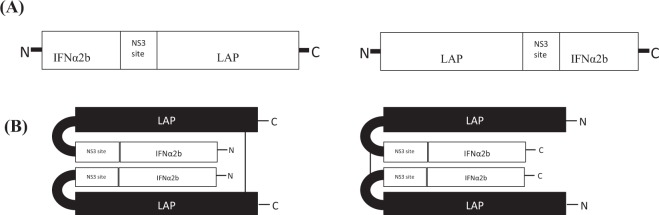
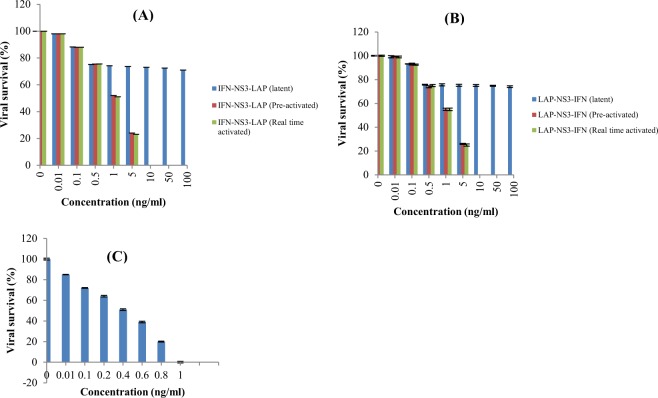
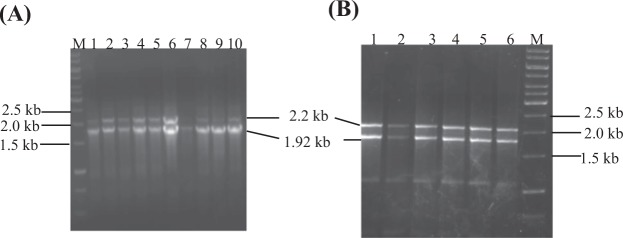
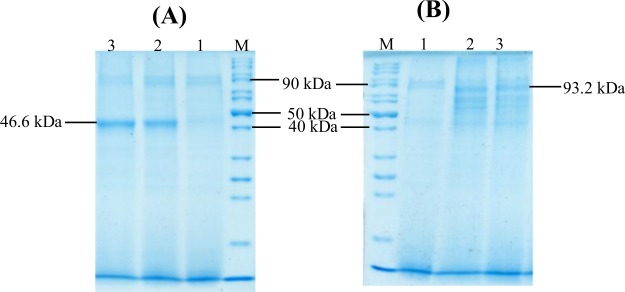
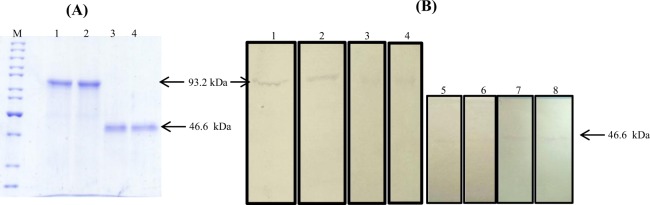
Interferon therapy for the treatment of hepatitis C virus infection has very limited clinical application due to short serum half-life and side effects of therapy in systemic route of administration. In the present study, we have focused to improve the interferon therapy by overcoming the limitation of side effects. We hypothesized that latent interferon alpha 2b (IFNα2b) produced by fusion of Latency associated protein (LAP) domain of TGFβ and IFNα2b having HCV NS3 protease cleavage site as linker that will be activated only at target site (liver) by viral protease (HCV NS3 protease) present on the surface of infected cells. The fusion proteins were expressed in pichia pastoris as homodimer and cleaved by recombinant HCV NS3 protease in vitro into two fragments corresponding to the IFNα-2b and LAP respectively. The latency of chimeric proteins and biological activity after treatment with HCV NS3 protease was assessed by cytopathic effect inhibition assay in A594 cells infected with encephalomyocarditis virus (EMCV) and reduction in HCV viral load in Huh7 cells. The HCV NS3 protease was present on the surface of HCV replicating Huh7 cells in amount that activated half of the effective concentration (EC) of latent IFNα2b fusion protein. As free circulating HCV NS3 protease was not detected in sera from chronic HCV patients and in vitro cleavage of intact latent IFNα2b fusion protein was not observed with peripheral blood mononuclear cells (PBMCs) isolated from chronic HCV patients, thus there are less likely chances of activation and off target binding of latent IFNα2b to show side effects during systemic route of administration. Therefore, most of the side effects of interferon can be overwhelmed at the cost of 50% reduced biological activity. Thus, the use of latent IFNα2b can be considered again as an option for treatment of HCV infection in combination with direct acting antivirals rather than alone with improved safety profile.
干扰素治疗丙型肝炎病毒感染的临床应用非常有限,这是由于全身给药途径的血清半衰期短和治疗副作用。在本研究中,我们专注于通过克服副作用的限制来改善干扰素治疗。我们假设潜伏的干扰素 alpha 2b(IFNα2b)通过融合 TGFβ的潜伏相关蛋白(LAP)结构域和 IFNα2b 产生,其连接子具有 HCV NS3 蛋白酶切割位点,该连接子将仅在靶位(肝脏)被感染细胞表面存在的病毒蛋白酶(HCV NS3 蛋白酶)激活。融合蛋白在毕赤酵母中作为同源二聚体表达,并在体外通过重组 HCV NS3 蛋白酶切割成分别对应 IFNα-2b 和 LAP 的两个片段。通过用脑炎心肌炎病毒(EMCV)感染的 A594 细胞中的细胞病变效应抑制试验和在 Huh7 细胞中降低 HCV 病毒载量来评估嵌合蛋白的潜伏性和 HCV NS3 蛋白酶处理后的生物活性。HCV NS3 蛋白酶存在于复制 HCV 的 Huh7 细胞表面,其数量足以激活潜伏的 IFNα2b 融合蛋白的有效浓度(EC)的一半。由于慢性 HCV 患者的血清中未检测到游离循环 HCV NS3 蛋白酶,并且从慢性 HCV 患者分离的外周血单核细胞(PBMCs)也未观察到完整的潜伏 IFNα2b 融合蛋白的体外切割,因此在全身给药途径中潜伏 IFNα2b 的激活和脱靶结合发生副作用的可能性较小。因此,大多数干扰素的副作用可以被克服,而生物活性降低 50%。因此,与直接作用抗病毒药物联合使用潜伏的 IFNα2b 可以再次被考虑作为治疗 HCV 感染的一种选择,而不是单独使用,从而具有改善的安全性。