Unité de Recherche en Biologie des Microorganismes, Laboratoire d'Immunologie et de Microbiologie, NARILIS, Université de Namur, Namur, Belgium.
Laboratory of Neurophysiology, Université Libre de Bruxelles, Brussels, Belgium.
Front Immunol. 2019 Jul 11;10:1589. doi: 10.3389/fimmu.2019.01589. eCollection 2019.
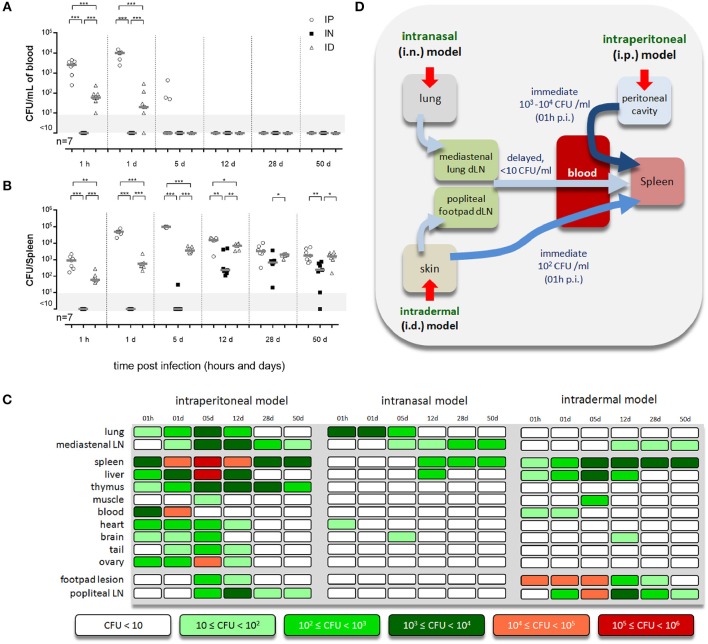
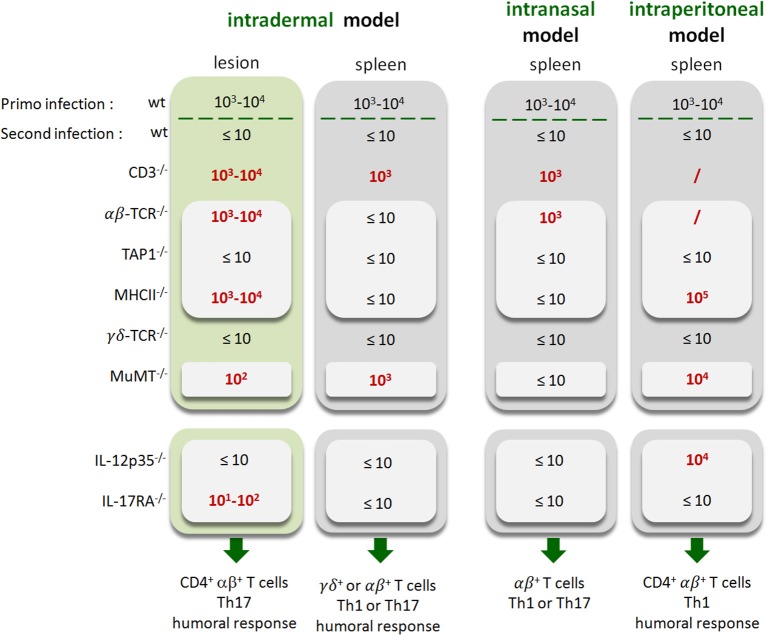
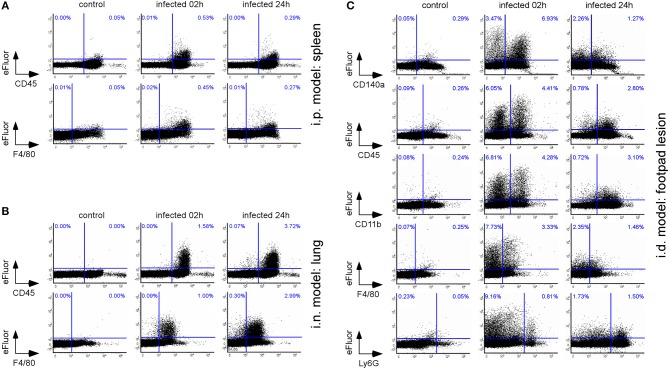
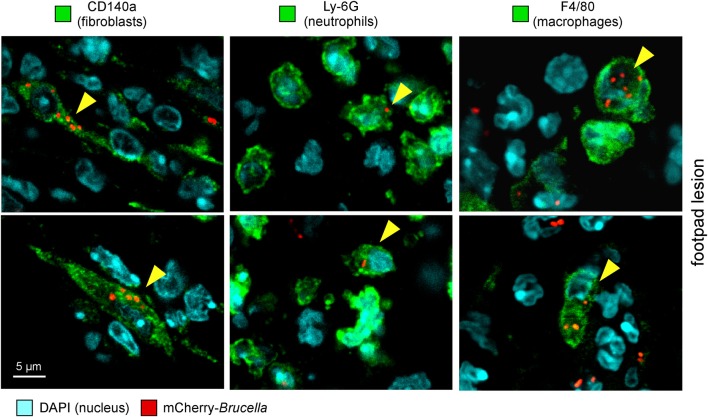
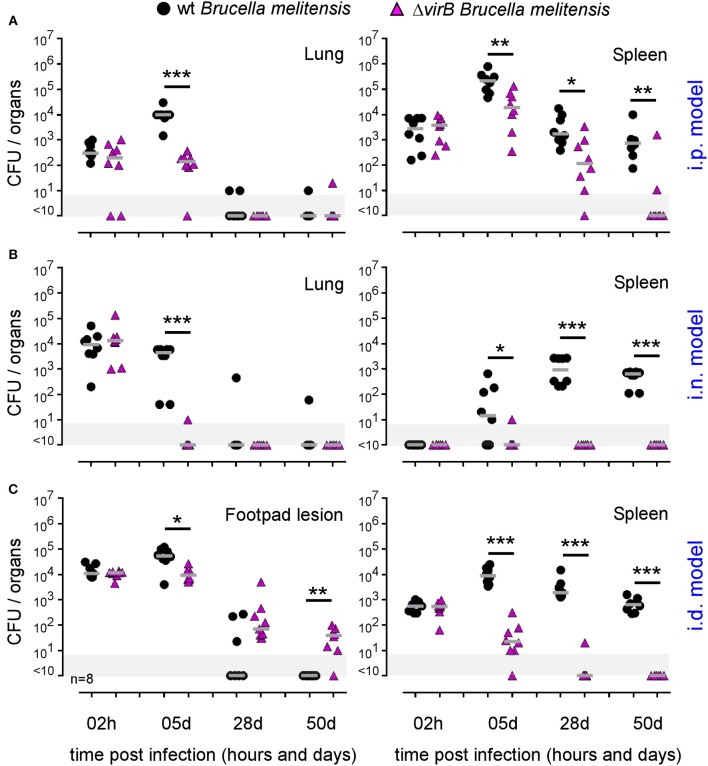
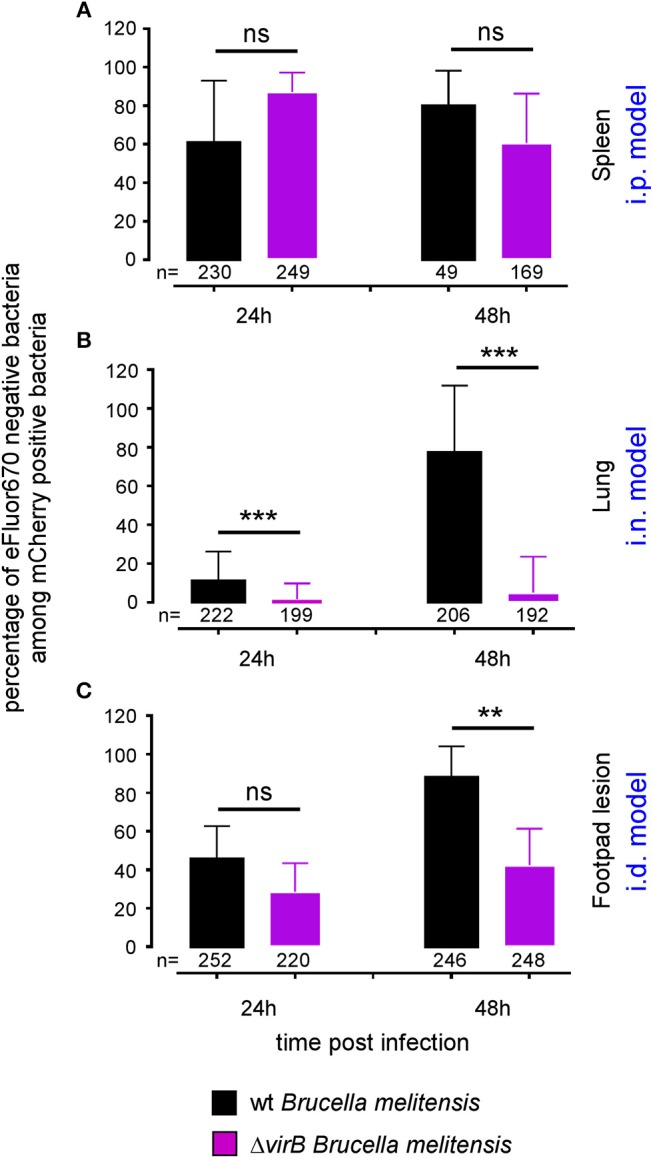
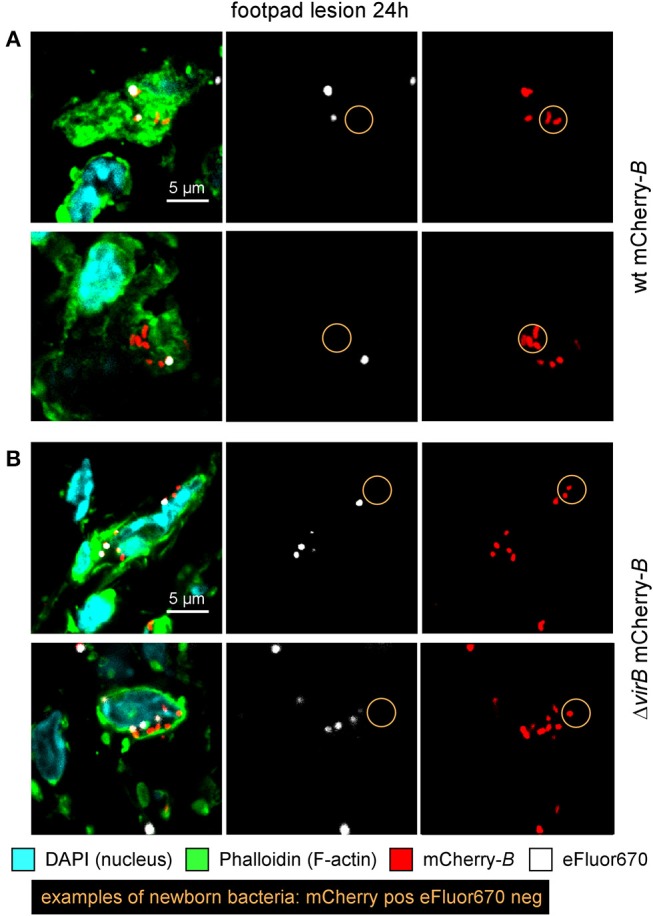
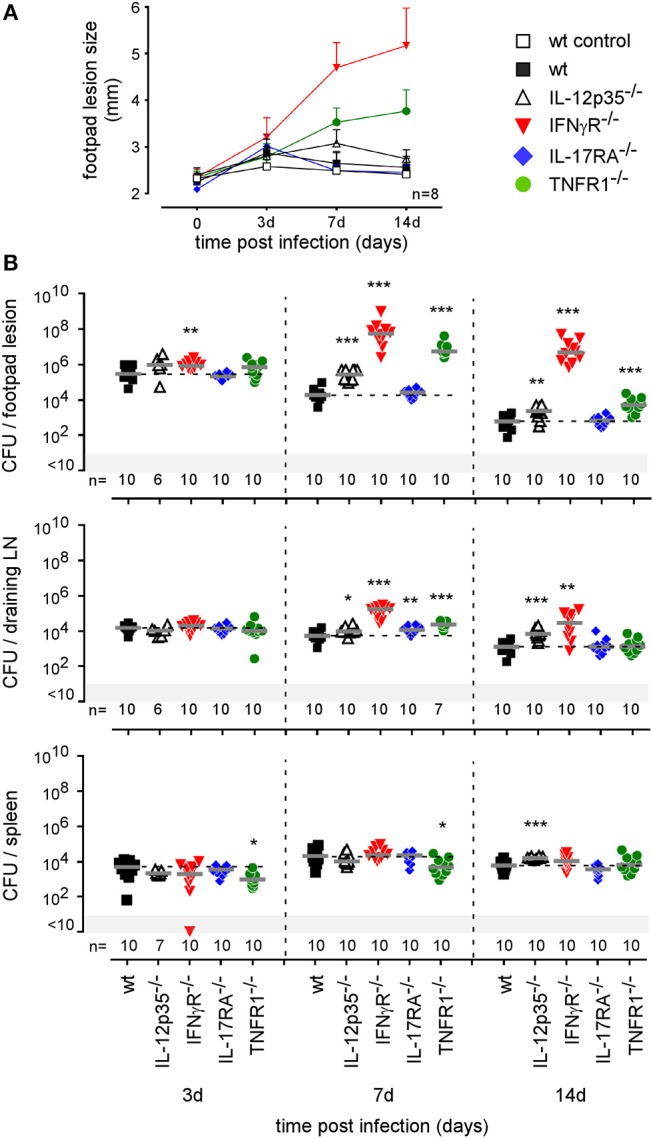
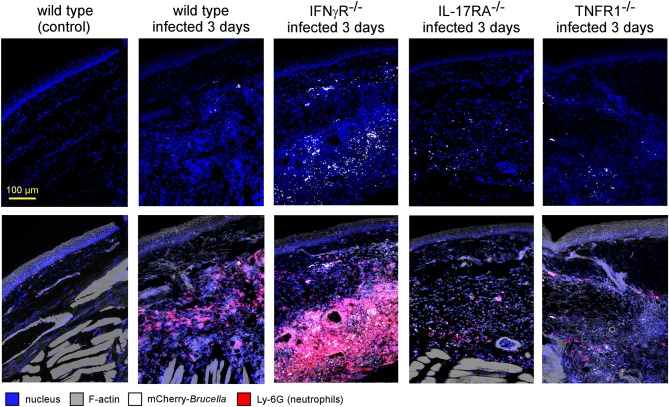
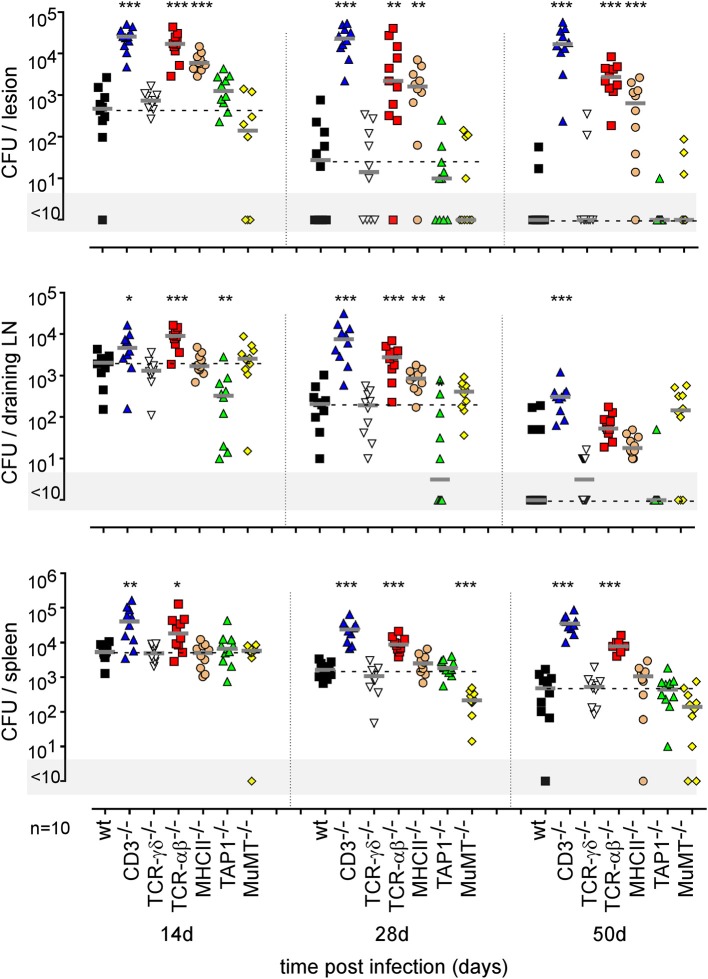
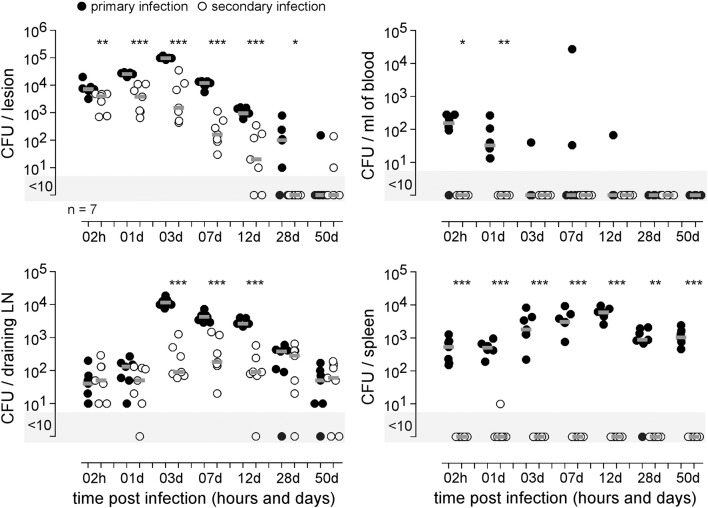
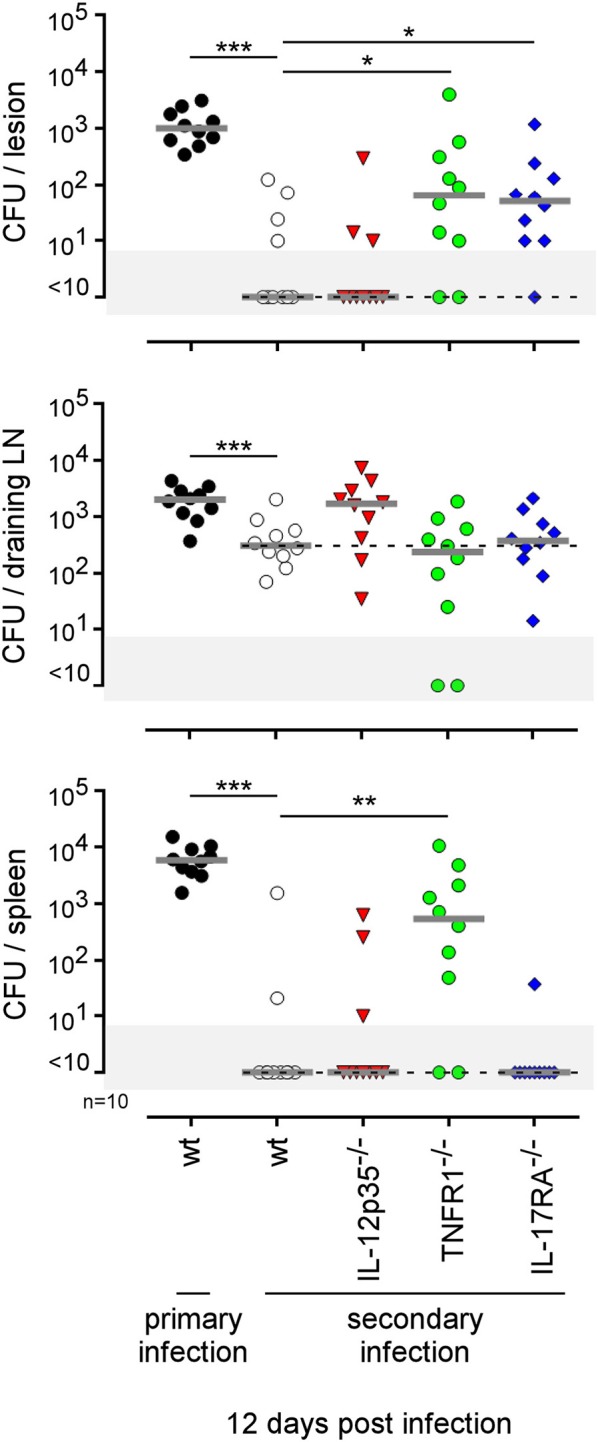
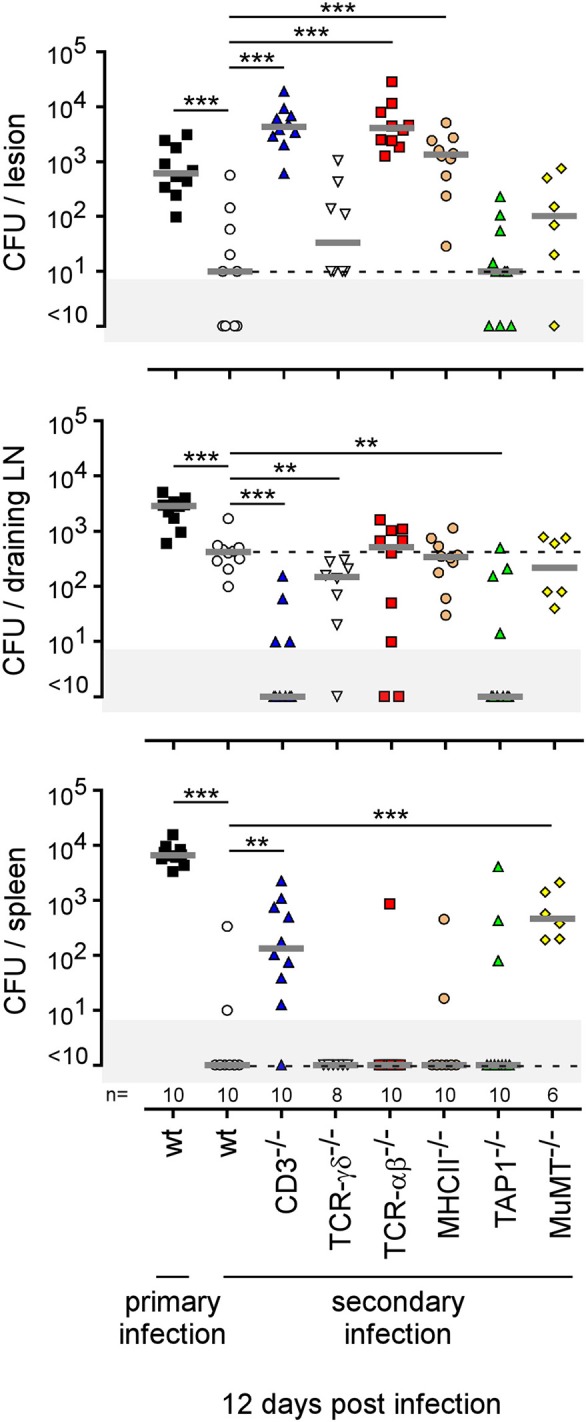
Live attenuated vaccines play a key role in the control of many human and animal pathogens. Their rational development is usually helped by identification of the reservoir of infection, the lymphoid subpopulations associated with protective immunity as well as the virulence genes involved in pathogen persistence. Here, we compared the course of infection in C57BL/6 mice infected via intraperitoneal (i.p.), intranasal (i.n.) and intradermal (i.d.) route and demonstrated that the route of infection strongly impacts all of these parameters. Following i.p. and i.n. infection, most infected cells observed in the spleen or lung were F4/80 myeloid cells. In striking contrast, infected Ly6G neutrophils and CD140a fibroblasts were also observed in the skin after i.d. infection. The operon encoding for the type IV secretion system is considered essential to deflecting vacuolar trafficking in phagocytic cells and allows to multiply and persist. Unexpectedly, the Δ strain, which does not persist in the lung after i.n. infection, persists longer in skin tissues than the wild strain after i.d. infection. While the CD4 T cell-mediated Th1 response is indispensable to controlling the challenge in the i.p. model, it is dispensable for the control of in the i.d. and i.n. models. Similarly, B cells are indispensable in the i.p. and i.d. models but dispensable in the i.n. model. γδ T cells appear able to compensate for the absence of αβ T cells in the i.d. model but not in the other models. Taken together, our results demonstrate the crucial importance of the route of infection for the host pathogen relationship.
减毒活疫苗在控制许多人类和动物病原体方面发挥着关键作用。它们的合理开发通常得益于感染源的鉴定、与保护性免疫相关的淋巴亚群以及参与病原体持续存在的毒力基因。在这里,我们比较了经腹腔内(i.p.)、鼻腔内(i.n.)和皮内(i.d.)途径感染 C57BL/6 小鼠的感染过程,并证明感染途径强烈影响所有这些参数。在 i.p. 和 i.n. 感染后,在脾脏或肺部观察到的大多数感染细胞是 F4/80 髓样细胞。相比之下,在 i.d. 感染后,也可以在皮肤中观察到感染的 Ly6G 中性粒细胞和 CD140a 成纤维细胞。编码 IV 型分泌系统的 operon 被认为对于阻止吞噬细胞中的液泡运输至关重要,并允许 增殖和持续存在。出乎意料的是,与在 i.n. 感染后不在肺部持续存在的 Δ 株相比,Δ 株在 i.d. 感染后在皮肤组织中的持续时间更长。虽然 CD4 T 细胞介导的 Th1 反应对于控制 i.p. 模型中的 挑战是必不可少的,但对于控制 i.d. 和 i.n. 模型中的 感染则是可有可无的。同样,B 细胞在 i.p. 和 i.d. 模型中是必不可少的,但在 i.n. 模型中则是可有可无的。γδ T 细胞似乎能够在 i.d. 模型中弥补 αβ T 细胞的缺失,但在其他模型中则不能。总之,我们的结果表明感染途径对于宿主-病原体关系至关重要。