University of Utah School of Medicine (L.J.C., J.W.R., J.S.A., A.M.J., R.K., B.M., M.P., R.E., J.Y., S.M.), Salt Lake City; Division of Neuroimmunology and Multiple Sclerosis Center (M.H.H.), Department of Neurology and Neurological Sciences, Stanford University; Department of Neurology and Neurological Sciences (A.J.T.), Stanford School of Medicine, CA; Department of Neurology, Johns Hopkins University School of Medicine (M.L., M.A.M., J.C.), Baltimore, MD; Departments of Neurology and Ophthalmology (J.L.B., R.J., M.B.-G.), University of Colorado School of Medicine, Aurora; Department of Medicine & Neurology (A.L.T., R.L.C., L.E.L., J.J.S., K.M.), University of British Columbia, Vancouver, Canada; NYU Langone Health (I.K., Z.R., A.R.), New York; Department of Neurology, Cedars-Sinai Medical Center (N.L.S.), Los Angeles, CA; Mellen Center for MS Treatment and Research (S.M.P., J.A.C., D.I., J.L.S.), Neurological Institute, Cleveland Clinic, OH; Icahn School of Medicine at Mount Sinai (I.K.S.), New York; Multiple Sclerosis Center (P.R.), Swedish Neuroscience Institute, Seattle, WA; Department of Neurology (L.A., A.P., E.A.), Keck School of Medicine, University of Southern California, Los Angeles; Department of Neurology (T.C., D.S.M.), Brigham and Women's Hospital, Harvard Medical School, Boston, MA; Department of Neurology (E.C.K., A.W.R.), Massachusetts General Hospital, Harvard Medical School, Boston; Department of Neurology (C.S.R., K.B.O., L.L., K.E.N.), Columbia University Medical Center; Weill Cornell Medicine (M.M.N., C.E., M.K.-H., M.M.), New York; Department of Neurology (L.T.), Division of Multiple Sclerosis, University of Miami Miller School of Medicine, FL; PPD (A.R., A.G.), Wilmington, NC; The Guthy-Jackson Charitable Foundation (M.K.B., R.R.R., D.W. Behne., D.W. Blackway, B.C., J.S., J.M.B.), Beverly Hills; Departments of Medicine and of Molecular Pharmacology (T.F.B.), Stanford University School of Medicine, CA; Kellogg Eye Center (T.J.S.), University of Michigan Medical School, Ann Arbor; Department of Medicine, University of California, Los Angeles (M.R.Y.); and Harbor-UCLA Medical Center/LABioMed (M.R.Y.), Torrance, CA.
Neurol Neuroimmunol Neuroinflamm. 2019 Jun 28;6(5):e583. doi: 10.1212/NXI.0000000000000583. eCollection 2019 Sep.
To develop a resource of systematically collected, longitudinal clinical data and biospecimens for assisting in the investigation into neuromyelitis optica spectrum disorder (NMOSD) epidemiology, pathogenesis, and treatment.
To illustrate its research-enabling purpose, epidemiologic patterns and disease phenotypes were assessed among enrolled subjects, including age at disease onset, annualized relapse rate (ARR), and time between the first and second attacks.
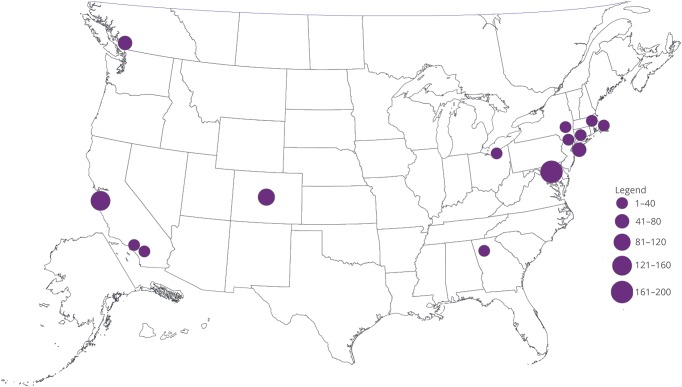
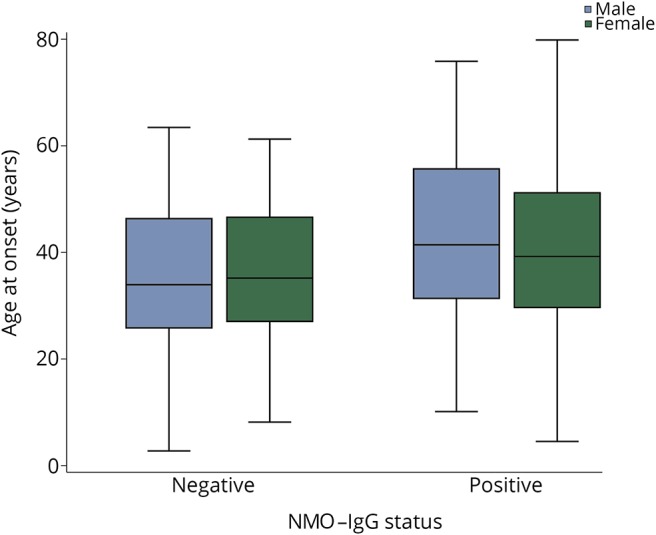
As of December 2017, the Collaborative International Research in Clinical and Longitudinal Experience Study (CIRCLES) had enrolled more than 1,000 participants, of whom 77.5% of the NMOSD cases and 71.7% of the controls continue in active follow-up. Consanguineous relatives of patients with NMOSD represented 43.6% of the control cohort. Of the 599 active cases with complete data, 84% were female, and 76% were anti-AQP4 seropositive. The majority were white/Caucasian (52.6%), whereas blacks/African Americans accounted for 23.5%, Hispanics/Latinos 12.4%, and Asians accounted for 9.0%. The median age at disease onset was 38.4 years, with a median ARR of 0.5. Seropositive cases were older at disease onset, more likely to be black/African American or Hispanic/Latino, and more likely to be female.
Collectively, the CIRCLES experience to date demonstrates this study to be a useful and readily accessible resource to facilitate accelerating solutions for patients with NMOSD.
为协助研究视神经脊髓炎谱系疾病(NMOSD)的流行病学、发病机制和治疗方法,开发一个系统收集的、纵向临床数据和生物样本资源。
为说明其研究促进目的,在入组的受试者中评估了流行病学模式和疾病表型,包括发病年龄、年复发率(ARR)和首次和第二次发作之间的时间。
截至 2017 年 12 月,国际临床和纵向经验研究协作组(CIRCLES)已入组 1000 多名参与者,其中 77.5%的 NMOSD 病例和 71.7%的对照者继续接受积极随访。NMOSD 患者的近亲占对照组的 43.6%。在 599 例具有完整数据的活跃病例中,84%为女性,76%为抗 AQP4 阳性。大多数为白种人/高加索人(52.6%),黑人/非裔美国人占 23.5%,西班牙裔/拉丁裔占 12.4%,亚洲人占 9.0%。疾病发病年龄中位数为 38.4 岁,中位 ARR 为 0.5。血清阳性病例的发病年龄较大,更可能为黑种人/非裔美国人或西班牙裔/拉丁裔,且更可能为女性。
总之,迄今为止,CIRCLES 的经验表明,该研究是一个有用且易于获得的资源,有助于加速 NMOSD 患者的解决方案。