Bibi Hajira, Nadeem Humaira, Abbas Muzaffar, Arif Muazzam
1Department of Pharmaceutical Chemistry, Riphah Institute of Pharmaceutical Science, Riphah International University, Islamabad, Pakistan.
2Department of Pharmacology, Riphah Institute of Pharmaceutical Science, Riphah International University, Islamabad, Pakistan.
BMC Chem. 2019 Jan 29;13(1):6. doi: 10.1186/s13065-019-0518-6. eCollection 2019 Dec.
Isoxazole is an important pharmacophore in medicinal chemistry with a wide range of pharmacological activities. The present study deals with the synthesis and evaluation of antinociceptive potential of nine novel 3-substituted-isoxazole-4-carboxamide derivatives.
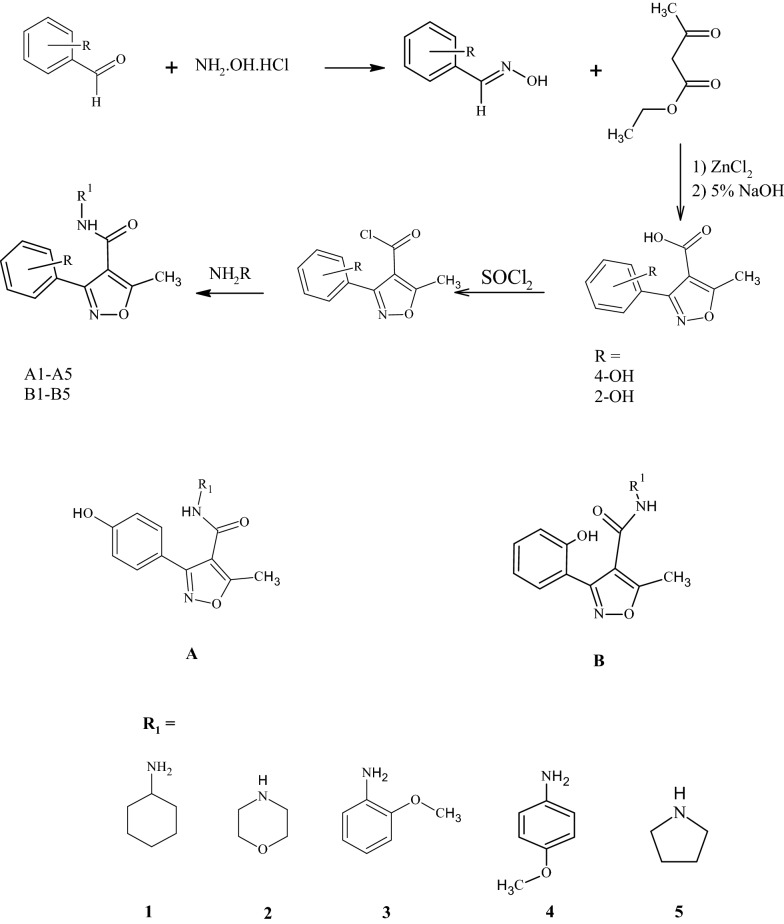
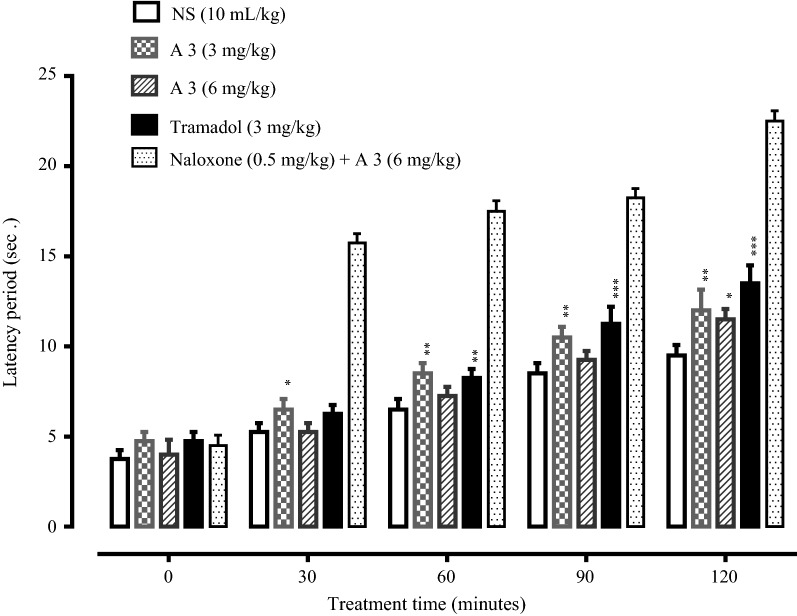
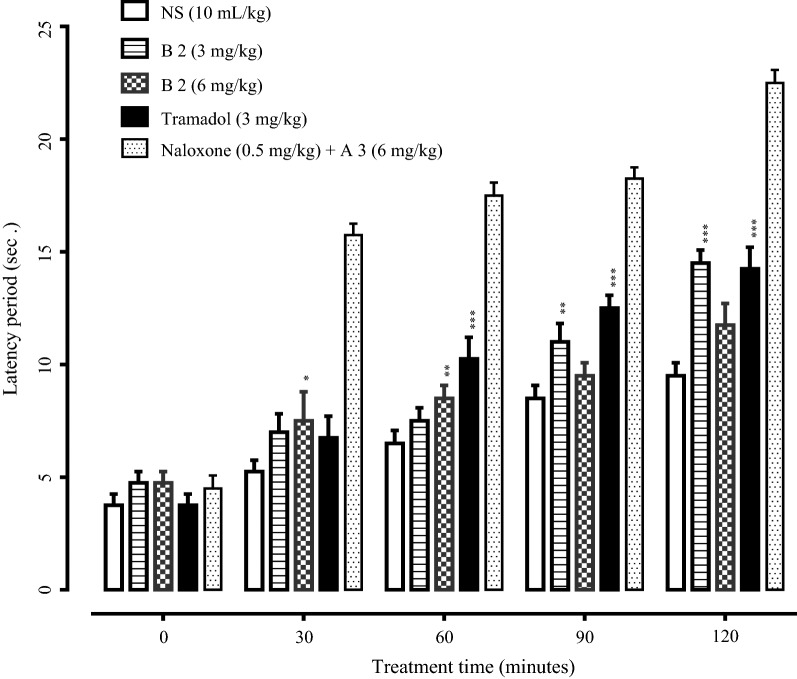
In the first step, respective oxime was prepared and further treated with ethylacetoacetate and anhydrous zinc chloride followed by hydrolysis of ester to furnish 3-substituted isoxazole-4-carboxylic acid. The respective carboxylic acids were converted to acid chlorides and condensed with aromatic amines to get the target carboxamide derivatives (A1-A5 and B1-B5). These compounds were characterized by FTIR, HNMR, CNMR and elemental analysis data and screened for their analgesic activity using acetic acid-induced writhing assay and hot plat test in mice and compared with the standard centrally acting analgesic, tramadol.
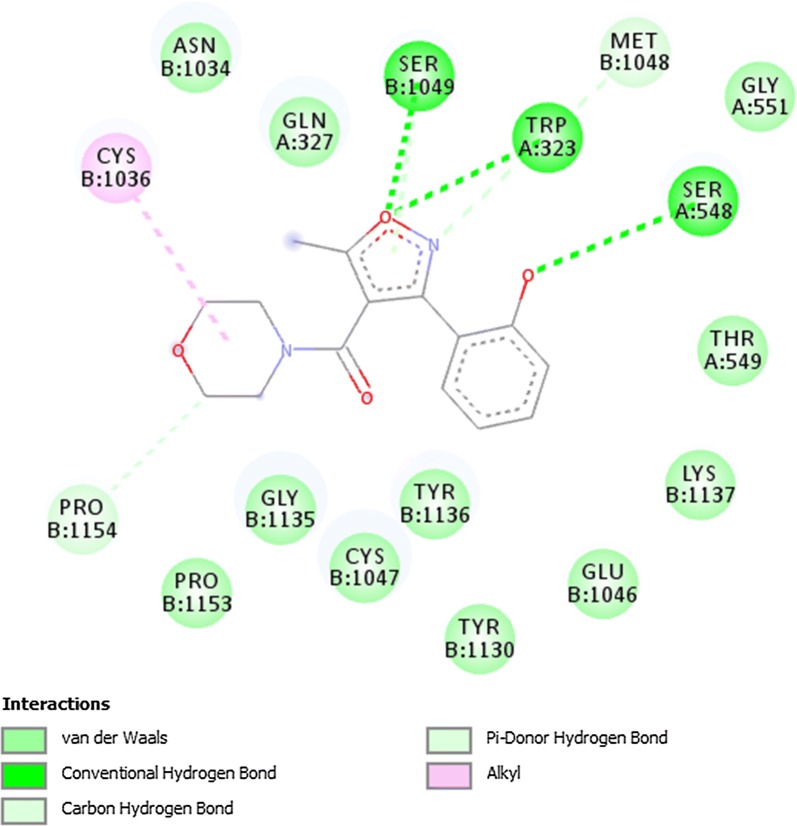
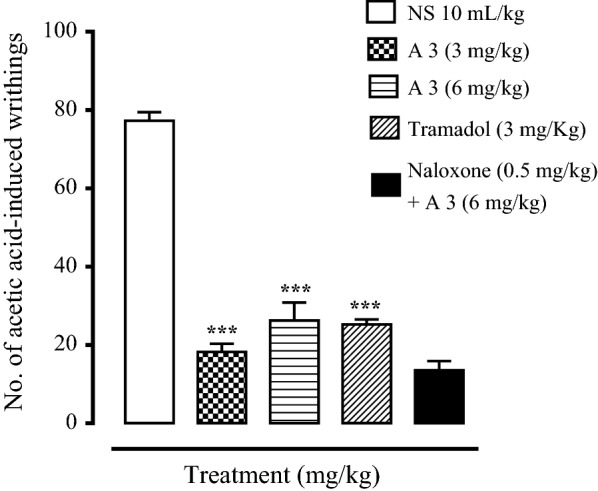
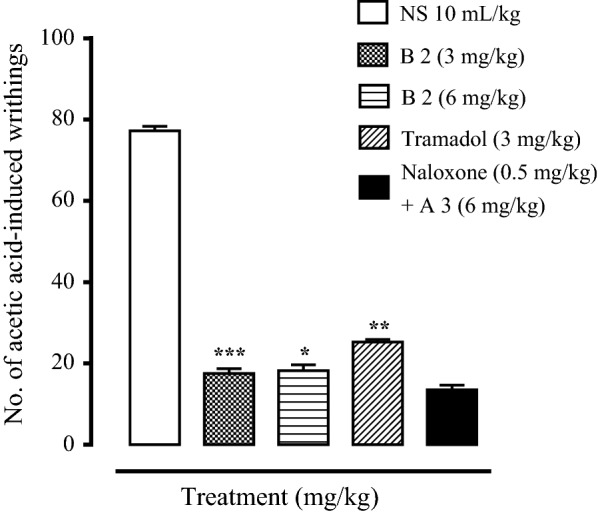
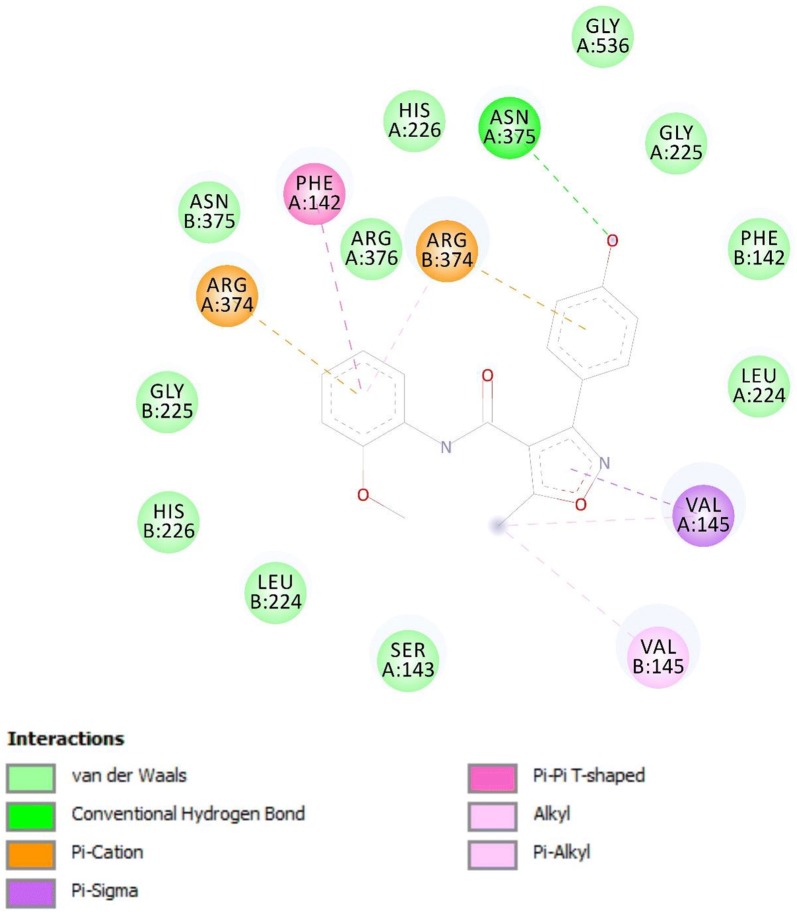
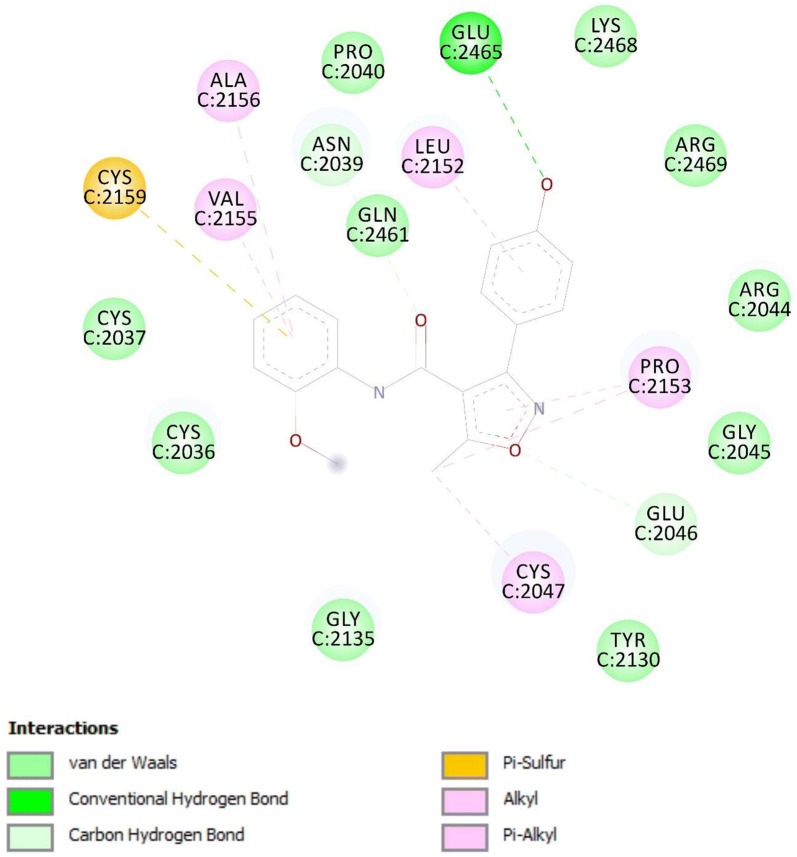
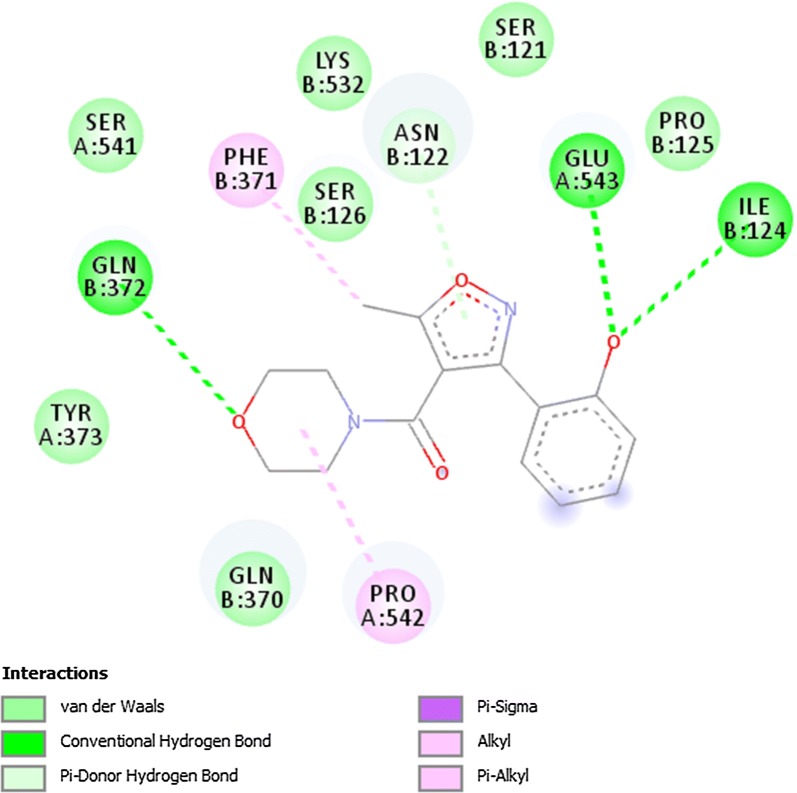
All the synthesized carboxamide derivatives showed low to moderate analgesic activity. Among the synthesized derivatives B2 having methoxy (OCH) showed high analgesic activity as compared to tramadol both in acetic acid-induced writhing assay and hot plate assay at dose of 6 mg/kg. To examine the involvement of opioidergic mechanism in the mediation of analgesic effects of isoxazole derivatives animals were further treated with non-selective opioid analgesic, naloxone (0.5 mg/kg). The results showed that compounds A3 and B2 follow a non-opioid receptor pathway in the mediation of analgesic effects. Synthesized compounds A3 and B2 were docked against non-opioid receptors COX-1 (3N8X), COX-2 (1PXX) and human capsaicin receptor (HCR, 3J9J) to analyze their binding interactions. They showed binding energies in the range of - 7.5 to - 9.7 kcal/mol.
The results indicated that isoxazole carboxamide derivatives possess moderate analgesic potential especially compounds A3 and B2 can be considered as lead molecules and explored further for pain management with fewer side effects.
异恶唑是药物化学中一种重要的药效基团,具有广泛的药理活性。本研究涉及九种新型3-取代异恶唑-4-甲酰胺衍生物的合成及其抗伤害感受潜力的评估。
第一步,制备相应的肟,再用乙酰乙酸乙酯和无水氯化锌进一步处理,随后进行酯水解以得到3-取代异恶唑-4-羧酸。将相应的羧酸转化为酰氯,并与芳香胺缩合以得到目标甲酰胺衍生物(A1 - A5和B1 - B5)。这些化合物通过傅里叶变换红外光谱(FTIR)、核磁共振氢谱(HNMR)、核磁共振碳谱(CNMR)和元素分析数据进行表征,并使用乙酸诱导的扭体试验和小鼠热板试验筛选其镇痛活性,并与标准的中枢性镇痛药曲马多进行比较。
所有合成的甲酰胺衍生物均表现出低至中等的镇痛活性。在合成的衍生物中,具有甲氧基(OCH)的B2在乙酸诱导的扭体试验和热板试验中,在6 mg/kg剂量下与曲马多相比显示出高镇痛活性。为了研究阿片样物质机制在异恶唑衍生物镇痛作用介导中的参与情况,动物进一步用非选择性阿片类镇痛药纳洛酮(0.5 mg/kg)处理。结果表明,化合物A3和B2在镇痛作用的介导中遵循非阿片受体途径。将合成的化合物A3和B2与非阿片受体环氧化酶-1(COX-1,3N8X)、环氧化酶-2(COX-2,1PXX)和人辣椒素受体(HCR,3J9J)进行对接,以分析它们的结合相互作用。它们显示出-7.5至-9.7 kcal/mol范围内的结合能。
结果表明,异恶唑甲酰胺衍生物具有中等镇痛潜力,特别是化合物A3和B2可被视为先导分子,并进一步探索用于副作用较少的疼痛管理。