Institute of Healthy Ageing, Department of Genetics, Evolution and Environment, University College London, London, United Kingdom.
School of Biosciences, University of Kent, Canterbury, United Kingdom.
PLoS Genet. 2019 Jul 29;15(7):e1008212. doi: 10.1371/journal.pgen.1008212. eCollection 2019 Jul.
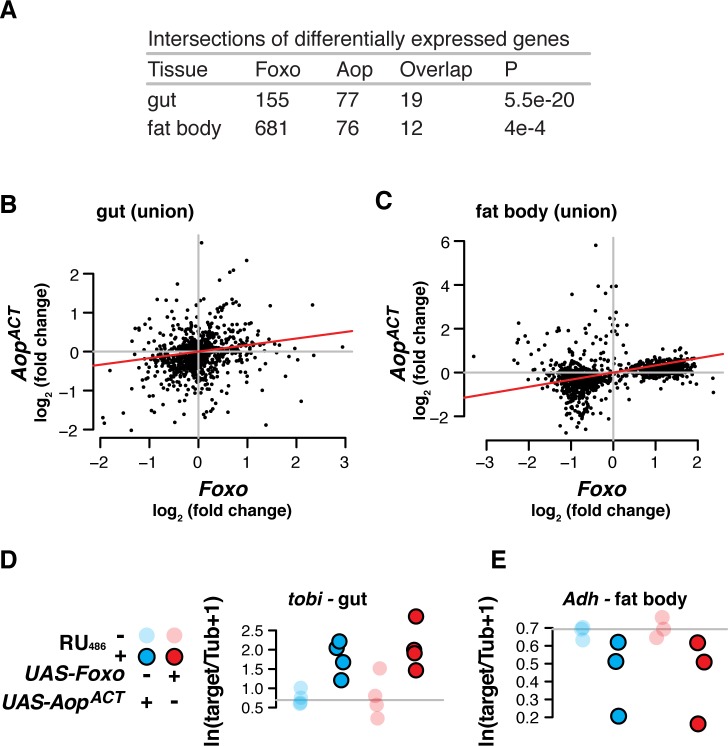
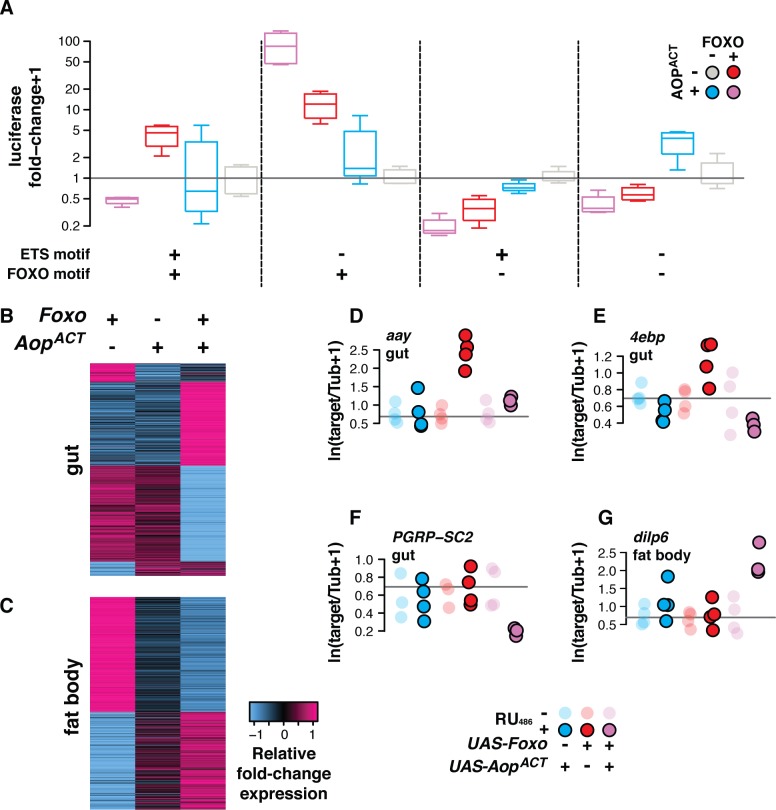
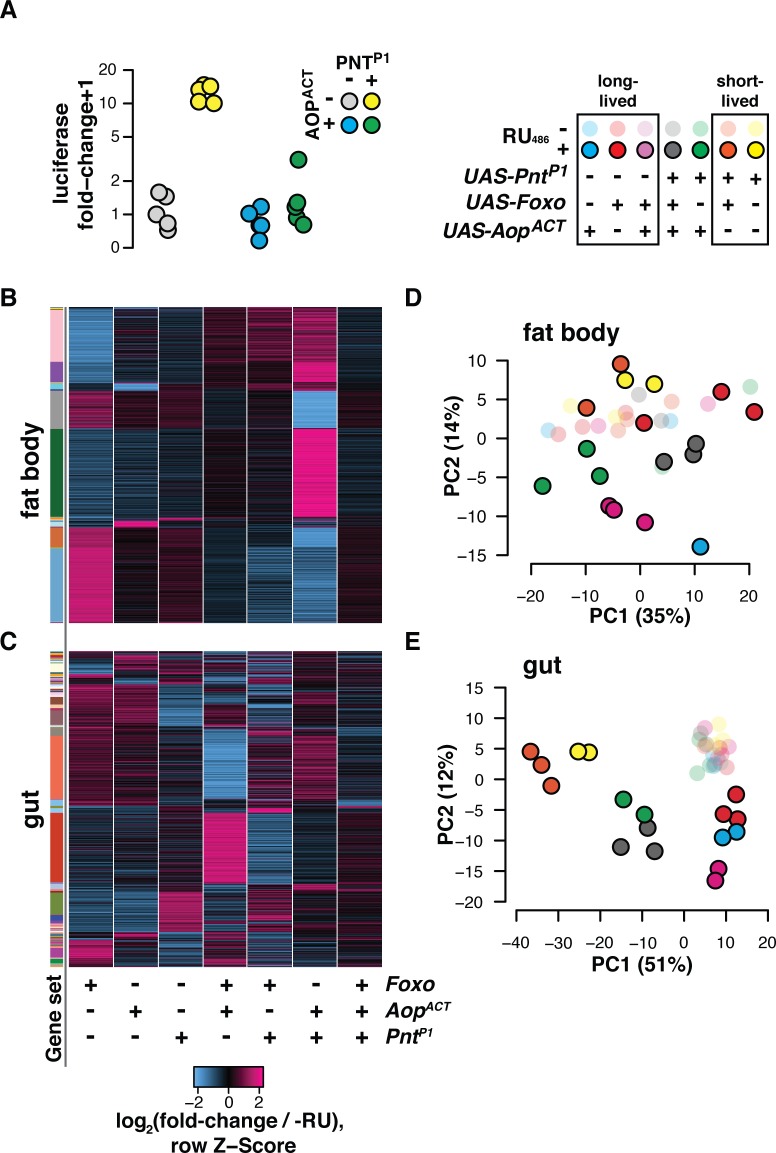
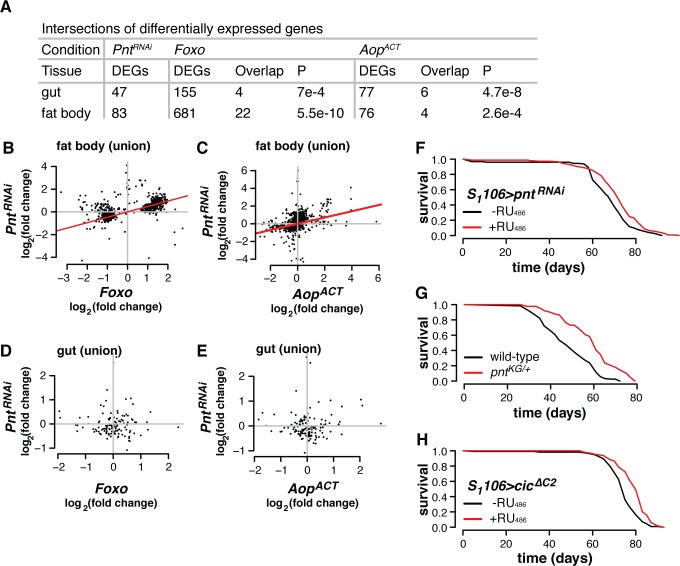
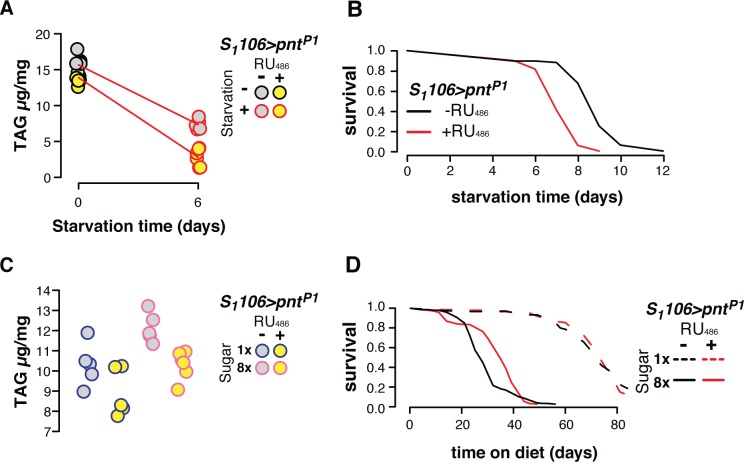
Ageing populations pose one of the main public health crises of our time. Reprogramming gene expression by altering the activities of sequence-specific transcription factors (TFs) can ameliorate deleterious effects of age. Here we explore how a circuit of TFs coordinates pro-longevity transcriptional outcomes, which reveals a multi-tissue and multi-species role for an entire protein family: the E-twenty-six (ETS) TFs. In Drosophila, reduced insulin/IGF signalling (IIS) extends lifespan by coordinating activation of Aop, an ETS transcriptional repressor, and Foxo, a Forkhead transcriptional activator. Aop and Foxo bind the same genomic loci, and we show that, individually, they effect similar transcriptional programmes in vivo. In combination, Aop can both moderate or synergise with Foxo, dependent on promoter context. Moreover, Foxo and Aop oppose the gene-regulatory activity of Pnt, an ETS transcriptional activator. Directly knocking down Pnt recapitulates aspects of the Aop/Foxo transcriptional programme and is sufficient to extend lifespan. The lifespan-limiting role of Pnt appears to be balanced by a requirement for metabolic regulation in young flies, in which the Aop-Pnt-Foxo circuit determines expression of metabolic genes, and Pnt regulates lipolysis and responses to nutrient stress. Molecular functions are often conserved amongst ETS TFs, prompting us to examine whether other Drosophila ETS-coding genes may also affect ageing. We show that five out of eight Drosophila ETS TFs play a role in fly ageing, acting from a range of organs and cells including the intestine, adipose and neurons. We expand the repertoire of lifespan-limiting ETS TFs in C. elegans, confirming their conserved function in ageing and revealing that the roles of ETS TFs in physiology and lifespan are conserved throughout the family, both within and between species.
人口老龄化是我们这个时代面临的主要公共卫生危机之一。通过改变序列特异性转录因子(TFs)的活性来重新编程基因表达,可以改善年龄带来的有害影响。在这里,我们探索了一个 TF 电路如何协调促进长寿的转录结果,这揭示了整个蛋白质家族——E-二十六(ETS)TFs 的多组织和多物种作用。在果蝇中,降低胰岛素/IGF 信号(IIS)通过协调 Aop(ETS 转录抑制剂)和 Foxo(Forkhead 转录激活剂)的激活来延长寿命。Aop 和 Foxo 结合相同的基因组位点,我们表明,它们各自在体内产生相似的转录程序。在组合中,Aop 可以根据启动子上下文调节或与 Foxo 协同作用。此外,Foxo 和 Aop 与 Pnt(ETS 转录激活剂)的基因调控活性相反。直接敲低 Pnt 可以再现 Aop/Foxo 转录程序的某些方面,并足以延长寿命。Pnt 的寿命限制作用似乎与年轻果蝇中代谢调节的要求相平衡,其中 Aop-Pnt-Foxo 电路决定代谢基因的表达,而 Pnt 调节脂肪分解和对营养胁迫的反应。分子功能在 ETS TFs 中通常是保守的,这促使我们研究其他果蝇 ETS 编码基因是否也可能影响衰老。我们表明,在果蝇中,8 个 ETS TF 中有 5 个在衰老中起作用,它们作用于包括肠道、脂肪和神经元在内的一系列器官和细胞。我们扩展了 C. elegans 中寿命限制 ETS TF 的功能谱,证实了它们在衰老中的保守功能,并揭示了 ETS TF 在生理和寿命中的作用在整个家族中是保守的,无论是在物种内还是物种间。