Gener Petra, Rafael Diana, Seras-Franzoso Joaquin, Perez Anna, Pindado Luis Alamo, Casas Glòria, Arango Diego, Fernández Yolanda, Díaz-Riascos Zamira V, Abasolo Ibane, Schwartz Simó
Drug Delivery and Targeting Group, Molecular Biology and Biochemistry Research Centre for Nanomedicine (CIBBIM-Nanomedicine), Vall d'Hebron Institut de Recerca, Universitat Autònoma de Barcelona, 08035 Barcelona, Spain.
Networking Research Centre for Bioengineering, Biomaterials, and Nanomedicine (CIBER-BBN), Instituto de Salud Carlos III, 28029 Madrid, Spain.
Cancers (Basel). 2019 Jul 26;11(8):1058. doi: 10.3390/cancers11081058.
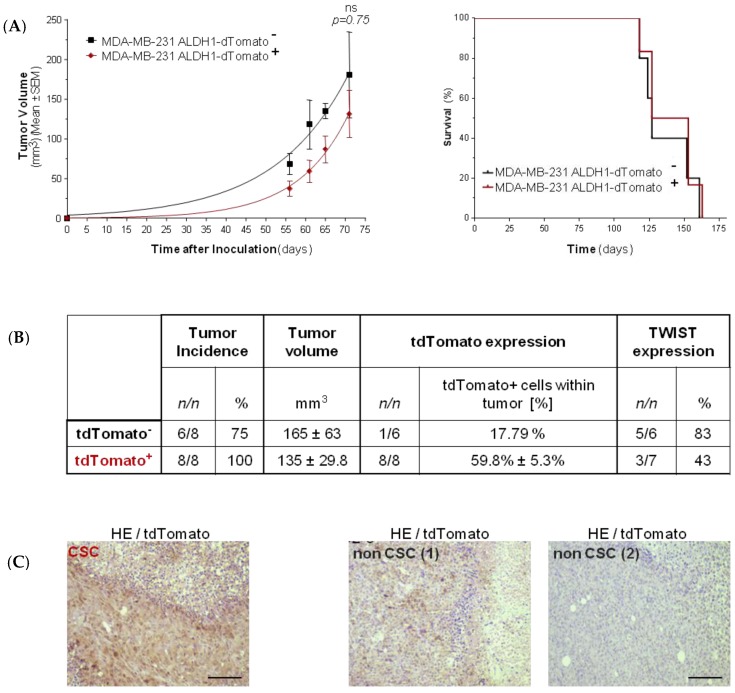
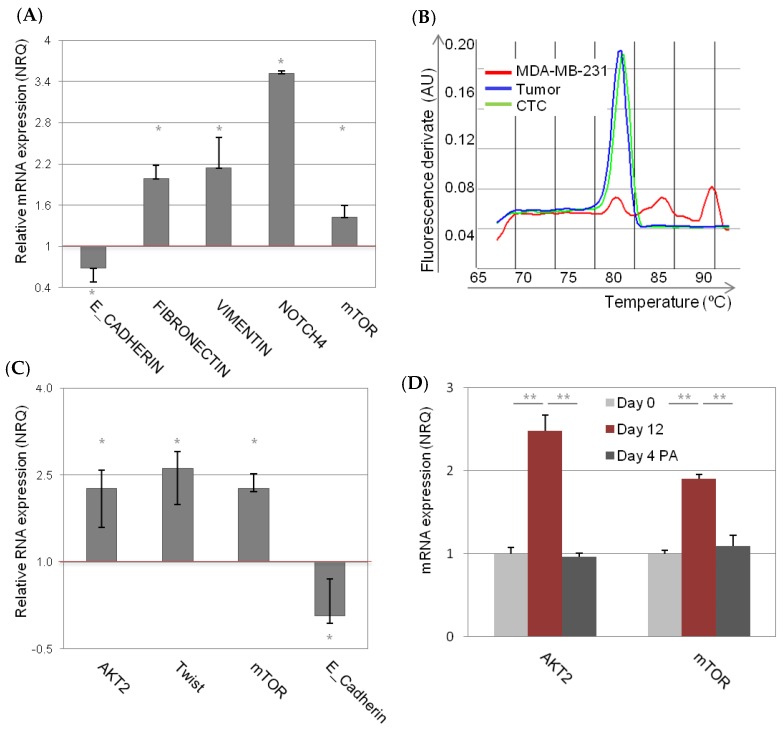
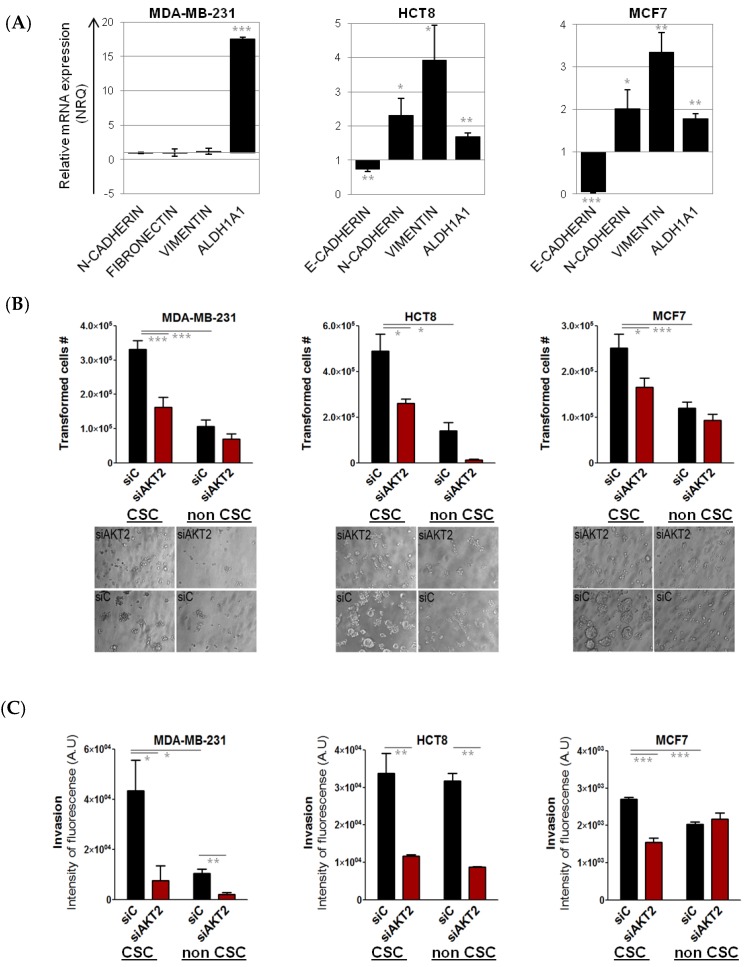
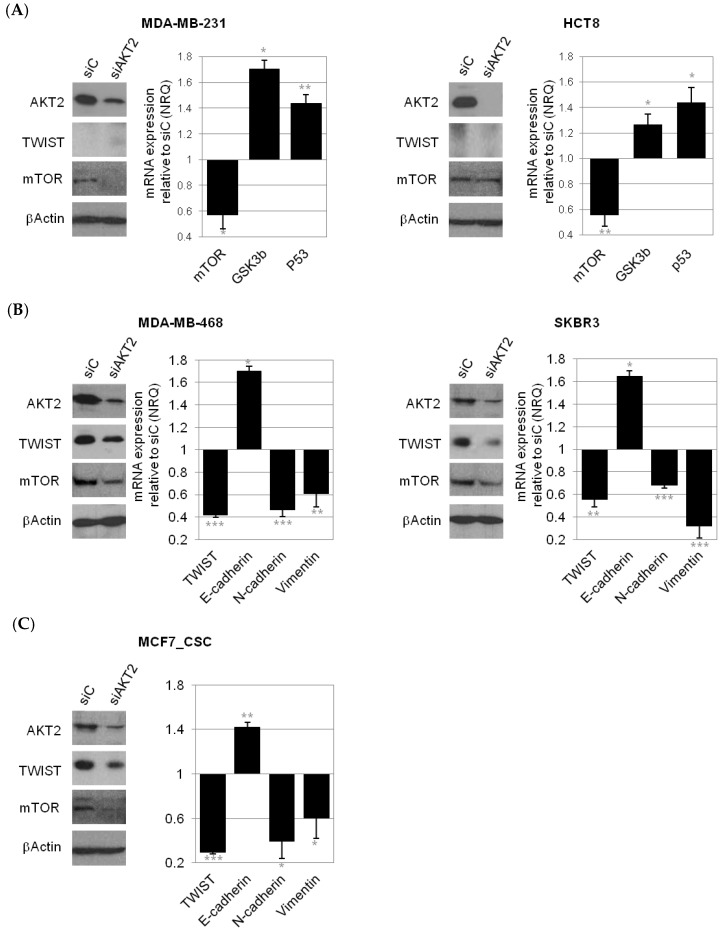
Therapeutic resistance seen in aggressive forms of breast cancer remains challenging for current treatments. More than half of the patients suffer from a disease relapse, most of them with distant metastases. Cancer maintenance, resistance to therapy, and metastatic disease seem to be sustained by the presence of cancer stem cells (CSC) within a tumor. The difficulty in targeting this subpopulation derives from their dynamic interconversion process, where CSC can differentiate to non-CSC, which in turn de-differentiate into cells with CSC properties. Using fluorescent CSC models driven by the expression of (aldehyde dehydrogenase 1A1), we confirmed this dynamic phenotypic change in MDA-MB-231 breast cancer cells and to identify Serine/Threonine Kinase 2 (AKT2) as an important player in the process. To confirm the central role of AKT2, we silenced AKT2 expression via small interfering RNA and using a chemical inhibitor (CCT128930), in both CSC and non-CSC from different cancer cell lines. Our results revealed that AKT2 inhibition effectively prevents non-CSC reversion through mesenchymal to epithelial transition, reducing invasion and colony formation ability of both, non-CSC and CSC. Further, AKT2 inhibition reduced CSC survival in low attachment conditions. Interestingly, in orthotopic tumor mouse models, high expression levels of AKT2 were detected in circulating tumor cells (CTC). These findings suggest AKT2 as a promising target for future anti-cancer therapies at three important levels: (i) Epithelial-to-mesenchymal transition (EMT) reversion and maintenance of CSC subpopulation in primary tumors, (ii) reduction of CTC and the likelihood of metastatic spread, and (iii) prevention of tumor recurrence through inhibition of CSC tumorigenic and metastatic potential.
侵袭性乳腺癌中出现的治疗耐药性对当前治疗来说仍然是一项挑战。超过半数的患者会出现疾病复发,其中大多数伴有远处转移。肿瘤中癌症干细胞(CSC)的存在似乎维持了癌症的维持、对治疗的耐药性以及转移性疾病。靶向这一亚群的困难源于它们动态的相互转化过程,在此过程中,CSC可分化为非CSC,而非CSC又可去分化为具有CSC特性的细胞。利用由(醛脱氢酶1A1)表达驱动的荧光CSC模型,我们证实了MDA-MB-231乳腺癌细胞中的这种动态表型变化,并确定丝氨酸/苏氨酸激酶2(AKT2)是该过程中的一个重要参与者。为了证实AKT2的核心作用,我们通过小干扰RNA并使用化学抑制剂(CCT128930),在来自不同癌细胞系的CSC和非CSC中沉默了AKT2的表达。我们的结果显示,抑制AKT2可有效阻止非CSC通过间充质向上皮转化发生逆转,降低非CSC和CSC的侵袭及集落形成能力。此外,抑制AKT2可降低CSC在低附着条件下的存活率。有趣的是,在原位肿瘤小鼠模型中,循环肿瘤细胞(CTC)中检测到了高表达水平的AKT2。这些发现表明,AKT2在三个重要层面上是未来抗癌治疗的一个有前景的靶点:(i)原发肿瘤中上皮向间充质转化(EMT)的逆转及CSC亚群的维持;(ii)减少CTC及转移扩散的可能性;(iii)通过抑制CSC的致瘤和转移潜能预防肿瘤复发。