Abdullayeva Nazrin, Altaf Cigdem Tuc, Mintas Merve, Ozer Ahmet, Sankir Mehmet, Kurt Hamza, Sankir Nurdan Demirci
Micro and Nanotechnology Graduate Program, TOBB University of Economics and Technology, Sogutozu Caddesi No 43 Sogutozu, 06560, Ankara, Turkey.
Department of Materials Science and Nanotechnology Engineering, TOBB University of Economics and Technology, Sogutozu Caddesi No 43 Sogutozu, 06560, Ankara, Turkey.
Sci Rep. 2019 Jul 29;9(1):11006. doi: 10.1038/s41598-019-47546-1.
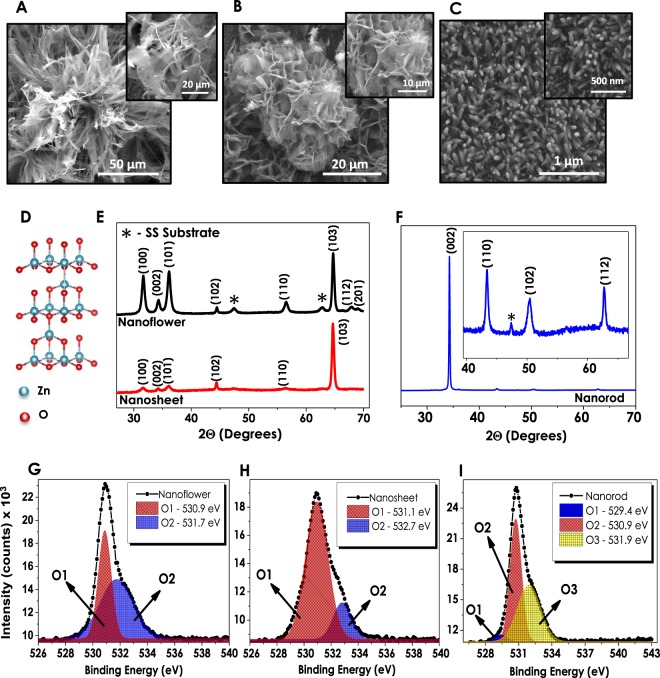
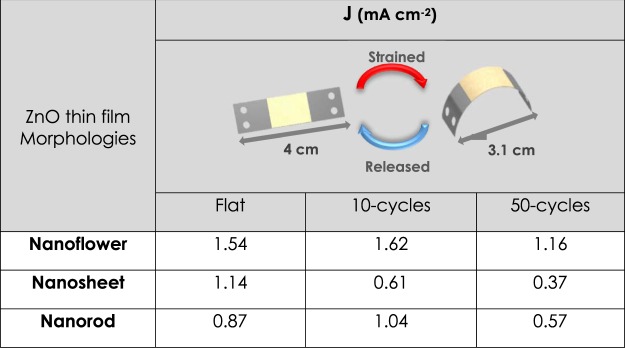
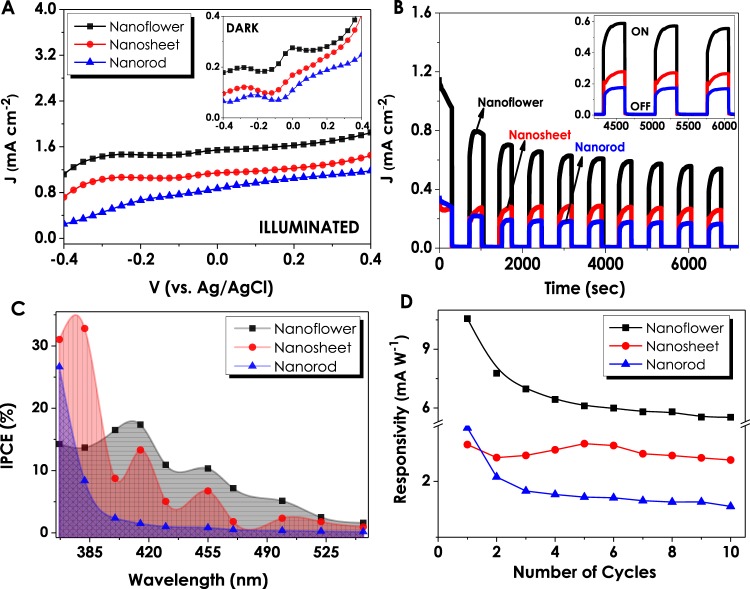
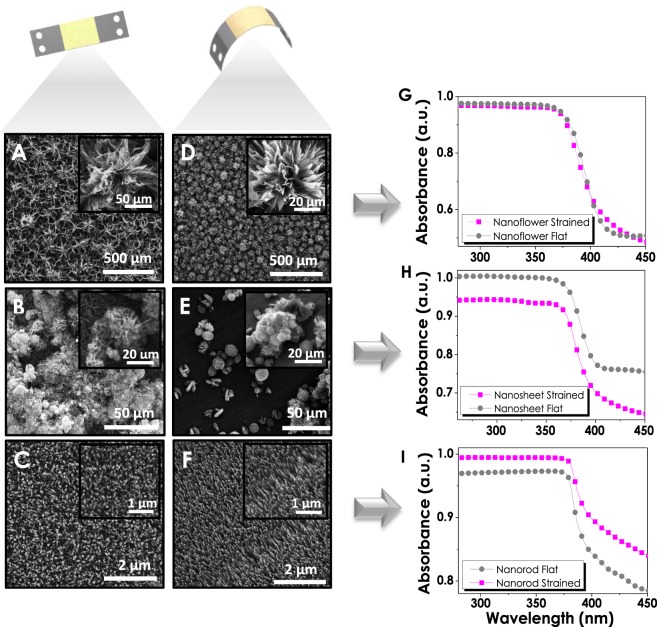
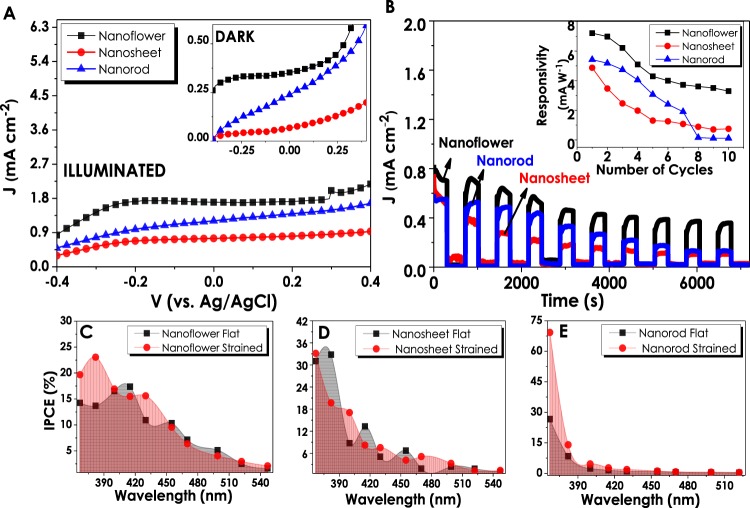
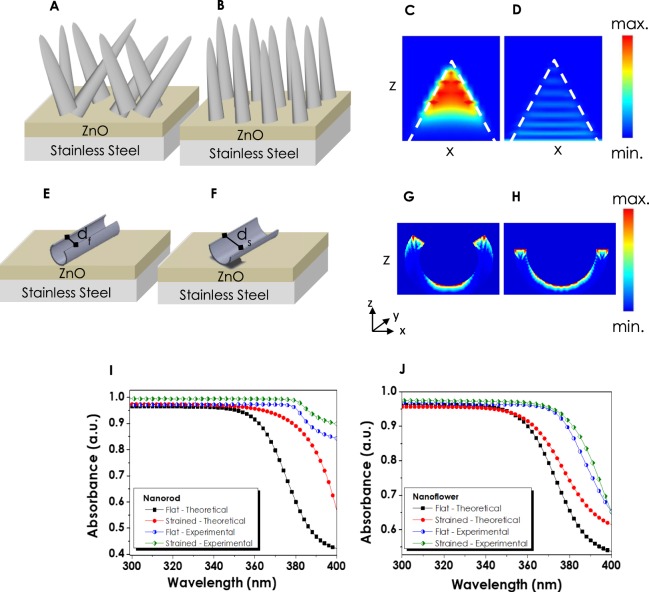
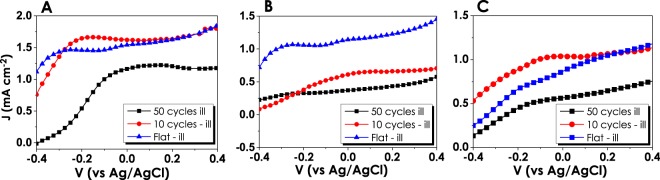
In this report, the growth of zinc oxide (ZnO) nanocrystals with various morphologies, nanoflower, nanosheet, and nanorod, on flexible stainless steel (SS) foils to be utilized as photoanodes in photoelectrochemical (PEC) solar cells has been presented. It has been aimed to provide flexibility and adaptability for the next generation systems with the incorporation of SS foils as electrode into PEC cells. Therefore, physical deformation tests have been applied to the prepared ZnO thin film photoanodes. These thin films have been thoroughly characterized before and after straining for better understanding the relationship between the morphology, straining effect and photoelectrochemical efficiency. We observed a notable increase in the maximum incident photon-to-current efficiency (IPCE) and durability of all ZnO photoelectrodes after straining process. The increase in IPCE values by 1.5 and 2.5 folds at 370 nm has been observed for nanoflower and nanorod morphologies, respectively after being strained. The maximum IPCE of 69% has been calculated for the ZnO nanorod structures after straining. Bending of the SS electrodes resulted in the more oriented nanorod arrays compared to its flat counterpart, which improved both the light absorption and also the photo-conversion efficiency drastically. The finite-difference time-domain simulations have also been carried out to examine the optical properties of flat and bent ZnO electrodes. Finally, it has been concluded that SS photoanodes bearing ZnO semiconducting material with nanoflower and nanorod morphologies are very promising candidates for the solar hydrogen generator systems in terms of efficiency, durability, flexibility, and lightness in weight.
在本报告中,介绍了在柔性不锈钢(SS)箔上生长具有各种形态(纳米花、纳米片和纳米棒)的氧化锌(ZnO)纳米晶体,以用作光电化学(PEC)太阳能电池中的光阳极。旨在通过将SS箔作为电极并入PEC电池,为下一代系统提供灵活性和适应性。因此,对制备的ZnO薄膜光阳极进行了物理变形测试。在应变前后对这些薄膜进行了全面表征,以便更好地理解形态、应变效应和光电化学效率之间的关系。我们观察到,在应变过程之后,所有ZnO光电极的最大入射光子到电流效率(IPCE)和耐久性都有显著提高。应变后,纳米花和纳米棒形态的ZnO光电极在370 nm处的IPCE值分别提高了1.5倍和2.5倍。应变后,ZnO纳米棒结构的最大IPCE计算为69%。与平坦的SS电极相比,弯曲SS电极导致纳米棒阵列更加取向,这极大地提高了光吸收和光电转换效率。还进行了时域有限差分模拟,以研究平坦和弯曲的ZnO电极的光学特性。最后得出结论,就效率、耐久性灵活性和重量轻而言,带有纳米花和纳米棒形态的ZnO半导体材料的SS光阳极是太阳能制氢系统非常有前景的候选材料。