Sedaghat Zahra, Kadkhodaee Mehri, Seifi Behjat, Salehi Eisa
Department of Physiology, School of Medicine, Bushehr University of Medical Sciences, Bushehr, Iran.
Department of Physiology, School of Medicine, Tehran University of Medical Sciences, Tehran, Iran.
Arch Med Sci. 2019 Jul;15(4):1081-1091. doi: 10.5114/aoms.2019.85651. Epub 2019 Jun 20.
We recently reported that a series of brief hind limb ischemia and reperfusion (IR) at the beginning of renal ischemia (remote per-conditioning - RPEC) significantly attenuated the ischemia/reperfusion-induced acute kidney injury. In the present study, we investigated whether the nitric oxide synthase (NOS) pathway is involved in the RPEC protection of the rat ischemic kidneys.
Male rats were subjected to right nephrectomy and randomized as: (1) sham, no additional intervention; (2) IR, 45 min of renal ischemia followed by 24 h reperfusion; (3) RPEC, four 5 min cycles of lower limb IR administered at the beginning of renal ischemia; (4) RPEC+L-NAME (a non-specific NOS inhibitor, 10 mg/kg, .) (5) RPEC + 1400W (a specific iNOS inhibitor, 1 mg/kg, .). After 24 h, blood, urine and tissue samples were collected.
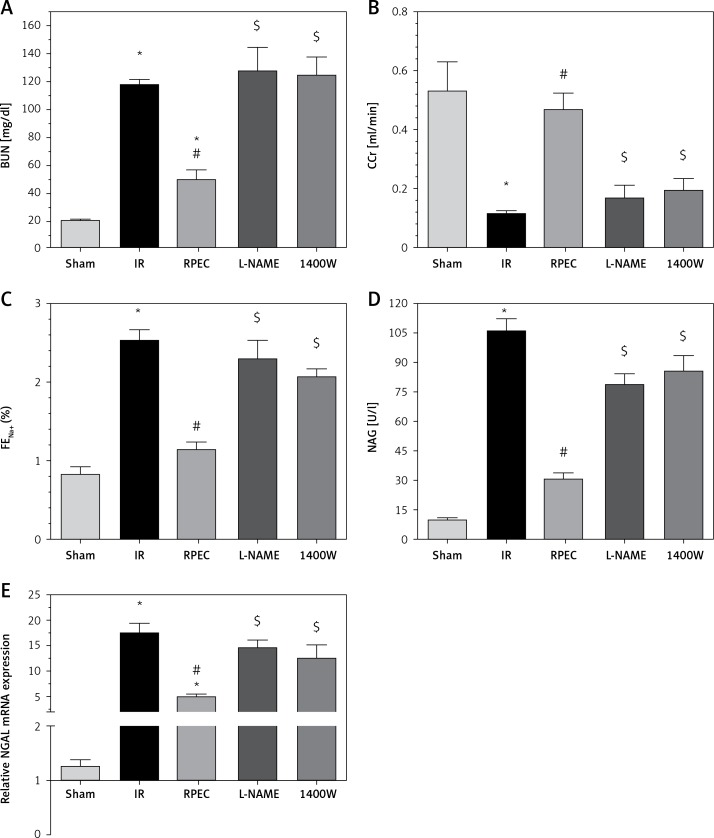
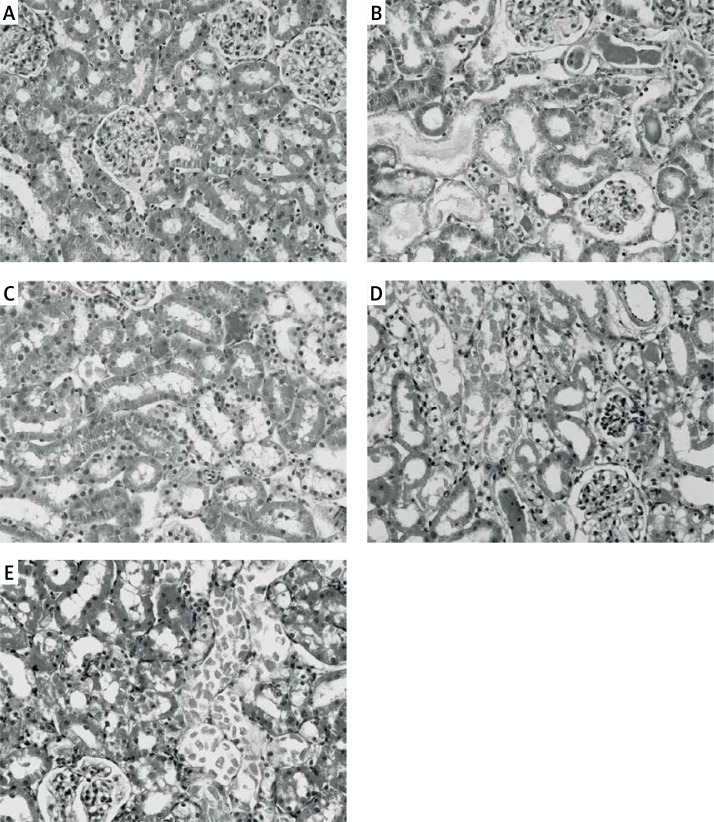
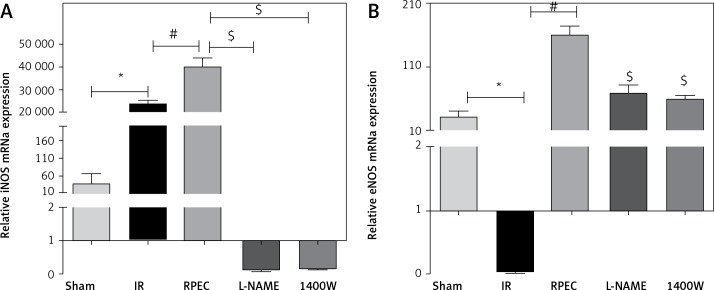
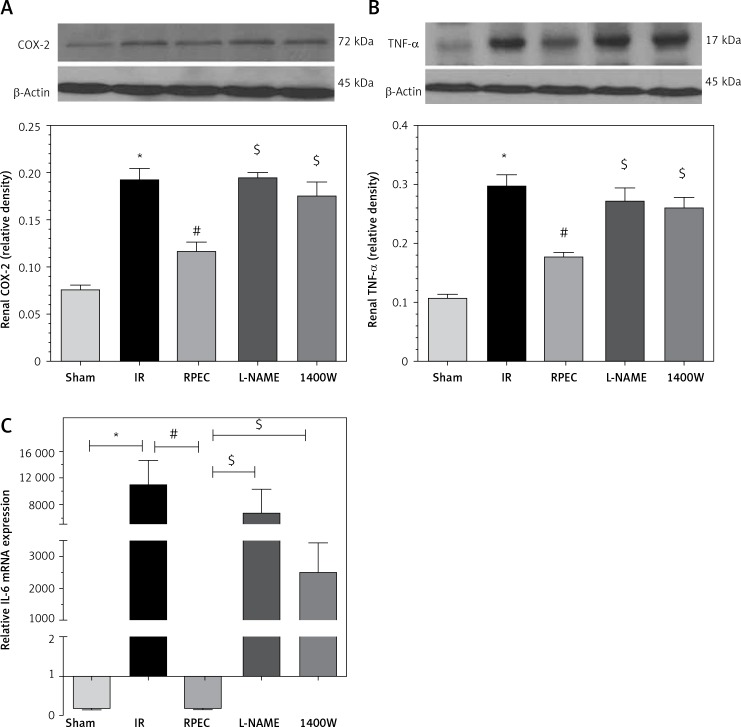
The protective effect of RPEC on renal function, oxidative stress indices, pro-inflammatory marker expression and histopathological changes of kidneys subjected to 45 min ischemia were completely inhibited by pretreatment with L-NAME or 1400W. It was accompanied by increased iNOS and eNOS expression in the RPEC group compared with the IR group.
These findings suggest that the protective effects of RPEC on renal IR injury are closely dependent on the nitric oxide production after the reperfusion and both eNOS and iNOS are involved in this protection.
我们最近报道,在肾缺血开始时进行一系列短暂的后肢缺血再灌注(IR)(远程预处理 - RPEC)可显著减轻缺血/再灌注诱导的急性肾损伤。在本研究中,我们调查了一氧化氮合酶(NOS)途径是否参与RPEC对大鼠缺血性肾脏的保护作用。
雄性大鼠接受右肾切除术,并随机分为:(1)假手术组,无额外干预;(2)IR组,肾缺血45分钟后再灌注24小时;(3)RPEC组,在肾缺血开始时进行四个5分钟的下肢IR周期;(4)RPEC + L-NAME组(一种非特异性NOS抑制剂,10 mg/kg,......)(5)RPEC + 1400W组(一种特异性iNOS抑制剂,1 mg/kg,......)。24小时后,收集血液、尿液和组织样本。
L-NAME或1400W预处理完全抑制了RPEC对缺血45分钟的肾脏的肾功能、氧化应激指标、促炎标志物表达和组织病理学变化的保护作用。与IR组相比,RPEC组iNOS和eNOS表达增加。
这些发现表明,RPEC对肾脏IR损伤的保护作用密切依赖于再灌注后一氧化氮的产生,并且eNOS和iNOS均参与了这种保护作用。