Department of Anesthesiology, Affiliated Hospital of Nanjing University of Traditional Chinese Medicine, Hanzhong Road 155, Nanjing, 210029, China.
Department of Acupuncture and Rehabilitation, Affiliated Hospital of Nanjing University of Chinese Medicine, Hanzhong Road 155, Nanjing, 210029, China.
BMC Complement Altern Med. 2019 Jul 30;19(1):192. doi: 10.1186/s12906-019-2583-8.
Acute postoperative pain remains a major clinical problem that affects patient recovery. Distal acupoint and peri-incisional stimulation are both used for relieving acute postoperative pain in hospital. Our objective was to assess and compare the effects of distal and peri-incisional stimulation on postoperative pain in open abdominal surgery.
MEDLINE, EMBASE, Cochrane Central Register of Controlled Trials and Chinese databases CNKI and Wanfangdata were searched to identify eligible randomized controlled trials. Intensity of postoperative pain, opioid consumption and related data were extracted and analyzed using a random effects model. Risk of bias was assessed. Subgroup analyses were conducted when data were enough.
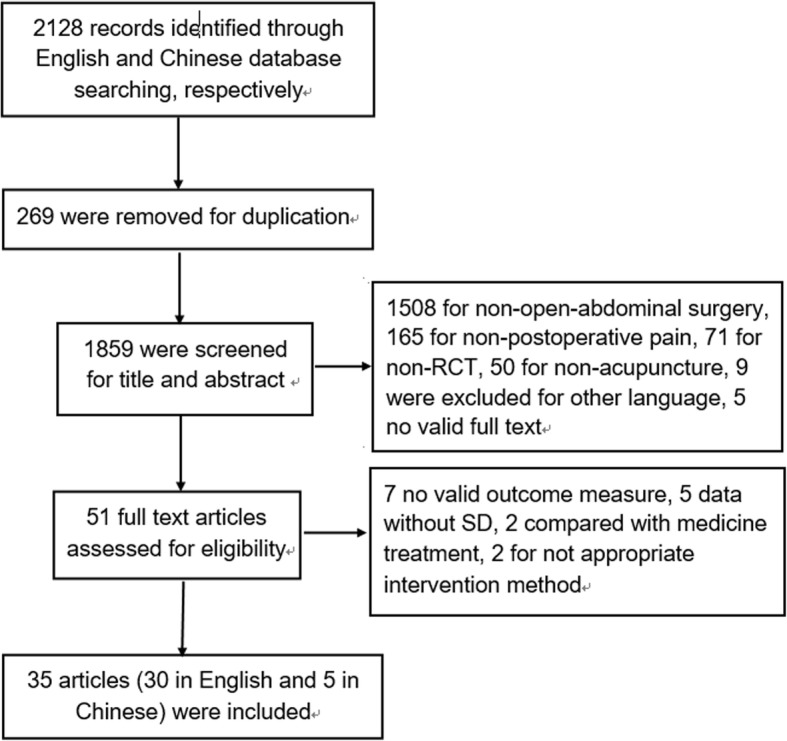
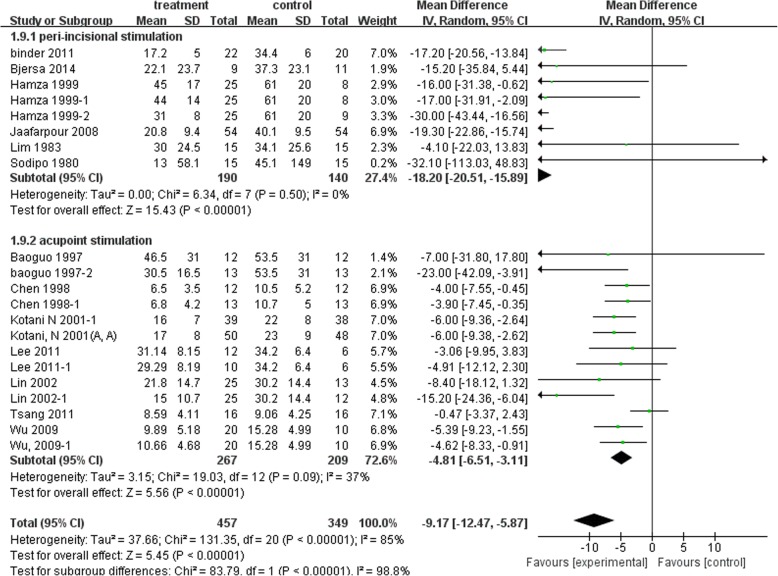
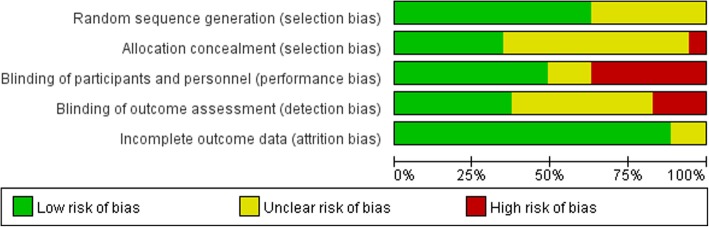
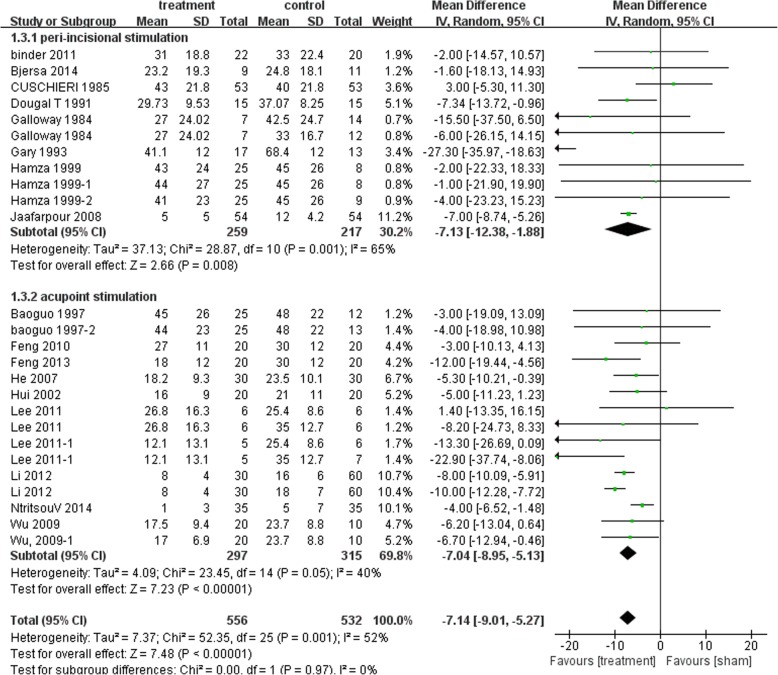
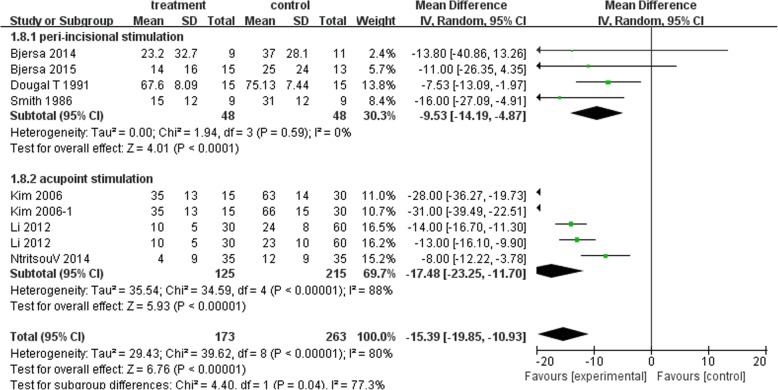
Thirty-five trials were included, in which 17 trials studied distal stimulation, another 17 trials studied peri-incisional stimulation and one studied the combination of the two approaches. No studies that directly compared the two approaches were identified. Subgroup analysis showed that both distal and peri-incisional stimulation significantly alleviated postoperative resting and movement pain from 4 h to 48 h after surgery by 6 to 25 mm on a 100 mm visual analogue scale. Peri-incisional stimulation showed a better reduction in postoperative opioid consumption. No studies compared the effects of the combined peri-incisional and distal stimulation with either mode alone. Overall the quality of evidence was moderate due to a lack of blinding in some studies, and unclear risk of allocation concealment.
Both distal and peri-incisional modes of stimulation were effective in reducing postoperative pain. Whether a combined peri-incisional stimulation and distal acupuncture has superior results requires further studies.
急性术后疼痛仍然是影响患者康复的一个主要临床问题。远部穴位刺激和切口周围刺激均用于缓解医院内急性术后疼痛。我们的目的是评估和比较远部穴位刺激和切口周围刺激对剖腹手术术后疼痛的影响。
检索 MEDLINE、EMBASE、Cochrane 对照试验中心注册库和中国的 CNKI 和万方数据库,以确定合格的随机对照试验。使用随机效应模型提取和分析术后疼痛强度、阿片类药物消耗和相关数据。评估偏倚风险。当数据足够时进行亚组分析。
共纳入 35 项试验,其中 17 项研究远部穴位刺激,17 项研究切口周围刺激,1 项研究两种方法的联合应用。未发现直接比较两种方法的研究。亚组分析显示,远部穴位刺激和切口周围刺激均能显著减轻术后静息和运动疼痛,在术后 4 小时至 48 小时,疼痛视觉模拟评分从 100 毫米的 6 毫米到 25 毫米。切口周围刺激能更好地减少术后阿片类药物的消耗。没有研究比较联合切口周围和远部刺激与任何单一模式的效果。由于一些研究中存在盲法不足和分配隐藏风险不明确,总体证据质量为中等。
远部穴位刺激和切口周围刺激模式均能有效减轻术后疼痛。联合切口周围刺激和远部针刺是否具有更好的效果需要进一步研究。