Cancer Immunology, Genentech, Inc., South San Francisco, CA 94080.
Translational Oncology, Genentech, Inc., South San Francisco, CA 94080.
Proc Natl Acad Sci U S A. 2019 Aug 13;116(33):16420-16429. doi: 10.1073/pnas.1906999116. Epub 2019 Aug 1.
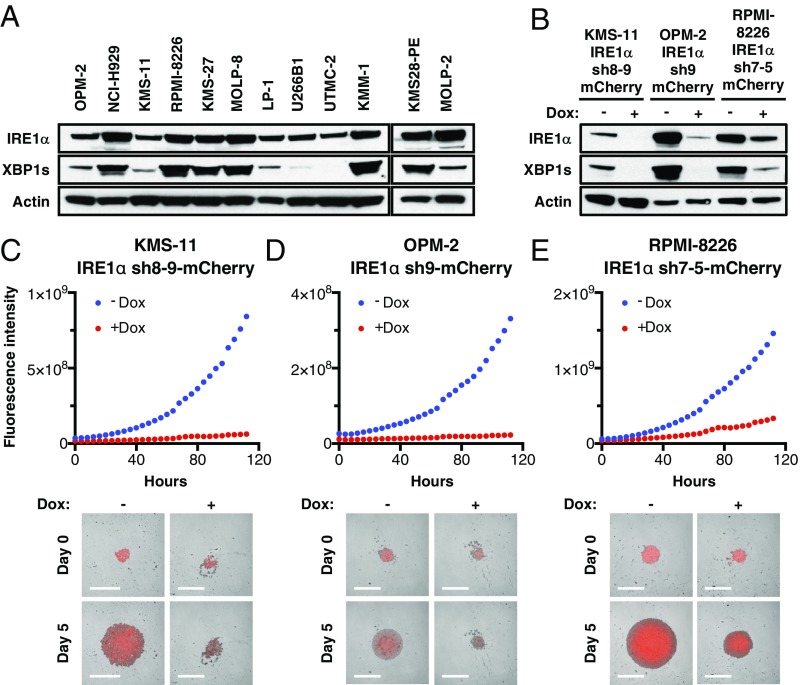
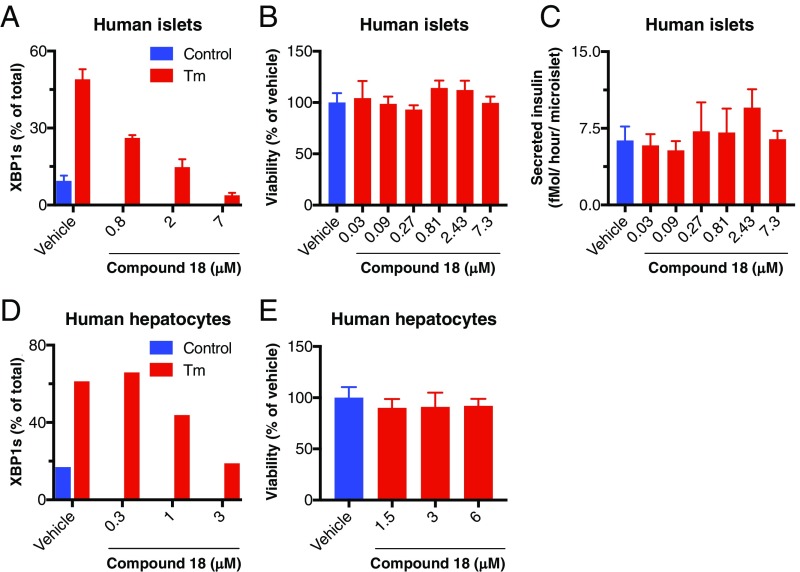
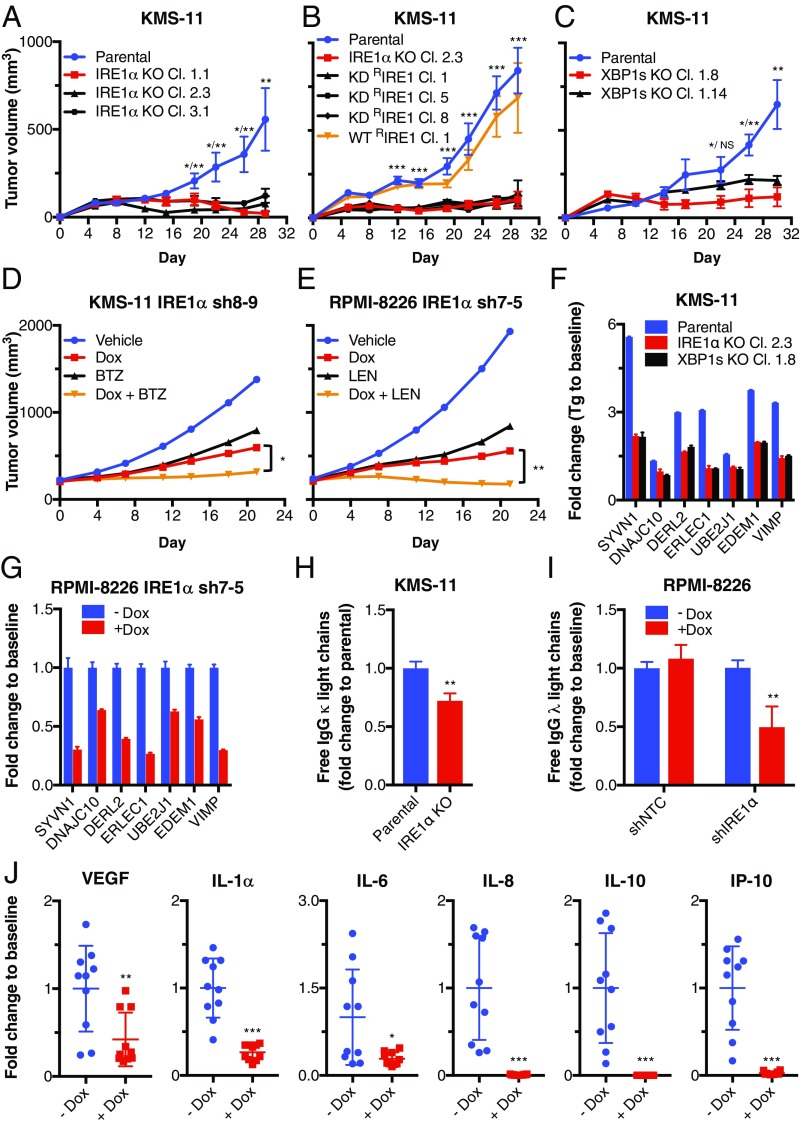
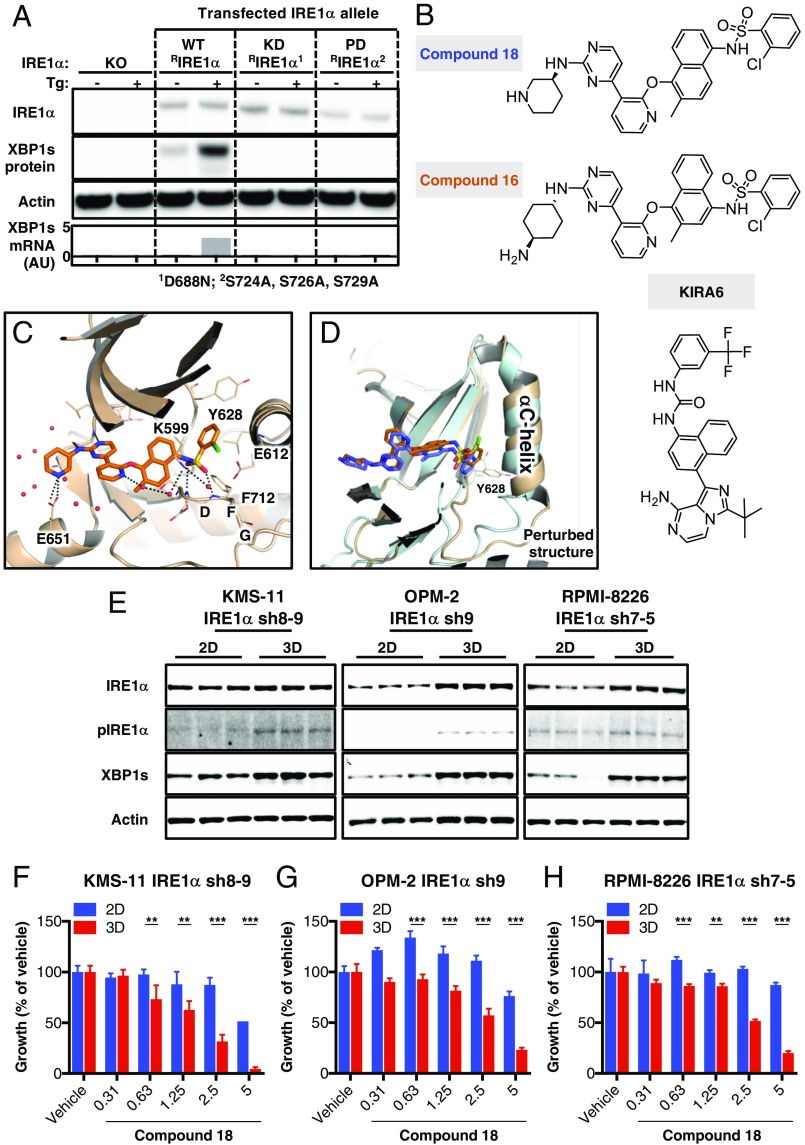
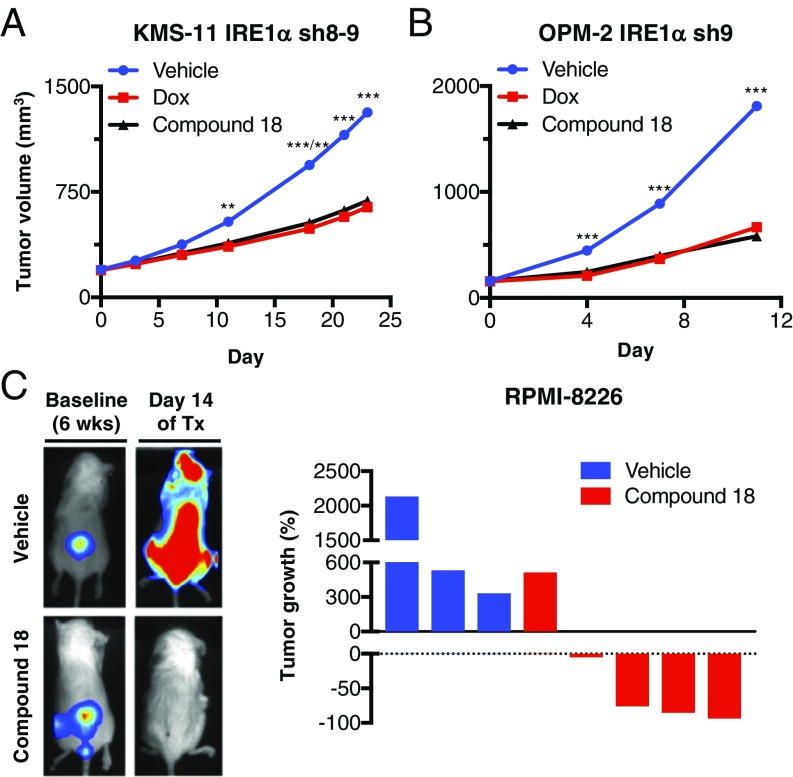
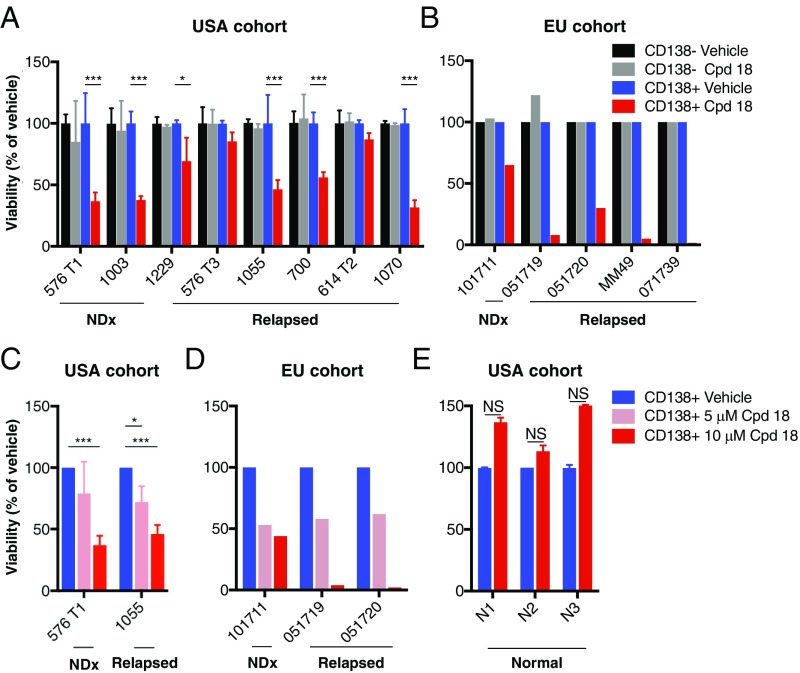
Multiple myeloma (MM) arises from malignant immunoglobulin (Ig)-secreting plasma cells and remains an incurable, often lethal disease despite therapeutic advances. The unfolded-protein response sensor IRE1α supports protein secretion by deploying a kinase-endoribonuclease module to activate the transcription factor XBP1s. MM cells may co-opt the IRE1α-XBP1s pathway; however, the validity of IRE1α as a potential MM therapeutic target is controversial. Genetic disruption of IRE1α or XBP1s, or pharmacologic IRE1α kinase inhibition, attenuated subcutaneous or orthometastatic growth of MM tumors in mice and augmented efficacy of two established frontline antimyeloma agents, bortezomib and lenalidomide. Mechanistically, IRE1α perturbation inhibited expression of key components of the endoplasmic reticulum-associated degradation machinery, as well as secretion of Ig light chains and of cytokines and chemokines known to promote MM growth. Selective IRE1α kinase inhibition reduced viability of CD138 plasma cells while sparing CD138 cells derived from bone marrows of newly diagnosed or posttreatment-relapsed MM patients, in both US- and European Union-based cohorts. Effective IRE1α inhibition preserved glucose-induced insulin secretion by pancreatic microislets and viability of primary hepatocytes in vitro, as well as normal tissue homeostasis in mice. These results establish a strong rationale for developing kinase-directed inhibitors of IRE1α for MM therapy.
多发性骨髓瘤(MM)起源于恶性免疫球蛋白(Ig)分泌的浆细胞,尽管治疗取得了进展,但仍然是一种无法治愈的、常常致命的疾病。未折叠蛋白反应传感器 IRE1α 通过部署激酶-内切核糖核酸酶模块来激活转录因子 XBP1s,从而支持蛋白质分泌。MM 细胞可能会选择 IRE1α-XBP1s 途径;然而,IRE1α 作为潜在的 MM 治疗靶点的有效性存在争议。IRE1α 或 XBP1s 的遗传破坏,或药理学 IRE1α 激酶抑制,减弱了 MM 肿瘤在小鼠中的皮下或原位转移生长,并增强了两种已确立的一线抗骨髓瘤药物硼替佐米和来那度胺的疗效。从机制上讲,IRE1α 的干扰抑制了内质网相关降解机制的关键成分的表达,以及 Ig 轻链以及已知促进 MM 生长的细胞因子和趋化因子的分泌。在基于美国和欧盟的队列中,选择性 IRE1α 激酶抑制减少了 CD138 浆细胞的活力,同时保留了来自新诊断或治疗后复发的 MM 患者骨髓的 CD138 细胞。IRE1α 的有效抑制在体外保留了胰岛的葡萄糖诱导的胰岛素分泌和原代肝细胞的活力,以及小鼠的正常组织稳态。这些结果为开发针对 IRE1α 的激酶定向抑制剂用于 MM 治疗提供了强有力的依据。