• 文献检索
  • 文档翻译
  • 深度研究
  • 学术资讯
  • Suppr Zotero 插件Zotero 插件
  • 邀请有礼
  • 套餐&价格
  • 历史记录
应用&插件
Suppr Zotero 插件Zotero 插件浏览器插件Mac 客户端Windows 客户端微信小程序
定价
高级版会员购买积分包购买API积分包
服务
文献检索文档翻译深度研究API 文档MCP 服务
关于我们
关于 Suppr公司介绍联系我们用户协议隐私条款
关注我们

Suppr 超能文献

核心技术专利:CN118964589B侵权必究
粤ICP备2023148730 号-1Suppr @ 2026

文献检索

告别复杂PubMed语法,用中文像聊天一样搜索,搜遍4000万医学文献。AI智能推荐,让科研检索更轻松。

立即免费搜索

文件翻译

保留排版,准确专业,支持PDF/Word/PPT等文件格式,支持 12+语言互译。

免费翻译文档

深度研究

AI帮你快速写综述,25分钟生成高质量综述,智能提取关键信息,辅助科研写作。

立即免费体验

干预改变帕金森病 Pink1-/- 大鼠模型的声峰频率和中脑边缘神经化学。

Intervention changes acoustic peak frequency and mesolimbic neurochemistry in the Pink1-/- rat model of Parkinson disease.

机构信息

Department of Surgery, Division of Otolaryngology, University of Wisconsin-Madison, Madison, Wisconsin, United States of America.

出版信息

PLoS One. 2019 Aug 2;14(8):e0220734. doi: 10.1371/journal.pone.0220734. eCollection 2019.

DOI:10.1371/journal.pone.0220734
PMID:31374106
原文链接:https://pmc.ncbi.nlm.nih.gov/articles/PMC6677310/
Abstract

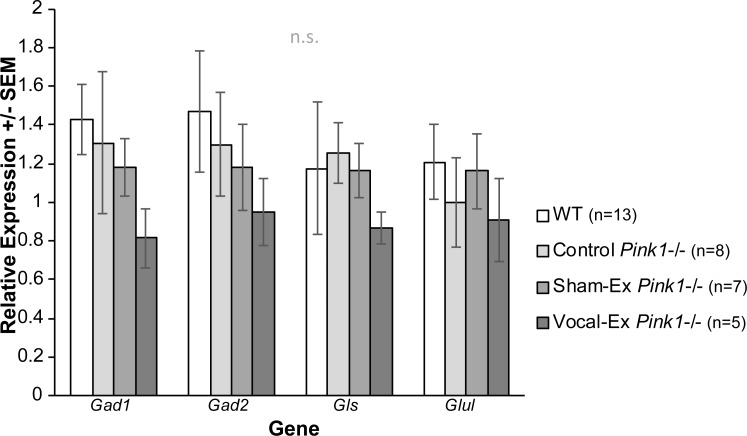
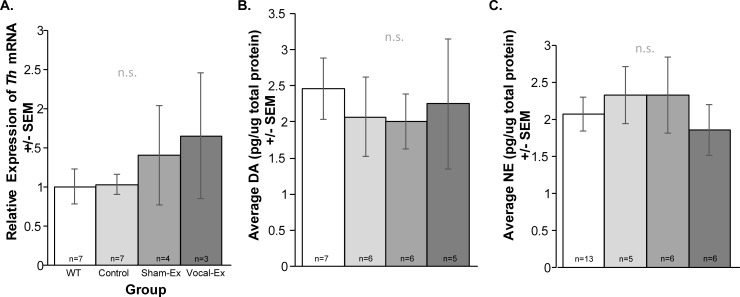
The neural mechanisms underlying behavioral therapy for vocal acoustic deficits in patients with Parkinson disease is unknown. A primary hypothesis is that voice therapy may modulate mesolimbic brainstem regions, including the ventral tegmental area (VTA). The VTA is implicated in ultrasonic call peak frequency, involved in rewarding behaviors, and impacted by Parkinsonism. We tested the hypothesis that chronic (daily) behavioral vocal exercise of male Pink1-/- rats would alter ultrasonic vocalization acoustics and mesolimbic neurochemistry (catecholamines, GABA, mu-opioid receptor) compared to three different controls: sham-exercised Pink1-/-, unexercised Pink1-/-, and unexercised wildtype (WT) rats. A sub-hypothesis is that sham-exercise rats may exhibit changes to VTA neurochemistry as a result of a type or rewarding intervention. Results demonstrate that average bandwidth (frequency range) of ultrasonic vocalizations did not differ between WT, Pink1-/- no exercise vs. sham and vocal-exercise rats. However, average peak frequency is significantly reduced in vocal-exercised Pink1-/- rats compared to Pink1-/- no exercise, and WT groups. Unexpectedly, there were no significant acoustic differences between the vocal- and sham-exercised groups. There were no differences in catecholamine protein concentrations or tyrosine hydroxylase mRNA expression in the VTA between any of the groups. However, there was significant upregulation of all GABA-related genes in both vocal- and sham-exercised Pink1-/- rats (Gad1, Gad2, Gls, Glul); this finding was confirmed with follow up quantitative Western blotting for GAD. Additionally, there were differential results for mu-opioid receptor quantification in the VTA: vocal-exercised Pink1-/- rats showed increased mRNA expression for mu-opioid receptors whereas Western blotting indicated decreased protein levels in all Pink1-/- rats compared to WT controls suggesting the possible onset of pathology in this model. These data demonstrate modulatory effects of a rewarding behavioral paradigm on ultrasonic vocalization peak frequency. The results suggest that neuromodulators such as GABA and opioid activity, as well as the rewarding aspects of therapy may play a key role in shaping vocal treatments.

摘要

行为疗法治疗帕金森病患者发声缺陷的神经机制尚不清楚。一个主要假设是,语音治疗可能会调节中脑边缘脑区,包括腹侧被盖区(VTA)。VTA 与超声呼叫峰值频率有关,涉及奖励行为,并受帕金森病影响。我们测试了以下假设:与三种不同的对照组(假锻炼 Pink1-/-、不锻炼 Pink1-/-、不锻炼野生型(WT)大鼠)相比,慢性(每日)行为声乐锻炼雄性 Pink1-/-大鼠会改变超声发声的声学特性和中脑边缘神经化学(儿茶酚胺、GABA、μ-阿片受体)。一个子假设是,假锻炼大鼠可能会因为某种奖励干预而改变 VTA 神经化学。结果表明,WT、Pink1-/-不锻炼与假锻炼和声乐锻炼大鼠之间的超声发声平均带宽(频率范围)没有差异。然而,与 Pink1-/-不锻炼组和 WT 组相比,声乐锻炼的 Pink1-/-大鼠的平均峰值频率显著降低。出乎意料的是,声乐锻炼组和假锻炼组之间没有明显的声学差异。在 VTA 中,儿茶酚胺蛋白浓度或酪氨酸羟化酶 mRNA 表达在任何组之间均无差异。然而,在声乐和假锻炼的 Pink1-/-大鼠中,所有 GABA 相关基因都有显著的上调(Gad1、Gad2、Gls、Glul);这一发现通过后续的 GABA 定量 Western blot 得到了证实。此外,VTA 中μ-阿片受体定量存在差异结果:声乐锻炼的 Pink1-/-大鼠的μ-阿片受体 mRNA 表达增加,而 Western blot 表明所有 Pink1-/-大鼠的蛋白水平均低于 WT 对照组,表明该模型中可能出现了病理。这些数据表明,奖励行为范式对超声发声峰值频率具有调节作用。研究结果表明,神经调质如 GABA 和阿片活性以及治疗的奖励方面可能在塑造声乐治疗方面发挥关键作用。
https://cdn.ncbi.nlm.nih.gov/pmc/blobs/31c0/6677310/a1d2d525c715/pone.0220734.g007.jpg
https://cdn.ncbi.nlm.nih.gov/pmc/blobs/31c0/6677310/7c857a5bcc24/pone.0220734.g001.jpg
https://cdn.ncbi.nlm.nih.gov/pmc/blobs/31c0/6677310/caa820a5aeab/pone.0220734.g002.jpg
https://cdn.ncbi.nlm.nih.gov/pmc/blobs/31c0/6677310/dee14f77c5ff/pone.0220734.g003.jpg
https://cdn.ncbi.nlm.nih.gov/pmc/blobs/31c0/6677310/f033e42a4972/pone.0220734.g004.jpg
https://cdn.ncbi.nlm.nih.gov/pmc/blobs/31c0/6677310/76ecd031956f/pone.0220734.g005.jpg
https://cdn.ncbi.nlm.nih.gov/pmc/blobs/31c0/6677310/2cf6f1a73187/pone.0220734.g006.jpg
https://cdn.ncbi.nlm.nih.gov/pmc/blobs/31c0/6677310/a1d2d525c715/pone.0220734.g007.jpg
https://cdn.ncbi.nlm.nih.gov/pmc/blobs/31c0/6677310/7c857a5bcc24/pone.0220734.g001.jpg
https://cdn.ncbi.nlm.nih.gov/pmc/blobs/31c0/6677310/caa820a5aeab/pone.0220734.g002.jpg
https://cdn.ncbi.nlm.nih.gov/pmc/blobs/31c0/6677310/dee14f77c5ff/pone.0220734.g003.jpg
https://cdn.ncbi.nlm.nih.gov/pmc/blobs/31c0/6677310/f033e42a4972/pone.0220734.g004.jpg
https://cdn.ncbi.nlm.nih.gov/pmc/blobs/31c0/6677310/76ecd031956f/pone.0220734.g005.jpg
https://cdn.ncbi.nlm.nih.gov/pmc/blobs/31c0/6677310/2cf6f1a73187/pone.0220734.g006.jpg
https://cdn.ncbi.nlm.nih.gov/pmc/blobs/31c0/6677310/a1d2d525c715/pone.0220734.g007.jpg

相似文献

1
Intervention changes acoustic peak frequency and mesolimbic neurochemistry in the Pink1-/- rat model of Parkinson disease.干预改变帕金森病 Pink1-/- 大鼠模型的声峰频率和中脑边缘神经化学。
PLoS One. 2019 Aug 2;14(8):e0220734. doi: 10.1371/journal.pone.0220734. eCollection 2019.
2
Atp13a2 expression in the periaqueductal gray is decreased in the Pink1 -/- rat model of Parkinson disease.在帕金森病的Pink1 -/-大鼠模型中,中脑导水管周围灰质中的Atp13a2表达降低。
Neurosci Lett. 2016 May 16;621:75-82. doi: 10.1016/j.neulet.2016.04.003. Epub 2016 Apr 4.
3
Early-onset Parkinsonian behaviors in female Pink1-/- rats.早发性帕金森病行为在雌性 Pink1-/- 大鼠中。
Behav Brain Res. 2020 Jan 13;377:112175. doi: 10.1016/j.bbr.2019.112175. Epub 2019 Sep 19.
4
Exercise Effects on Early Vocal Ultrasonic Communication Dysfunction in a PINK1 Knockout Model of Parkinson's Disease.运动对帕金森病PINK1基因敲除模型早期发声超声通讯功能障碍的影响
J Parkinsons Dis. 2015;5(4):749-63. doi: 10.3233/JPD-150688.
5
Gene expression within the periaqueductal gray is linked to vocal behavior and early-onset parkinsonism in Pink1 knockout rats.缰核内的基因表达与 Pink1 敲除大鼠的发声行为和早发性帕金森病有关。
BMC Genomics. 2020 Sep 17;21(1):625. doi: 10.1186/s12864-020-07037-4.
6
Changes to Ventilation, Vocalization, and Thermal Nociception in the Pink1-/- Rat Model of Parkinson's Disease.帕金森病 Pink1-/- 大鼠模型中通气、发声和热伤害感受的变化。
J Parkinsons Dis. 2020;10(2):489-504. doi: 10.3233/JPD-191853.
7
Quantification of brainstem norepinephrine relative to vocal impairment and anxiety in the Pink1-/- rat model of Parkinson disease.帕金森病 Pink1-/- 大鼠模型中脑干去甲肾上腺素与发声障碍和焦虑的定量关系。
Behav Brain Res. 2021 Sep 24;414:113514. doi: 10.1016/j.bbr.2021.113514. Epub 2021 Aug 4.
8
Quantitative Analysis of Catecholamines in the Pink1 -/- Rat Model of Early-onset Parkinson's Disease.在早发性帕金森病的 Pink1 -/- 大鼠模型中儿茶酚胺的定量分析。
Neuroscience. 2018 May 21;379:126-141. doi: 10.1016/j.neuroscience.2018.02.027. Epub 2018 Feb 27.
9
Evidence for early and progressive ultrasonic vocalization and oromotor deficits in a PINK1 gene knockout rat model of Parkinson's disease.帕金森病PINK1基因敲除大鼠模型中早期和进行性超声发声及口面部运动功能障碍的证据。
J Neurosci Res. 2015 Nov;93(11):1713-27. doi: 10.1002/jnr.23625. Epub 2015 Jul 31.
10
Vocal and tongue exercise in early to mid-stage Parkinson disease using the Pink1-/- rat.使用 Pink1-/- 大鼠进行帕金森病早中期的嗓音和舌部锻炼。
Brain Res. 2024 Aug 15;1837:148958. doi: 10.1016/j.brainres.2024.148958. Epub 2024 Apr 27.

引用本文的文献

1
Vocal and tongue exercise in early to mid-stage Parkinson disease using the Pink1-/- rat.使用 Pink1-/- 大鼠进行帕金森病早中期的嗓音和舌部锻炼。
Brain Res. 2024 Aug 15;1837:148958. doi: 10.1016/j.brainres.2024.148958. Epub 2024 Apr 27.
2
Molecular mechanisms underlying the neuroprotection of environmental enrichment in Parkinson's disease.帕金森病中环境富集神经保护作用的分子机制
Neural Regen Res. 2023 Jul;18(7):1450-1456. doi: 10.4103/1673-5374.360264.
3
Predictors of prodromal Parkinson's disease in young adult rats.

本文引用的文献

1
Noradrenergic receptor modulation influences the acoustic parameters of pro-social rat ultrasonic vocalizations.去甲肾上腺素能受体调节影响亲社会大鼠超声发声的声学参数。
Behav Neurosci. 2018 Aug;132(4):269-283. doi: 10.1037/bne0000258. Epub 2018 Jul 9.
2
Pink1 -/- Rats Show Early-Onset Swallowing Deficits and Correlative Brainstem Pathology.Pink1基因敲除大鼠表现出早发性吞咽功能障碍及相关脑干病理学变化。
Dysphagia. 2018 Dec;33(6):749-758. doi: 10.1007/s00455-018-9896-5. Epub 2018 Apr 30.
3
Quantitative Analysis of Catecholamines in the Pink1 -/- Rat Model of Early-onset Parkinson's Disease.
年轻成年大鼠前驱期帕金森病的预测指标
Front Behav Neurosci. 2022 Sep 12;16:867958. doi: 10.3389/fnbeh.2022.867958. eCollection 2022.
4
Vocal changes in a zebra finch model of Parkinson's disease characterized by alpha-synuclein overexpression in the song-dedicated anterior forebrain pathway.在表达α-突触核蛋白的斑马雀帕金森病模型中观察到的发声变化,该模型中α-突触核蛋白在前脑 song-dedicated 前通路中过度表达。
PLoS One. 2022 May 4;17(5):e0265604. doi: 10.1371/journal.pone.0265604. eCollection 2022.
5
Rat Models of Vocal Deficits in Parkinson's Disease.帕金森病嗓音缺陷的大鼠模型
Brain Sci. 2021 Jul 13;11(7):925. doi: 10.3390/brainsci11070925.
6
Thyroarytenoid Muscle Gene Expression in a Rat Model of Early-Onset Parkinson's Disease.早发性帕金森病大鼠模型中的甲状腺动肌基因表达。
Laryngoscope. 2021 Dec;131(12):E2874-E2879. doi: 10.1002/lary.29661. Epub 2021 May 31.
7
Pink1 rats are a useful tool to study early Parkinson disease.Pink1大鼠是研究早期帕金森病的一种有用工具。
Brain Commun. 2021 Apr 23;3(2):fcab077. doi: 10.1093/braincomms/fcab077. eCollection 2021.
8
Gene expression within the periaqueductal gray is linked to vocal behavior and early-onset parkinsonism in Pink1 knockout rats.缰核内的基因表达与 Pink1 敲除大鼠的发声行为和早发性帕金森病有关。
BMC Genomics. 2020 Sep 17;21(1):625. doi: 10.1186/s12864-020-07037-4.
9
Rapid development of mature vocal patterns of ultrasonic calls in a fast-growing rodent, the yellow steppe lemming (Eolagurus luteus).快速生长的啮齿动物——黄兔尾鼠(Eolagurus luteus)的超声波叫声的成熟模式迅速发展。
PLoS One. 2020 Feb 11;15(2):e0228892. doi: 10.1371/journal.pone.0228892. eCollection 2020.
在早发性帕金森病的 Pink1 -/- 大鼠模型中儿茶酚胺的定量分析。
Neuroscience. 2018 May 21;379:126-141. doi: 10.1016/j.neuroscience.2018.02.027. Epub 2018 Feb 27.
4
Non-motor features of Parkinson disease.帕金森病的非运动症状。
Nat Rev Neurosci. 2017 Jul;18(7):435-450. doi: 10.1038/nrn.2017.62. Epub 2017 Jun 8.
5
Axonal damage and loss of connectivity in nigrostriatal and mesolimbic dopamine pathways in early Parkinson's disease.早期帕金森病中黑质纹状体和中脑边缘多巴胺能通路的轴突损伤及连接丧失
Neuroimage Clin. 2017 Mar 27;14:734-740. doi: 10.1016/j.nicl.2017.03.011. eCollection 2017.
6
Parkinson's Disease and Neurodegeneration: GABA-Collapse Hypothesis.帕金森病与神经退行性变:GABA衰竭假说
Front Neurosci. 2016 Jun 9;10:269. doi: 10.3389/fnins.2016.00269. eCollection 2016.
7
Data in support of qPCR primer design and verification in a Pink1 -/- rat model of Parkinson disease.支持帕金森病Pink1 -/-大鼠模型中qPCR引物设计与验证的数据。
Data Brief. 2016 May 30;8:360-3. doi: 10.1016/j.dib.2016.05.056. eCollection 2016 Sep.
8
Atp13a2 expression in the periaqueductal gray is decreased in the Pink1 -/- rat model of Parkinson disease.在帕金森病的Pink1 -/-大鼠模型中,中脑导水管周围灰质中的Atp13a2表达降低。
Neurosci Lett. 2016 May 16;621:75-82. doi: 10.1016/j.neulet.2016.04.003. Epub 2016 Apr 4.
9
Vocal training, levodopa, and environment effects on ultrasonic vocalizations in a rat neurotoxin model of Parkinson disease.在帕金森病大鼠神经毒素模型中,发声训练、左旋多巴及环境对超声发声的影响
Behav Brain Res. 2016 Jul 1;307:54-64. doi: 10.1016/j.bbr.2016.03.006. Epub 2016 Mar 26.
10
Exercise Effects on Early Vocal Ultrasonic Communication Dysfunction in a PINK1 Knockout Model of Parkinson's Disease.运动对帕金森病PINK1基因敲除模型早期发声超声通讯功能障碍的影响
J Parkinsons Dis. 2015;5(4):749-63. doi: 10.3233/JPD-150688.