Department of Physical Medicine and Rehabilitation, School of Medicine, College of Medicine, Taipei Medical University, 252 Wu-Hsing Street, Taipei, 11031, Taiwan, Republic of China.
Department of Physical Medicine and Rehabilitation, Taipei Medical University Hospital, 250 Wu-Xing Street, Taipei, 11031, Taiwan, Republic of China.
J Neuroeng Rehabil. 2019 Aug 2;16(1):101. doi: 10.1186/s12984-019-0570-4.
Stroke can lead to movement disorders that affect interlimb coordination control of the bilateral upper extremities, especially the hands. However, few studies have investigated the influence of a stroke on bimanual force coordination control between the hands using a quantitative measurement tool, or the relationship of force coordination with paretic upper extremity motor and functional performance. We aimed to investigate these outcomes using a novel measurement device, and analyze the relationship of bimanual force coordination control deficits in both hands with motor and functional performances of the paretic upper extremity in stroke patients.
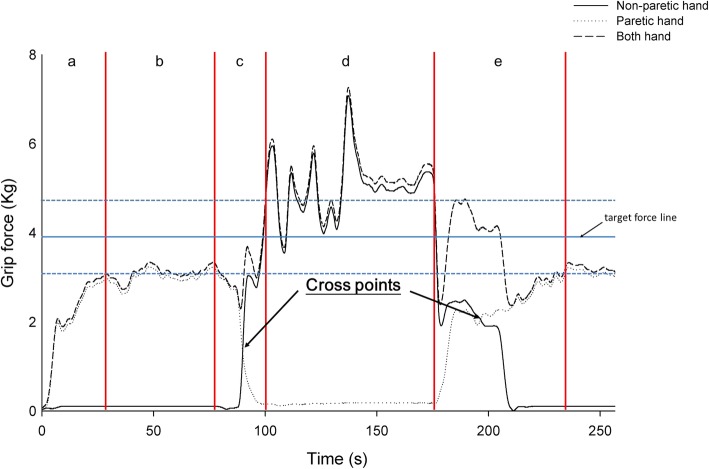
Sixteen healthy adults and 22 stroke patients were enrolled. A novel bilateral hand grip measurement device with two embedded dynamometers was used to evaluate the grip force during a bilateral hand grip-force coordination control task. The alternating time and force applied for coordination with the grip force of both hands were calculated to analyze control of bimanual grip force coordination. Motor and functional measurements included the upper-extremity portion of the Fugl-Meyer assessment (FMA-UE), Wolf Motor Function Test (WMFT), Motor Assessment Scale (MAS), and Barthel Index (BI).
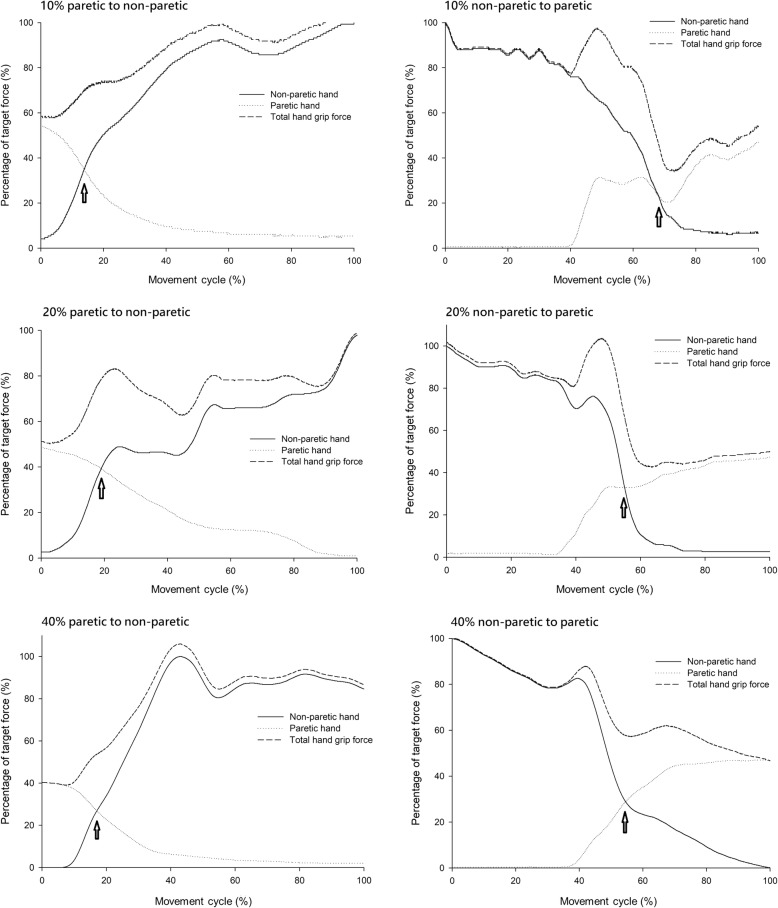
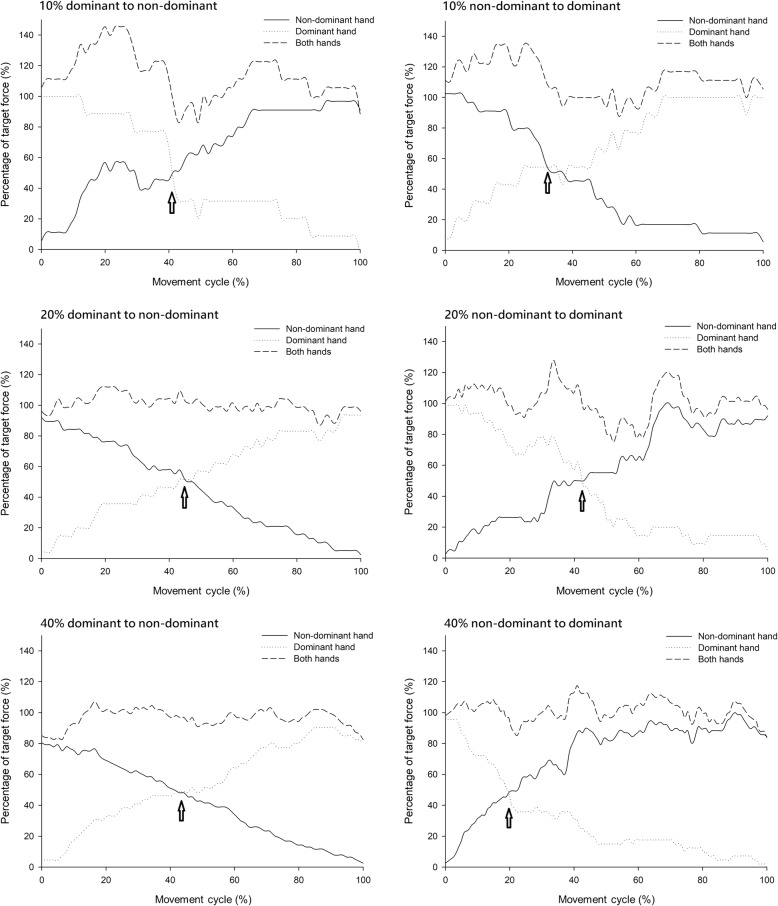
Compared with the healthy group, the alternating time from the non-paretic to the paretic hand was 27.6% shorter for stroke patients (p < 0.001). The grip force generated for coordination in the healthy group was significantly greater (30-59%) than that of the stroke group (p < 0.05), and the coefficients of variation of alternating time (p = 0.001) and force applied (p = 0.002) were significantly higher in the stroke group than the healthy group. The alternating time from the paretic to the non-paretic hand showed moderately significant correlations with the FMA-UE (r = - 0.533; p = 0.011), the WMFT (r = - 0.450; p = 0.036), and the BI (r = - 0.497; p = 0.019).
Stroke results in a decline in bimanual grip force generation and increases the alternating time for coordinating the two hands. A shorter alternating time is moderately to highly associated with enhanced motor and functional performances.
中风可导致运动障碍,影响双侧上肢的肢体间协调控制,尤其是手部。然而,很少有研究使用定量测量工具来研究中风对手部双手之间的双上肢力协调控制的影响,或者力协调与瘫痪上肢运动和功能表现之间的关系。我们旨在使用新型测量设备研究这些结果,并分析中风患者双手的双上肢力协调控制缺陷与瘫痪上肢的运动和功能表现之间的关系。
纳入 16 名健康成年人和 22 名中风患者。使用新型双手握力测量设备,其中嵌入两个测力计,评估双手握力协调控制任务期间的握力。计算双手协调时施加的交替时间和力,以分析双手握力协调控制。运动和功能测量包括 Fugl-Meyer 上肢评估(FMA-UE)、Wolf 运动功能测试(WMFT)、运动评估量表(MAS)和 Barthel 指数(BI)的上肢部分。
与健康组相比,中风患者从非瘫痪手到瘫痪手的交替时间短了 27.6%(p<0.001)。健康组的协调产生的握力明显更大(30-59%)(p<0.05),并且中风组的交替时间(p=0.001)和力的变异系数(p=0.002)明显高于健康组。从瘫痪手到非瘫痪手的交替时间与 FMA-UE(r=-0.533;p=0.011)、WMFT(r=-0.450;p=0.036)和 BI(r=-0.497;p=0.019)呈中度显著相关。
中风导致双手握力产生下降,双手协调的交替时间增加。较短的交替时间与运动和功能表现的增强具有中度到高度的相关性。