Department of Orthodontics, Dentofacial Orthopedics and Pedodontics, Charité - Universitätsmedizin Berlin, Berlin, Germany
Department of Operative and Preventive Dentistry, Charité - Universitätsmedizin Berlin, Berlin, Germany.
BMJ Open. 2019 Aug 2;9(8):e028352. doi: 10.1136/bmjopen-2018-028352.
Outcome and comparator choice strongly determine the validity and implementation of clinical trial results. We aimed to assess outcome and comparator choice in intervention studies on molar incisor hypomineralisation (MIH) using systematic review and social network analysis (SNA).
Medline, Embase, Cochrane Central, Google Scholar, opengrey.eu as well as DRKS.de and Clinicaltrials.gov were searched for MIH intervention studies. The search covered the period from 1980 to 2019.
Clinical single-arm/multiarm, controlled/uncontrolled studies reporting on the management of MIH were included. Reported outcomes and comparators were extracted and categorised. SNA was used to evaluate comparator choice and the resulting trial networks.
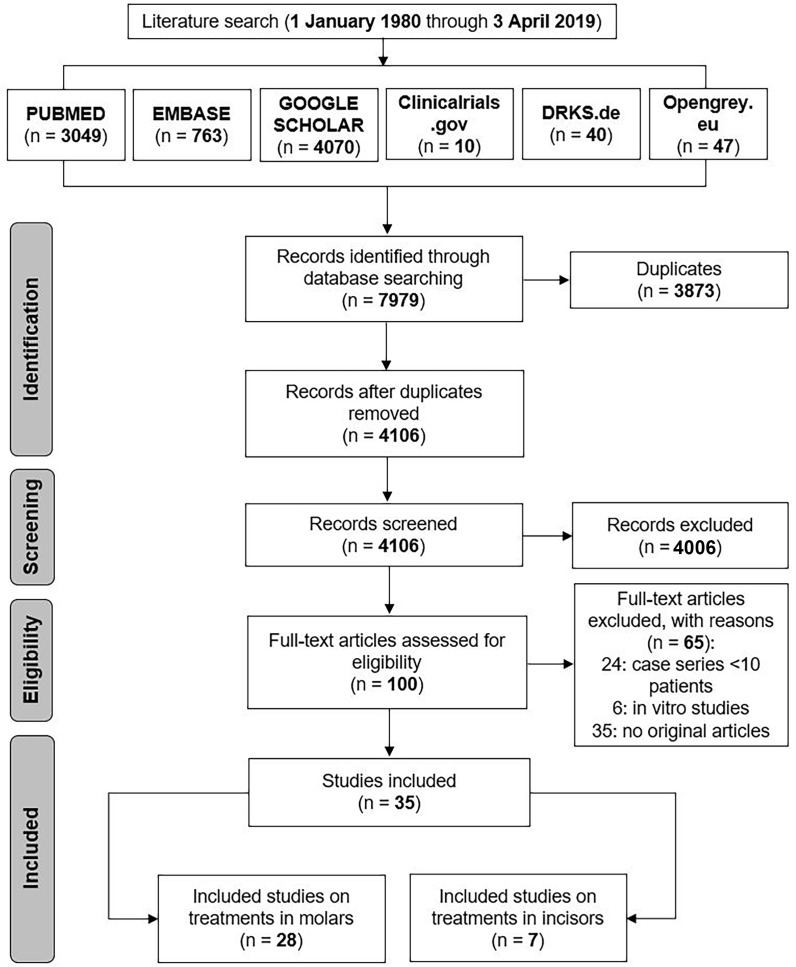
Of the 7979 identified records, 100 were evaluated in full text and 35 studies (17 randomised controlled trials, 14 prospective and 4 retrospective cohort studies) were included.
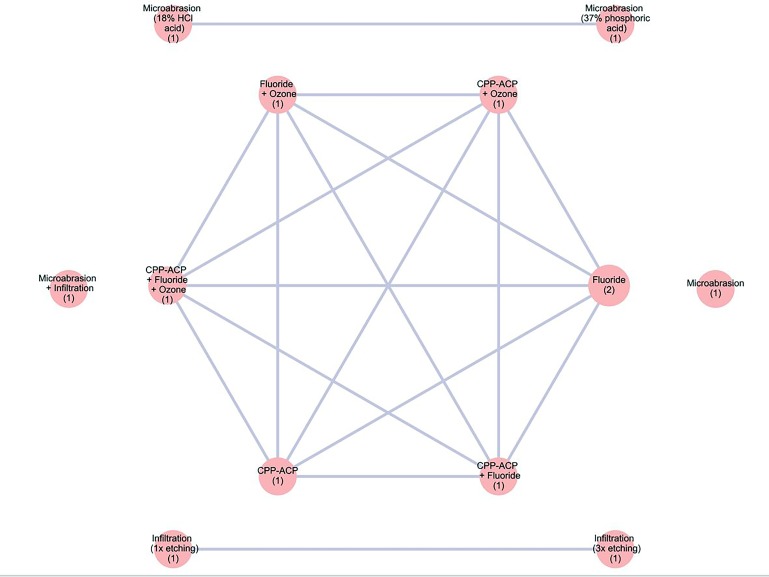
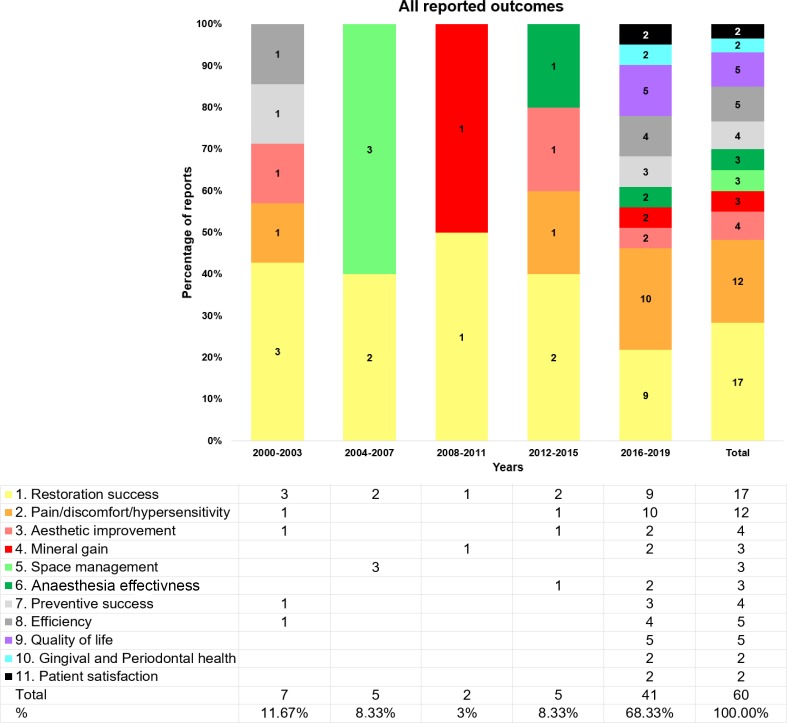
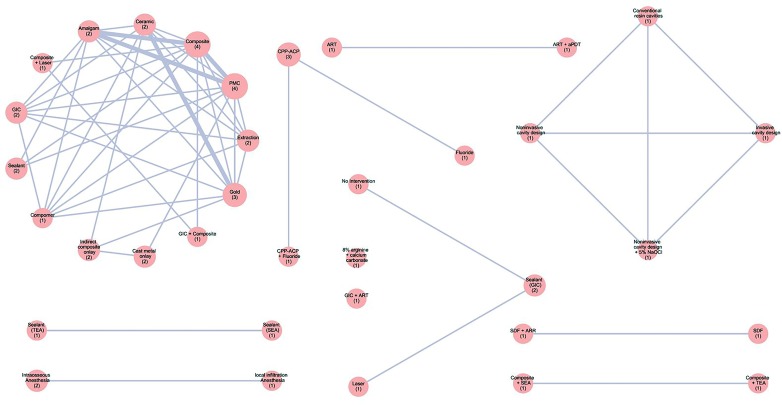
In total, 2124 patients with a mean age of 11 years (min/max 6/70 years) were included. Outcomes fell in one of 11 different outcome categories: restoration success, aesthetic improvement, pain/hypersensitivity/discomfort, mineral gain, space management, anaesthesia effectiveness, preventive success, efficiency, quality of life, gingival and periodontal health and patient satisfaction. Comparators were mainly restorative interventions (17 studies), remineralisation (3), treatment of hypersensitivity (10), aesthetic interventions (5) and orthodontic interventions (3). Two highly clustered comparator networks emerged; many interventions were not robustly linked to these networks.
MIH intervention studies recorded both clinically centred and patient-centred outcomes. Core outcome set development should consider these and supplement them with outcomes on, for example, applicability. The high number of compared interventions tested in only few studies and our SNA results implicate that the current evidence may not be robust.
结局和对照选择强烈影响临床试验结果的有效性和实施。我们旨在通过系统评价和社会网络分析(SNA)评估恒磨牙牙釉质发育不全(MIH)干预研究中的结局和对照选择。
检索 Medline、Embase、Cochrane 中央、Google Scholar、opengrey.eu 以及 DRKS.de 和 Clinicaltrials.gov 以获取 MIH 干预研究。搜索时间从 1980 年到 2019 年。
纳入报告 MIH 管理的单臂/多臂、对照/非对照临床研究。提取并分类报告的结局和对照。使用 SNA 评估对照选择和由此产生的试验网络。
从 7979 条记录中,有 100 条进行了全文评估,纳入了 35 项研究(17 项随机对照试验、14 项前瞻性队列研究和 4 项回顾性队列研究)。
共纳入 2124 名平均年龄为 11 岁(最小/最大 6/70 岁)的患者。结局分为 11 种不同结局类别之一:修复成功率、美学改善、疼痛/过敏/不适、矿物质增加、间隙管理、麻醉效果、预防成功率、效率、生活质量、牙龈和牙周健康以及患者满意度。对照主要是修复干预(17 项研究)、再矿化(3 项)、过敏治疗(10 项)、美学干预(5 项)和正畸干预(3 项)。出现了两个高度聚类的对照网络;许多干预措施与这些网络没有得到很好的关联。
MIH 干预研究记录了以临床为中心和以患者为中心的结局。核心结局集的发展应考虑这些,并补充如适用性等方面的结局。大量经过测试的对照干预措施仅在少数研究中进行,我们的 SNA 结果表明,目前的证据可能不够可靠。