Department of Ears, Nose and Throat (ENT), St. George's University Hospitals NHS Foundation Trust, London, United Kingdom.
Molecular and Clinical Sciences Research Institute and Cardiology Clinical Academic Group, St. George's, University of London, London, United Kingdom.
Front Immunol. 2019 Jul 16;10:1644. doi: 10.3389/fimmu.2019.01644. eCollection 2019.
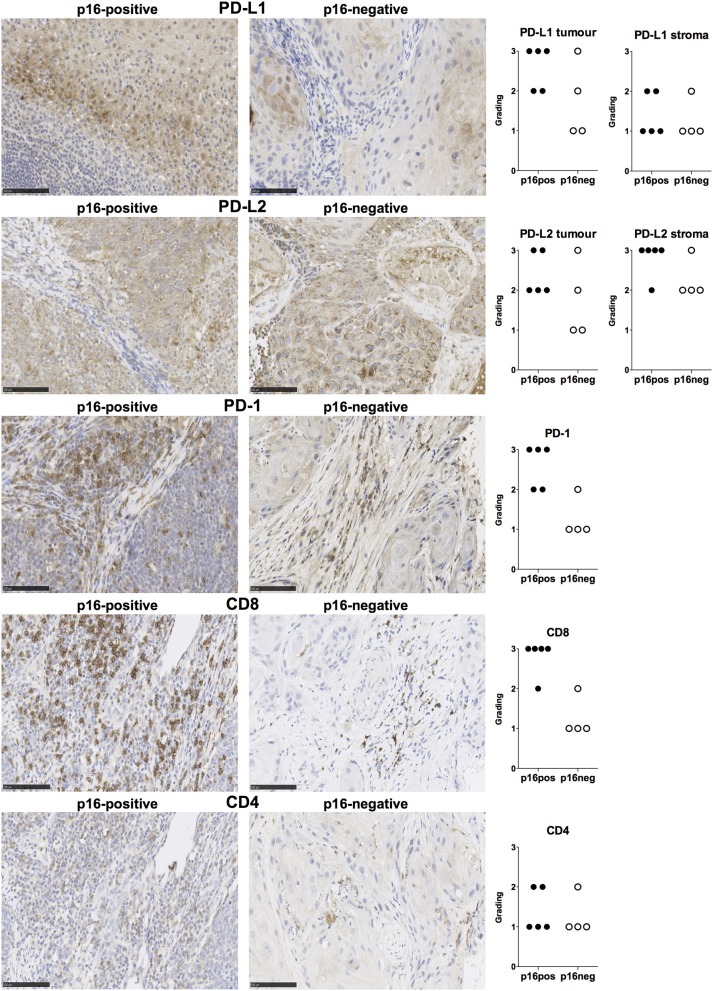
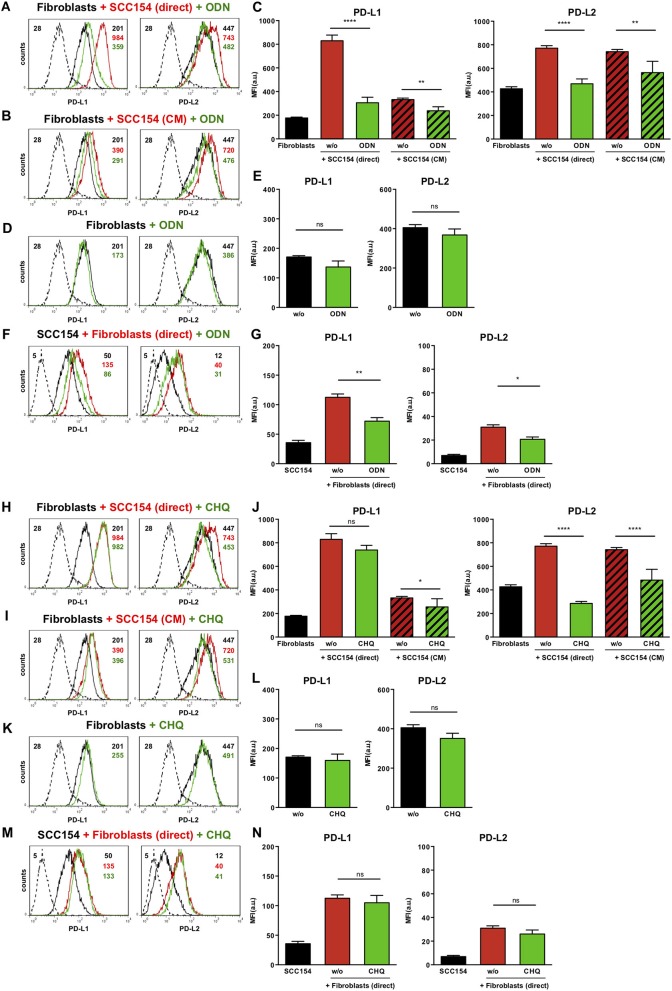
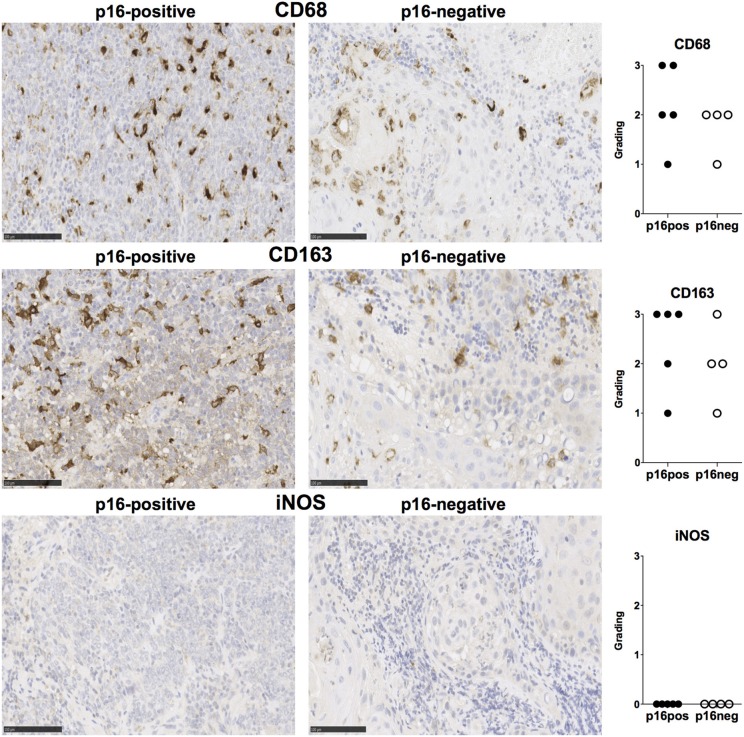
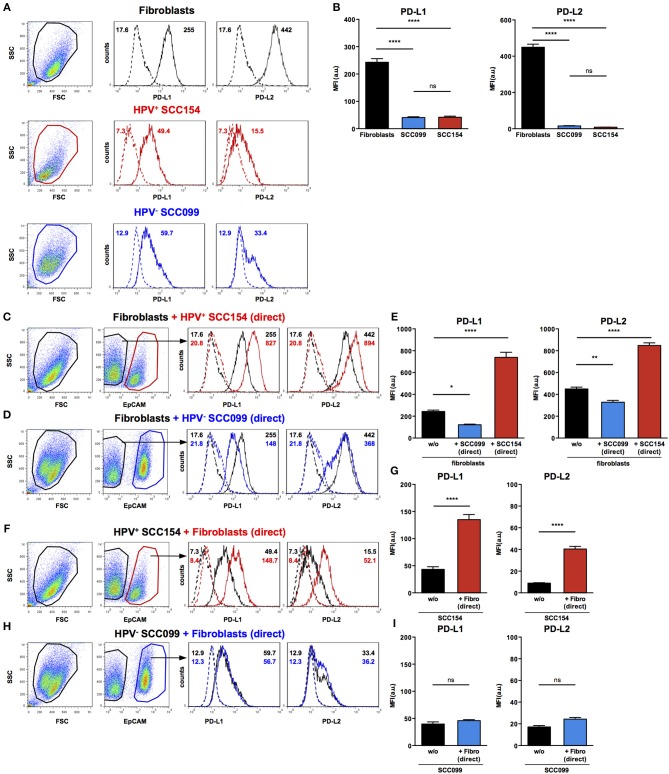
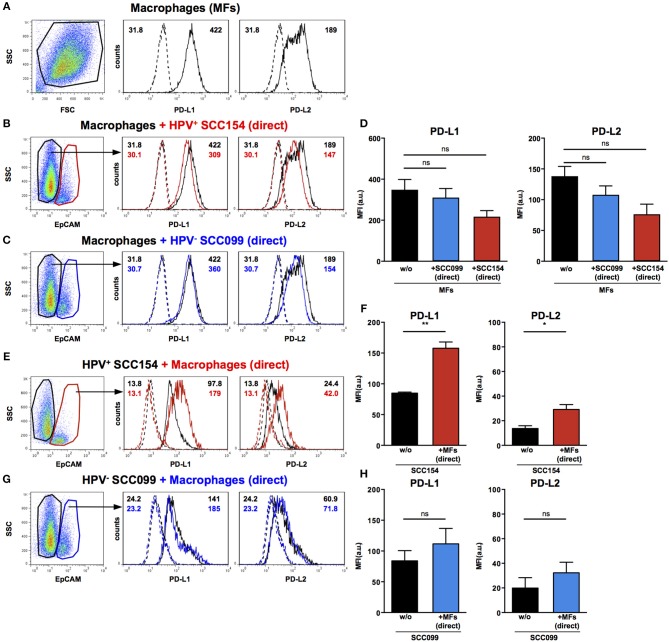
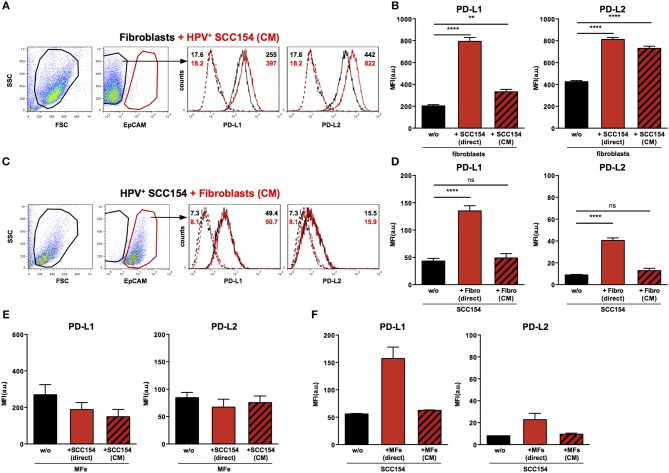
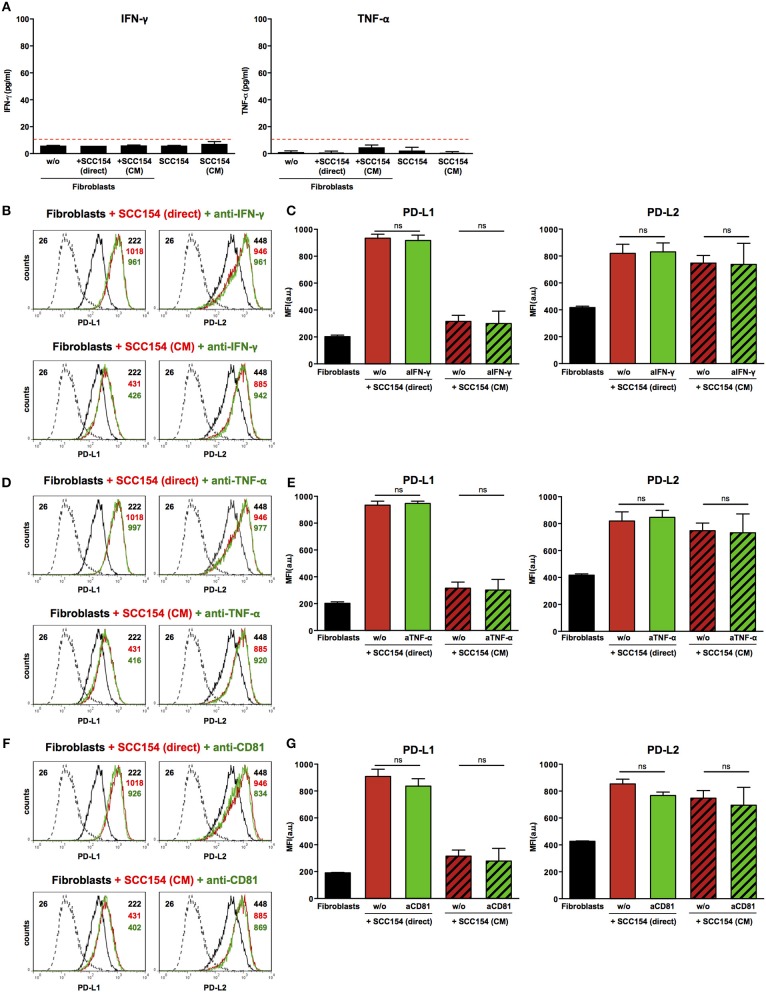
The co-inhibitory receptor PD-1 is expressed in many tumors including head and neck squamous cell carcinoma (HNSCC) and is an important immunotherapy target. However, the role of PD-1 ligands, PD-L1, and particularly PD-L2, in the tumor-stromal cell interactions that cause a tumor-permissive environment in HNSCC is not completely understood and is the focus of our study. Expression of PD-L1 and PD-L2 was analyzed by immunohistochemistry in HNSCC tumor tissue. Co-cultures were established between stromal cells (fibroblasts and macrophages) and human papilloma virus (HPV)-positive and HPV-negative HNSCC cell lines (HNSCCs) and PD-1 ligands expression was analyzed using flow cytometry. PD-L1 and PD-L2 were expressed both in tumor cells and stroma in HNSCC tissue . , basal expression of PD-L1 and PD-L2 was low in HNSCCs and high on fibroblasts and macrophages. Interestingly, HPV-positive but not HPV-negative HNSCCs increased the expression of both PD-1 ligands on fibroblasts upon co-culture. This effect was not observed with macrophages. Conversely, both fibroblasts and macrophages increased PD-1 ligands on HPV-positive HNSCCs, whilst this was not observed in HPV-negative HNSCCs. Crucially, we demonstrate that up-regulation of PD-L1 and PD-L2 on fibroblasts by HPV-positive HNSCCs is mediated via TLR9. This work demonstrates in an model that HPV-positive HNSCCs regulate PD-L1/2 expression on fibroblasts via TLR9. This may open novel avenues to modulate immune checkpoint regulator PD-1 and its ligands by targeting TLR9.
抑制性受体 PD-1 在包括头颈部鳞状细胞癌(HNSCC)在内的许多肿瘤中表达,是一种重要的免疫治疗靶点。然而,PD-1 配体 PD-L1 ,尤其是 PD-L2 ,在导致 HNSCC 肿瘤微环境中肿瘤耐受性的肿瘤-基质细胞相互作用中的作用尚不完全清楚,这也是我们研究的重点。我们通过免疫组织化学分析了 HNSCC 肿瘤组织中 PD-L1 和 PD-L2 的表达。建立了基质细胞(成纤维细胞和巨噬细胞)与人乳头瘤病毒(HPV)阳性和 HPV 阴性 HNSCC 细胞系(HNSCC)之间的共培养物,并通过流式细胞术分析 PD-1 配体的表达。PD-L1 和 PD-L2 在 HNSCC 组织中的肿瘤细胞和基质中均有表达。在 HNSCC 中,PD-L1 和 PD-L2 的基础表达水平较低,而在成纤维细胞和巨噬细胞中表达较高。有趣的是,HPV 阳性而非 HPV 阴性的 HNSCC 在共培养时增加了成纤维细胞上两种 PD-1 配体的表达。这种现象在巨噬细胞中没有观察到。相反,成纤维细胞和巨噬细胞均增加了 HPV 阳性 HNSCC 上的 PD-1 配体,而在 HPV 阴性 HNSCC 中则没有观察到这种现象。至关重要的是,我们证明 HPV 阳性 HNSCC 通过 TLR9 上调成纤维细胞上的 PD-L1 和 PD-L2。这一工作在模型中证明,HPV 阳性 HNSCC 通过 TLR9 调节成纤维细胞上 PD-L1/2 的表达。这可能为通过靶向 TLR9 来调节免疫检查点调节剂 PD-1 及其配体开辟新的途径。