Department of Molecular Biosciences, University of Texas at Austin, Austin, United States.
Department of Chemical Engineering, University of Texas at Austin, Austin, United States.
Elife. 2019 Aug 6;8:e48725. doi: 10.7554/eLife.48725.
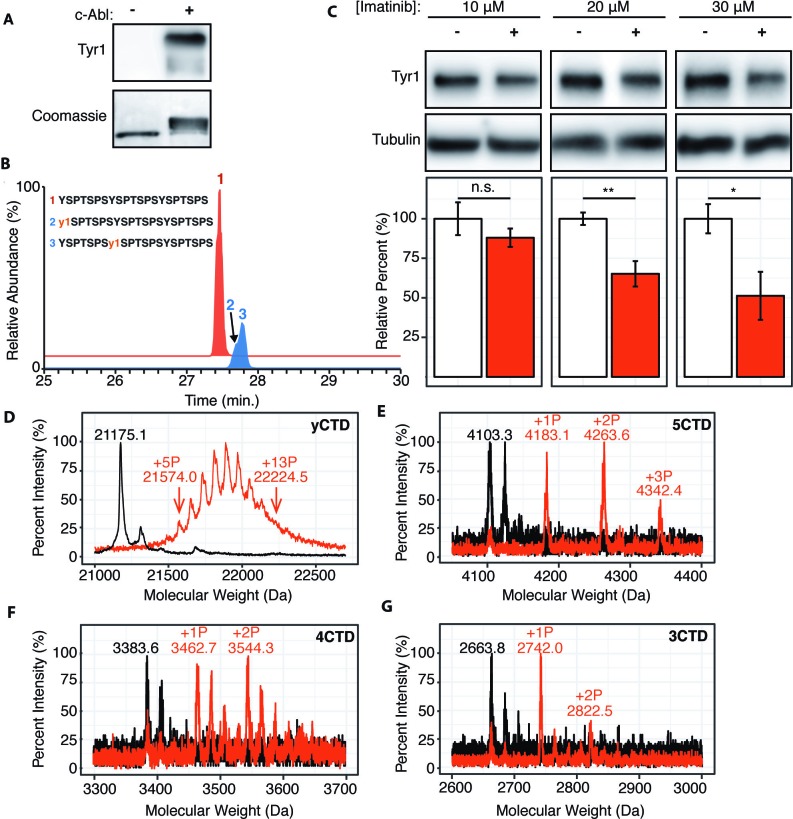
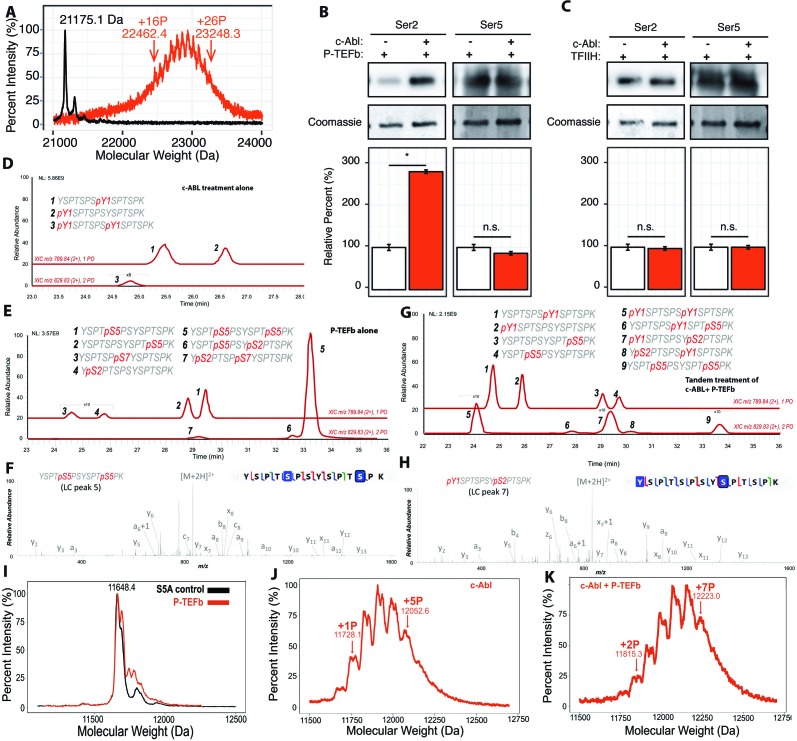
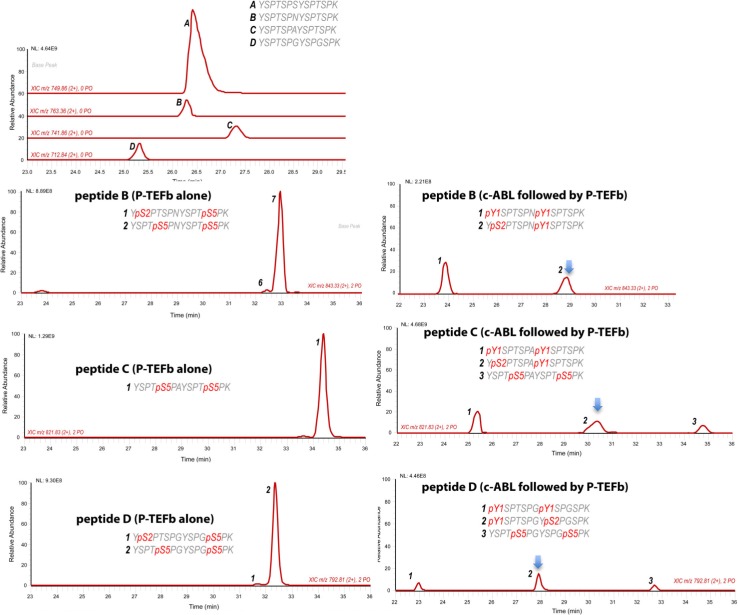
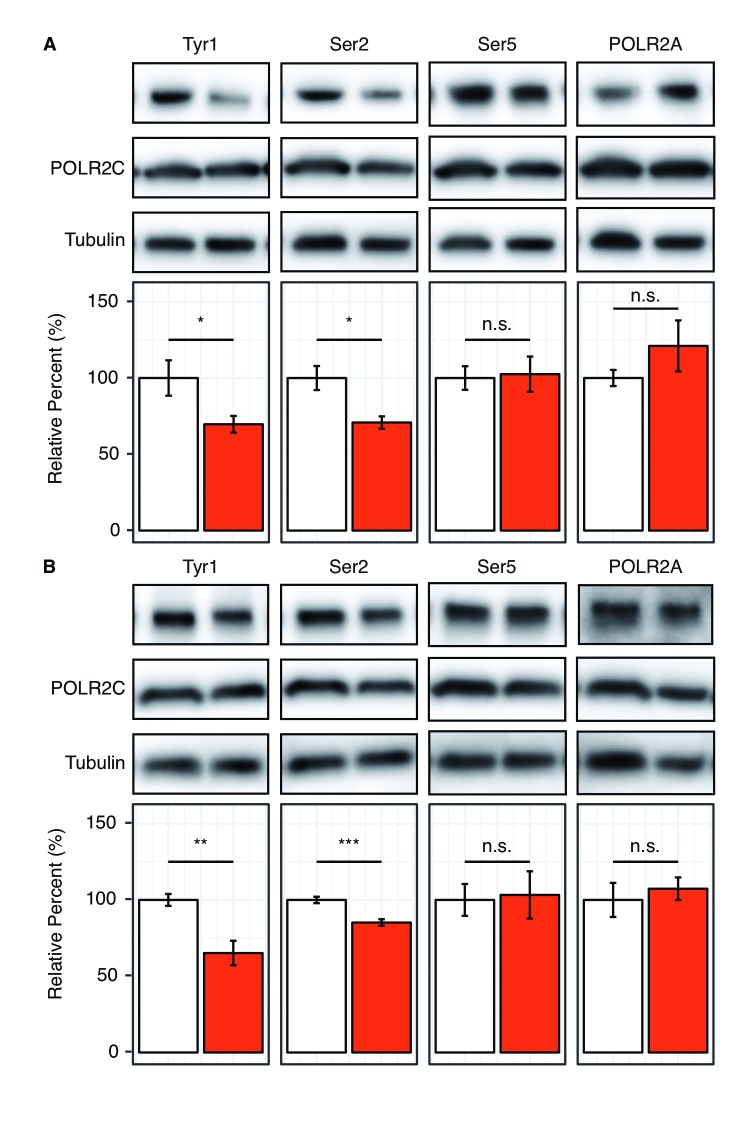
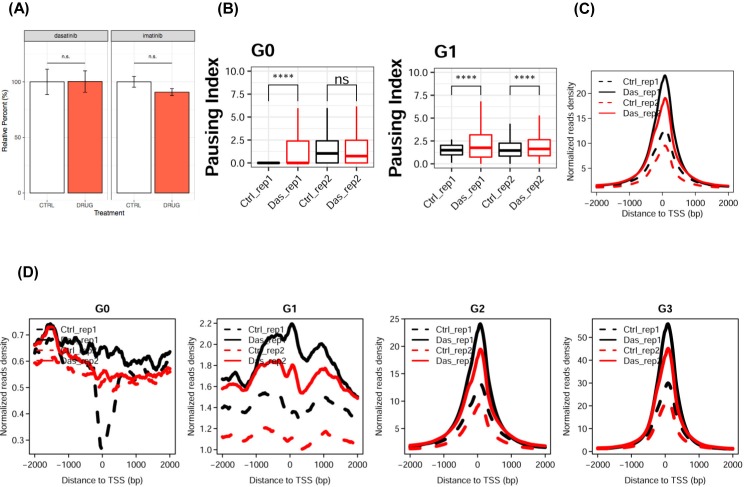
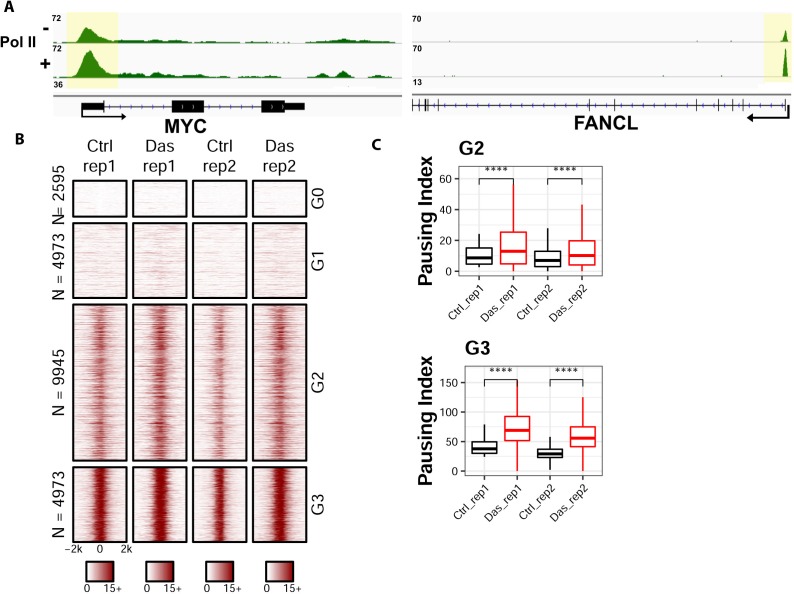
The Positive Transcription Elongation Factor b (P-TEFb) phosphorylates Ser2 residues of the C-terminal domain (CTD) of the largest subunit (RPB1) of RNA polymerase II and is essential for the transition from transcription initiation to elongation in vivo. Surprisingly, P-TEFb exhibits Ser5 phosphorylation activity in vitro. The mechanism garnering Ser2 specificity to P-TEFb remains elusive and hinders understanding of the transition from transcription initiation to elongation. Through in vitro reconstruction of CTD phosphorylation, mass spectrometry analysis, and chromatin immunoprecipitation sequencing (ChIP-seq) analysis, we uncover a mechanism by which Tyr1 phosphorylation directs the kinase activity of P-TEFb and alters its specificity from Ser5 to Ser2. The loss of Tyr1 phosphorylation causes an accumulation of RNA polymerase II in the promoter region as detected by ChIP-seq. We demonstrate the ability of Tyr1 phosphorylation to generate a heterogeneous CTD modification landscape that expands the CTD's coding potential. These findings provide direct experimental evidence for a combinatorial CTD phosphorylation code wherein previously installed modifications direct the identity and abundance of subsequent coding events by influencing the behavior of downstream enzymes.
正转录延伸因子 b(P-TEFb)可使 RNA 聚合酶 II 大亚基(RPB1) C 末端结构域(CTD)的 Ser2 残基发生磷酸化,这对体内从转录起始到延伸的转变是必不可少的。令人惊讶的是,P-TEFb 在体外表现出 Ser5 磷酸化活性。将 P-TEFb 获得 Ser2 特异性的机制仍然难以捉摸,这阻碍了我们对从转录起始到延伸的转变的理解。通过体外 CTD 磷酸化重建、质谱分析和染色质免疫沉淀测序(ChIP-seq)分析,我们揭示了一种机制,即 Tyr1 磷酸化指导 P-TEFb 的激酶活性,并改变其从 Ser5 到 Ser2 的特异性。ChIP-seq 检测到 Tyr1 磷酸化丧失导致 RNA 聚合酶 II 在启动子区域的积累。我们证明了 Tyr1 磷酸化能够产生一种异质的 CTD 修饰图谱,从而扩大了 CTD 的编码潜力。这些发现为组合 CTD 磷酸化密码提供了直接的实验证据,其中先前安装的修饰通过影响下游酶的行为来指导后续编码事件的身份和丰度。