Department of Immunology, School of Basic Medical Sciences, Peking University, Beijing, China.
State Key Laboratory of Molecular Biology, CAS Center for Excellence in Molecular Cell Science, Institute of Biochemistry and Cell Biology, Chinese Academy of Sciences, Shanghai, China.
Clin Exp Immunol. 2020 Mar;199(3):255-262. doi: 10.1111/cei.13357. Epub 2019 Sep 3.
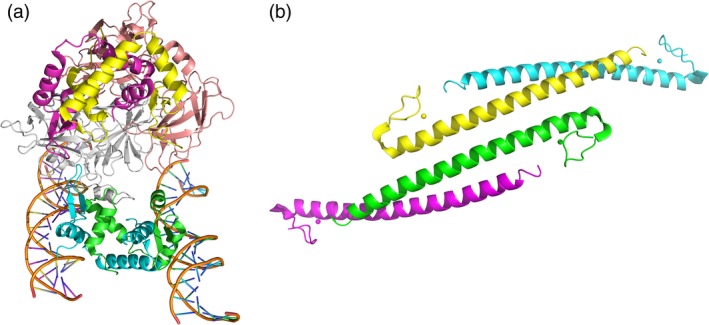
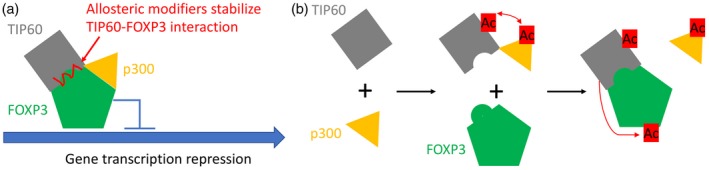
Regulatory T cells (T ) are specialized in immune suppression and play a dominant role in peripheral immune tolerance. T cell lineage development and function maintenance is determined by the forkhead box protein 3 (FoxP3) transcriptional factor, whose activity is fine-tuned by its post-translational modifications (PTMs) and interaction partners. In this review, we summarize current studies in the crystal structures, the PTMs and interaction partners of FoxP3 protein, and discuss how these insights may provide a roadmap for new approaches to modulate T suppression, and new therapies to enhance immune tolerance in autoimmune diseases.
调节性 T 细胞(Treg)在免疫抑制方面具有专长,在外周免疫耐受中发挥主导作用。T 细胞谱系发育和功能维持取决于叉头框蛋白 3(FoxP3)转录因子,其活性通过其翻译后修饰(PTM)和相互作用伴侣进行微调。在这篇综述中,我们总结了 FoxP3 蛋白的晶体结构、PTM 和相互作用伴侣的现有研究,并讨论了这些见解如何为调节 T 抑制和增强自身免疫性疾病中的免疫耐受的新方法和新疗法提供路线图。