Gallo Mariano, De Luca Giuseppina, D'Acierno Luca, Botte Marilisa
Department of Engineering, University of Sannio, piazza Roma 21, 82100 Benevento, Italy.
Department of Civil, Architectural and Environmental Engineering, Federico II University of Naples, via Claudio 21, 80125 Naples, Italy.
Sensors (Basel). 2019 Aug 5;19(15):3424. doi: 10.3390/s19153424.
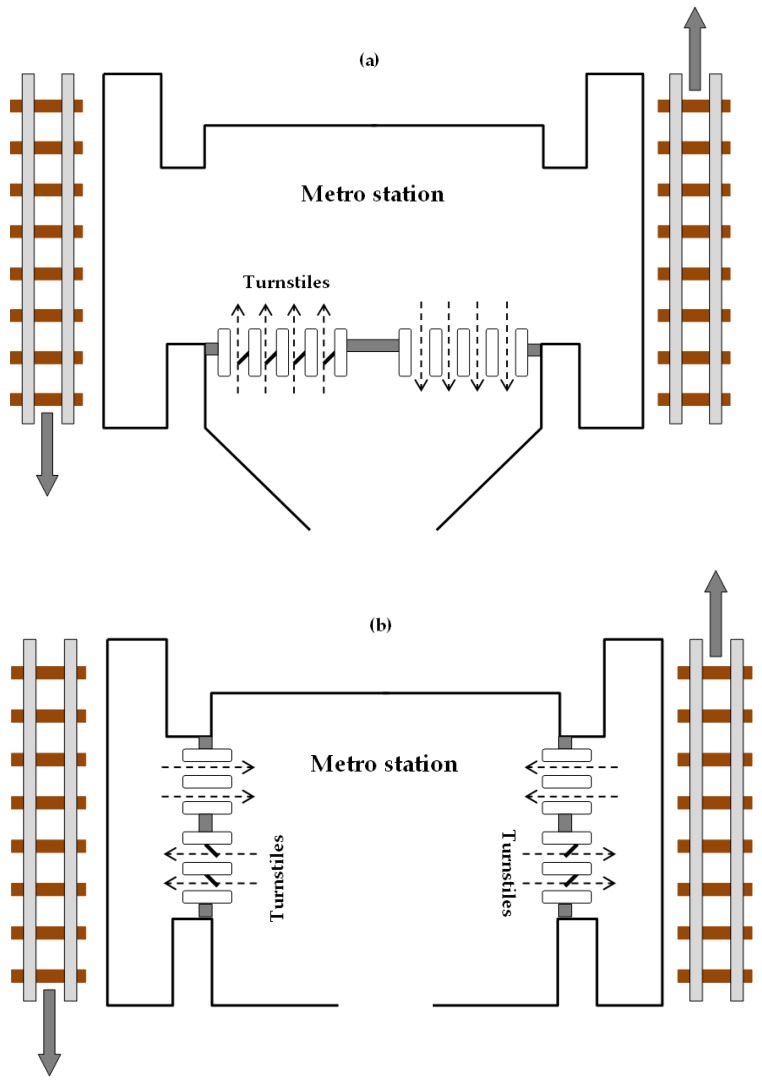
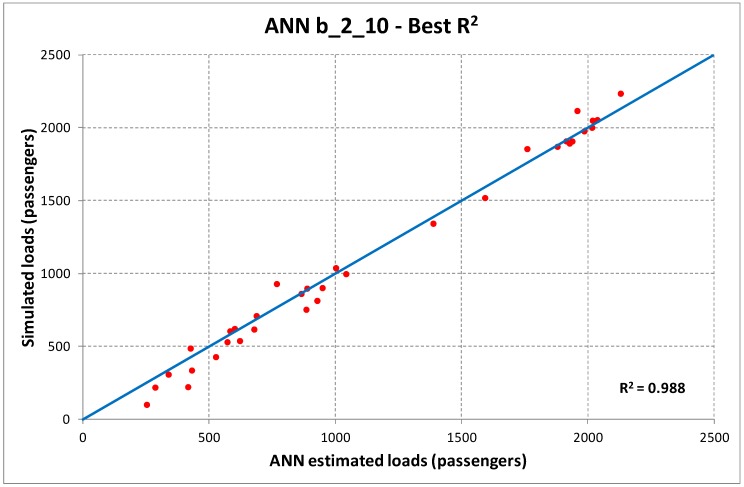
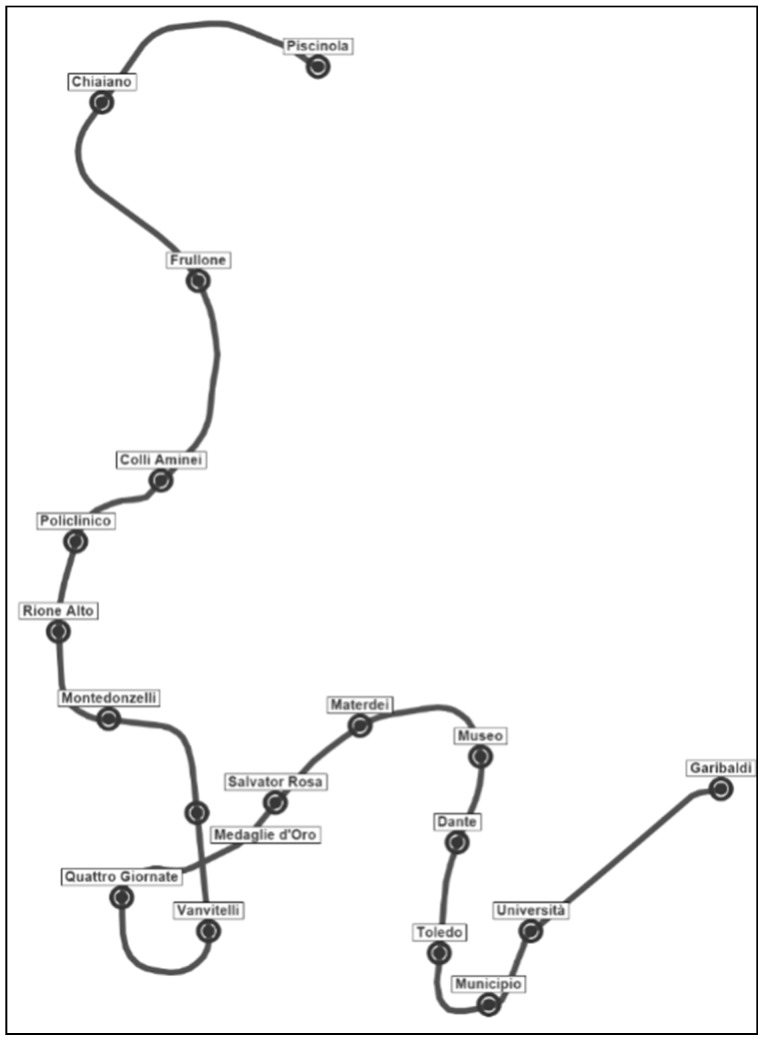
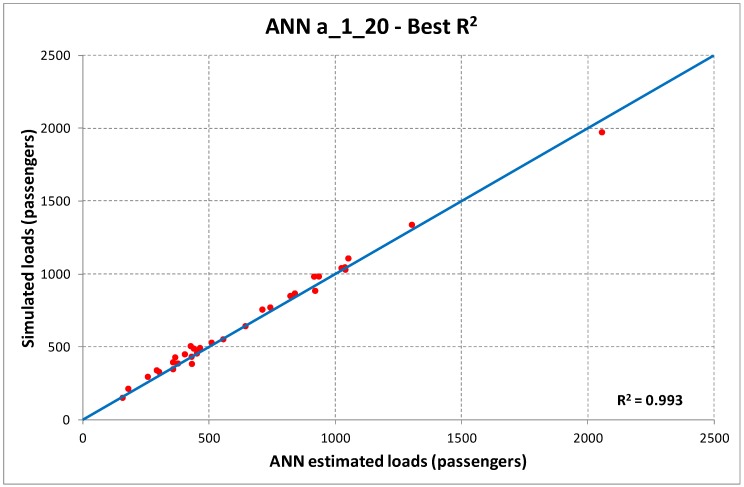
Forecasting user flows on transportation networks is a fundamental task for Intelligent Transport Systems (ITSs). Indeed, most control and management strategies on transportation systems are based on the knowledge of user flows. For implementing ITS strategies, the forecast of user flows on some network links obtained as a function of user flows on other links (for instance, where data are available in real time with sensors) may provide a significant contribution. In this paper, we propose the use of Artificial Neural Networks (ANNs) for forecasting metro onboard passenger flows as a function of passenger counts at station turnstiles. We assume that metro station turnstiles record the number of passengers entering by means of an automatic counting system and that these data are available every few minutes (temporal aggregation); the objective is to estimate onboard passengers on each track section of the line (i.e., between two successive stations) as a function of turnstile data collected in the previous periods. The choice of the period length may depend on service schedules. Artificial Neural Networks are trained by using simulation data obtained with a dynamic loading procedure of the rail line. The proposed approach is tested on a real-scale case: Line 1 of the Naples metro system (Italy). Numerical results show that the proposed approach is able to forecast the flows on metro sections with satisfactory precision.
预测交通网络中的用户流量是智能交通系统(ITS)的一项基本任务。事实上,大多数交通系统的控制和管理策略都基于对用户流量的了解。为了实施智能交通系统策略,根据其他链路(例如,通过传感器实时获取数据的地方)上的用户流量来预测某些网络链路上的用户流量可能会有很大帮助。在本文中,我们提出使用人工神经网络(ANN)来预测地铁上的乘客流量,该流量是车站闸机处乘客数量的函数。我们假设地铁站闸机通过自动计数系统记录进站乘客数量,并且这些数据每隔几分钟(时间聚合)就可获取;目标是根据前几个时间段收集的闸机数据来估计线路每个轨道区间(即两个连续车站之间)上的车上乘客数量。时间段长度的选择可能取决于服务时间表。人工神经网络通过使用铁路线路动态加载程序获得的模拟数据进行训练。所提出的方法在一个实际规模的案例上进行了测试:那不勒斯地铁系统(意大利)的1号线。数值结果表明,所提出的方法能够以令人满意的精度预测地铁区间的流量。