Department of Biologic and Materials Sciences, University of Michigan School of Dentistry, Ann Arbor, Michigan.
Department of Anatomy and Cell Biology, Faculty of Medicine, McGill University, Montreal, Quebec, Canada.
Mol Genet Genomic Med. 2019 Sep;7(9):e929. doi: 10.1002/mgg3.929. Epub 2019 Aug 11.
Ameloblastin (AMBN) is a secreted matrix protein that is critical for the formation of dental enamel and is enamel-specific with respect to its essential functions. Biallelic AMBN defects cause non-syndromic autosomal recessive amelogenesis imperfecta. Homozygous Ambn mutant mice expressing an internally truncated AMBN protein deposit only a soft mineral crust on the surface of dentin.
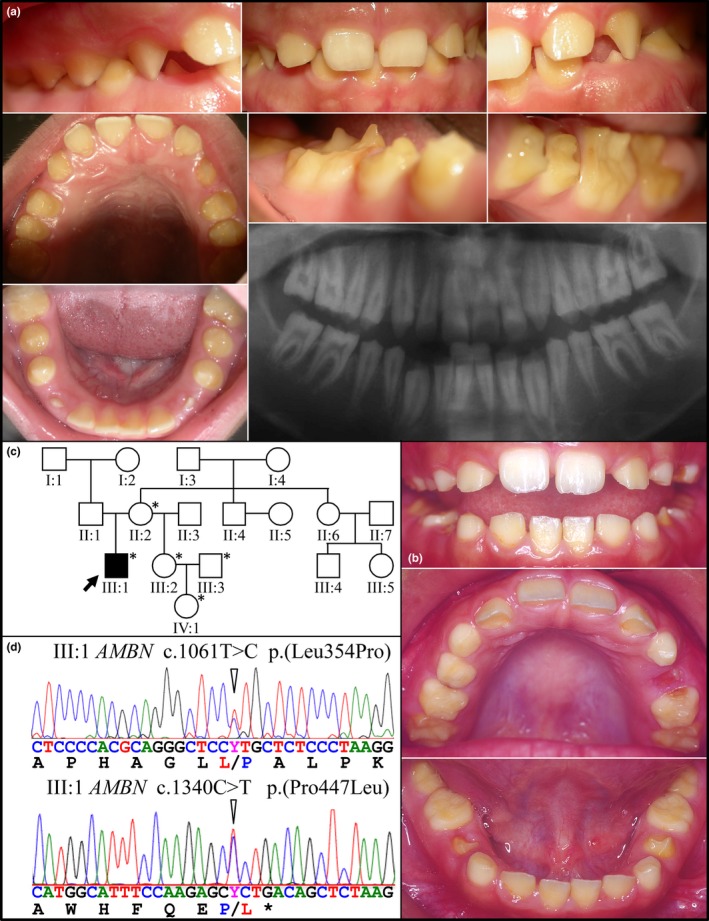
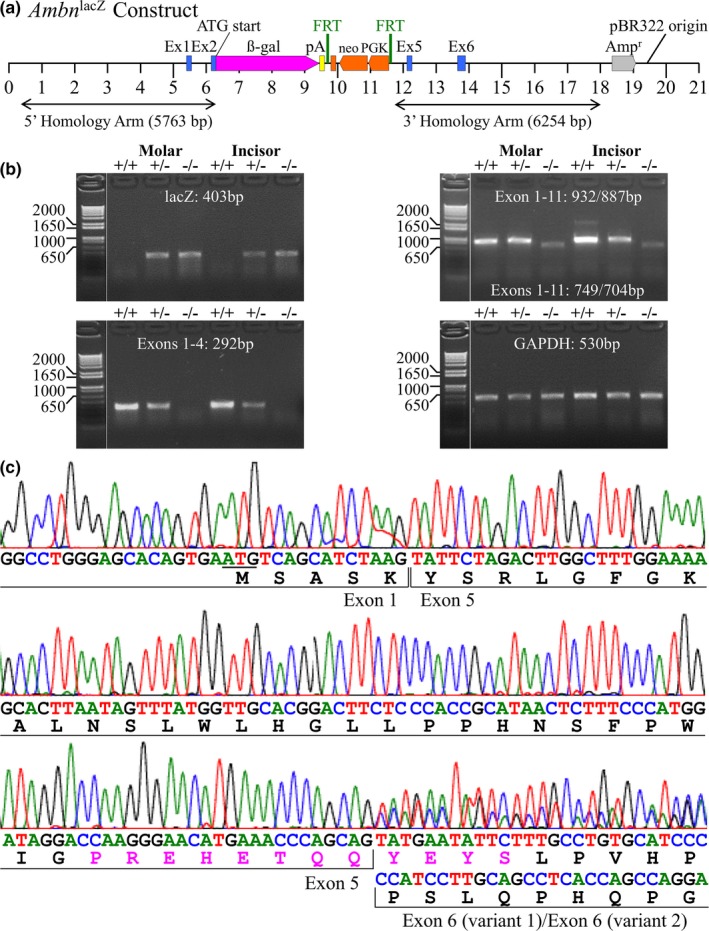
We characterized a family with hypoplastic amelogenesis imperfecta caused by AMBN compound heterozygous mutations (c.1061T>C; p.Leu354Pro/ c.1340C>T; p.Pro447Leu). We generated and characterized Ambn knockout/NLS-lacZ (Ambn ) knockin mice.
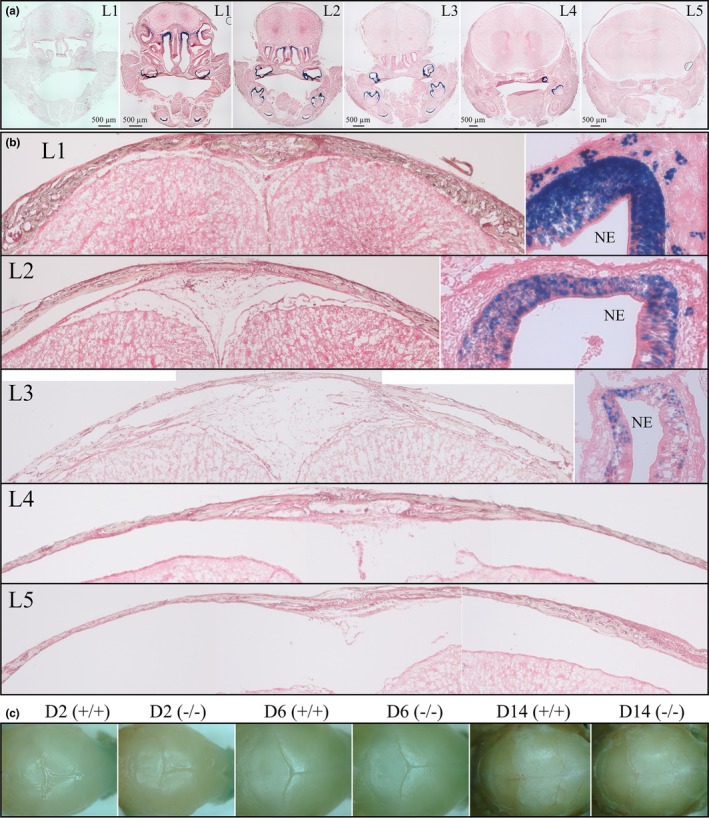
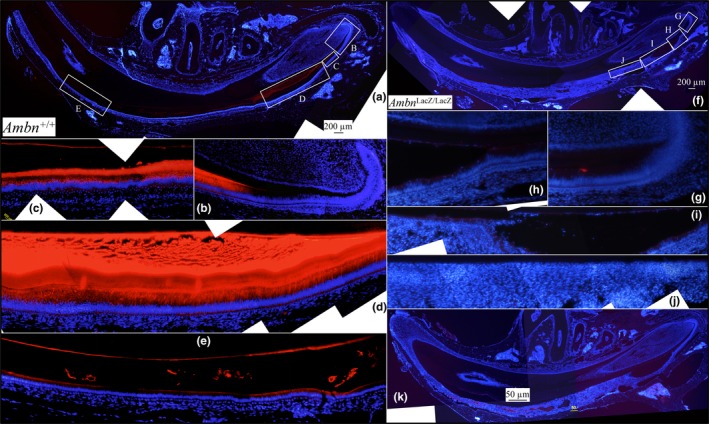
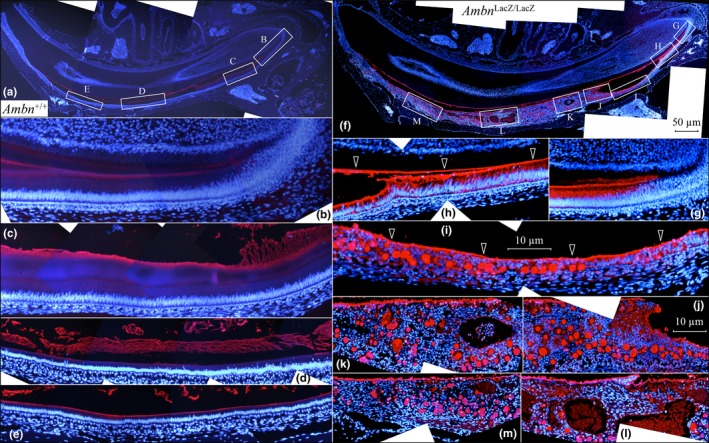
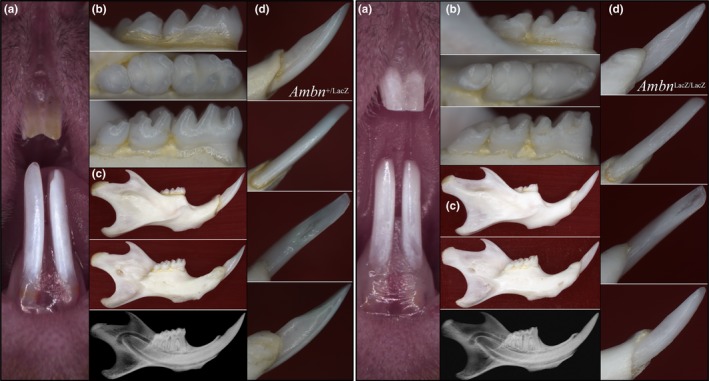
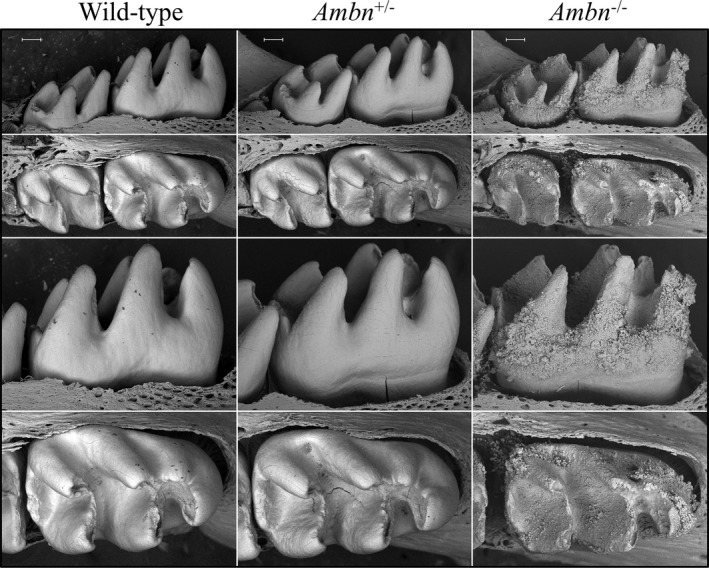
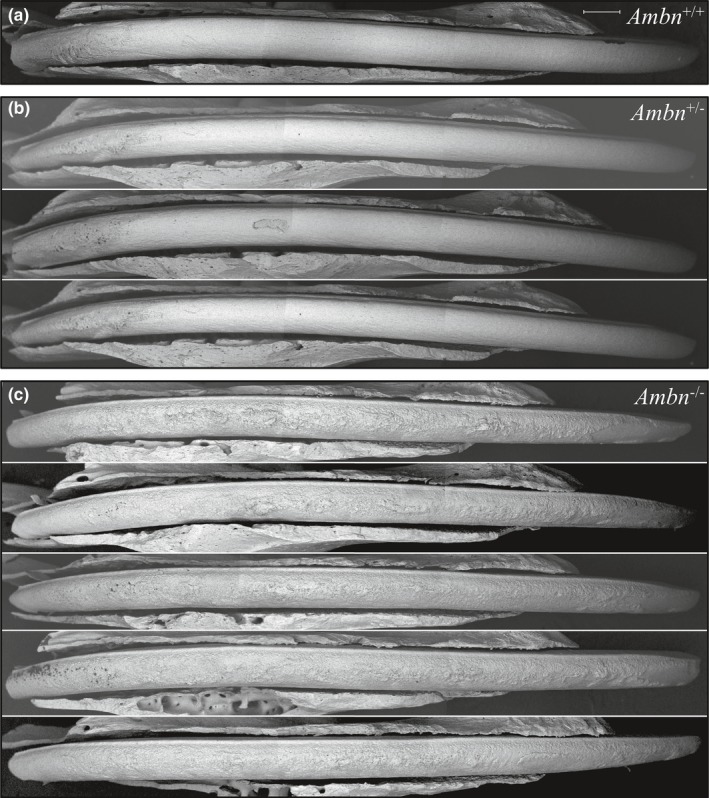
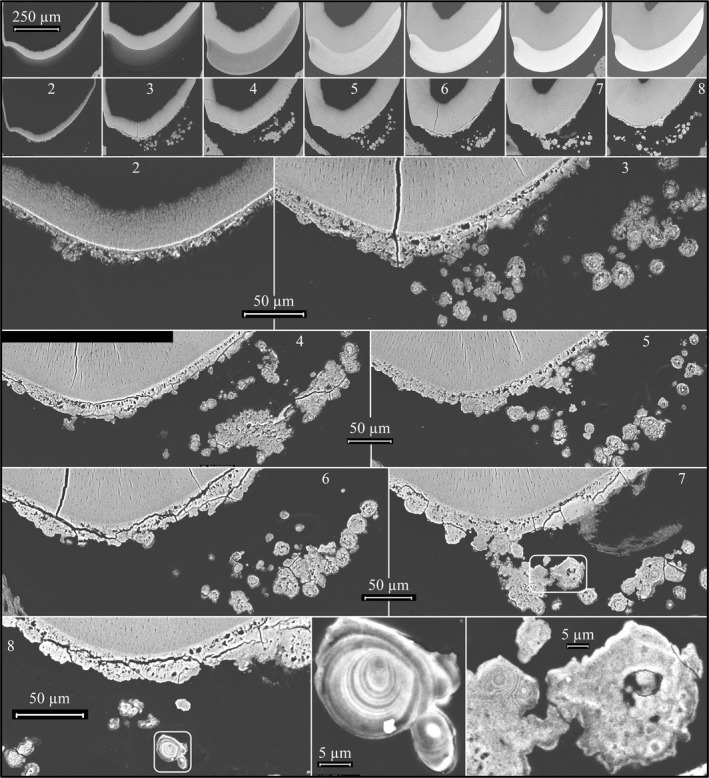
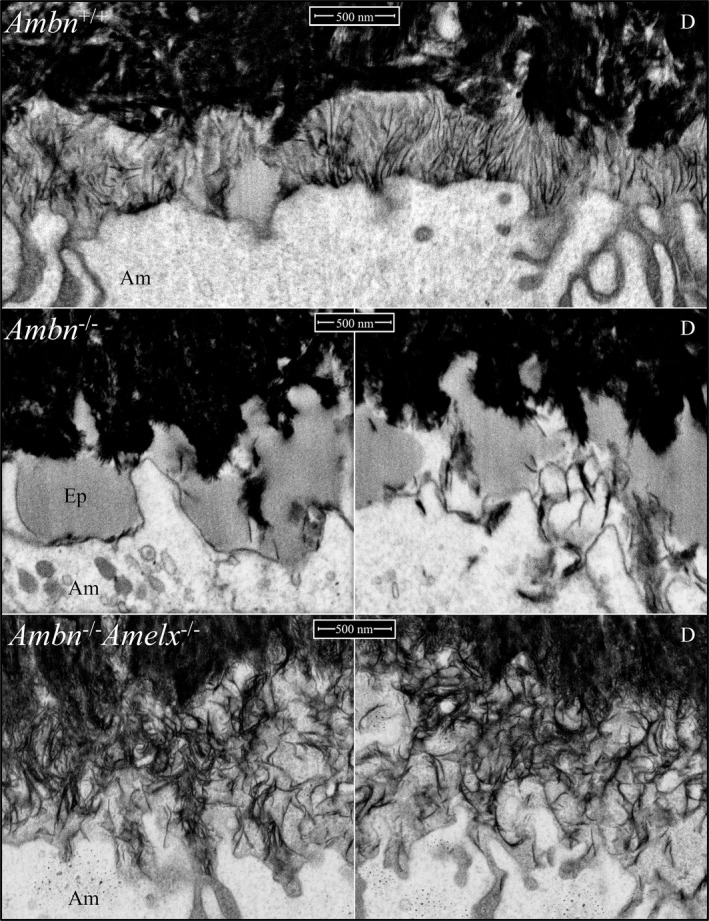
No AMBN protein was detected using immunohistochemistry in null mice. ß-galactosidase activity was specific for ameloblasts in incisors and molars, and islands of cells along developing molar roots. Ambn 7-week incisors and unerupted (D14) first molars showed extreme enamel surface roughness. No abnormalities were observed in dentin mineralization or in nondental tissues. Ameloblasts in the Ambn mice were unable to initiate appositional growth and started to degenerate and deposit ectopic mineral. No layer of initial enamel ribbons formed in the Ambn mice, but pockets of amelogenin accumulated on the dentin surface along the ameloblast distal membrane and within the enamel organ epithelia (EOE). NLS-lacZ signal was positive in the epididymis and nasal epithelium, but negative in ovary, oviduct, uterus, prostate, seminal vesicles, testis, submandibular salivary gland, kidney, liver, bladder, and bone, even after 15 hr of incubation with X-gal.
Ameloblastin is critical for the initiation of enamel ribbon formation, and its absence results in pathological mineralization within the enamel organ epithelia.
釉原蛋白(AMBN)是一种分泌的基质蛋白,对牙釉质的形成至关重要,并且在其基本功能方面是釉质特异性的。双等位 AMBN 缺陷导致非综合征常染色体隐性遗传性牙釉质不全。表达内部截短 AMBN 蛋白的纯合 Ambn 突变小鼠仅在牙本质表面沉积一层软矿化壳。
我们对一个由 AMBN 复合杂合突变(c.1061T>C;p.Leu354Pro/c.1340C>T;p.Pro447Leu)引起的牙釉质发育不全的家族进行了特征描述。我们生成并表征了 Ambn 敲除/NLS-lacZ(Ambn )敲入小鼠。
在缺失小鼠中,免疫组织化学检测不到 AMBN 蛋白。ß-半乳糖苷酶活性在切牙和磨牙以及磨牙根发育过程中的细胞岛中特异性存在于成釉细胞中。Ambn 7 周龄切牙和未萌出(D14)第一磨牙的釉质表面粗糙度极不规则。牙本质矿化或非牙组织无异常。Ambn 小鼠的成釉细胞无法启动贴附生长,开始退化并沉积异位矿化。Ambn 小鼠未形成初始釉质带的层,但釉原蛋白的小袋在牙本质表面沿成釉细胞的远端膜和在釉质器官上皮内(EOE)积累。NLS-lacZ 信号在附睾和鼻上皮中为阳性,但在卵巢、输卵管、子宫、前列腺、精囊、睾丸、颌下腺、肾、肝、膀胱和骨中为阴性,即使在 X-gal 孵育 15 小时后也是如此。
釉原蛋白对于釉质带形成的启动至关重要,其缺失导致釉质器官上皮内的病理性矿化。