Department of Physiology & Pharmacology, WVU School of Medicine, West Virginia University, Morgantown, WV, United States of America.
Division of Exercise Physiology, West Virginia University, Morgantown, WV, United States of America.
PLoS One. 2019 Aug 13;14(8):e0216167. doi: 10.1371/journal.pone.0216167. eCollection 2019.
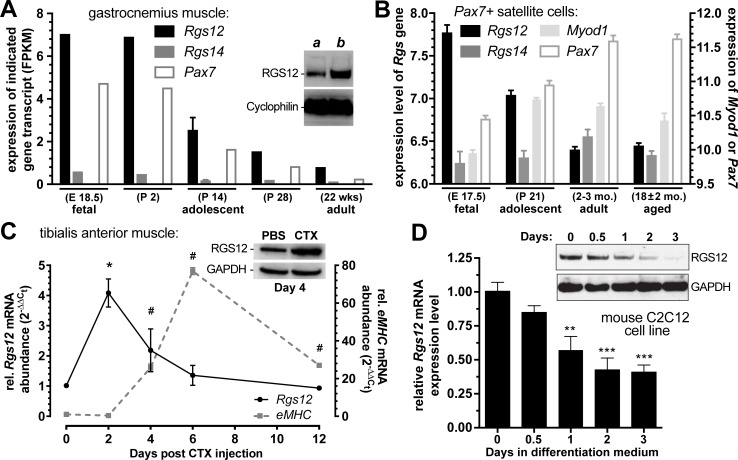
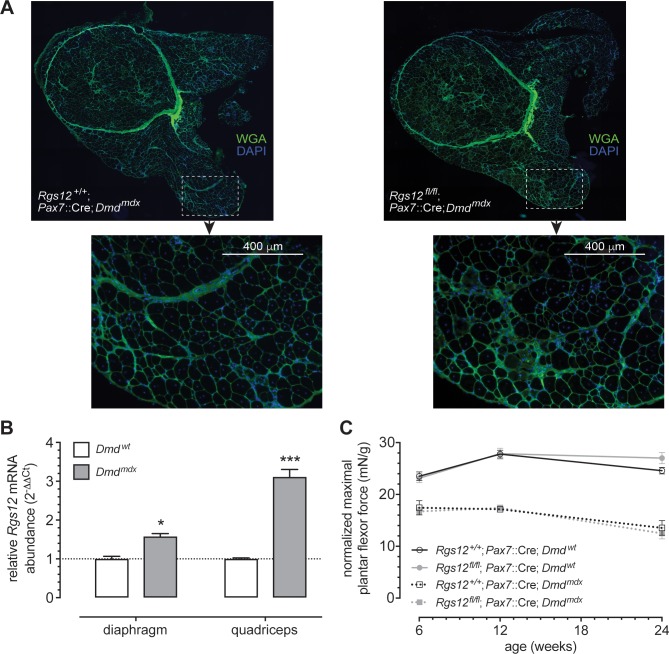
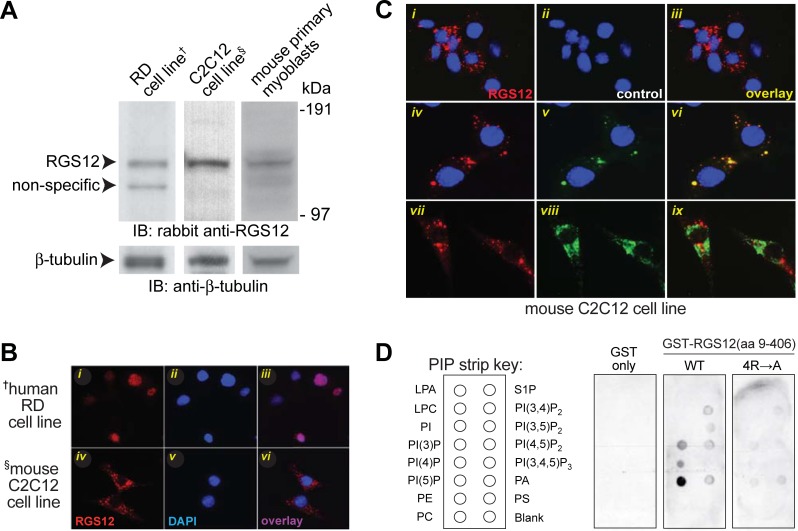
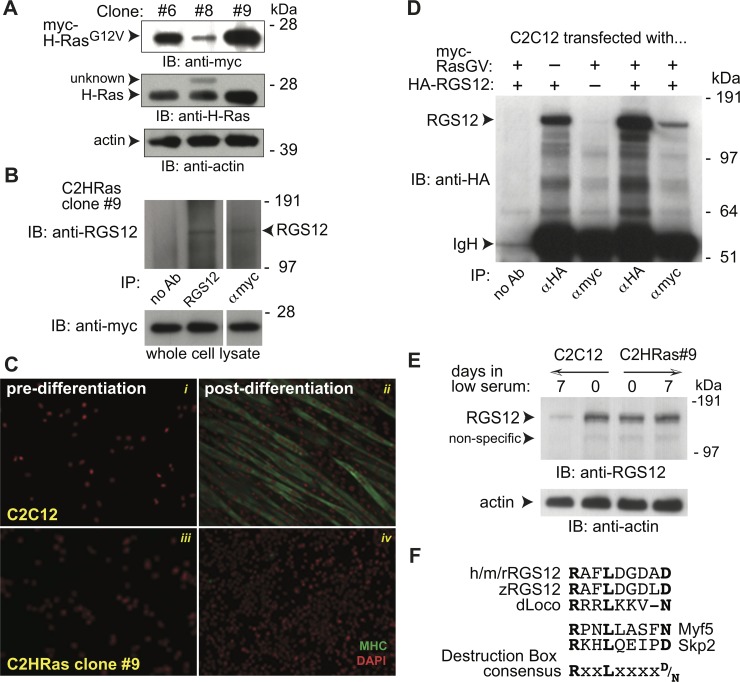
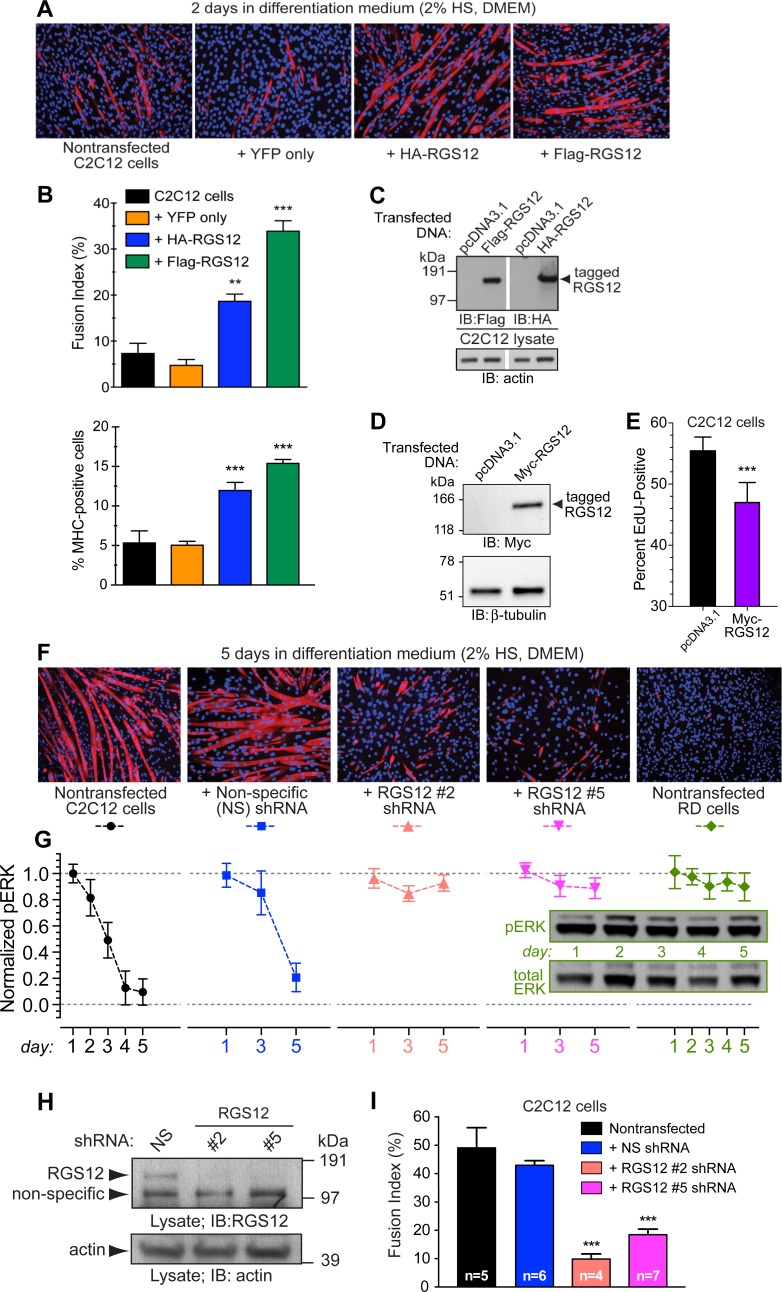
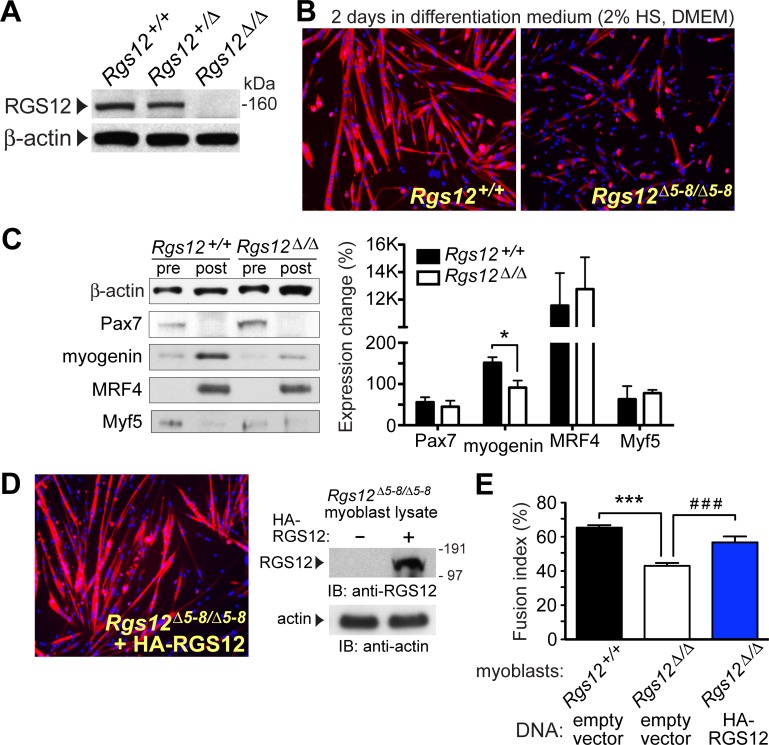
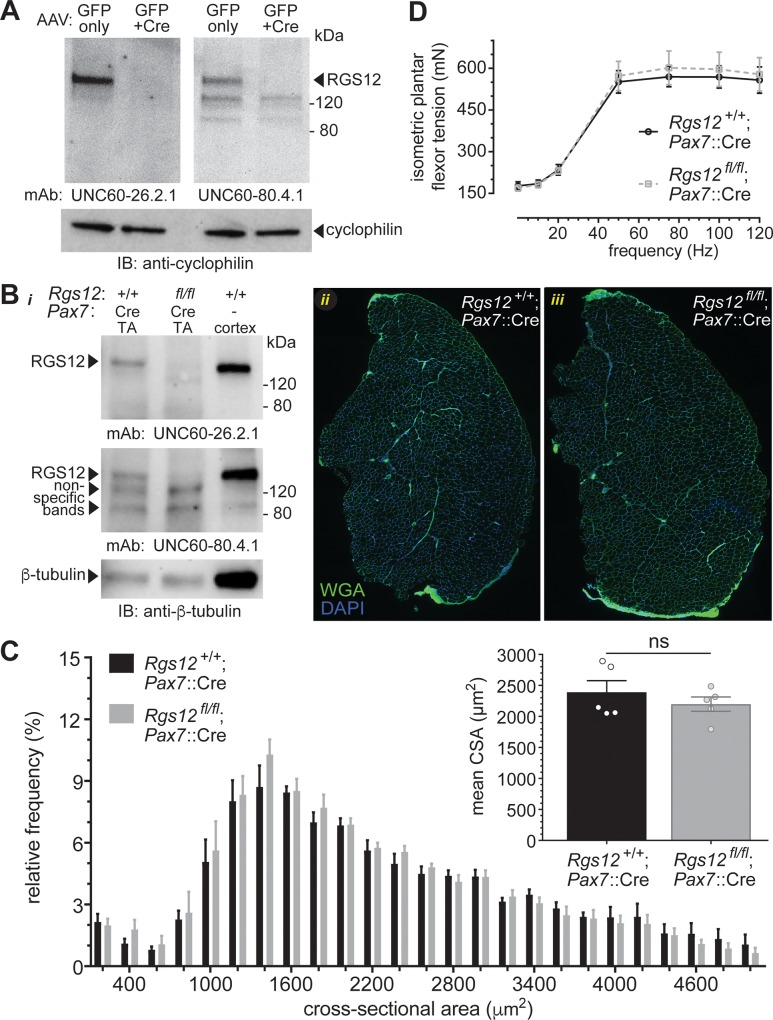
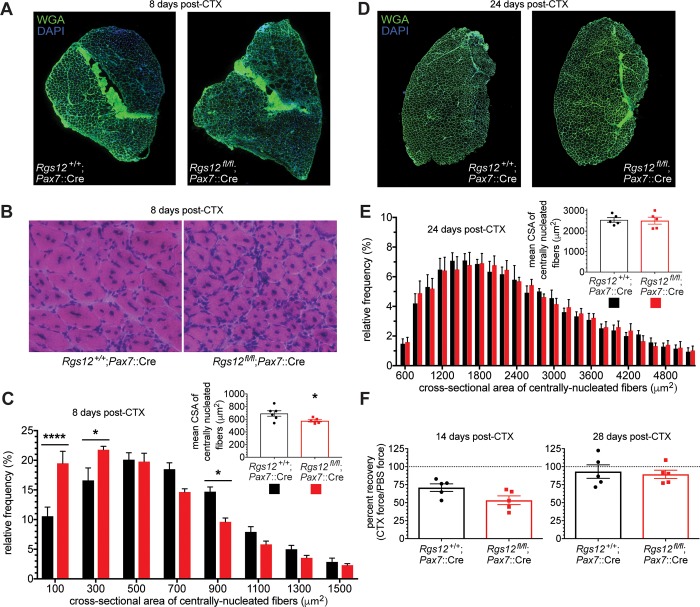
Regulators of G Protein Signaling (RGS proteins) inhibit G protein-coupled receptor (GPCR) signaling by accelerating the GTP hydrolysis rate of activated Gα subunits. Some RGS proteins exert additional signal modulatory functions, and RGS12 is one such protein, with five additional, functional domains: a PDZ domain, a phosphotyrosine-binding domain, two Ras-binding domains, and a Gα·GDP-binding GoLoco motif. RGS12 expression is temporospatially regulated in developing mouse embryos, with notable expression in somites and developing skeletal muscle. We therefore examined whether RGS12 is involved in the skeletal muscle myogenic program. In the adult mouse, RGS12 is expressed in the tibialis anterior (TA) muscle, and its expression is increased early after cardiotoxin-induced injury, suggesting a role in muscle regeneration. Consistent with a potential role in coordinating myogenic signals, RGS12 is also expressed in primary myoblasts; as these cells undergo differentiation and fusion into myotubes, RGS12 protein abundance is reduced. Myoblasts isolated from mice lacking Rgs12 expression have an impaired ability to differentiate into myotubes ex vivo, suggesting that RGS12 may play a role as a modulator/switch for differentiation. We also assessed the muscle regenerative capacity of mice conditionally deficient in skeletal muscle Rgs12 expression (via Pax7-driven Cre recombinase expression), following cardiotoxin-induced damage to the TA muscle. Eight days post-damage, mice lacking RGS12 in skeletal muscle had attenuated repair of muscle fibers. However, when mice lacking skeletal muscle expression of Rgs12 were cross-bred with mdx mice (a model of human Duchenne muscular dystrophy), no increase in muscle degeneration was observed over time. These data support the hypothesis that RGS12 plays a role in coordinating signals during the myogenic program in select circumstances, but loss of the protein may be compensated for within model syndromes of prolonged bouts of muscle damage and repair.
G 蛋白信号调节蛋白(RGS 蛋白)通过加速激活的 Gα 亚基的 GTP 水解速率来抑制 G 蛋白偶联受体(GPCR)信号。一些 RGS 蛋白具有额外的信号调节功能,RGS12 就是这样一种蛋白,它具有五个额外的、功能域:PDZ 结构域、磷酸酪氨酸结合结构域、两个 Ras 结合结构域和一个 Gα·GDP 结合的 GoLoco 基序。RGS12 在发育中的小鼠胚胎中的时空表达受到调节,在体节和发育中的骨骼肌中表达明显。因此,我们研究了 RGS12 是否参与骨骼肌成肌程序。在成年小鼠中,RGS12 在胫骨前肌(TA)中表达,在心脏毒素诱导损伤后早期表达增加,表明其在肌肉再生中起作用。与协调成肌信号的潜在作用一致,RGS12 也在原代成肌细胞中表达;随着这些细胞分化并融合成肌管,RGS12 蛋白丰度降低。从缺乏 Rgs12 表达的小鼠中分离的成肌细胞在体外分化为肌管的能力受损,这表明 RGS12 可能作为分化的调节剂/开关发挥作用。我们还评估了在 TA 肌肉受到心脏毒素损伤后,骨骼肌表达 Rgs12 条件性缺失(通过 Pax7 驱动的 Cre 重组酶表达)的小鼠的肌肉再生能力。损伤后 8 天,骨骼肌中缺乏 RGS12 的小鼠的肌纤维修复减弱。然而,当缺乏骨骼肌表达 Rgs12 的小鼠与 mdx 小鼠(一种人类杜氏肌营养不良症的模型)杂交时,随着时间的推移,肌肉退化没有增加。这些数据支持这样一种假设,即在某些情况下,RGS12 在协调成肌程序中的信号中发挥作用,但在长时间肌肉损伤和修复的模型综合征中,该蛋白的缺失可能得到代偿。