Division of Pneumoconiosis, School of Public Health, China Medical University, Shenyang, PR China.
Theranostics. 2019 Jul 9;9(17):4993-5008. doi: 10.7150/thno.35665. eCollection 2019.
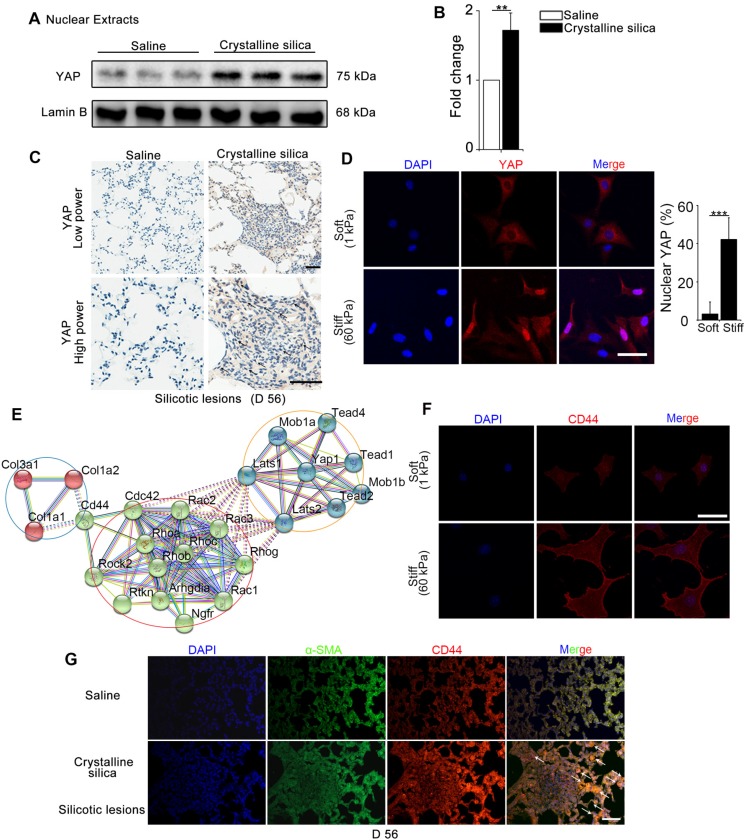
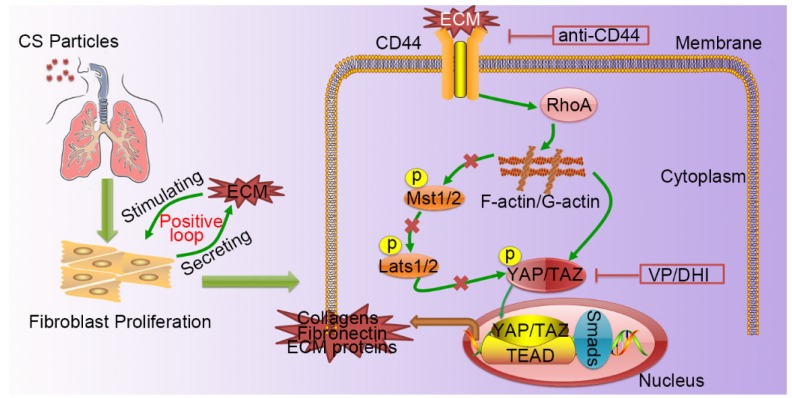
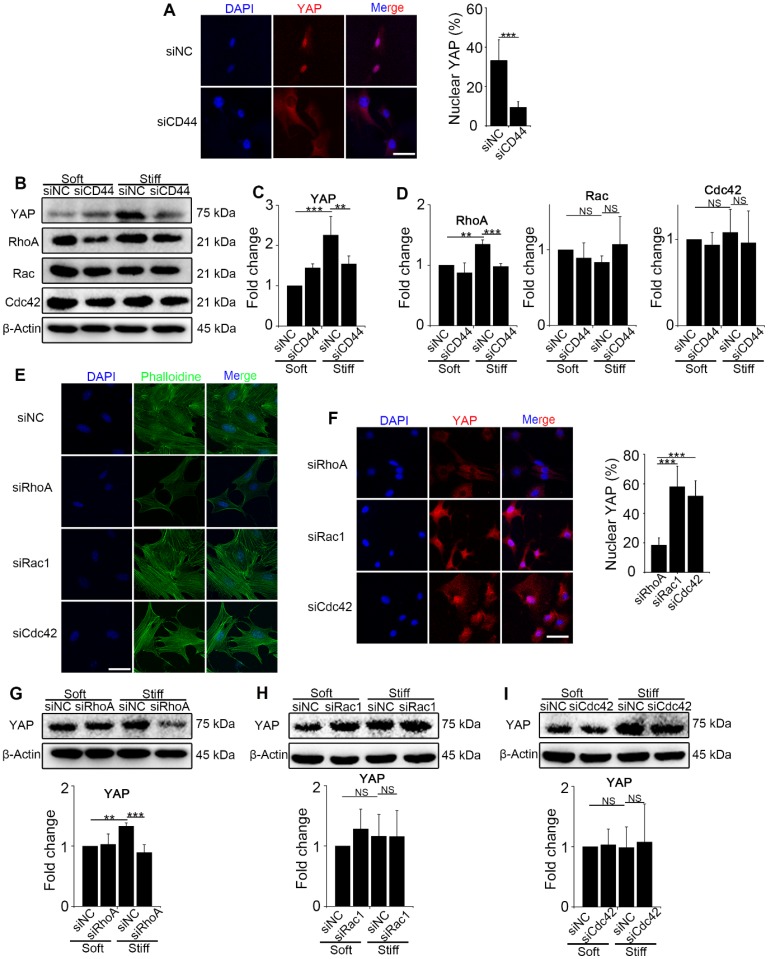
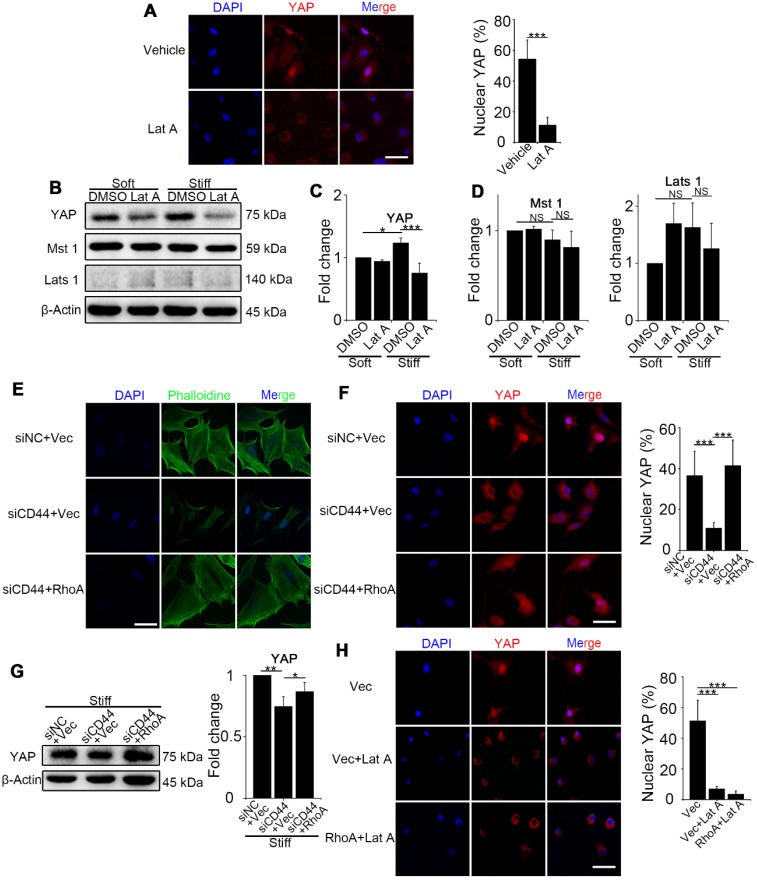
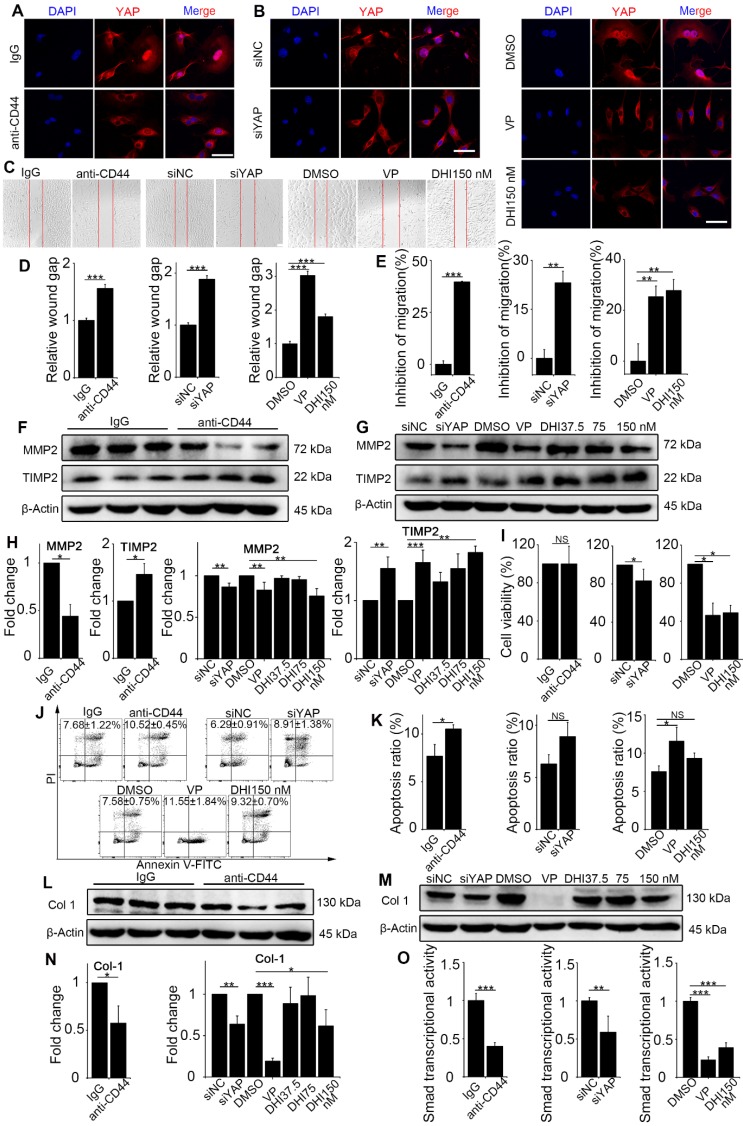
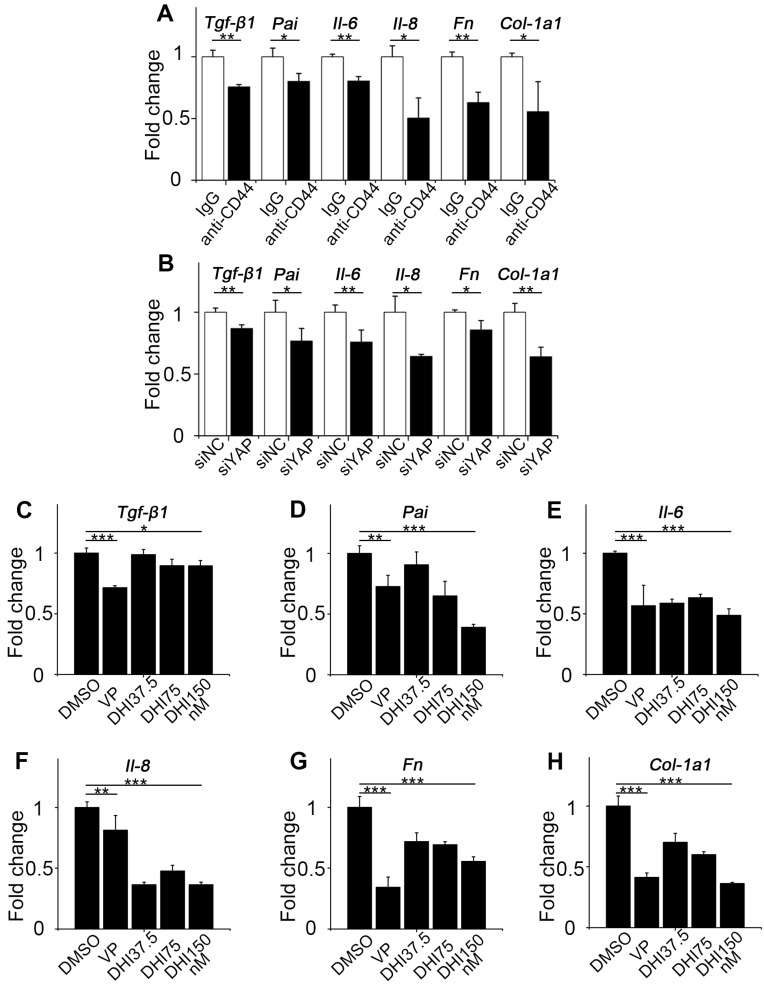
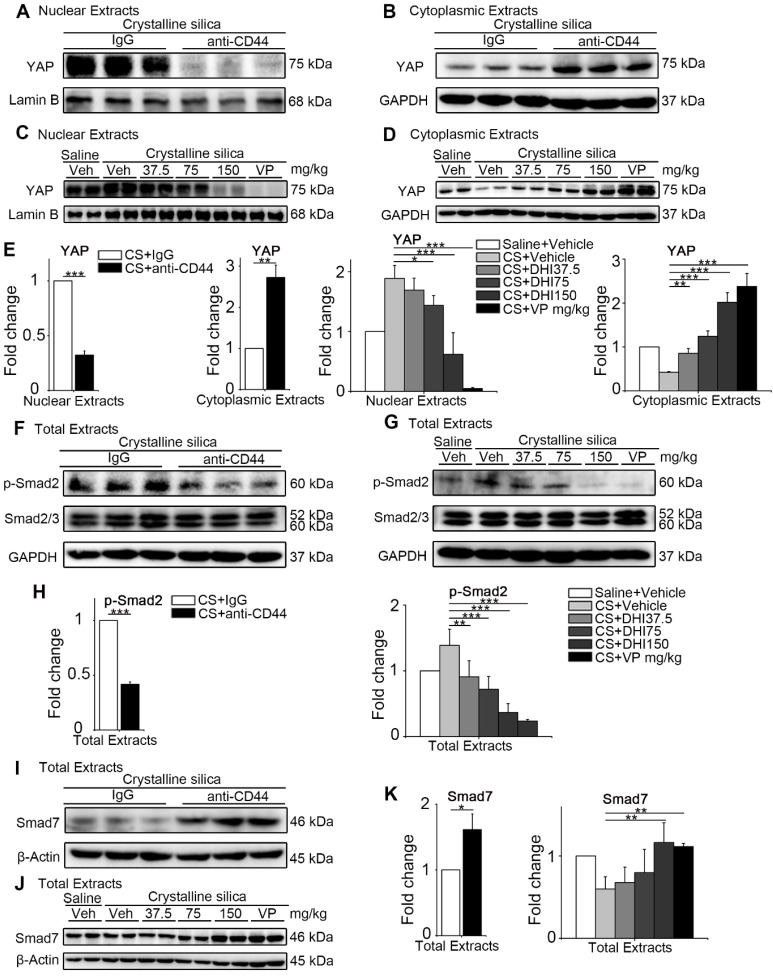
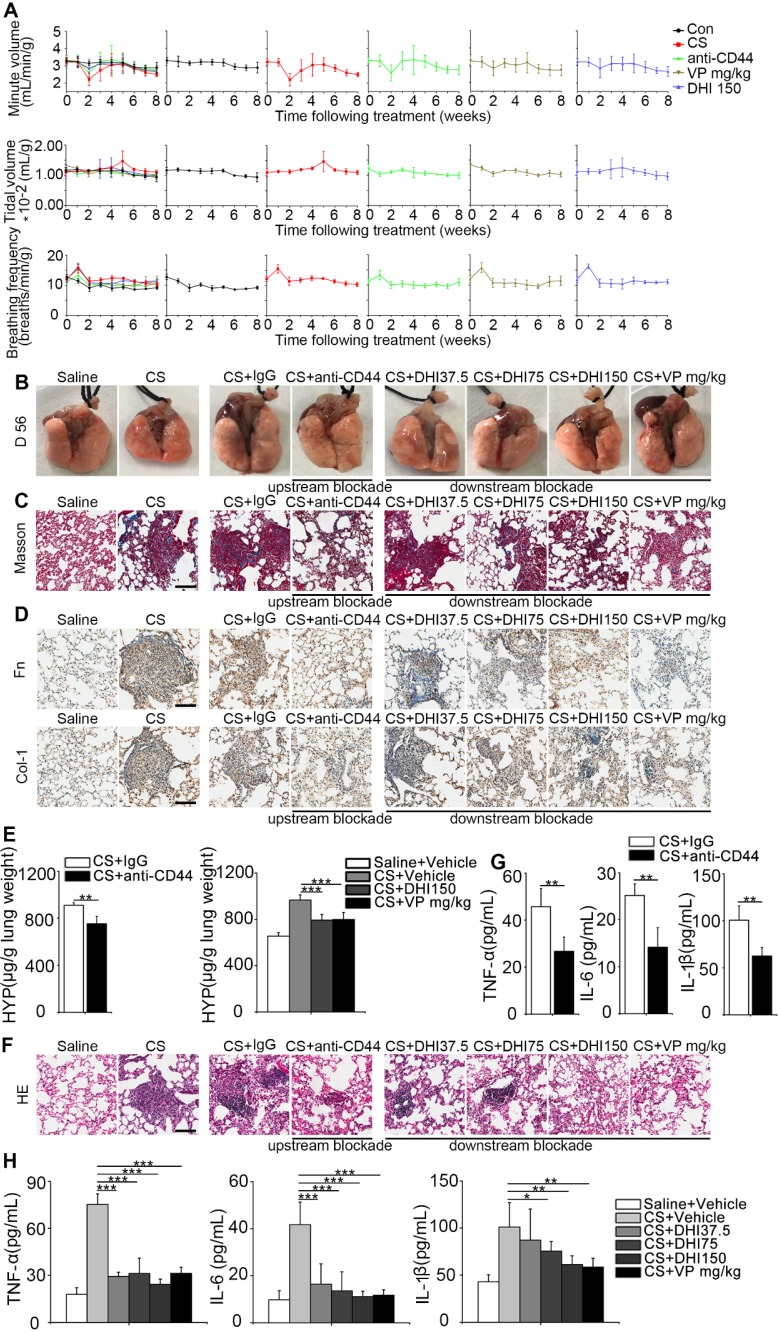
Silicosis is pneumoconiosis of the lung, usually resulting from prolonged exposure to crystalline silica (CS). The hallmark of silicosis is excessive extracellular matrix (ECM) deposition produced by activated fibroblasts. Recent work demonstrated that excessive ECM-forming mechanical cues play an essential role in promoting fibroblast activation and perpetuating fibrotic pathologies. However, the detailed molecular mechanism still needs to be uncovered. : NIH-3T3 fibroblasts were cultured on either 1 kappa (soft) or 60 kappa (stiff) gel-coated coverslips. A series of knockdown and reverse experiments were performed to establish the signaling for mechanics-induced fibroblast activation. An experimental model of silicosis was established by one-time intratracheal instillation of CS suspension. The cluster of differentiation 44 (CD44) antibody (IM7), dihydrotanshinone I (DHI) and verteporfin (VP) were used to explore the effect of CD44-RhoA-YAP signaling blockade on mechanics-induced fibroblast activation and CS-induced pulmonary fibrosis. : Matrix stiffness could induce nuclear translocation of the Yes-associated protein (YAP) through CD44 in fibroblasts. This effect required RhoA activity and F-actin cytoskeleton polymerization but was independent of Hippo pathway kinases, Mst 1 and Lats 1, forming CD44-RhoA-YAP signaling pathway. Pharmacological upstream blocking by CD44 antibody or downstream blockade of YAP by DHI or VP could attenuate fibroblast migration, invasion, proliferation, and collagen deposition. Furthermore, CD44-RhoA-YAP signaling blockade could alleviate CS-induced fibrosis and improve pulmonary function . : CD44-RhoA-YAP signaling mediates mechanics-induced fibroblast activation. Targeting this pathway could ameliorate crystalline silica-induced silicosis and provide a potential therapeutic strategy to mitigate fibrosis.
矽肺是肺部的尘肺病,通常是由于长期暴露于结晶二氧化硅(CS)引起的。矽肺的特征是由激活的成纤维细胞产生的细胞外基质(ECM)过度沉积。最近的工作表明,过度形成 ECM 的机械线索在促进成纤维细胞激活和维持纤维化病理方面起着至关重要的作用。然而,其详细的分子机制仍有待揭示。
NIH-3T3 成纤维细胞分别培养在 1 kappa(软)或 60 kappa(硬)凝胶包被的盖玻片上。进行了一系列的敲低和反向实验,以建立力学诱导成纤维细胞激活的信号通路。通过一次性气管内滴注 CS 混悬液建立矽肺实验模型。使用 CD44 抗体(IM7)、二氢丹参酮 I(DHI)和维替泊芬(VP)来研究 CD44-RhoA-YAP 信号通路阻断对力学诱导的成纤维细胞激活和 CS 诱导的肺纤维化的影响。
基质硬度可以通过 CD44 诱导成纤维细胞中 Yes 相关蛋白(YAP)的核转位。这种效应需要 RhoA 活性和 F-肌动蛋白细胞骨架聚合,但不依赖于 Hippo 通路激酶 Mst1 和 Lats1,形成 CD44-RhoA-YAP 信号通路。CD44 抗体的药理学上游阻断或 DHI 或 VP 的下游阻断 YAP 可以减弱成纤维细胞的迁移、侵袭、增殖和胶原沉积。此外,CD44-RhoA-YAP 信号通路阻断可以减轻 CS 诱导的纤维化并改善肺功能。
CD44-RhoA-YAP 信号通路介导力学诱导的成纤维细胞激活。靶向该通路可以改善结晶二氧化硅诱导的矽肺,并为减轻纤维化提供一种潜在的治疗策略。