Department of Surgical Oncology, The First Affiliated Hospital of Xi'an Jiaotong University, Xi'an, 710061, Shaanxi, China.
BMC Cancer. 2019 Aug 14;19(1):803. doi: 10.1186/s12885-019-5995-4.
The risk of lymph node positivity in early-stage colon cancer is a parameter that impacts therapeutic recommendations. However, little is known about the effect of age on lymph node positivity in colon cancer with mucosal invasion. In this study, we aimed to quantify the effect of younger age on lymph node positivity in colon cancer with mucosal invasion.
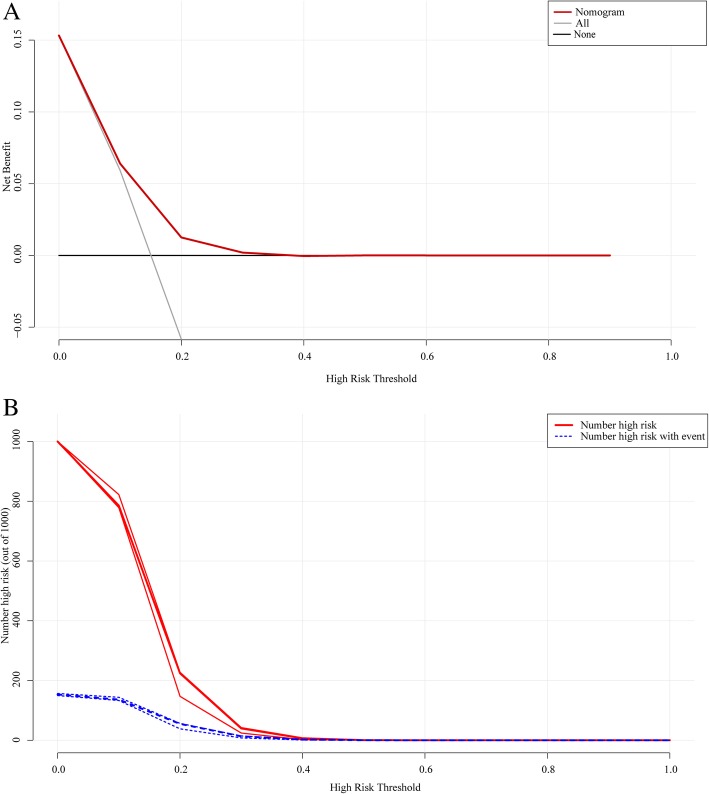
All patients were identified between 2004 and 2014 in the Surveillance, Epidemiology, and End Results database. Patients were stage T1-T2, did not undergo preoperative radiotherapy, had at least one lymph node examined, and underwent a standard colon cancer operation. Demographics and pathological data were compared between different age ranges. A nomogram model was built to estimate the probability of nodal involvement according to different characteristics. Decision curve analysis was performed by calculating the net benefits for a range of threshold probabilities.
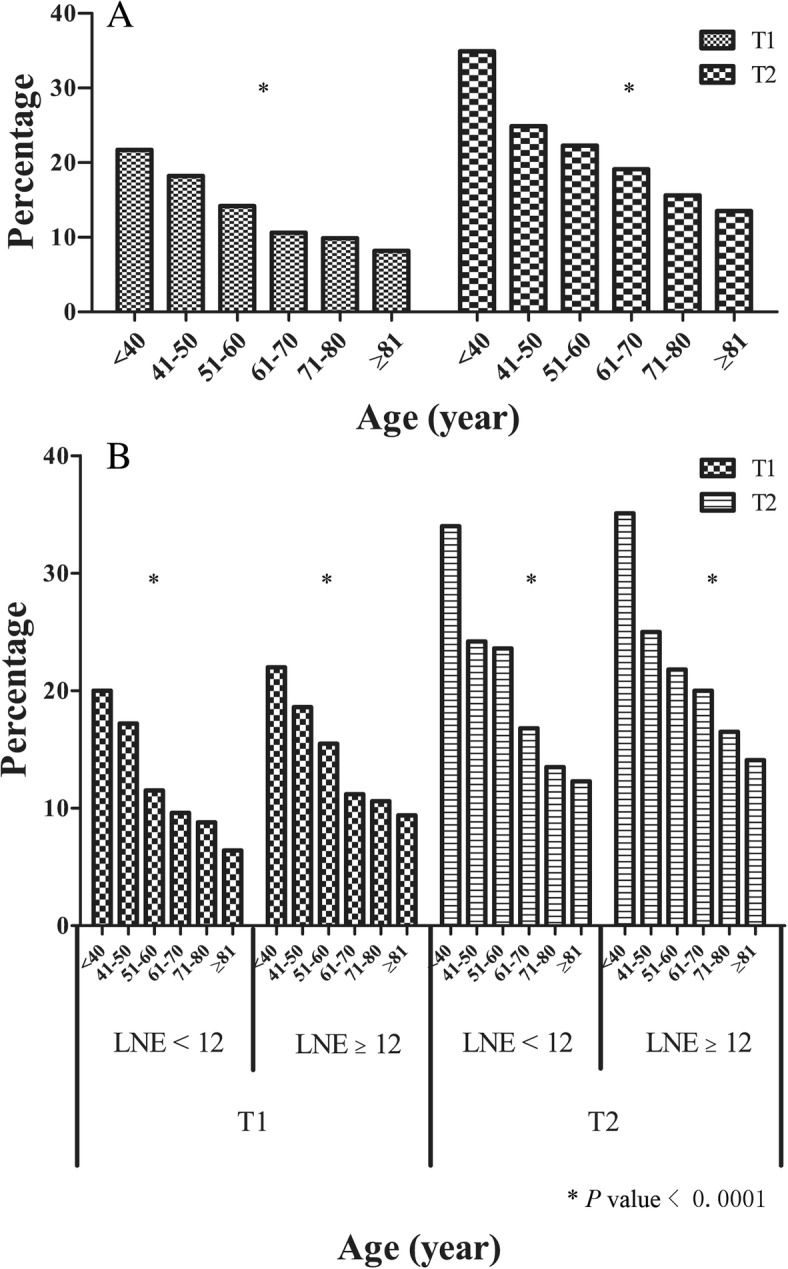
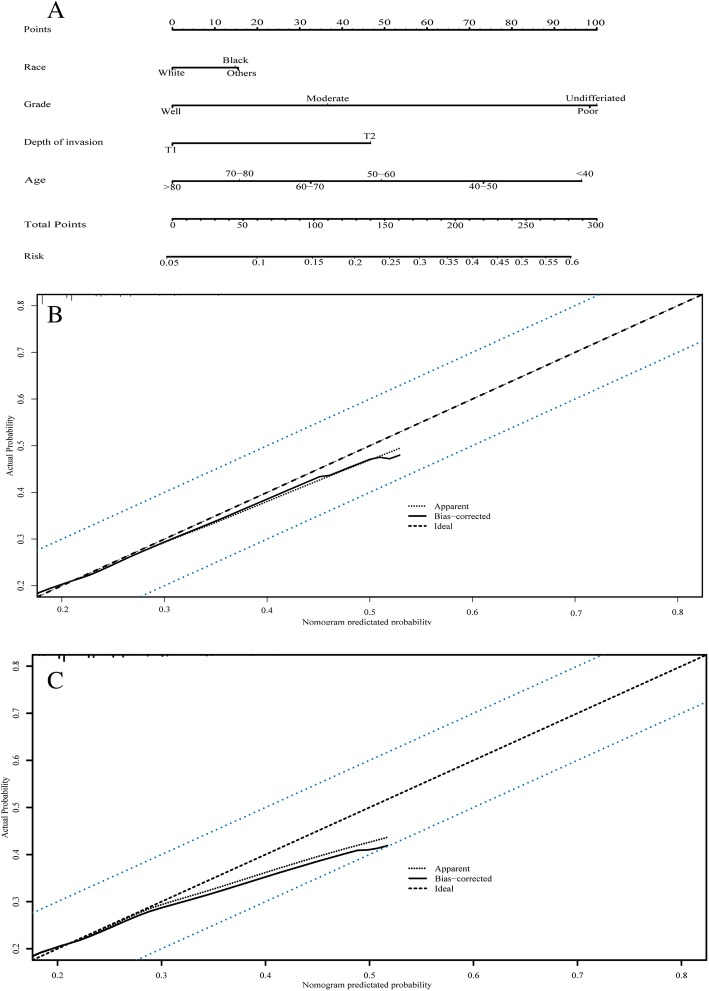
This study identified 41,490 patients who met the eligibility criteria for our study. 1.4% (n = 620) of patients were under 40 years old; 5.9% (n = 2571) were between 40 and 49 years old. Within each T stage, positive lymph node rates decreased with increasing age. In univariate analyses, the positive lymph node rates for patients 20 to 39 years of age were significantly higher than in patients in the reference group for stages T1 and T2. After dividing the colon into the left and right parts, these trends remained. The lymph node metastatic rate was higher in the right colon than in the left colon in terms of different age ranges. The nomogram prediction system represents a novel model with which to estimate lymph node metastasis in early T stage colon adenocarcinomas based on four risk factors with a C-index of 0.657 (95% CI: 0.658-0666).
Our study demonstrates that the risk of lymph node metastasis was higher in young (< 40 years) patients with early-stage colon adenocarcinomas. Therefore, more aggressive screening and therapeutic strategies should be considered for young patients with colon adenocarcinoma.
早期结肠癌的淋巴结阳性风险是影响治疗建议的一个参数。然而,对于黏膜侵犯的结肠癌中年龄对淋巴结阳性的影响知之甚少。本研究旨在量化年轻(<40 岁)对黏膜侵犯的结肠癌淋巴结阳性的影响。
所有患者均于 2004 年至 2014 年期间在监测、流行病学和最终结果数据库中被识别。患者为 T1-T2 期,未行术前放疗,至少有一个淋巴结被检查,并接受了标准的结肠癌手术。不同年龄组之间比较了人口统计学和病理数据。根据不同特征建立了列线图模型来估计淋巴结受累的概率。通过计算一系列阈值概率的净效益来进行决策曲线分析。
本研究共纳入符合研究标准的 41490 名患者。其中 1.4%(n=620)患者年龄<40 岁;5.9%(n=2571)患者年龄为 40-49 岁。在每个 T 分期内,阳性淋巴结率随年龄增加而降低。在单因素分析中,年龄 20-39 岁的患者 T1 和 T2 期的阳性淋巴结率明显高于参考组患者。在将结肠分为左、右两部分后,这些趋势仍然存在。不同年龄组的右半结肠癌的淋巴结转移率高于左半结肠癌。该列线图预测系统是一种新的模型,可以根据四个风险因素预测早期 T 期结肠腺癌的淋巴结转移,其 C 指数为 0.657(95%CI:0.658-0666)。
本研究表明,年轻(<40 岁)早期结肠癌患者的淋巴结转移风险较高。因此,对于年轻的结肠癌患者,应考虑更积极的筛查和治疗策略。