Carrera Sergio, Beristain Elena, Sancho Aintzane, Iruarrizaga Eluska, Rivero Pilar, Mañe Juan Manuel, López Vivanco Guillermo
1Hereditary Cancer Genetic Counseling Unit- Medical Oncology Department, Cruces University Hospital, Plaza de Cruces s/n., 48903 Baracaldo, Bizkaia Spain.
Molecular Genetics Laboratory, Araba University Hospital, Vitoria, Spain.
Hered Cancer Clin Pract. 2019 Aug 9;17:23. doi: 10.1186/s13053-019-0124-6. eCollection 2019.
Gastrointestinal stromal tumors (GISTs) represent the most frequent mesenchymal tumor of the gastrointestinal tract. Less than 5% of them seem to be hereditary, being succinate dehydrogenase complex () deficient disorders and neurofibromatosis type 1 the more related inherited conditions. Wild type (WT) and GISTs constitute a clue for a hypothetical underlying germline condition.
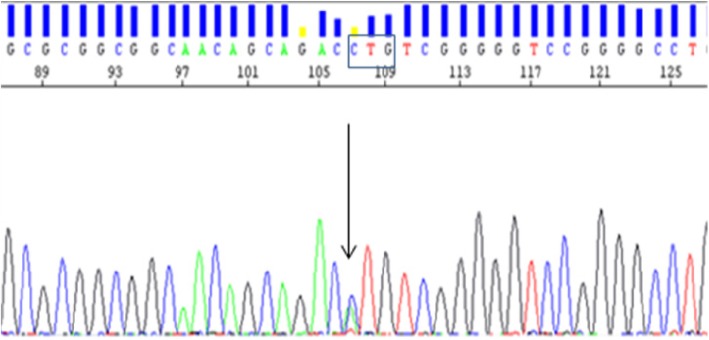
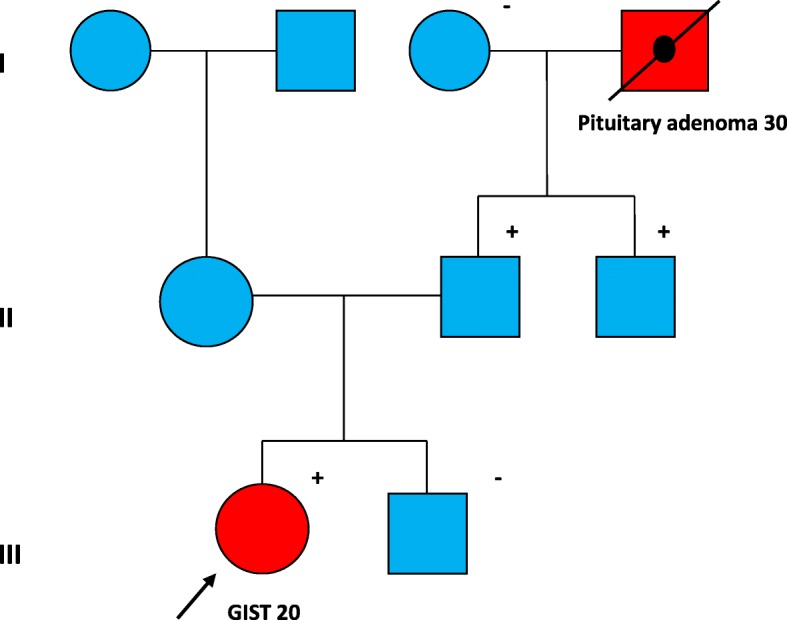
We present a case of a 20 years old female diagnosed of a gastric WT GIST who developed hepatic metastases during her clinical course. No significant or typical phenotypic features suggestive of a specific syndrome were detected by physical examination. Also, her family history seemed to be irrelevant, since no other cases of GISTs, paragangliomas or pheochromocytomas were reported. Her paternal grandfather died as a consequence of a pituitary adenoma. In light of the age of tumor presentation and somatic features of gastric GIST, we performed genetic testing of genes. Analysis obtained from peripheral blood sample revealed the presence, in heterozygous state, of the c.1A > C; p.(Met1?) pathogenic variant in the .
To the best of our knowledge, this is the first published report in which the c.1A > C; p.(Met1?) pathogenic variant in the is associated with a GIST. pathogenic variants increase the risk of paraganglioma, pheochromocytoma, GIST, pituitary adenoma and renal cancer in an autosomal dominant inherited condition named paraganglioma syndrome type 5. The absence of family history of tumors in pathogenic variants carriers could be related to its low penetrance. All patients diagnosed with WT GISTs should be referred to a hereditary cancer genetic counseling unit regardless of the age at presentation or the absence of a suspicious family history.
胃肠道间质瘤(GISTs)是胃肠道最常见的间叶组织肿瘤。其中不到5%似乎是遗传性的,与琥珀酸脱氢酶复合物()缺陷症和1型神经纤维瘤病关系最为密切。野生型(WT)和GISTs提示可能存在潜在的种系疾病。
我们报告一例20岁女性,诊断为胃WT GIST,在临床过程中发生肝转移。体格检查未发现提示特定综合征的显著或典型表型特征。此外,她的家族史似乎无关紧要,因为没有报告其他GISTs、副神经节瘤或嗜铬细胞瘤病例。她的祖父因垂体腺瘤去世。鉴于肿瘤出现的年龄和胃GIST的体细胞特征,我们对基因进行了基因检测。从外周血样本分析发现,该基因存在杂合状态的c.1A>C;p.(Met1?)致病性变异。
据我们所知,这是首次发表的报告,其中该基因的c.1A>C;p.(Met1?)致病性变异与GIST相关。该基因的致病性变异在一种名为5型副神经节瘤综合征的常染色体显性遗传疾病中增加了副神经节瘤、嗜铬细胞瘤、GIST、垂体腺瘤和肾癌的风险。该基因致病性变异携带者缺乏肿瘤家族史可能与其低外显率有关。所有诊断为WT GIST的患者都应转诊至遗传性癌症遗传咨询单位,无论其就诊年龄或是否有可疑家族史。