Spain Lavinia, Tippu Zayd, Larkin James M, Carr Aisling, Turajlic Samra
Royal Marsden NHS Foundation Trust, London, UK.
Department of Neurology, University College London Hospitals NHS Foundation Trust National Hospital for Neurology and Neurosurgery, London, UK.
ESMO Open. 2019 Jul 31;4(Suppl 4):e000540. doi: 10.1136/esmoopen-2019-000540. eCollection 2019.
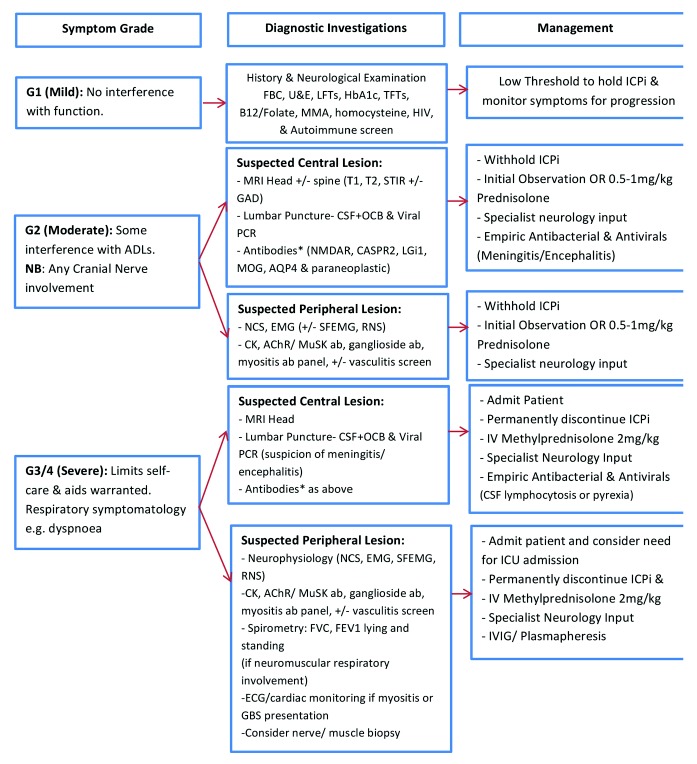
Neurological adverse events from immune checkpoint inhibition are increasingly recognised, especially with combination anti-cytotoxic T-lymphocyte antigen 4 (CTLA4) and anti-programmed death receptor 1 (anti-PD-1) therapies. Their presenting symptoms and signs are often subacute and highly variable, reflecting the numerous components of the nervous system. Given the risk of substantial morbidity and mortality, it is important to inform patients of symptoms that may be of concern, and to assess any suspected toxicity promptly. As with other immune-related adverse events, the cornerstone of management is administration of corticosteroids. Specialist neurology input is vital in this group of patients to guide appropriate investigations and tailor treatment strategies.
免疫检查点抑制引起的神经系统不良事件越来越受到关注,尤其是在联合使用抗细胞毒性T淋巴细胞抗原4(CTLA4)和抗程序性死亡受体1(抗PD-1)疗法时。其出现的症状和体征通常为亚急性且变化很大,这反映了神经系统的众多组成部分。鉴于存在严重发病和死亡风险,告知患者可能令人担忧的症状并及时评估任何疑似毒性非常重要。与其他免疫相关不良事件一样,治疗的基石是使用皮质类固醇。对于这组患者,神经科专科医生的参与对于指导适当的检查和制定治疗策略至关重要。