• 文献检索
  • 文档翻译
  • 深度研究
  • 学术资讯
  • Suppr Zotero 插件Zotero 插件
  • 邀请有礼
  • 套餐&价格
  • 历史记录
应用&插件
Suppr Zotero 插件Zotero 插件浏览器插件Mac 客户端Windows 客户端微信小程序
定价
高级版会员购买积分包购买API积分包
服务
文献检索文档翻译深度研究API 文档MCP 服务
关于我们
关于 Suppr公司介绍联系我们用户协议隐私条款
关注我们

Suppr 超能文献

核心技术专利:CN118964589B侵权必究
粤ICP备2023148730 号-1Suppr @ 2026

文献检索

告别复杂PubMed语法,用中文像聊天一样搜索,搜遍4000万医学文献。AI智能推荐,让科研检索更轻松。

立即免费搜索

文件翻译

保留排版,准确专业,支持PDF/Word/PPT等文件格式,支持 12+语言互译。

免费翻译文档

深度研究

AI帮你快速写综述,25分钟生成高质量综述,智能提取关键信息,辅助科研写作。

立即免费体验

大堡礁上热应激与珊瑚白化之间神秘的脱钩现象。

An enigmatic decoupling between heat stress and coral bleaching on the Great Barrier Reef.

作者信息

DeCarlo Thomas M, Harrison Hugo B

机构信息

Red Sea Research Center, Division of Biological and Environmental Science and Engineering, King Abdullah University of Science and Technology (KAUST), Thuwal, Saudi Arabia.

Australian Research Council Centre of Excellence for Coral Reef Studies, University of Western Australia, Crawley, WA, Australia.

出版信息

PeerJ. 2019 Aug 12;7:e7473. doi: 10.7717/peerj.7473. eCollection 2019.

DOI:10.7717/peerj.7473
PMID:31423360
原文链接:https://pmc.ncbi.nlm.nih.gov/articles/PMC6694787/
Abstract

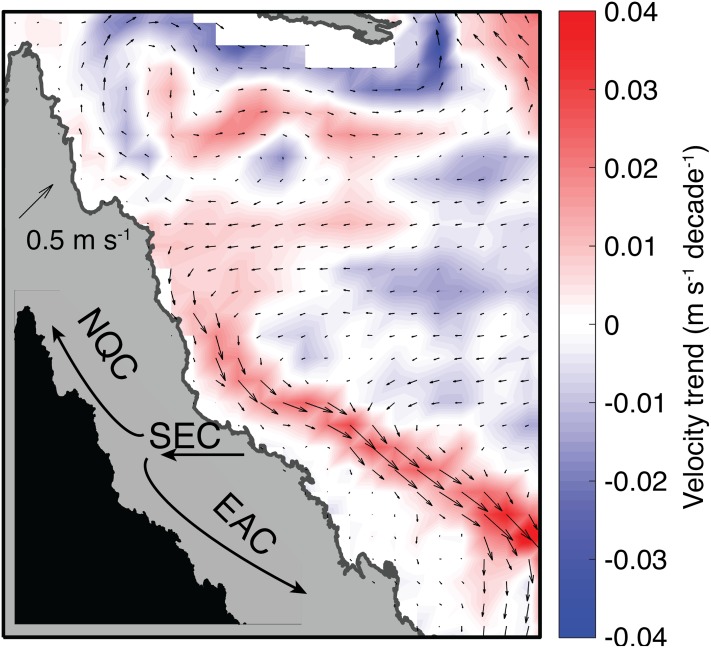
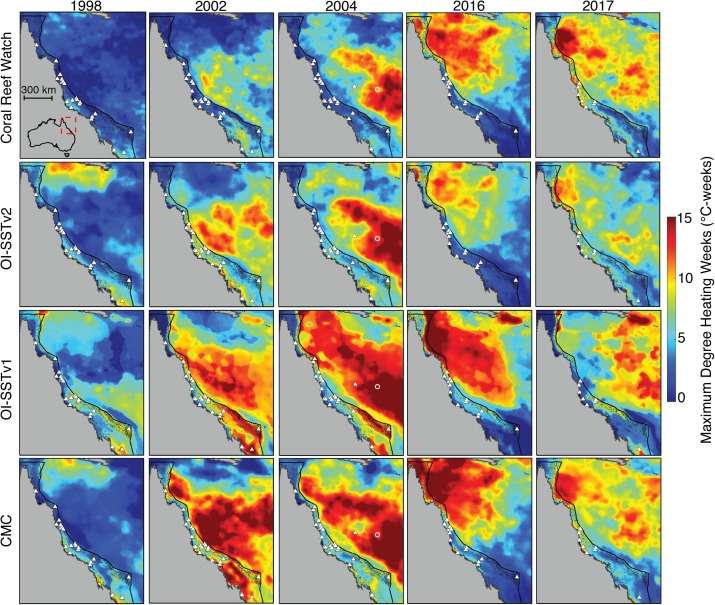
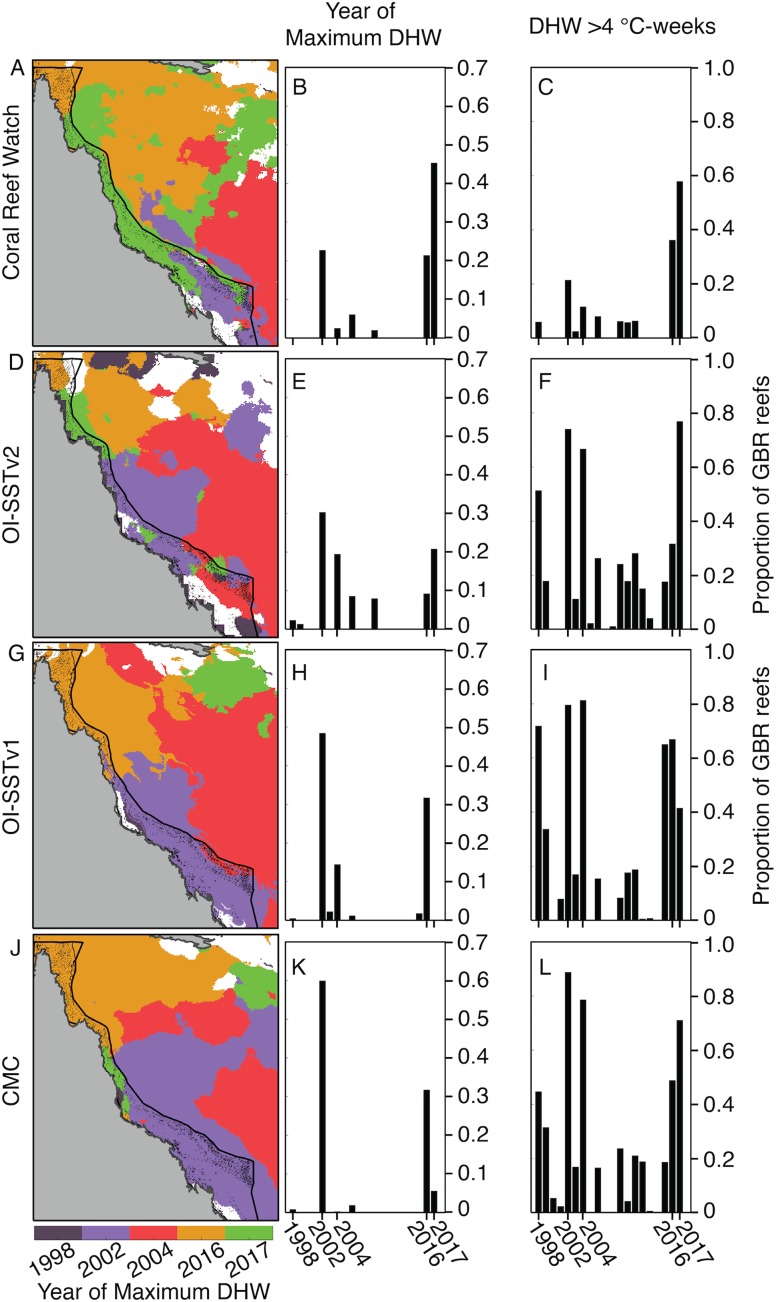
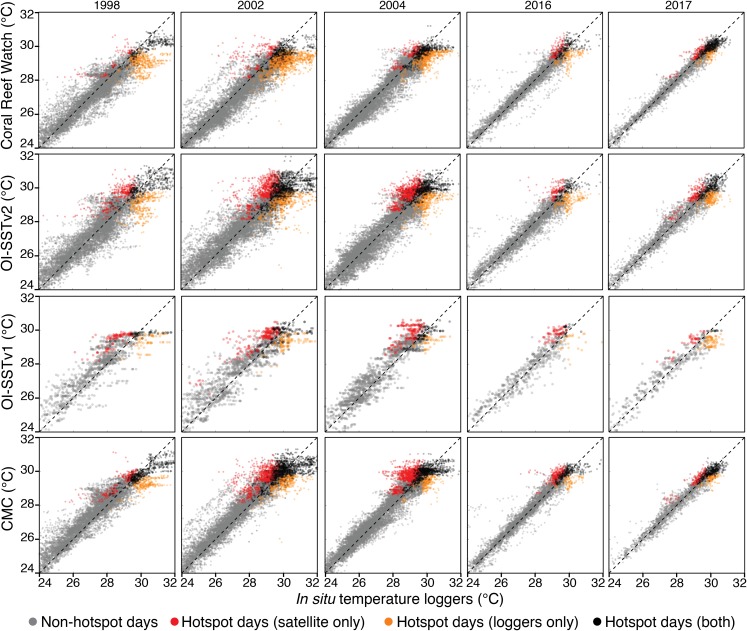
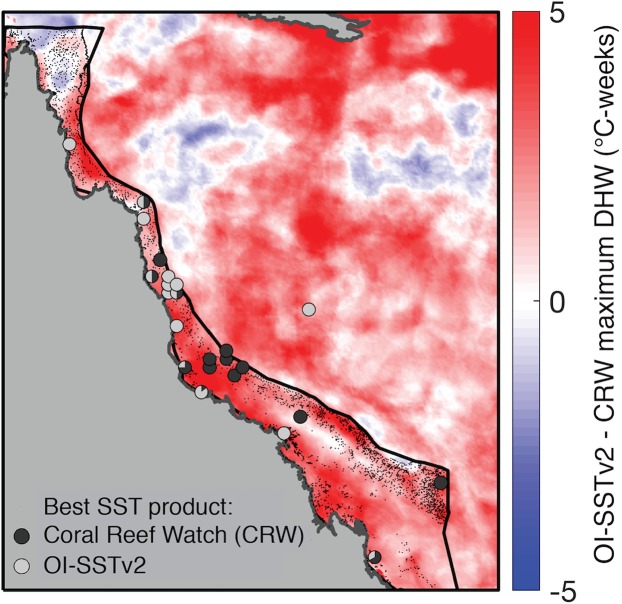
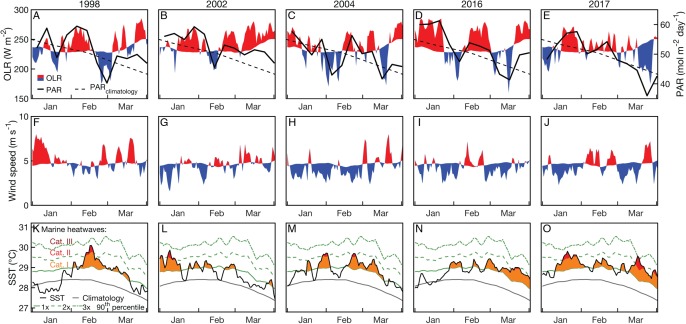
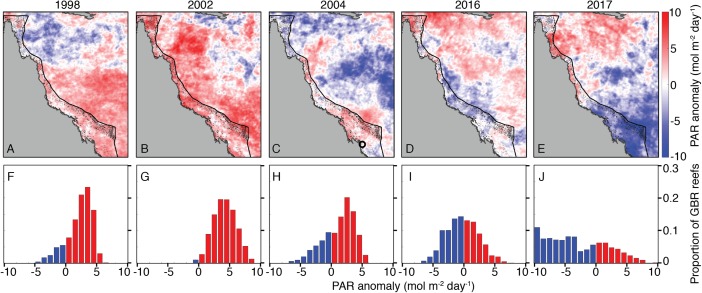
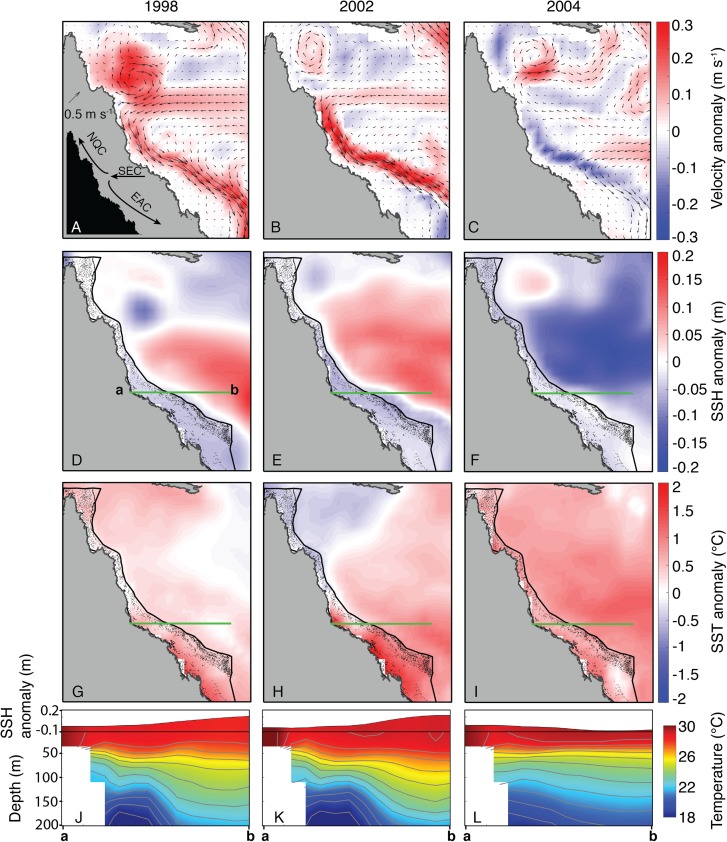
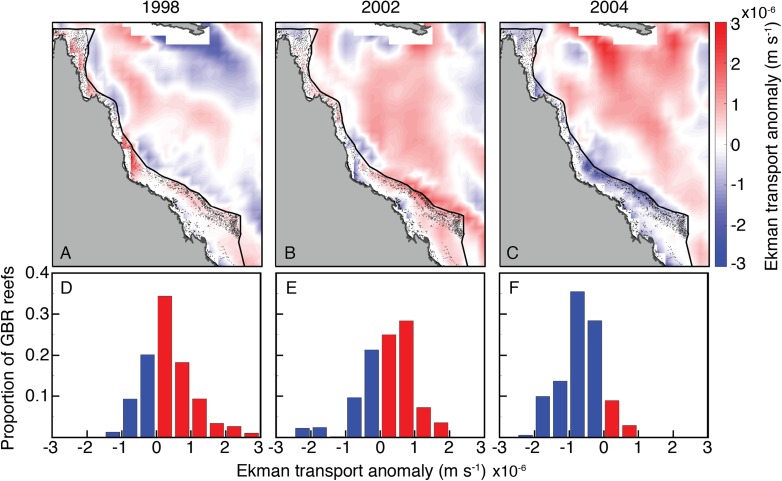
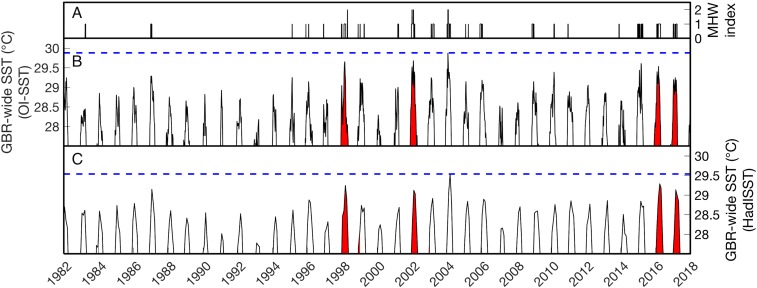
Ocean warming threatens the functioning of coral reef ecosystems by inducing mass coral bleaching and mortality events. The link between temperature and coral bleaching is now well-established based on observations that mass bleaching events usually occur when seawater temperatures are anomalously high. However, times of high heat stress but without coral bleaching are equally important because they can inform an understanding of factors that regulate temperature-induced bleaching. Here, we investigate the absence of mass coral bleaching on the Great Barrier Reef (GBR) during austral summer 2004. Using four gridded sea surface temperature data products, validated with in situ temperature loggers, we demonstrate that the summer of 2004 was among the warmest summers of the satellite era (1982-2017) on the GBR. At least half of the GBR experienced temperatures that were high enough to initiate bleaching in other years, yet mass bleaching was not reported during 2004. The absence of bleaching is not fully explained by wind speed or cloud cover. Rather, 2004 is clearly differentiated from bleaching years by the slow speed of the East Australian Current (EAC) offshore of the GBR. An anomalously slow EAC during summer 2004 may have dampened the upwelling of nutrient-rich waters onto the GBR shelf, potentially mitigating bleaching due to the lower susceptibility of corals to heat stress in low-nutrient conditions. Although other factors such as irradiance or acclimatization may have played a role in the absence of mass bleaching, 2004 remains a key case study for demonstrating the dynamic nature of coral responses to marine heatwaves.

摘要

海洋变暖通过引发大规模珊瑚白化和死亡事件,威胁着珊瑚礁生态系统的功能。基于大规模白化事件通常发生在海水温度异常高时的观测结果,温度与珊瑚白化之间的联系现已得到充分证实。然而,高温胁迫但未发生珊瑚白化的时期同样重要,因为它们有助于了解调节温度诱导白化的因素。在这里,我们调查了2004年南半球夏季大堡礁未发生大规模珊瑚白化的情况。我们使用四种网格化海面温度数据产品,并与现场温度记录仪进行了验证,结果表明2004年夏季是卫星时代(1982 - 2017年)大堡礁最温暖的夏季之一。大堡礁至少一半区域经历的温度在其他年份足以引发白化,但2004年并未报告大规模白化事件。风速或云量并不能完全解释未发生白化的原因。相反,2004年与发生白化的年份明显不同之处在于大堡礁近海的东澳大利亚暖流(EAC)流速缓慢。2004年夏季EAC异常缓慢,可能抑制了富含营养的海水上升到大堡礁陆架,由于在低营养条件下珊瑚对热胁迫的敏感性较低,这可能减轻了白化现象。尽管其他因素如辐照度或适应性可能在未发生大规模白化过程中起到了作用,但2004年仍是证明珊瑚对海洋热浪反应动态性质的关键案例研究。
https://cdn.ncbi.nlm.nih.gov/pmc/blobs/67ca/6694787/6e26f5009430/peerj-07-7473-g011.jpg
https://cdn.ncbi.nlm.nih.gov/pmc/blobs/67ca/6694787/c307150696a6/peerj-07-7473-g001.jpg
https://cdn.ncbi.nlm.nih.gov/pmc/blobs/67ca/6694787/b720067f4bba/peerj-07-7473-g002.jpg
https://cdn.ncbi.nlm.nih.gov/pmc/blobs/67ca/6694787/56f1d1ccb278/peerj-07-7473-g003.jpg
https://cdn.ncbi.nlm.nih.gov/pmc/blobs/67ca/6694787/e956e9795bf7/peerj-07-7473-g004.jpg
https://cdn.ncbi.nlm.nih.gov/pmc/blobs/67ca/6694787/b592f33a155b/peerj-07-7473-g005.jpg
https://cdn.ncbi.nlm.nih.gov/pmc/blobs/67ca/6694787/b4550dc99738/peerj-07-7473-g006.jpg
https://cdn.ncbi.nlm.nih.gov/pmc/blobs/67ca/6694787/29792a827605/peerj-07-7473-g007.jpg
https://cdn.ncbi.nlm.nih.gov/pmc/blobs/67ca/6694787/fcab333651ae/peerj-07-7473-g008.jpg
https://cdn.ncbi.nlm.nih.gov/pmc/blobs/67ca/6694787/34391bf01e14/peerj-07-7473-g009.jpg
https://cdn.ncbi.nlm.nih.gov/pmc/blobs/67ca/6694787/9d0dbab28bb1/peerj-07-7473-g010.jpg
https://cdn.ncbi.nlm.nih.gov/pmc/blobs/67ca/6694787/6e26f5009430/peerj-07-7473-g011.jpg
https://cdn.ncbi.nlm.nih.gov/pmc/blobs/67ca/6694787/c307150696a6/peerj-07-7473-g001.jpg
https://cdn.ncbi.nlm.nih.gov/pmc/blobs/67ca/6694787/b720067f4bba/peerj-07-7473-g002.jpg
https://cdn.ncbi.nlm.nih.gov/pmc/blobs/67ca/6694787/56f1d1ccb278/peerj-07-7473-g003.jpg
https://cdn.ncbi.nlm.nih.gov/pmc/blobs/67ca/6694787/e956e9795bf7/peerj-07-7473-g004.jpg
https://cdn.ncbi.nlm.nih.gov/pmc/blobs/67ca/6694787/b592f33a155b/peerj-07-7473-g005.jpg
https://cdn.ncbi.nlm.nih.gov/pmc/blobs/67ca/6694787/b4550dc99738/peerj-07-7473-g006.jpg
https://cdn.ncbi.nlm.nih.gov/pmc/blobs/67ca/6694787/29792a827605/peerj-07-7473-g007.jpg
https://cdn.ncbi.nlm.nih.gov/pmc/blobs/67ca/6694787/fcab333651ae/peerj-07-7473-g008.jpg
https://cdn.ncbi.nlm.nih.gov/pmc/blobs/67ca/6694787/34391bf01e14/peerj-07-7473-g009.jpg
https://cdn.ncbi.nlm.nih.gov/pmc/blobs/67ca/6694787/9d0dbab28bb1/peerj-07-7473-g010.jpg
https://cdn.ncbi.nlm.nih.gov/pmc/blobs/67ca/6694787/6e26f5009430/peerj-07-7473-g011.jpg

相似文献

1
An enigmatic decoupling between heat stress and coral bleaching on the Great Barrier Reef.大堡礁上热应激与珊瑚白化之间神秘的脱钩现象。
PeerJ. 2019 Aug 12;7:e7473. doi: 10.7717/peerj.7473. eCollection 2019.
2
Large-scale bleaching of corals on the Great Barrier Reef.大堡礁上珊瑚的大规模白化现象。
Ecology. 2018 Feb;99(2):501. doi: 10.1002/ecy.2092. Epub 2017 Dec 18.
3
Acclimatization of massive reef-building corals to consecutive heatwaves.大规模造礁珊瑚对连续热浪的适应。
Proc Biol Sci. 2019 Mar 13;286(1898):20190235. doi: 10.1098/rspb.2019.0235.
4
Marine heatwaves in the Great Barrier Reef and Coral Sea: their mechanisms and impacts on shallow and mesophotic coral ecosystems.大堡礁和珊瑚海的海洋热浪:其机制及其对浅海和中层珊瑚生态系统的影响。
Sci Total Environ. 2024 Jan 15;908:168063. doi: 10.1016/j.scitotenv.2023.168063. Epub 2023 Oct 29.
5
Unprecedented early-summer heat stress and forecast of coral bleaching on the Great Barrier Reef, 2021-2022.2021-2022 年,大堡礁遭遇史无前例的初夏热浪和珊瑚白化预测。
F1000Res. 2022 Feb 1;11:127. doi: 10.12688/f1000research.108724.4. eCollection 2022.
6
Deep reefs of the Great Barrier Reef offer limited thermal refuge during mass coral bleaching.大堡礁的深海珊瑚礁在大规模珊瑚白化期间提供的热避难所有限。
Nat Commun. 2018 Sep 4;9(1):3447. doi: 10.1038/s41467-018-05741-0.
7
Marine heatwaves reveal coral reef zones susceptible to bleaching in the Red Sea.海洋热浪揭示了红海易受珊瑚白化影响的珊瑚礁区。
Glob Chang Biol. 2019 Jul;25(7):2338-2351. doi: 10.1111/gcb.14652. Epub 2019 Apr 29.
8
Do clouds save the great barrier reef? satellite imagery elucidates the cloud-SST relationship at the local scale.云层会保护大堡礁吗?卫星图像在局部尺度上阐明了云层与海表温度的关系。
PLoS One. 2013 Jul 24;8(7):e70400. doi: 10.1371/journal.pone.0070400. Print 2013.
9
Marine heatwaves modulate the genotypic and physiological responses of reef-building corals to subsequent heat stress.海洋热浪调节造礁珊瑚对后续热应激的基因型和生理反应。
Ecol Evol. 2023 Dec 13;13(12):e10798. doi: 10.1002/ece3.10798. eCollection 2023 Dec.
10
Marine heatwaves depress metabolic activity and impair cellular acid-base homeostasis in reef-building corals regardless of bleaching susceptibility.海洋热浪会降低造礁珊瑚的代谢活动,并损害其细胞酸碱平衡,而与珊瑚对漂白的易感性无关。
Glob Chang Biol. 2021 Jun;27(12):2728-2743. doi: 10.1111/gcb.15622. Epub 2021 Apr 14.

引用本文的文献

1
Highest ocean heat in four centuries places Great Barrier Reef in danger.四个世纪以来海洋最热纪录危及大堡礁。
Nature. 2024 Aug;632(8024):320-326. doi: 10.1038/s41586-024-07672-x. Epub 2024 Aug 7.
2
Competitive effects of the macroalga on key physiological processes in the scleractinian coral under thermal stress.在热胁迫下,大型海藻对石珊瑚关键生理过程的竞争影响。
PeerJ. 2023 Dec 14;11:e16646. doi: 10.7717/peerj.16646. eCollection 2023.
3
Hidden heatwaves and severe coral bleaching linked to mesoscale eddies and thermocline dynamics.

本文引用的文献

1
Nutrient Availability and Metabolism Affect the Stability of Coral-Symbiodiniaceae Symbioses.养分可用性和代谢会影响珊瑚-共生藻共生体的稳定性。
Trends Microbiol. 2019 Aug;27(8):678-689. doi: 10.1016/j.tim.2019.03.004. Epub 2019 Apr 12.
2
Acclimatization of massive reef-building corals to consecutive heatwaves.大规模造礁珊瑚对连续热浪的适应。
Proc Biol Sci. 2019 Mar 13;286(1898):20190235. doi: 10.1098/rspb.2019.0235.
3
Repeat bleaching of a central Pacific coral reef over the past six decades (1960-2016).过去六十年(1960年至2016年)中太平洋珊瑚礁的反复白化现象。
与中尺度涡旋和温跃层动力有关的隐藏热浪和严重珊瑚白化。
Nat Commun. 2023 Jan 6;14(1):25. doi: 10.1038/s41467-022-35550-5.
4
A large-scale view of marine heatwaves revealed by archetype analysis.基于原型分析揭示的大规模海洋热浪视图。
Nat Commun. 2022 Dec 21;13(1):7843. doi: 10.1038/s41467-022-35493-x.
5
Symbioses are restructured by repeated mass coral bleaching.共生关系通过反复的大规模珊瑚白化而重构。
Sci Adv. 2022 Dec 9;8(49):eabq8349. doi: 10.1126/sciadv.abq8349. Epub 2022 Dec 7.
6
Past the Precipice? Projected Coral Habitability Under Global Heating.越过悬崖?全球变暖下预计的珊瑚宜居性
Earths Future. 2022 May;10(5):e2021EF002608. doi: 10.1029/2021EF002608. Epub 2022 May 5.
7
The past century of coral bleaching in the Saudi Arabian central Red Sea.沙特阿拉伯红海中部过去一个世纪的珊瑚白化现象。
PeerJ. 2020 Oct 23;8:e10200. doi: 10.7717/peerj.10200. eCollection 2020.
8
Nutrient-supplying ocean currents modulate coral bleaching susceptibility.提供营养的洋流调节珊瑚白化易感性。
Sci Adv. 2020 Aug 21;6(34). doi: 10.1126/sciadv.abc5493. Print 2020 Aug.
9
Treating coral bleaching as weather: a framework to validate and optimize prediction skill.将珊瑚白化视为天气现象:验证和优化预测技能的框架
PeerJ. 2020 Jul 3;8:e9449. doi: 10.7717/peerj.9449. eCollection 2020.
Commun Biol. 2018 Nov 8;1:177. doi: 10.1038/s42003-018-0183-7. eCollection 2018.
4
Securing a Long-term Future for Coral Reefs.保护珊瑚礁的长远未来。
Trends Ecol Evol. 2018 Dec;33(12):936-944. doi: 10.1016/j.tree.2018.09.006. Epub 2018 Oct 29.
5
Immunity and the coral crisis.免疫与珊瑚危机。
Commun Biol. 2018 Jul 9;1:91. doi: 10.1038/s42003-018-0097-4. eCollection 2018.
6
Evidence of acclimatization or adaptation in Hawaiian corals to higher ocean temperatures.夏威夷珊瑚适应或适应更高海洋温度的证据。
PeerJ. 2018 Aug 7;6:e5347. doi: 10.7717/peerj.5347. eCollection 2018.
7
High frequency temperature variability reduces the risk of coral bleaching.高频温度变化可降低珊瑚白化风险。
Nat Commun. 2018 Apr 26;9(1):1671. doi: 10.1038/s41467-018-04074-2.
8
Global warming transforms coral reef assemblages.全球变暖改变了珊瑚礁生物组合。
Nature. 2018 Apr;556(7702):492-496. doi: 10.1038/s41586-018-0041-2. Epub 2018 Apr 18.
9
Climate change promotes parasitism in a coral symbiosis.气候变化促进珊瑚共生中的寄生虫现象。
ISME J. 2018 Mar;12(3):921-930. doi: 10.1038/s41396-018-0046-8. Epub 2018 Jan 29.
10
Temperature Stress Causes Host Cell Detachment in Symbiotic Cnidarians: Implications for Coral Bleaching.温度胁迫导致共生刺胞动物宿主细胞脱离:对珊瑚白化的影响
Biol Bull. 1992 Jun;182(3):324-332. doi: 10.2307/1542252.