Department of Neuroscience, Mayo Clinic, Jacksonville, Florida, USA.
Department of Neurology, Mayo Clinic, Rochester, Minnesota, USA.
Mov Disord. 2019 Nov;34(11):1655-1662. doi: 10.1002/mds.27816. Epub 2019 Aug 21.
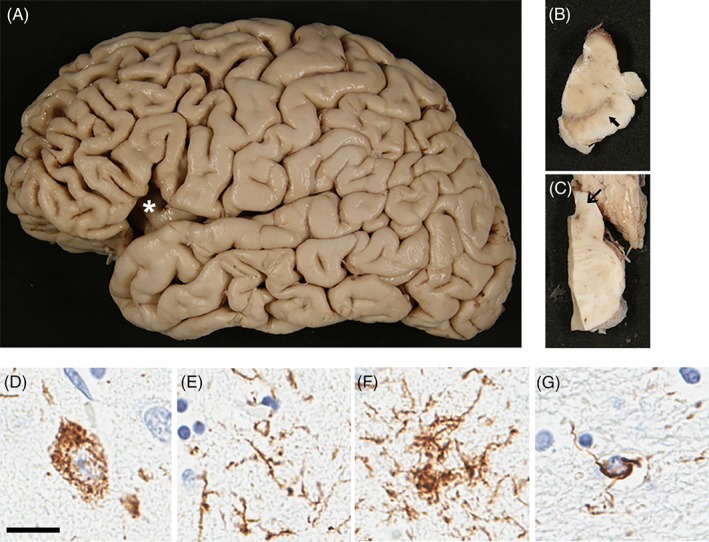
Progressive supranuclear palsy (PSP) is a neurodegenerative disorder characterized by neuronal loss in the extrapyramidal system with pathologic accumulation of tau in neurons and glia. The most common clinical presentation of PSP, referred to as Richardson syndrome, is that of atypical parkinsonism with vertical gaze palsy, axial rigidity, and frequent falls. Although cognitive deficits in PSP are often ascribed to subcortical dysfunction, a subset of patients has dementia with behavioral features similar to the behavioral variant of frontotemporal dementia. In this study we aimed to identify the clinical and pathological characteristics of PSP presenting with frontotemporal dementia.
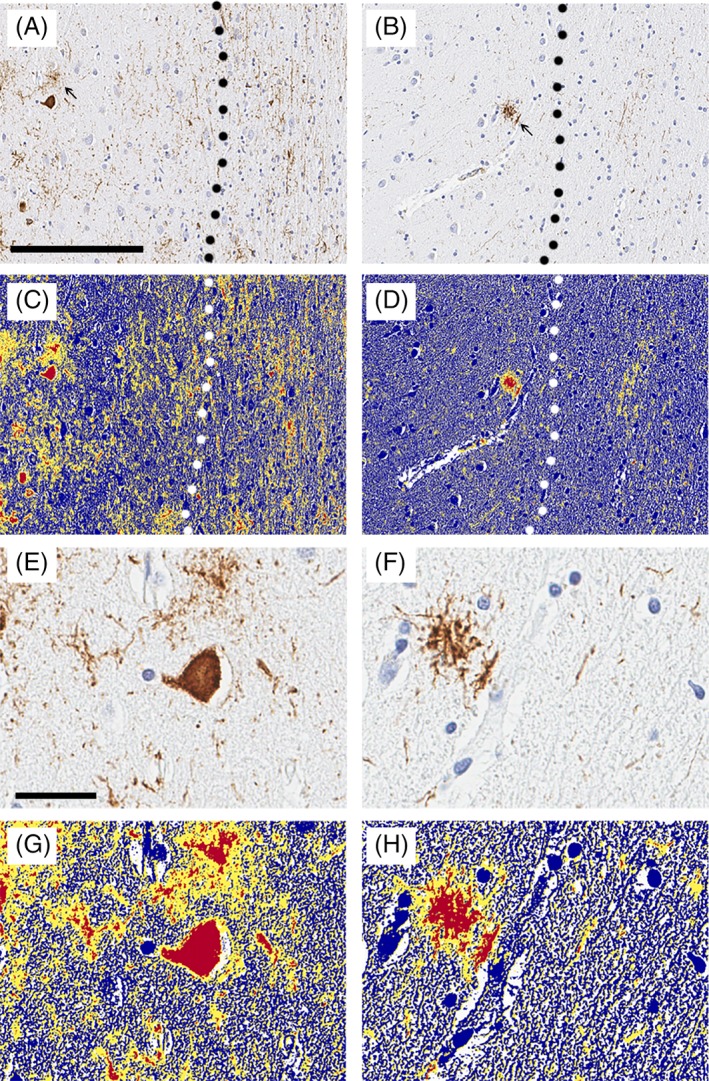
In this study, we compared clinical and pathologic characteristics of 31 patients with PSP with Richardson syndrome with 15 patients with PSP with frontotemporal dementia. For pathological analysis, we used semiquantitative methods to assess neuronal and glial lesions with tau immunohistochemistry, as well image analysis of tau burden using digital microscopic methods.
We found greater frontal and temporal neocortical neuronal tau pathology in PSP with frontotemporal dementia compared with PSP with Richardson syndrome. White matter tau pathology was also greater in PSP with frontotemporal dementia than PSP with Richardson syndrome. Genetic and demographic factors were not associated with atypical distribution of tau pathology in PSP with frontotemporal dementia.
The results confirm the subset of cognitive-predominant PSP mimicking frontotemporal dementia in PSP. PSP with frontotemporal dementia has distinct clinical features that differ from PSP with Richardson syndrome, as well as differences in distribution and density of tau pathology. © 2019 The Authors. Movement Disorders published by Wiley Periodicals, Inc. on behalf of International Parkinson and Movement Disorder Society.
进行性核上性麻痹(PSP)是一种神经退行性疾病,其特征是锥体外系神经元丧失,神经元和神经胶质中tau 蛋白病理性积聚。PSP 最常见的临床表现为 Richardson 综合征,表现为非典型帕金森病,伴有垂直性眼球运动障碍、轴性僵硬和频繁跌倒。尽管 PSP 中的认知缺陷通常归因于皮质下功能障碍,但有一部分患者具有痴呆症,其行为特征类似于额颞叶痴呆的行为变异型。在这项研究中,我们旨在确定表现为额颞叶痴呆的 PSP 的临床和病理学特征。
在这项研究中,我们比较了 31 例表现为 Richardson 综合征的 PSP 患者和 15 例表现为额颞叶痴呆的 PSP 患者的临床和病理学特征。为了进行病理学分析,我们使用半定量方法评估了 tau 免疫组织化学染色的神经元和神经胶质病变,以及使用数字显微镜方法对 tau 负荷进行图像分析。
我们发现,与表现为 Richardson 综合征的 PSP 相比,表现为额颞叶痴呆的 PSP 患者的额颞叶新皮质神经元 tau 病理学更严重。表现为额颞叶痴呆的 PSP 患者的白质 tau 病理学也比表现为 Richardson 综合征的 PSP 患者更严重。遗传和人口统计学因素与表现为额颞叶痴呆的 PSP 中 tau 病理学的非典型分布无关。
这些结果证实了认知为主型 PSP 的一个亚组类似于额颞叶痴呆的 PSP。表现为额颞叶痴呆的 PSP 具有不同于表现为 Richardson 综合征的 PSP 的独特临床特征,以及 tau 病理学分布和密度的差异。© 2019 作者。运动障碍由 Wiley 期刊出版公司代表国际帕金森和运动障碍学会出版。