Infectious Diseases Division, Massachusetts General Hospital, Boston, Massachusetts, USA.
Department of Medicine, Harvard Medical School, Boston, Massachusetts, USA.
mSphere. 2019 Aug 21;4(4):e00206-19. doi: 10.1128/mSphere.00206-19.
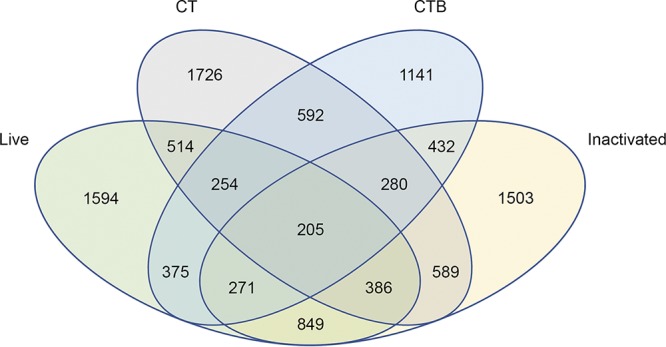
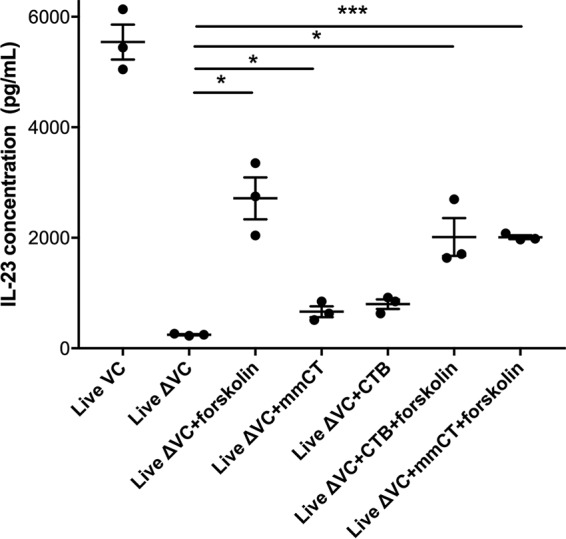
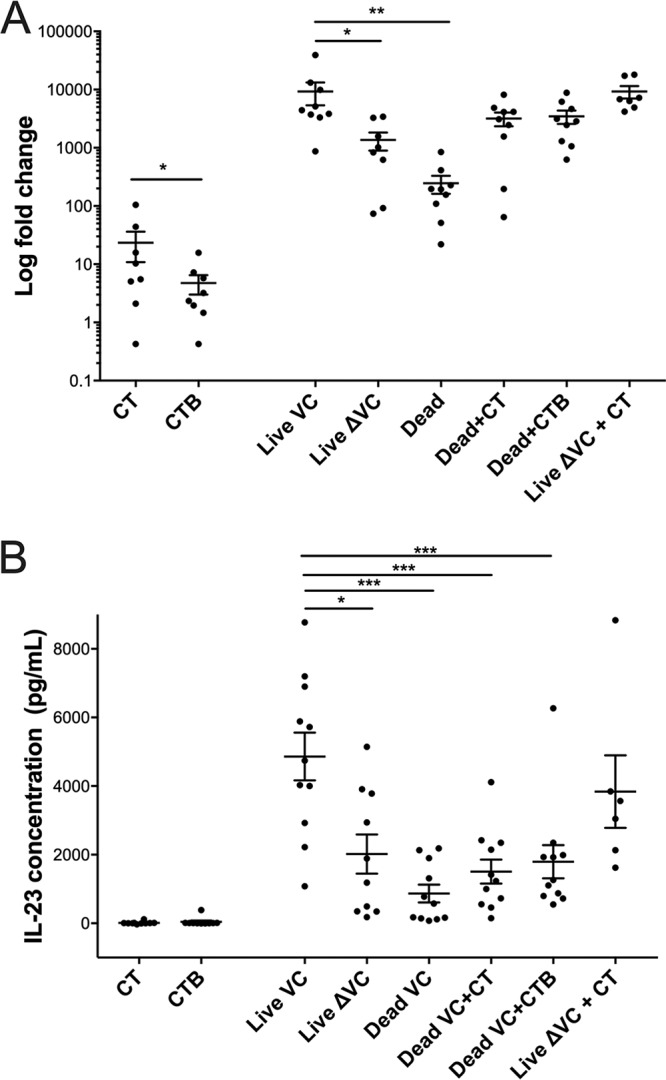
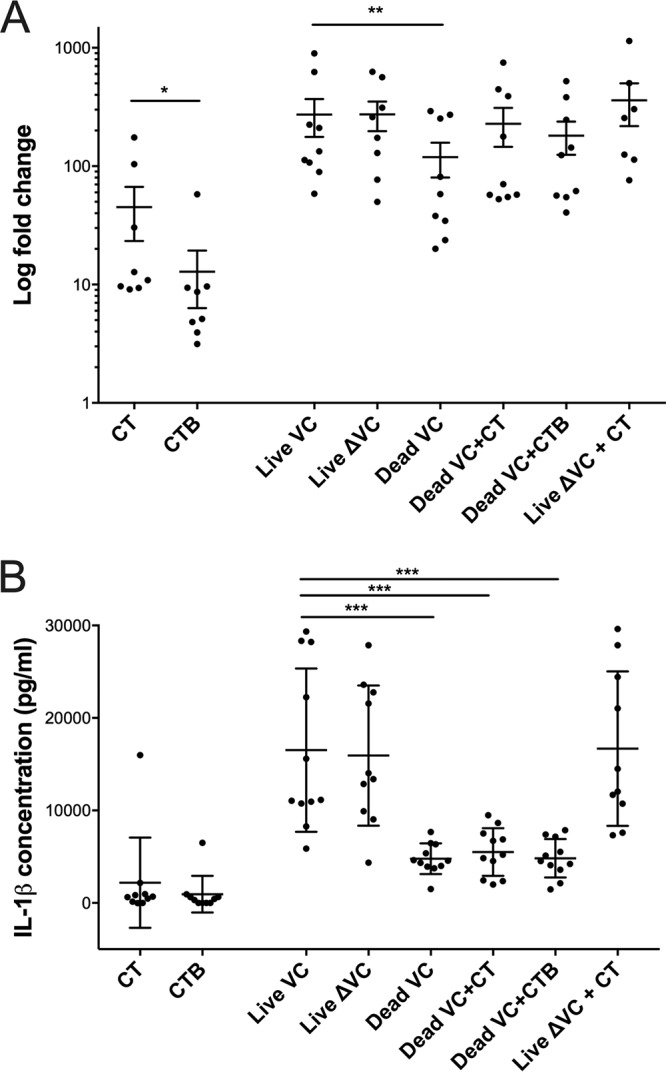
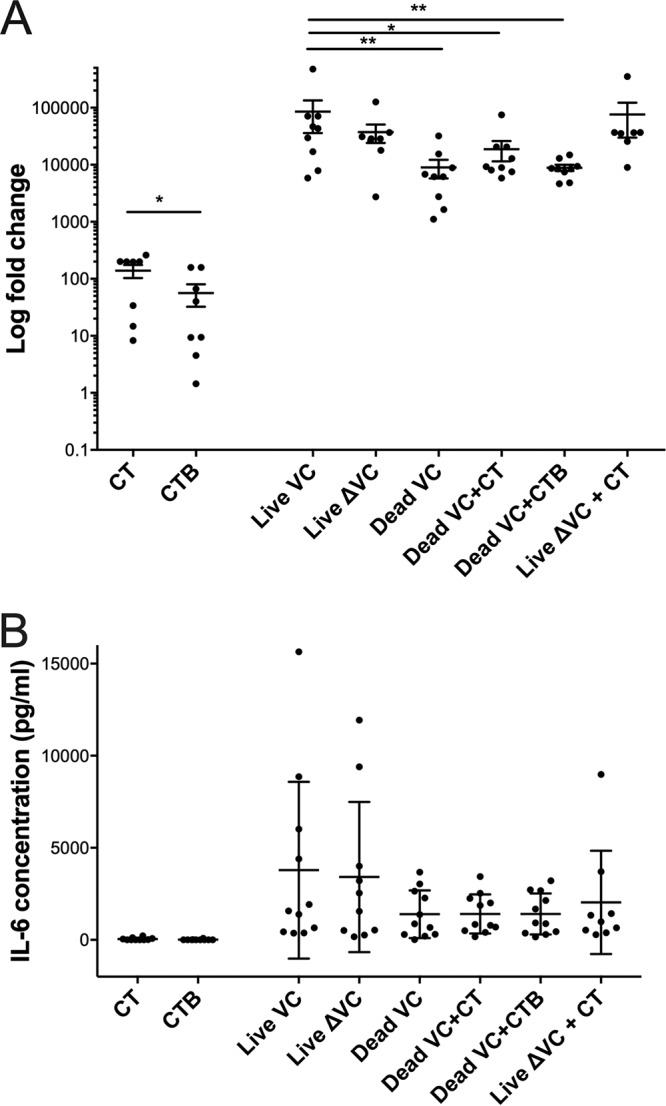
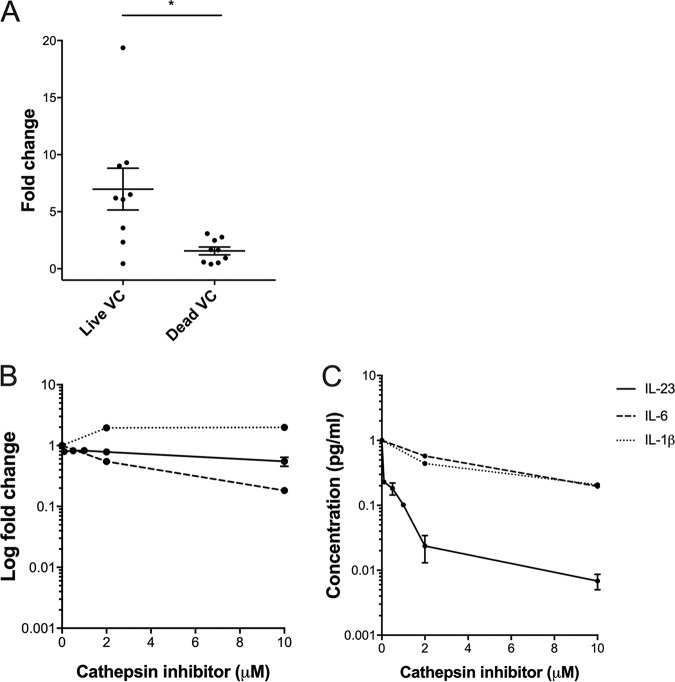
infection provides long-lasting protective immunity, while oral, inactivated cholera vaccines (OCV) result in more-limited protection. To identify characteristics of the innate immune response that may distinguish natural infection from OCV, we stimulated differentiated, macrophage-like THP-1 cells with live versus heat-inactivated with and without endogenous or exogenous cholera holotoxin (CT). Interleukin 23A gene () expression was higher in cells exposed to live than in cells exposed to inactivated organisms (mean change, 38-fold; 95% confidence interval [95% CI], 4.0 to 42; < 0.01). IL-23 secretion was also higher in cells exposed to live than in cells exposed to inactivated (mean change, 5.6-fold; 95% CI, 4.4 to 11; < 0.001). This increase in IL-23 secretion was more marked than for other key innate immune cytokines (e.g., IL-1β and IL-6) and dependent on exposure to the combination of both live and CT. While IL-23 secretion was reduced following stimulation with either heat-inactivated wild-type or a live isogenic mutant of , the addition of exogenous CT restored IL-23 secretion in combination with the live isogenic mutant , but not when it was paired with stimulation by heat-inactivated The posttranslational regulation of IL-23 under these conditions was dependent on the activity of the cysteine protease cathepsin B. In humans, IL-23 promotes the differentiation of Th17 cells to T follicular helper cells, which maintain and support long-term memory B cell generation after infection. Based on these findings, the stimulation of IL-23 production may be a determinant of protective immunity following infection. An episode of cholera provides better protection against reinfection than oral cholera vaccines, and the reasons for this are still under study. To better understand this, we compared the immune responses of human cells exposed to live with those of cells exposed to heat-killed (similar to the contents of oral cholera vaccines). We also compared the effects of active cholera toxin and the inactive cholera toxin B subunit (which is included in some cholera vaccines). One key immune signaling molecule, IL-23, was uniquely produced in response to the combination of live bacteria and active cholera holotoxin. Stimulation with that did not produce the active toxin or was killed did not produce an IL-23 response. The stimulation of IL-23 production by cholera toxin-producing may be important in conferring long-term immunity after cholera.
感染提供了持久的保护性免疫,而口服、灭活霍乱疫苗(OCV)则提供了更有限的保护。为了确定先天免疫反应的特征,这些特征可能将自然感染与 OCV 区分开来,我们用活的和热灭活的霍乱弧菌刺激分化的、类巨噬细胞 THP-1 细胞,同时有内源性或外源性霍乱全毒素(CT)。与接触灭活生物的细胞相比,接触活的霍乱弧菌的细胞中白细胞介素 23A 基因()的表达更高(平均变化,38 倍;95%置信区间[95%CI],4.0 至 42;<0.01)。与接触灭活霍乱弧菌的细胞相比,接触活的霍乱弧菌的细胞中白细胞介素 23 的分泌也更高(平均变化,5.6 倍;95%CI,4.4 至 11;<0.001)。这种白细胞介素 23 分泌的增加比其他关键的先天免疫细胞因子(如白细胞介素 1β 和白细胞介素 6)更为显著,并且依赖于活霍乱弧菌和 CT 的组合暴露。虽然用热灭活的野生型或活的同源突变体刺激后,白细胞介素 23 的分泌减少,但添加外源性 CT 可在与活的同源突变体组合时恢复白细胞介素 23 的分泌,但与热灭活的刺激配对时则不能。在这些条件下,白细胞介素 23 的翻译后调节依赖于半胱氨酸蛋白酶组织蛋白酶 B 的活性。在人类中,白细胞介素 23 促进 Th17 细胞向滤泡辅助 T 细胞的分化,在感染后维持和支持长期记忆 B 细胞的产生。基于这些发现,白细胞介素 23 的产生可能是霍乱弧菌感染后保护性免疫的决定因素。霍乱的发作比口服霍乱疫苗提供了更好的抗感染保护,其原因仍在研究中。为了更好地理解这一点,我们比较了人类细胞暴露于活霍乱弧菌和暴露于热灭活霍乱弧菌(类似于口服霍乱疫苗的内容)的免疫反应。我们还比较了活性霍乱毒素和非活性霍乱毒素 B 亚单位(包含在一些霍乱疫苗中)的影响。一种关键的免疫信号分子白细胞介素 23 是唯一对活细菌和活性霍乱全毒素的组合产生反应的。刺激不产生活性毒素或已失活的不会产生白细胞介素 23 反应。产生活性霍乱毒素的霍乱弧菌对白细胞介素 23 产生的刺激可能对霍乱后获得长期免疫力很重要。