Chen Chih-Sheng, Huang Ching-Tsan, Hseu Ruey-Shyang
Institute of Microbiology and Biochemistry, College of Life Science, National Taiwan University, Taipei, Taiwan (R.O.C).
AIMS Genet. 2017 Aug 25;4(3):192-201. doi: 10.3934/genet.2017.3.192. eCollection 2017.
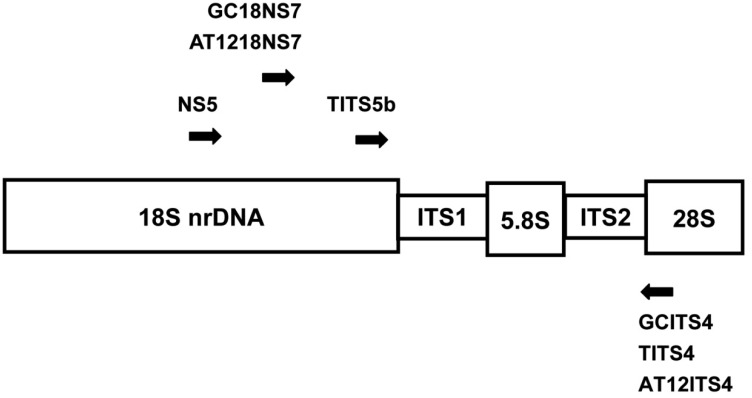
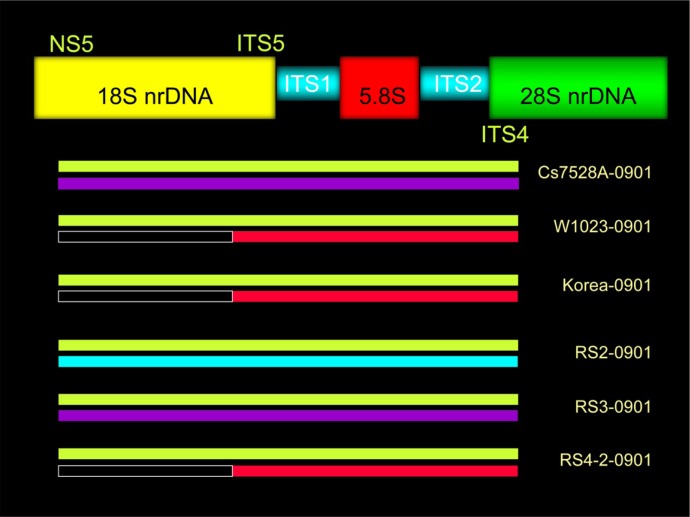
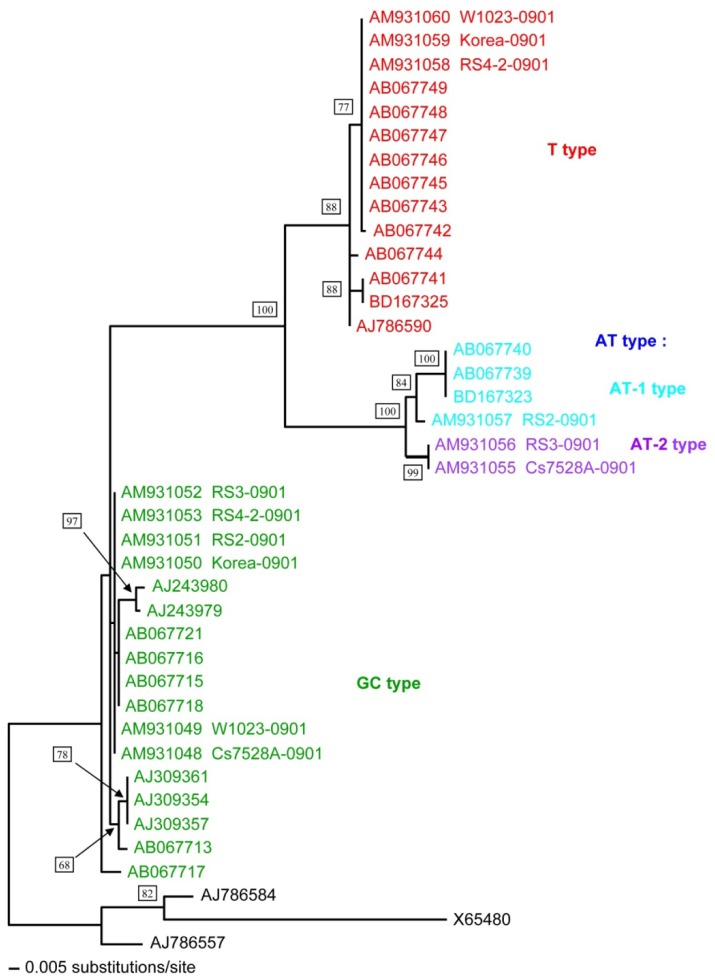
Nuclear ribosomal DNA (nrDNA) sequences are widely used in the molecular classification of fungi. Previous phylogenetic studies of highly-valued traditional Chinese medicinal fungus were mostly based on 18S and internal transcribed spacer (ITS) regions (ITS1, 5.8S and ITS2) of nrDNA. However, the disparity manifest in the low sequences identities between different isolates has led to argumentative hypotheses for this phenomenon, such as the "species complex" or "cryptic species" hypotheses. In the present study, four types of nrDNA (GC, AT-1, AT-2, and T) were identified using four primer pairs to amplify the nrDNA of six isolates. We demonstrate that each isolate contained two types of nrDNA, the omnipresent GC-type and a coexistent type alternating between the remaining three. This crucial discovery challenges the established notion of one type of nrDNA per species. We therefore propose that the composition of nrDNA types should be taken into consideration in studies of fungal genetics and classification.
核糖体DNA(nrDNA)序列在真菌的分子分类中被广泛应用。以往对名贵中药材真菌的系统发育研究大多基于nrDNA的18S和内部转录间隔区(ITS)区域(ITS1、5.8S和ITS2)。然而,不同分离株之间低序列同一性所表现出的差异导致了对这一现象的争议性假说,如“物种复合体”或“隐存种”假说。在本研究中,使用四对引物扩增六个分离株的nrDNA,鉴定出四种类型的nrDNA(GC、AT-1、AT-2和T)。我们证明每个分离株都包含两种类型的nrDNA,即普遍存在的GC型和在其余三种类型之间交替共存的一种类型。这一关键发现挑战了每个物种一种nrDNA类型的既定观念。因此,我们建议在真菌遗传学和分类研究中应考虑nrDNA类型的组成。